
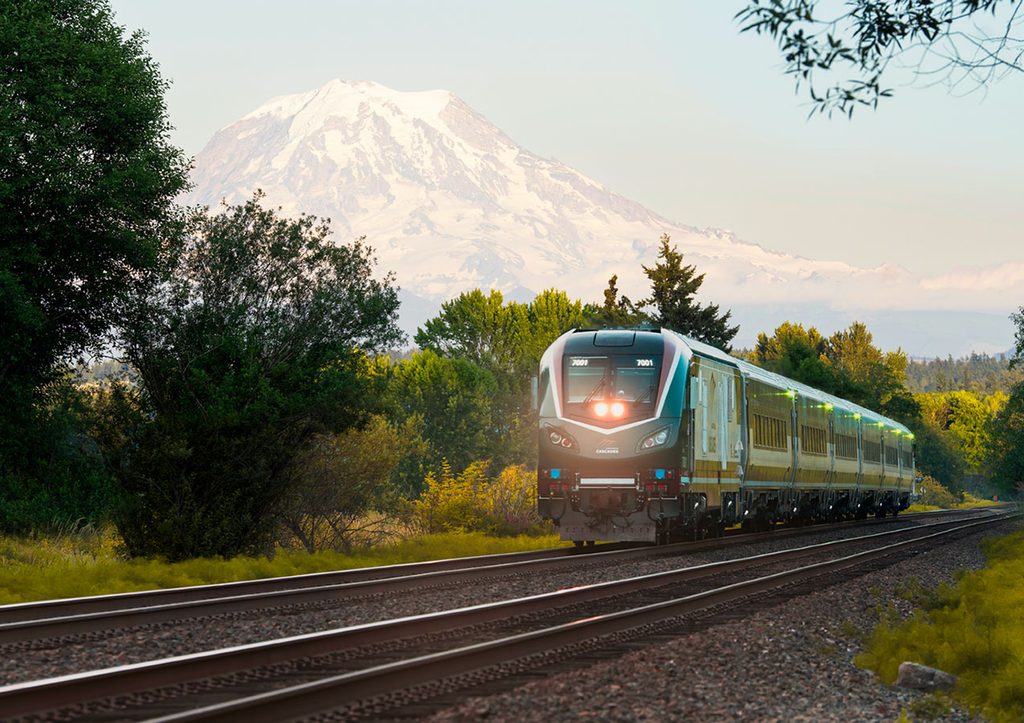
EVERETT —Rep. Rick Larsen (D-WA02), the Ranking member of the House Transportation and Infrastructure Committee, toured Amtrak’s new Airo trainset at Everett Station on Saturday, then rode south to Seattle and spoke at the official launch event. Pacific Northwest riders will be the first in the country to board Amtrak’s Airo trains on Wednesday, September 30, for the Cascades corridor route.
“Good transportation keeps people moving and it keeps the economy moving in our state,” Rep. Rick Larsen (D-WA02) said. “Washington state deserves a rail network that is on par with our international competitors and counterparts to meet this growing demand.”



The eight Cascades sets are the first slice of a national order of 83 Airo trainsets, a fleet overhaul funded largely with $8 billion from the Bipartisan Infrastructure Law which Larsen voted for. Amtrak plans to replace all existing trains on the Cascades route with Airo trains by the end of 2027.
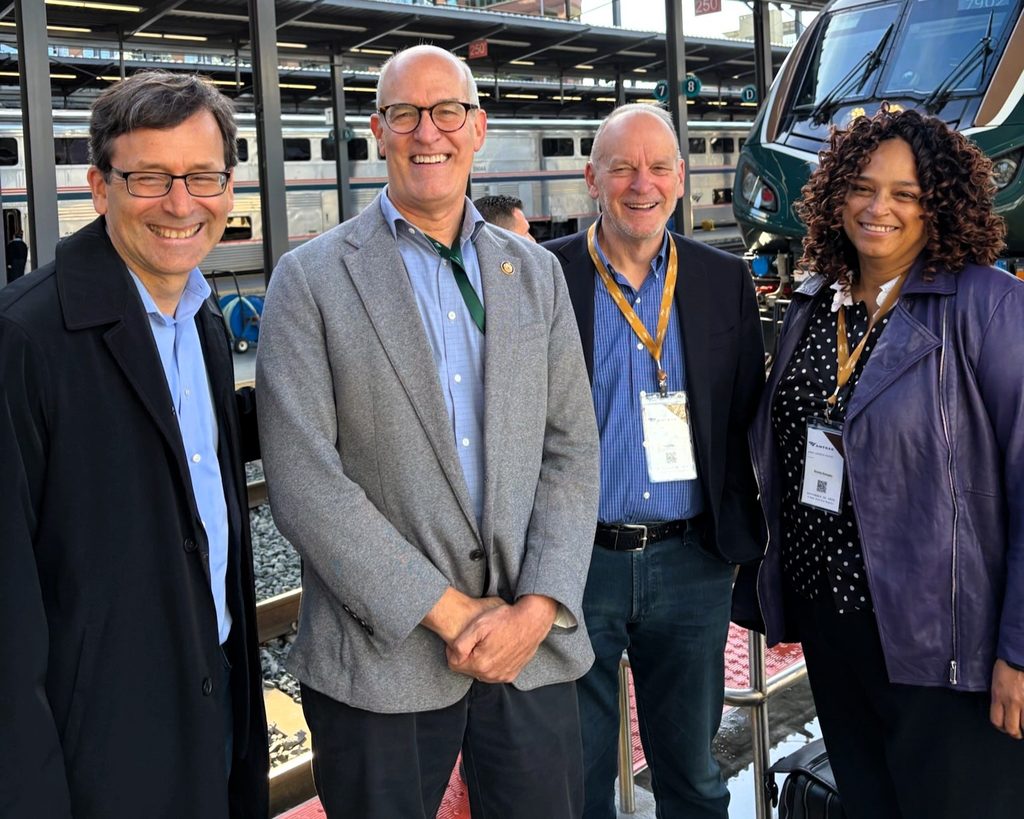
Gov. Bob Ferguson, joining the celebration of the Amtrak partnership, urged residents to “get out and ride it.”




“We are so appreciative of the partnership with Amtrak,” Gov. Ferguson said. “We are really honored to get these Amtrak trains running.”



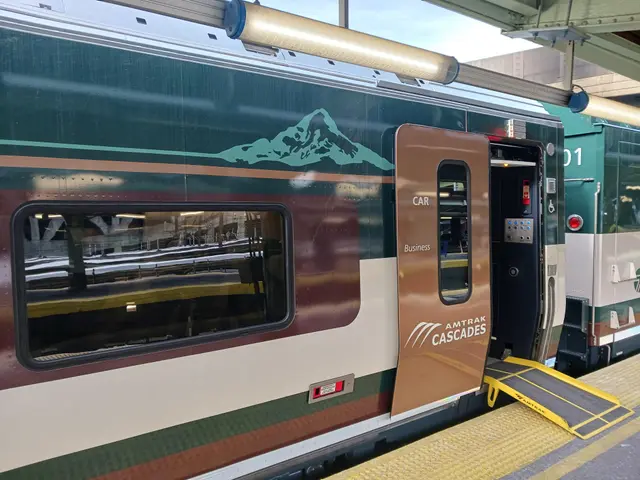
The trains Airo is replacing have been running on borrowed time. Amtrak pulled its Horizon coaches in March 2025 after inspections found corrosion and other structural problems, then patched the schedule with older Amfleet cars shipped in from other routes. Oregon’s Talgo Series 8 sets stayed in the mix but have been sidelined at times by mechanical trouble. The Siemens-built Airo sets are the first equipment designed for this corridor in years — assembled in the United States and finished in Cascades evergreen, mocha and cream, with Cascade Range graphics on the cars.
Each Airo set seats more than 300 people, a jump from the mixed fleet now on the line. Oregon’s Talgo Series 8 trains seat about 250. The Amfleet I cars Amtrak borrowed after it pulled Horizon coaches in March 2025 often ran with far fewer seats — in the low 160s. This extra capacity matters for the Cascade corridor as it set a record 993,000 riders in 2024, then slipped 8% to 916,000 in 2025 after the Horizon withdrawal cut seating by about 20% even as demand stayed high.
Amtrak also says the trains produce about 90% less particulate emissions in diesel operation than the older equipment and meet EPA Tier 4 locomotive standards.
Onboard, the pitch is less like a 1970s coach and more like a modern regional train. Seats are cushioned, with movable headrests, large tray tables, water-bottle holders and tablet clips.
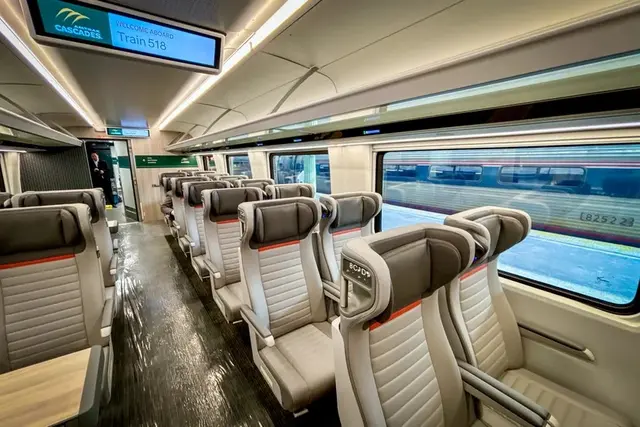
Panoramic windows are meant to frame Puget Sound, the Columbia River and the Willamette Valley.
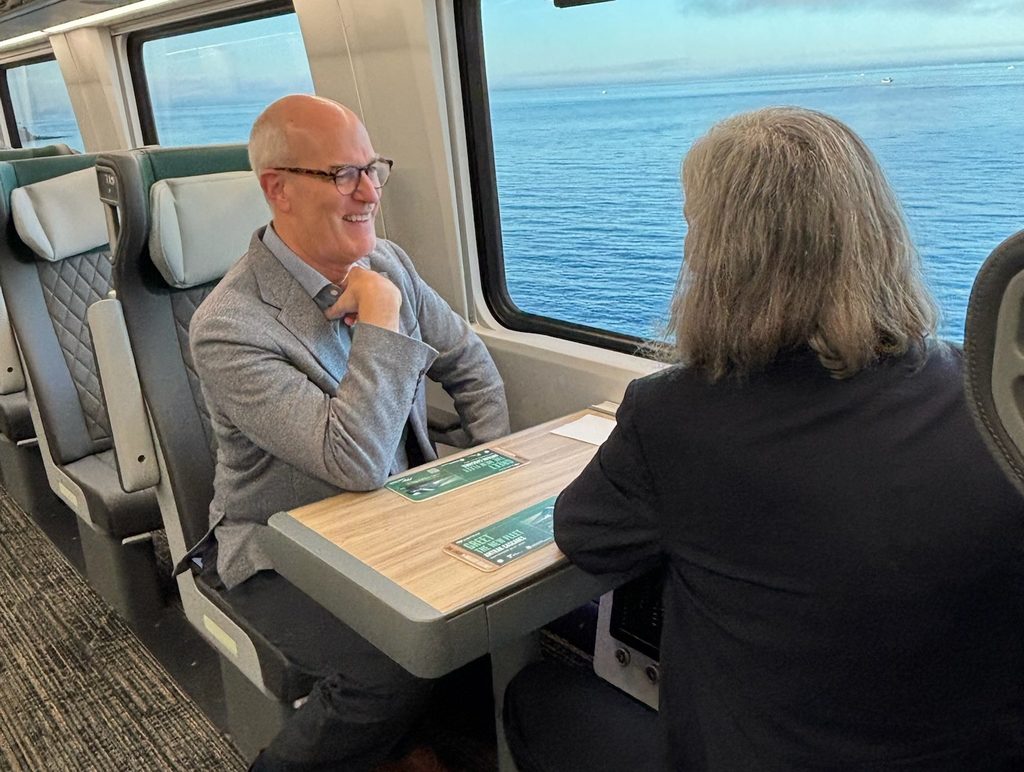
Every seat has power and USB ports. Wi-Fi is free. Digital screens show stops and other trip information.
Automated steps are designed to ease boarding at platforms of mixed height. Six larger restrooms have touchless controls.
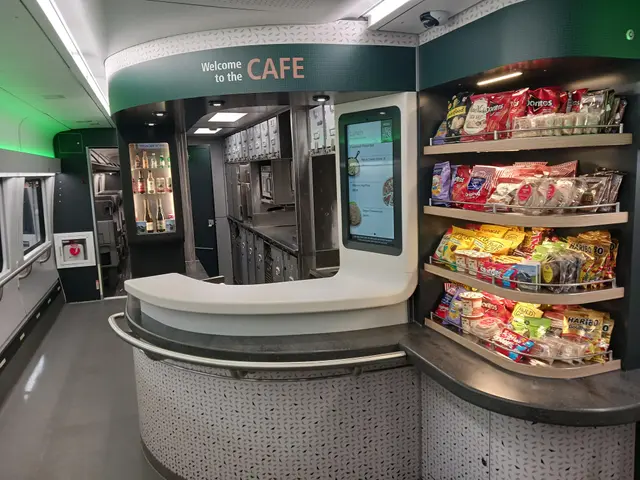
The café car is rebuilt around Northwest food, beer, wine and spirits, with some self-service options.
The scenic Amtrak Cascades route connects communities from Vancouver, British Columbia, down to Eugene, Oregon. It serves as a vital corridor for the region, with stops in key Washington cities including Bellingham, Mount Vernon, Stanwood, Everett, Edmonds, Seattle, and Tacoma.
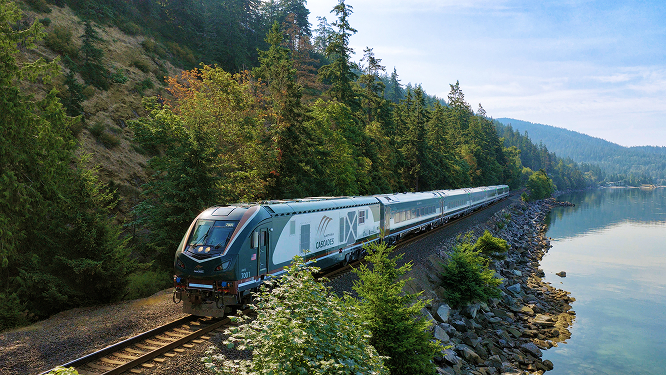
Two of eight Cascades Airo trainsets will cover four daily trips at launch: Train 516 from Seattle to Vancouver, B.C., at 8:30 a.m.; Train 519 back to Seattle at 4:45 p.m.; Train 503 from Seattle to Eugene, Oregon, at 7:10 a.m.; and Train 508 returning from Eugene at 4:30 p.m. A third set is being held in reserve. The remaining trainsets are due in stages through 2027, when Airo is expected to replace the corridor’s existing fleet.
Fares move with demand. Recent one-way coach prices have started around $29 between Seattle and Portland, from the mid-$40s to about $70 between Seattle and Vancouver, and from the high $60s into the $90s or more for Portland-Vancouver, B.C., depending on the day and how early a ticket is bought. Children, seniors and military travelers can often find discounts.
Tickets are sold the usual way: Amtrak.com, the Amtrak app or a station ticket office. Reservations are required. For Vancouver, B.C., riders need travel documents and should arrive early for customs.
What comes after the trains arrive
In the House, the next fight is the bill meant to replace the 2021 infrastructure law. Larsen helped negotiate the BUILD America 250 Act, a five-year surface transportation measure that the Transportation and Infrastructure Committee passed 62-2 in May. It would authorize about $580 billion overall, including continued funding for Amtrak’s Northeast Corridor and National Network.
The Trump administration has separately billed its rail agenda as a “Golden Age of Rail,” pairing new trainsets and locomotive overhauls with station and crossing work while pushing Amtrak toward a tighter split of infrastructure, service and fleet.
Transportation Secretary Sean Duffy in August announced a $5.3 billion Federal Railroad Administration package that includes $2.05 billion for up to 43 additional U.S.-built trainsets and $140 million to overhaul 41 locomotives used on Midwest and Pacific routes.
The Cascade corridor is on the list of services tied to the new directive. USDOT has also steered billions toward Northeast Corridor stations and other rail grants, while proposing to consolidate some passenger-rail programs and leave future Amtrak funding to annual appropriations.
Amtrak, for its part, is studying a split into infrastructure, service and fleet units under a parent company — not privatization, the railroad says, but a tighter focus on trains like the ones now sitting in Everett and Seattle.

Author: Mario Lotmore