

ANTALYA, Turkey — The United Nations climate summit COP31 collapsed without an overarching agreement after running two days past its scheduled November 20 close, making it the longest COP on record and the first since Copenhagen in 2009 to end without a cover decision.
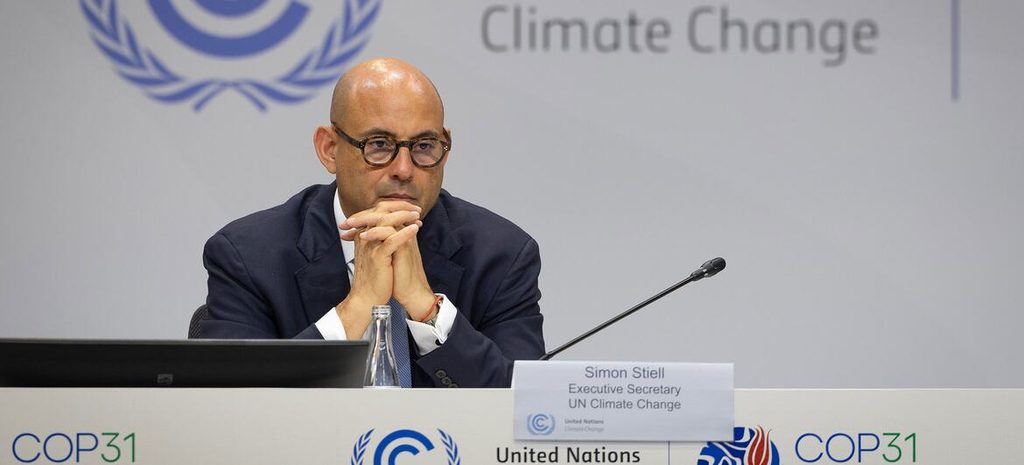
The talks broke down over fossil fuels. A bloc led by the European Union, the United Kingdom, Norway, Panama, Vanuatu, the Marshall Islands, and the least developed countries rejected the final draft, called the Antalya Pact, because it made no mention of fossil fuels or of transitioning away from them. Oil-producing nations, including Saudi Arabia and Russia, refused to accept any phase-out or phase-down language.
“There may be no consensus in the negotiating room. There is no ambiguity in the science,” the UN Secretary General António Guterres said in a statement.
“Temperatures keep shattering records. Climate extremes keep intensifying,” wrote Guterres. “Emissions remain far too high. And every delay makes our task harder and more costly. The world is now poised to exceed the globally-agreed limit of a 1.5-degree temperature rise. The window to keep that overshoot as short and shallow as possible is rapidly closing.”


A draft that never named fossil fuels

The summit opened around November 9, and the Antalya Pact became its central sticking point. Critics said the text dodged the question of fossil fuels, the main driver of the climate crisis, and leaned instead on technology.
Speaking for the EU, Ireland’s Environment Minister Darragh O’Brien joined the countries that rejected the draft. The bloc called the text unconscionable and said it would not accept a COP that greenwashes fossil fuels.
The other side drew a hard line as well. Saudi Arabia and Russia resisted any new commitment on fossil fuels and would refer back only to the agreement reached at COP28 in Dubai in 2023. Russia said it could not accept any wording on fossil fuels at all.
China and India, two of the world’s largest emitters, accepted the text.
Carbon capture in, adaptation money out
Instead of fossil fuel commitments, the draft relied heavily on carbon capture, utilization, and storage (CCUS), technology that traps carbon dioxide emissions so they can be reused or stored. It set a target of capturing at least 500 million metric tons of CO2 a year by 2035 and said nations should work toward higher levels.
The text also set goals to raise electricity’s share of global final energy consumption.
For poorer countries, the final draft fell short in another way. A proposed $120 billion adaptation finance target meant to help vulnerable nations cope with the effects of climate change was dropped. What remained was a weaker call to at least triple adaptation finance by 2035, with no baseline to measure that tripling against.
That change hit hardest for small island states such as Vanuatu and the Marshall Islands, and for the least developed countries, which joined the coalition against the draft.
Who was at the table, and who wasn’t


Australia’s Chris Bowen served as COP31 President of Negotiations alongside Turkey’s presidency, under an arrangement that split the summit’s leadership between the two countries.
The United States was notably absent from the talks under the Trump administration, leaving the world’s largest economy out of negotiations during one of the most divided summits in years.
Outside the formal process, more than 90 nations signed a separate electrification pledge, a sign that some countries are pursuing climate action through voluntary coalitions even as consensus-based UN talks stall.
Echoes of Copenhagen and Dubai
The collapse invites comparison with COP15 in Copenhagen in 2009, the last climate summit to end without an overarching cover decision. That failure came to symbolize the limits of a system in which nearly 200 countries must agree by consensus.
It also marks a reversal from COP28 in Dubai in 2023, where nations agreed on fossil fuel language for the first time. In Antalya, oil-producing countries were willing to point back to the Dubai agreement but blocked any effort to build on it. Countries pushing for stronger action, meanwhile, refused to sign a text that left fossil fuels out entirely.
What comes next
With no cover decision, COP31 leaves unresolved the two questions that dominated the talks, how and when the world moves away from fossil fuels and how much money vulnerable countries will get to adapt to a warming planet.
The breakdown also adds pressure on future summits to repair a process that, for the first time in more than 15 years, could not produce even a broad statement of shared direction. Whether the voluntary electrification pledge and other side agreements can fill that gap is now an open question for the next round of negotiations.

Author: Lynnwood Times Staff