

LYNNWOOD—Second graders at Beverly Elementary School are in for a treat this schoolyear as they’ll have the opportunity to learn, firsthand, about their teacher, Emily Czerwonka’s, summer research trip to Ecuador’s remote Galapagos Islands.

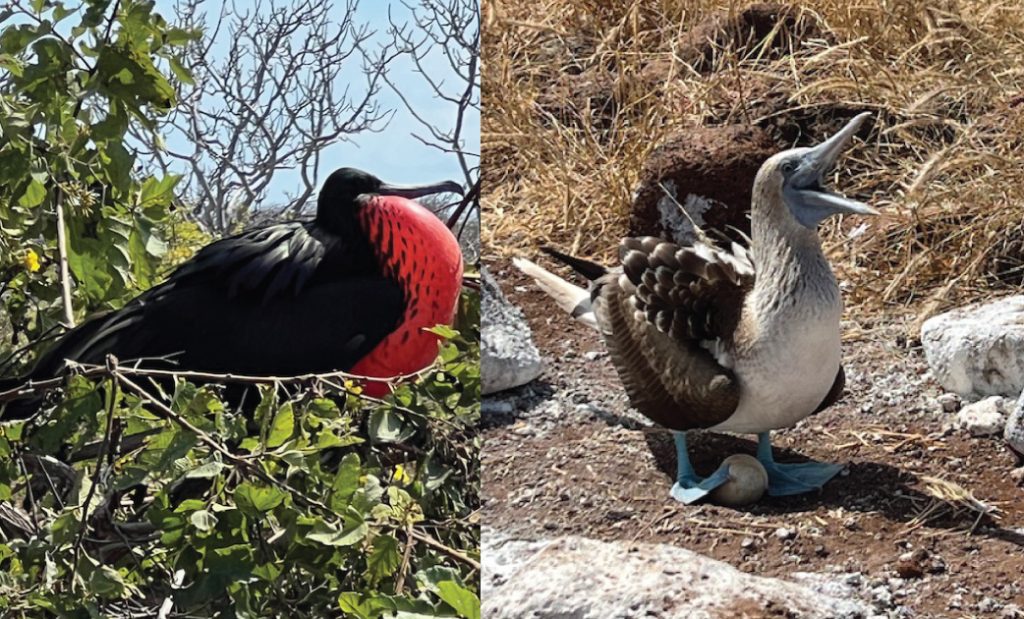
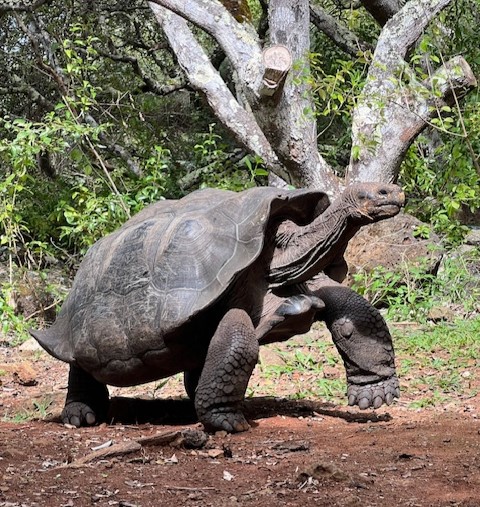
From June 24, through July 6, Czerwonka traveled to various islands, dove with hammerhead sharks, hiked the volcanic mountains, and saw an array of exotic wildlife – including giant tortoises, iguanas, and boobies (a type of bird). Most importantly, however, she learned about the island’s robust emphasis on conservation and environmental stewardship; lessons she plans to instill upon her classroom to educate the next generation of change-makers.
Czerwonka was one of 355 pre-K-12 teachers from across the country awarded a $5,000 Fund For Teachers (FFT) grant, which allowed her to work alongside scientists and naturalists in the Galapagos Islands to demonstrate the interdependence of living organisms. Of those 355, however, she was just one of 40 who were science-based.
“I’m so thankful to be apart of a fellowship that values educators and change-makers,” said Czerwonka.


Czerwonka is no stranger to world travel, and she typically brings these experiences back to the classroom for educational purposes. Though Galapagos Island has always been at the top of her list, its remoteness can be expensive and difficult to access. If it weren’t for the Fund for Teachers grant, she most likely would never have had the opportunity, she told the Lynnwood Times.
Czerwonka applied for the fellowship last November and was notified of her acceptance on April 3.

Czerwonka said the application process to be considered as a FFT fellow was easy enough to navigate but required quite a bit of hard work. She just completed a second master’s thesis last October, which was about 25,000 words, and said the process was similar. Questions involved detailed explanations of what she would do and what learning gaps she is trying to fill, for both herself and her classroom.
In summary her proposal was to enhance her instructional practices by connecting her knowledge of ecosystems, climate change, and conservation to inspire her students to become change-makers within their community. She proposed studying alongside scientists and naturalists in the Galapagos Islands to expand her local knowledge to a global perspective.
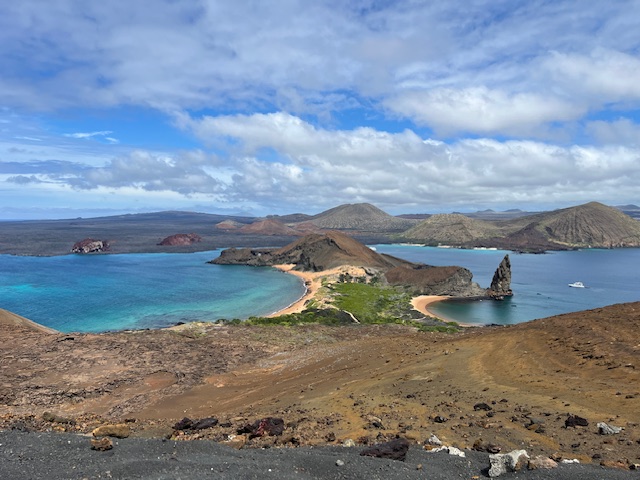
“The Pacific Northwest is a very niche ecosystem, and I wanted to go look at different places and what they do with conservation,” said Czerwonka. “I wanted to make sure I visited a place that had a lot of endemic species and what they’re doing to protect those fragile environments.”
Just some examples of what she learned about the Galapagos’ conservation efforts is tourists are not allowed to drive there – they either need to walk or take taxis who are operated by naturalists, some islands are off-limits to human visitors, and visitors must be scanned for foreign seeds and other non-native objects.


Only 3% of the Galapagos Islands are occupied by humans and of those 3%, the inhabitants adhere to strict requirements. For example, they must be Native Ecuadorians and are required to take a conservation class.
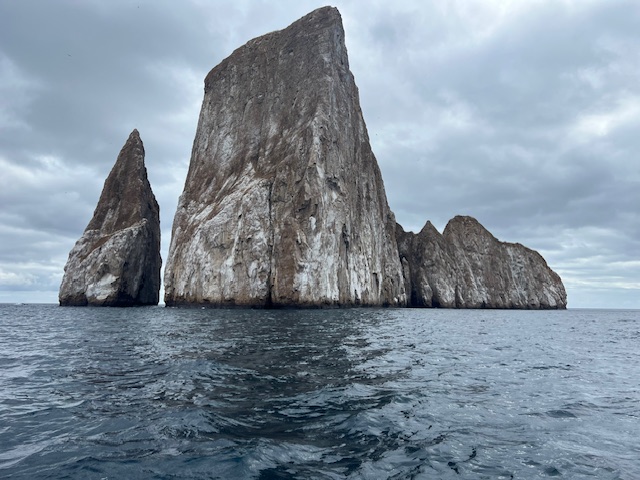
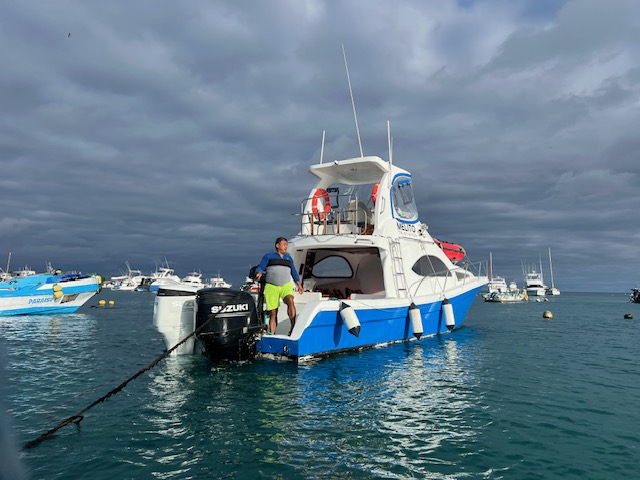
Though Czerwonka’s day-to-day varied, she spent a good amount of time on boats, sailing to various islands, learning about their history, catching rare wildlife, and hearing what the Ecuadorian government is doing to protect these islands.
A couple memorable events she shared was mustering the courage to free dive with a shiver of Hammerheads sharks and having one of her researchers be bitten by a sealion while they freed it from the clutches of a fishing net.
“I happened to bring my antibiotics that day so I gave him my antibiotics. Luckily, he was wearing really thick pants so the sea lion’s teeth just grazed him,” said Czerwonka.
As for the sharks, Czerwonka said that was the biggest “boundary pusher” for her, growing up feeling uneasy around sharks thanks to movies like Jaws. However, she said as soon as she entered the water with the hammerheads it was unexpectedly “beautiful, peaceful, and calm.”
“It was just laden with beautiful sea creatures. The hammerheads were there, and we had the opportunity to swim with them for maybe a minutes before they disappeared into the depths of the ocean. It was a very surreal experience,” said Czerwonka.
Not everything Czerwonka learned about during her trip was uplifting, unfortunately. There was a darker history to the Galapagos she learned about while visiting the Charles Darwin Exhibition Hall, involving pirates who forced a species of tortoises into extinction from poaching.
“Most of the trip I had a sense of childhood wonder, but then there was that part that really sit with me – the thought in the back of my mind of some of that harder stuff,” said Czerwonka. “Like a lot of the plant species that are there are there because they came from garbage.”
Though grim to think about, these misfortunate realities just indicate how important environmental conservation efforts are for the world, according to Czerwonka. In modern times, for example, that very same Exhibition Hall now has a Galapagos Tortoise breeding ground on site and lead efforts to eradicating invasive plant species that jeopardize the ecosystem.
In Czerwonka’s classroom, even prior to her trip to the Galapagos Islands, she makes it a point to teach her children about conservation and habitat loss. Students, regardless of what age she’s teaching, pick a native bird to Washington, for example, and spend the year learning about that animal. Now she plans to implement a compare/contrast segment comparing Washington birds to Galapagos birds.
She also wants to design more hands-on projects for her kids, to help them get in the minds of a professional conservationist and how they can “solve real world problems, and understand their own power to protect the planet,” she said.
“Those really meaningful and personal learning units where kids have choice and they’re learning something about, but then become really excited about, and it becomes deeply personal to them, I think that’s the type of learning that they carry with them as they grow,” said Czerwonka. “My goal is to plant that seed, that little seed where kids can realize their own power and how their choices can help make them changemakers in our world.”
FFT’s 2026 grant cycle begins on October 1. Teachers can apply by visiting: fundforteachers.org.

Author: Kienan Briscoe