


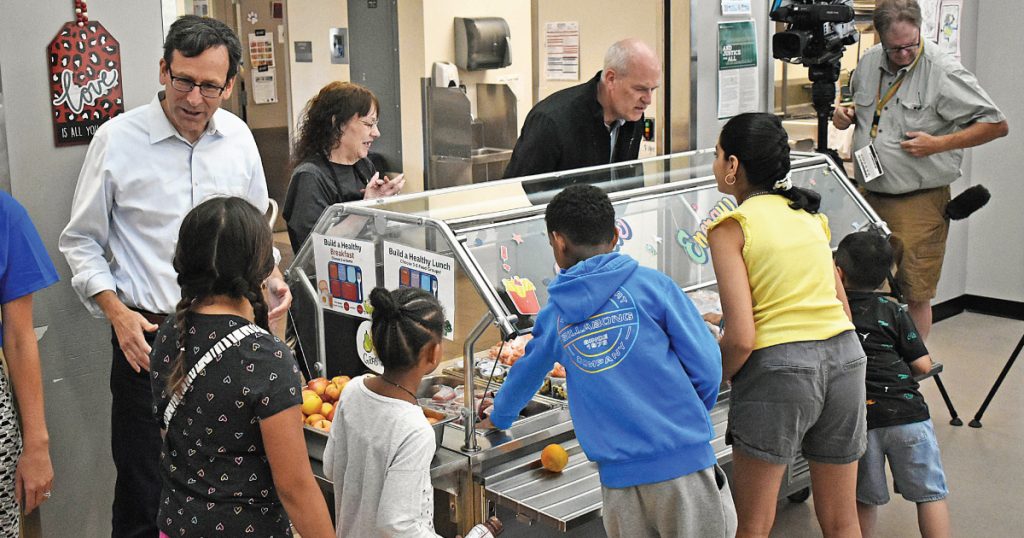
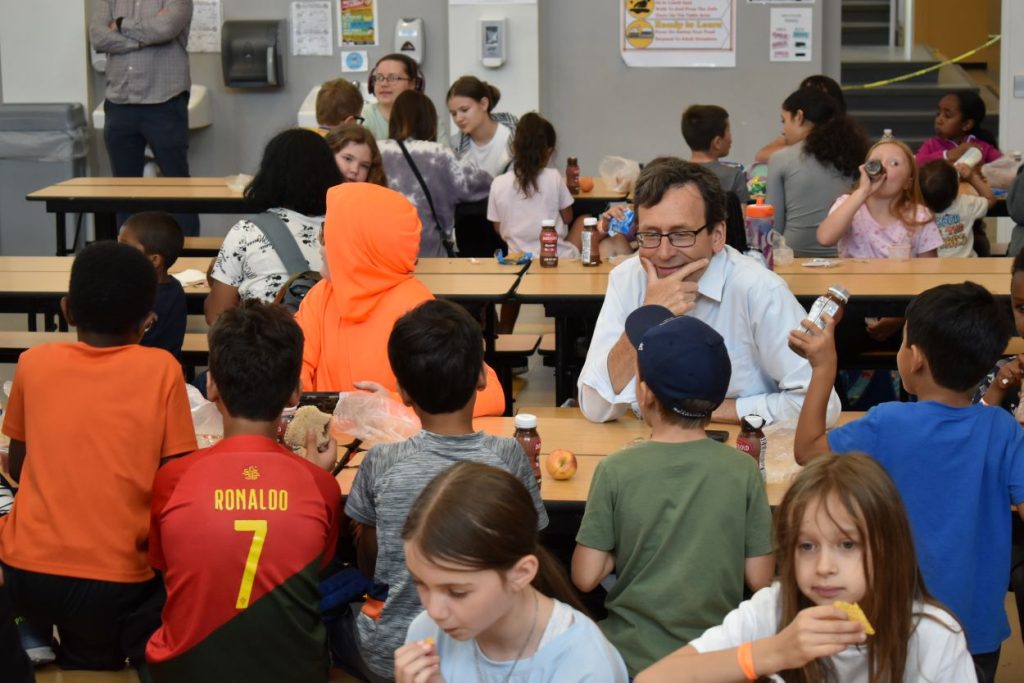
LYNNWOOD—Washington State Governor Bob Ferguson and Congressman Rick Larsen (WA-D02) handed out free lunches to kids at Lynnwood Elementary Thursday, August 21, before hearing, firsthand — from Edmonds School District staff, parents and community leaders — how President Donald J Trump’s spending bill could impact food insecurity in Snohomish County.
When the Congress passed the President’s “One Big Beautiful Bill,” or what Rep. Larsen calls the “Big Ugly Law,” back in June, he opted to cut approximately $186 billion in Supplemental Nutrition Assistance Program (SNAP) funding through 2034. Roughly one million Washingtonians rely on SNAP benefits each month to purchase food.




While many could see reductions in their benefits – or be required to meet new work requirements to keep their benefits, forcing families to scramble to afford childcare – an estimated 137,000 Washingtonians could lose their benefits altogether.
The reconciliation bill also reduces SNAP benefits to the average household under the Thrifty Food Plan by about $56 per month and decreases the maximum allotment per household. For example, the maximum allotment for a family of four would drop from $975 to $848.




But the impacts grow deeper than food insecurity, Ferguson says. The effects of Trump’s reductions to SNAP may cause a ripple through the state’s economy from leaving it with an $87.8 million administrative bill (from costs associated with the program), increasing the state’s cost share of benefits by, at minimum, $100 million, and impacting Washington’s agricultural sector.
The United States Department of Agriculture estimates that each dollar from the SNAP program produces more than $1.50 in economic activity in grocery stores, farmer markets, and more.


“This bill takes food from our most vulnerable Washingtonians to give tax breaks to the ultra-wealthy,” said Ferguson. “This bill is only beautiful to billionaires.”
President Trump’s spending bill is the largest tax break in United States history. However, these tax breaks will largely benefit the nation’s wealthiest Americans, Rep. Larsen added.
According to a Congressional Budget Office analysis, America’s poorest individuals will likely see a drop in roughly $1,200 a year (in the form of benefits such as Medicaid and food assistance) while the richest 10% of Americans will see a salary increase of $13,600 a year from tax cuts.
“This bill is literally taking food away from hungry families to pay for one of the largest tax breaks in American history that is largely going to the richest Americans and largest corporations,” said Larsen.
Governor Ferguson, who has his own name for Trump’s bill (“The Big Betrayal Bill”), added that it’s the largest transfer of wealth, from the lowest income Americans to the wealthiest Americans, in the nation’s history.
The Trump administration also cancelled $1.5 billion in funding, back in March, for schools and food banks making it harder to purchase food from local farmers and suppliers. In nearby Whatcom County, for example, the Bellingham Food Bank had to cancel $200,000 in contracts to local farmers who are contracted to grow food for their local food bank.
In Snohomish County, the Edmonds Food Bank saw a 27% increase in the number of people they served in 2024 compared to the previous year. That same year, the Washington State Department of Agriculture reported that one in four Washingtonians visited a food bank.
At the Everett Food Bank delivered a stark message: “Nobody wants to be the last person handing out the last bag of food while there’s still a line.”
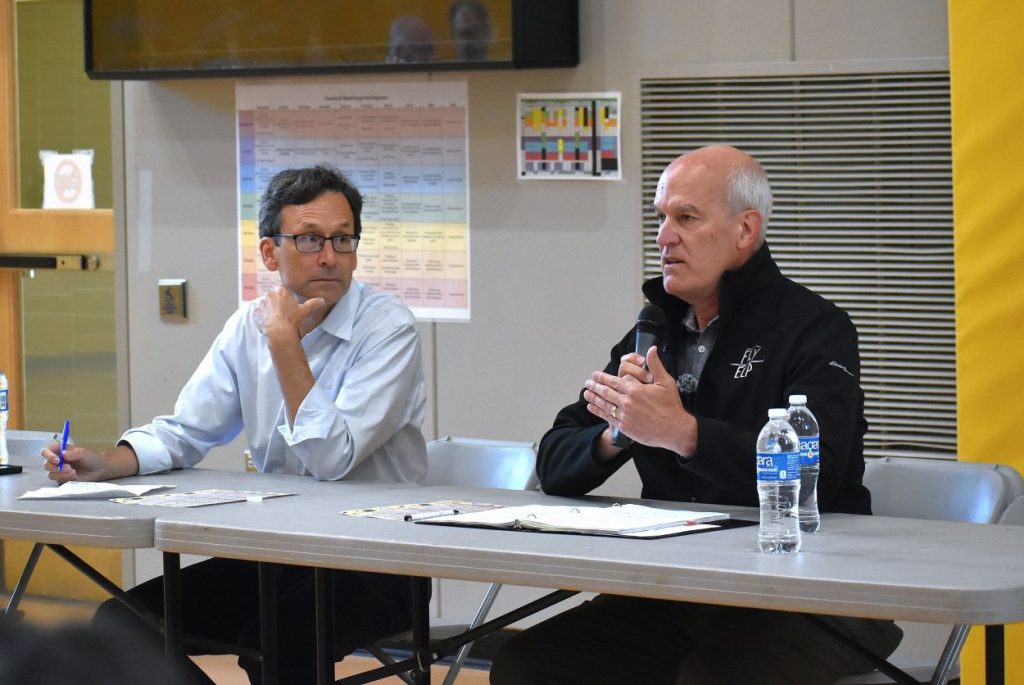
Rep. Larsen announced Thursday that he wants to see this funding restored. He plans to introduce legislation that would strengthen and expand summer nutrition programs through the Summer Meals Act which would help children get regular, healthy, meals regardless of season. That bill is currently awaiting a Republican co-sponsor, Larsen told the Lynnwood Times, and will likely be reintroduced after gaining bipartisan support.
Governor Ferguson, on the other hand, wants to make free lunch programs universal across Washington State, he said Thursday, similar to the State of Minnesota.
Though the State of Washington is in a $15 billion shortfall, Governor Ferguson still allocated approximately $128 million for food insecurity in the form of grants, with millions more allocated to other social services, in his budget passed back in May.
The Lynnwood Times asked Governor Ferguson if, after hearing from community leaders Thursday, he plans to reallocate some of those social service grant funds to bolster available food insecurity moneys. Gov. Ferguson replied that his team is still working out its supplemental budget and will await updated budget forecasts (on the state’s revenue) before making any solid decisions.
“That work is going on now, to make sure we’re plugging as many holes as possible, and maintain as much funding as possible,” Ferguson told the Lynnwood Times. “Even when times are challenging from a budget standpoint, I still believe in prioritizing the most important things.”
Speakers Thursday included Edmonds School District Superintendent Rebecca Miner, Deborah Brandi with the Foundation for Edmonds School District, Alyssa Jones with the Lynnwood Food Bank, John Glennon with Volunteers of America, Ceil Erickson with the Verdant Health Commission, Wally Webster with the ACCESS Project, Ericka San Juan Perez with the Latino Educational Training Institute, Stephanie Sarantos with Well Being Community, and Pastor Chris Goldman with Northwest Church/Community Life Center.
After these nonprofit leaders gave their remarks, parents were then invited to share how food insecurity is a constant stress in their ever-day-lives.
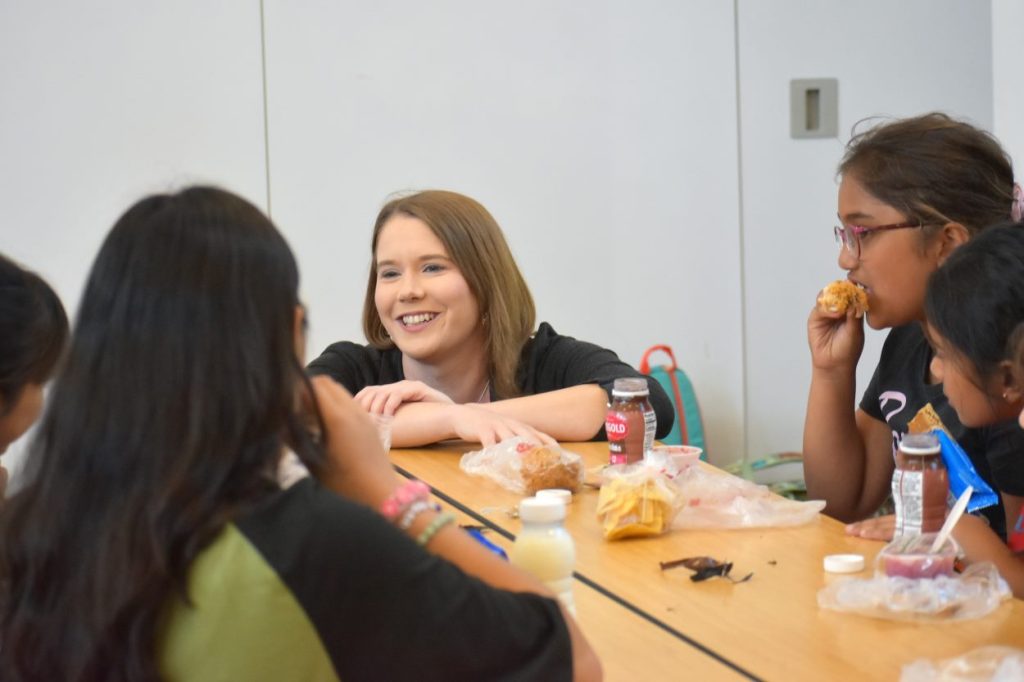
Prior to the listening session, the free lunches Governor Ferguson and Rep. Larsen handed out to the kids were provided by the Foundation for Edmonds School District as part of its Summer Meals Program. Each year the Foundation hands out approximately 600 free lunches/a week to kids who need them most, from June 25 through August 21. The program is part of a series of programs which began 12 years ago called Nourishing Network.
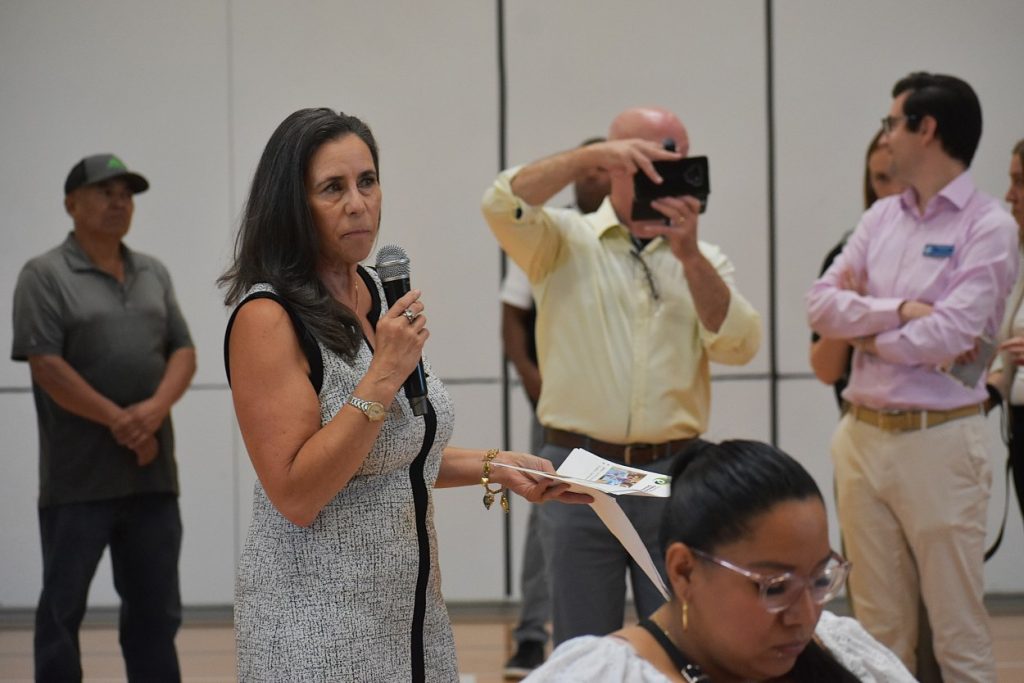
“We often say that our families have more month than they have money and now that they’re going to have reduced SNAP benefits, we are gearing up for a 30% increase in food services that we anticipate serving for our families during out-of-school times,” said Deborah Brandi Executive Director of the Foundation for Edmonds School District. “During the pandemic we gave out about 400 meal kits per week. We served 600 per week this year and anticipate serving 900 meal kits per week soon.”
44% of students enrolled in Edmonds School District schools qualify for free or reduced lunches but, as Superintendent Miner put it Thursday, just because most families miss the cusp of qualifying for free or reduced lunches doesn’t mean they’re not struggling to make ends meet.
Just las week, two hours after distribution ended, two grade school-aged kids rode up to the Lynnwood Food Bank on bicycles and said they don’t have any food at home. According to Lynnwood Food Bank Executive Director Alyssa Jones “that’s not something you should ever have to do.”
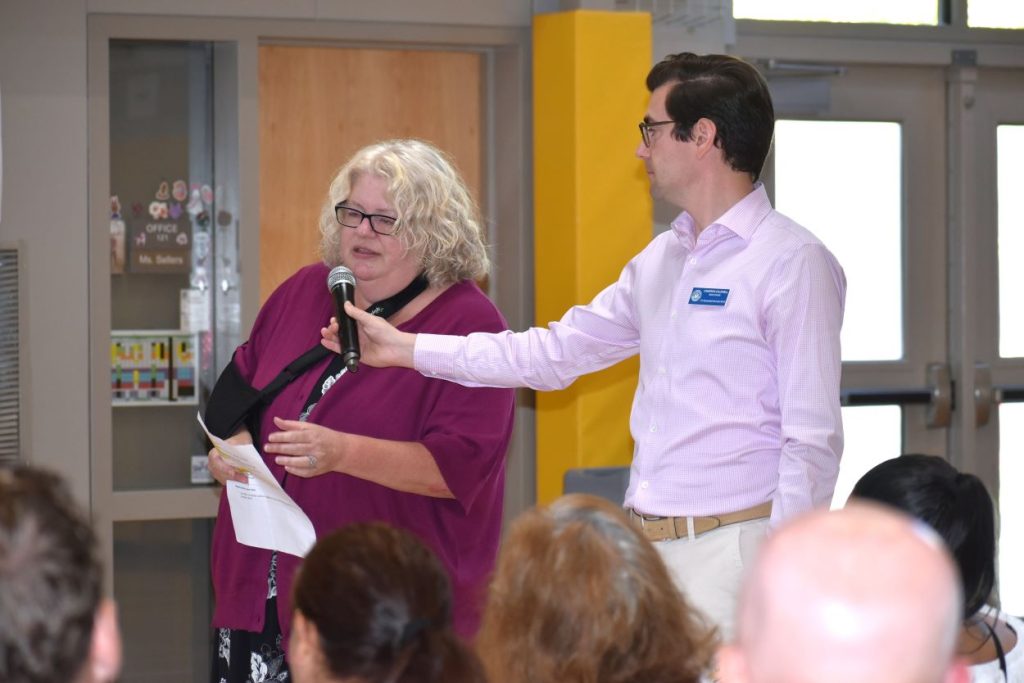
“We’re busier than we have ever been. In 2024 we served 175,000 people, that’s more than four times an increase since 2019. We’re buying more food than we’ve ever had to buy but the prices of that food are not going down,” said Jones. “I might be able to spend $1,000 on produce every week but the amount of produce I’m getting is getting less. It’s stretching our budget thin, it’s stretching our staffing thin, and our capacity is completely an issue with our building being too small with the amount of people we need to feed.”
John Glennon, Executive Director of Hunger Prevention Services at Volunteers of America Western Washington, suspects Trump’s reduction to SNAP could mean “less food for more people” at the food banks in Everett and Sultan he oversees.
He added that an anticipated 26% reduction to TFAP (The Emergency Food Assistance Program) would mean 21,000 pounds (the amount Foundation for Edmonds School District receives from TFAP) would be reduced to 15,000 pounds of food while seeing double-digit increases to children who need them.
“Our TFAP programs are not perfect, but they afford our food banks and our meal programs a foundation in which we do the work that we do. If we see further cuts to TFAP, on top of cuts to SNAP, we’re going to be open we’re just not going to be able to serve to the level of impact,” said Glennon adding that the recent closure of the Casino Road Fred Meyer in Everett, which was an affordable, walkable source of food for many South Everett residents, will further exacerbate the issue.
Also in attendance Thursday was Senator Jesse Salomon (D-32), Washington State Representative Lauren Davis (LD-32), Mountlake Terrace City Councilman and Volunteers of America VP of Community Engagement Dr. Steve Woodard, and Snohomish County PUD Commissioner and Lynnwood Food Bank Board Member Dr. Julieta Altamirano-Crosby.
“I’m extremely appreciative of Gov. Ferguson and Congressman Larsen for coming to my legislative district. It’s a real honor and I appreciate their mutual support for school feeding programs, particularly in light of cuts to SNAP,” Rep. Davis told the Lynnwood Times. “Kids can’t learn when they’re hungry.”
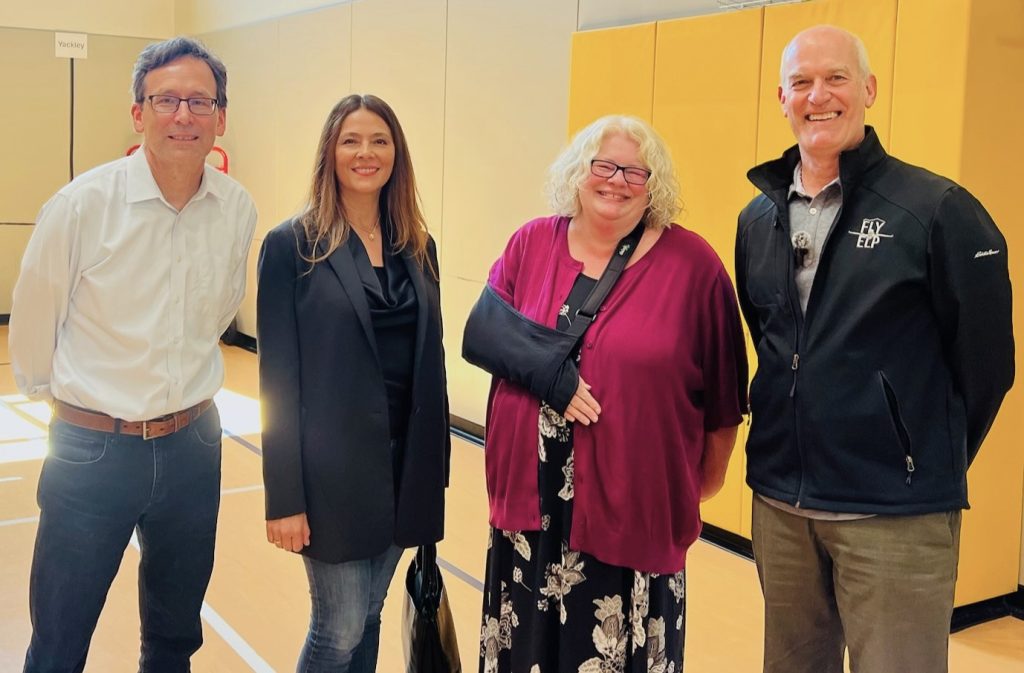

Author: Kienan Briscoe





One Response
Ronda McElroy: Hi Governor Bob Ferguson and Representative Rick Larson. I remember when Mr Larson was both on Everett city council and also became the DNC council committee chairman
Thank you both
From me Ronda han myrick McElroy MLT terrorists hides