


LYNNWOOD—At its upcoming Business Meeting at 6 p.m., September 8, the City of Lynnwood will be holding a Public Hearing on Retail Cannabis to receive public input regarding an ordinance to amend the municipal code that will permit retail cannabis in specific zones and with limitations within the city limits of Lynnwood. A Public Hearing is also scheduled on September 8 for input on the City of Lynnwood annexing Edmonds School District’s Old Alderwood Middle School property located at 20000 28th Ave W, Lynnwood.

As of today, there are no recreational cannabis stores within Lynnwood city limits, despite four licenses (or title-certificates) allocated to the city by the state. All four of these licenses, which are issued by the Washington State Liquor and Cannabis Board, are accounted for by individuals who must wait for the city’s approval before they are reinstated as retail licenses. Additional licenses could be awarded to the city in the future if it raises the allowable retailers.


There are, however, retail cannabis stores nearby Lynnwood whose official border jurisdictions fall within unincorporated Snohomish County.
Washington State voters approved I-502 in 2012, which legalized the production, processing, and retail sales of cannabis.


In response, the City of Lynnwood enacted a series of moratoriums prohibiting the sale of retail cannabis within city limits beginning in June 2013, through February 2015.
A City ordinance, 3136, adopted June of 2015, revoked these moratoriums and implemented a final prohibition of retail sales, production and processing, and medical marijuana collective gardens.
As it stands the list of restricted entities include elementary or secondary schools, public playgrounds, recreation centers or facilities, childcare centers, public parks, public transit centers, libraries, and game arcades where admission is not restricted to persons aged 21 or older (by state law).
At the council’s July 14 meeting, Council President Nick Coelho suggested the council reduce the buffer distance from the state’s 1,000-foot restriction to 100-feet (or 40 steps), as a starting point, which most of the council agreed to. This buffer zone is the distance in which a retail cannabis store can, or cannot, operate within a restricted entity.
This would allow the draft ordinance to reduce the buffers for all permitted zones to 100 feet. However, buffers cannot be reduced from the 1,000-foot restriction for any primary, secondary schools or public playgrounds per state law.
According to research by the Lynnwood Times, if the council moves forward with the 100-foot buffer, the city will have one of the most “relaxed” cannabis laws in the state of Washington, including the City of Seattle that has a 350-foot minimum. Below the buffer zones approved by a few municipalities along I-5:
- City of Mukilteo: 1,000 feet buffer zone [Link]
- City of Edmonds: 1,000 feet buffer zone [Link]
- City of Everett: 1,000 feet buffer zone [Link]
- City of Bellingham: 1,000 feet [Link]
- City of Vancouver: 1,000 feet [Link]
- Snohomish County: 1,000 feet [Link] of schools.
- City of Olympia: 500 feet [Link]
- City of Seattle: 350 to 500 feet [Link]
- City of Tacoma: 100 feet [Link]
The vote to approve or deny the final ordinance allowing retail cannabis within the city limits of Lynnwood is September 22.
Based on previous discussion by council members, those in favor to approve the ordinance are Derica Escamilla, Josh Binda, Nick Coelho, Goerge Hurst; those against are David Parshall and Patrick Decker.
To view supporting documents, click here.
Public Hearing: Annexation of Edmonds School District Old Alderwood Middle School
A Public Hearing is also scheduled on September 8 for input on the City of Lynnwood annexing Edmonds School District’s Old Alderwood Middle School property located at 20000 28th Ave W, Lynnwood. Following the public hearing, the City Council will consider the ordinance under the Business Items and Other Matters portion of the agenda.
On November 18, 2024, the City of Lynnwood received a petition for annexation from the Edmonds School District regarding the Old Alderwood Middle School property. On December 9, 2024, the City Council signed Resolution 2024-10, considering the annexation petition.
On December 9th, the City Council passed Resolution 2024-10 to consider the annexation petition. On April 14, 2025, the City Council passed Resolution 2025-05 accepting the notice of intent to commence annexation.
On June 6, 2025, the City filed a Notice of Intention for annexation of the Old Alderwood Middle School property with the Boundary Review Board.
On July 25, 2025, the Boundary Review Board confirmed that the 45-day review period for the New Middle School Annexation (BRB File No. 2-25-03) had ended on July 24, 2025, with no request for review being filed as outlined in RCW 36.93.100, and that the action was deemed approved.
To view supporting documents, click here.
Ordinance: Amendment to LMC 2.04.060 – Qualifications to Hold City Elective Office
The City Council is to vote on a drafted ordinance seeking to clarify the intentions regarding holding elected office and residency requirements for the City of Lynnwood.
In January of 2025, an in depth Lynnwood Times investigation uncovered that Lynnwood City Council Vice President Joshua Binda was allegedly living at his father’s apartment in Everett after being evicted from his Lynnwood apartment in November of 2023 for failing to pay his rent.
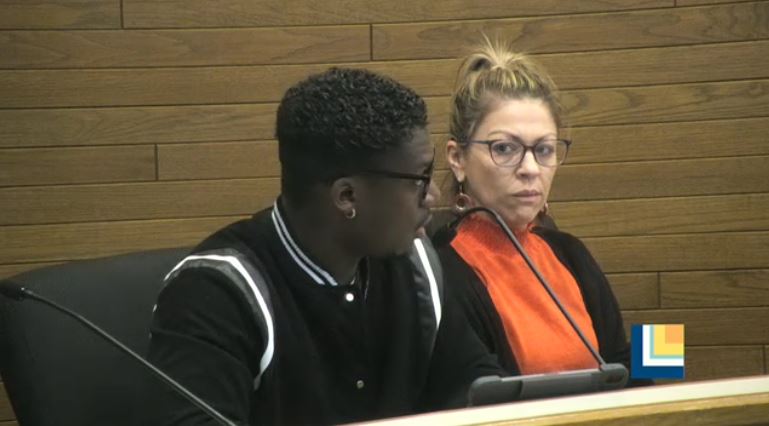
During a Business meeting on Monday, February 10, Councilman Binda claimed that he had simply been housesitting for his father while he was out of the country tending to his ailing mother in Liberia.
“In 2023 I had lost my job and was forced to vacate the house that I was living in as I could no longer afford it and during that time I had to rely on my family during that tough time,” said Binda in February. “Yet despite those hardships I remain steadfast in my commitment to serve my community, fulfilling my council duties, and advocating for all of our collective needs.”
Binda did not provide the council with an address in Lynnwood where he resided during the February 10 meeting. The Lynnwood address that he was using for his voter registration was classified as “inactive” and had not been verified by the Snohomish County Auditor’s Office.
Residents at the listed voter registration address Councilman Binda had on his voter registration (the same address he provided Mayor Christine Frizzell and Lynnwood City Council President Nick Coelho claiming as his place of residency) confirmed with the Lynnwood Times that they never heard of a Josh Binda nor that he lived at the address.
Binda’s February 10th statement to the council came after the Washington Secretary of State’s Voter Registration Database (VRDB) officially updated just days earlier confirming the Lynnwood Times’ reporting that Council Vice President Binda is not registered at the Lynnwood address he claims as his residence.
Councilwoman Derica Escamilla later admitted to giving multiple rides to Councilman Binda to his alleged Everett address after photo evidence surfaced from a Lynnwood Times investigation of her at his Everett apartment complex.
Councilman Binda in mid-February of 2025 did move into an apartment in Lynnwood and has since paid the over $10,000 in back rent to Heather Ridge Apartments.
The current Lynnwood Municipal Code Chapter 2.04.060 – Qualifications to hold city elective office, is as follows: “No elective officer or councilmember of the city of Lynnwood shall hold any other office, federal, state, county or municipal, except in the National Guard or any branch of the United States military or as a notary public; provided, this chapter shall not prohibit any Lynnwood elective officer or councilmember from holding a position on any municipal or quasi-municipal agency as part of that office holder’s duties and responsibilities to the Lynnwood office so held. (Ord. 1623 § 1, 1988)”
The proposed drafted ordinance the council will vote on regarding Qualifications to hold city elective office, reads as follows:
“A. All councilmembers must be a legally registered voter, residing and maintaining voter registration status within city limits for at least one year at the time of election, and must maintain their residency in Lynnwood and active voter registration status throughout the duration of their term of office.
“1. Council members must reside continuously within city limits for the duration of their term, except in cases of extreme hardship which prevent a councilmember from residing within city limits for a short duration of time, not to exceed 60 days in total over the course of their 4-year term. Any councilmember who needs to reside outside City limits for any period must submit to the council in advance of any period of non-residency a written affidavit stating the councilmember’s intent to resume residence within City limits and the date of that action.
“2. If any Council member ceases to reside within city limits, and the Council has not received an affidavit with the councilmember’s intent to resume residency, the councilmember shall vacate their position immediately.
“3. Annually, council members shall sign an affidavit confirming they have resided within Lynnwood city limits for the entirety of the previous year and have maintained active voter registration, unless they have provided an affidavit regarding their temporary non-resident status. The affidavit must be signed and submitted to the City Clerk no later than January 15 of each year.
“B. No person shall be eligible for the position of Lynnwood city council member while holding any other paid elective public office or while otherwise employed by the city. This chapter shall not prohibit any Lynnwood councilmember from holding a position on any municipal or quasi-municipal agency as part of that office holder’s duties and responsibilities to the Lynnwood office so held. Irrespective of the Doctrine of Incompatible Offices, that council member must resign from the Lynnwood city council before the first day of the outside elective office’s term.”

Author: Mario Lotmore






One Response
GREAT