


MUKILTEO—Washington State Governor Bob Ferguson, Snohomish County Executive Dave Somers, Senator Marko Liias, other law makers, and leaders in aviation technology research and sustainability launched the Cascadia Sustainable Aviation Accelerator (CSAA) today – a new initiative designed to accelerate Sustainable Aviation Fuel (SAF) production deployment and adoption across the Pacific Northwest.
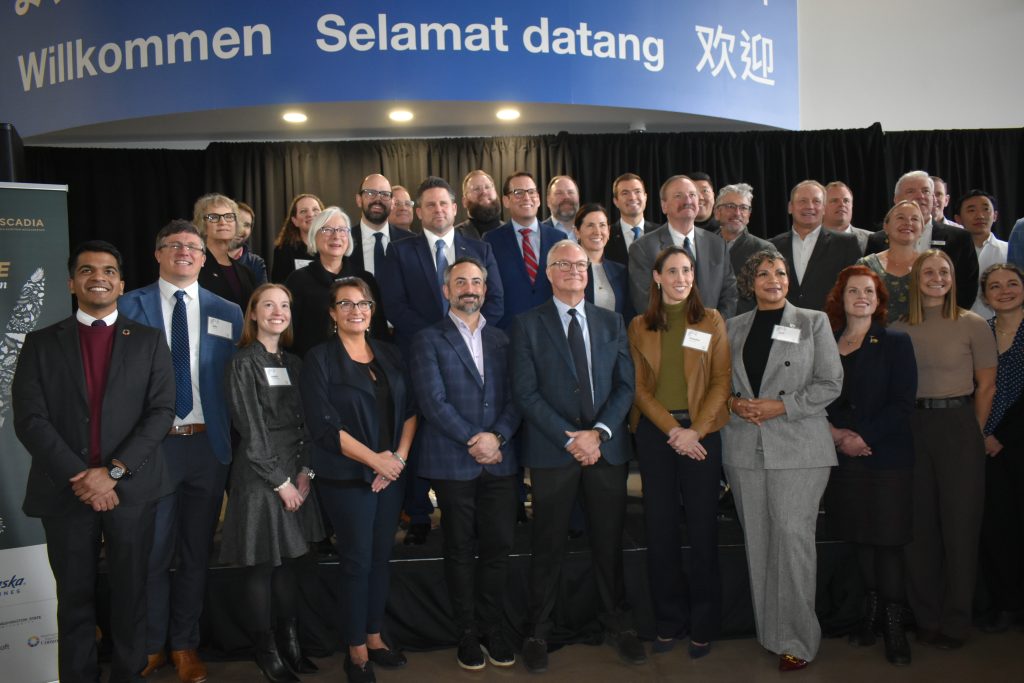
“Clean fuels are a priority for Washington State. It’s good for jobs, it’s good for the economy, it’s good for the environment. And I think we can all agree that sustainable aviation fuel is literally the future of this industry,” said Gov. Ferguson. “The good news is that Washington is uniquely situated to be the leader in this massive fuel industry for decades, and generations, to come.”

In partnership with the Washington State Department of Commerce, CSAA is a non-profit organization dedicated to advancing the renewable fuels industry in the Pacific Northwest.
The announcement came at Boeing’s Future of Flight Aviation Center in Mukilteo on Thursday, January 8. The event consisted of remarks by government, and industry leaders and partners, followed by a panel discussion with CSAA Board vice chair and Managing Director, Earth Finance Tim Zenk, Amazon executive Guy Palumbo, SkyNRG executive and former State Sen. Andy Billig, Port of Seattle Executive Director Steve Metruck, and Machinists Union, District 751, Jon Holden. The topic of the panel discussion was focused on investment innovation and workforce development.



“Today we’re launching the next chapter in our state’s history, as a global, environmental, economic, and technology leader,” said Senator Liias. “In the last couple of years, I’ve been proud to champion for investments in the state legislature, most recently $10 million from WA State, met with a $10 million philanthropic match. So we’re sitting on a $20 million investment on catalyzing on this industry and that is so exciting.”
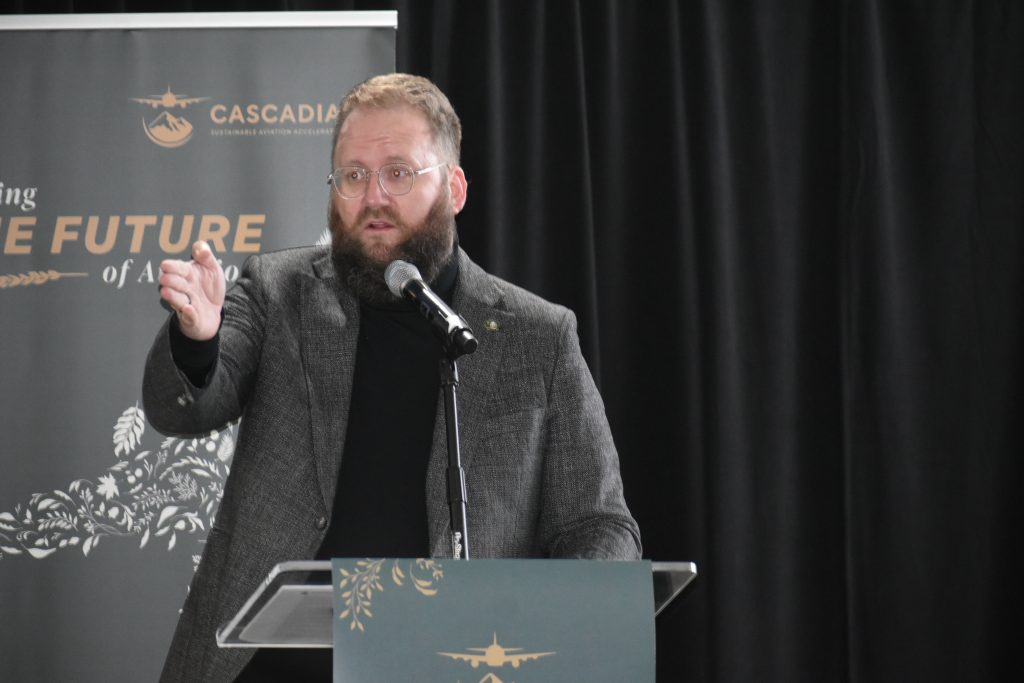
Liias thanked the Boeing Company, Alaska Airlines, Snohomish County, Microsoft, the Port of Seattle, Washington State University, Amazon, and the Washington State Department of Commerce for their continual support and partnership.

Gov. Ferguson, who followed Senator Liias in remarks, first deemed Snohomish County Executive Dave Somers as the “Washingtonian of the Day” for being the one person who has been forefront in the State’s initiative of bringing sustainable aviation fuel to, not only to Snohomish County, but to the state at large.
In 2023, the County, under Somers’ leadership, opened the world’s very first SAF Research and Development facility at the Snohomish County-operated Paine Field Airport. While the site is currently temporary, the county has plans to open a permanent facility at a later date – yet to be determined, according to Snohomish County Communications Director Kari Bray.
Well before, and even after, the opening of Paine Field’s SAF R&D facility, Somers has continued to be a champion for sustainable aviation fuel in Snohomish County and beyond, Ferguson said Thursday.

“We have the resources, we have the will, we have the leadership, and we have the partnership who are all here today. In other words, we all have pieces to play to ensure this once in a generation economic opportunity is realized,” said Gov. Ferguson.
Ferguson also thanked Washington State University for the continued research on SAF.
The ‘Washingtonian of the Day’ himself, and Chair of the CSAA, Executive Dave Somers, was next to speak beginning with a joke: “Sustainable jet fuel is great; same jet lag, but with a cleaner conscious.”
Somers was proud of Snohomish County’s role in Washington State’s economic footprint, being the home of the Boeing company who employees approximately 130,000 Washingtonians and contributes roughly $60 billion to the state annually.
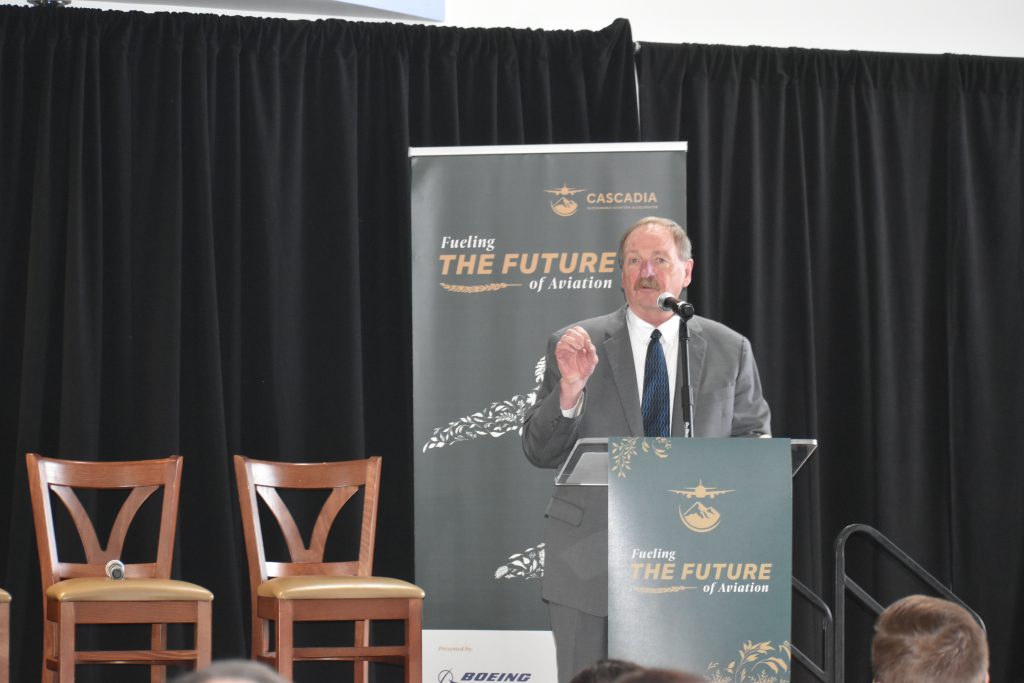
“For all of these reasons, Snohomish County is really the perfect place to house the Cascadia Institute,” said Executive Somers. “The County has four keyholes for the future of research and development. First, we’ll bridge the gap between academia and history by partnering with Washington State University and eventually other national, and international institutions. The second is to lead the world in development, distribution, and adoption of new technologies to reduce the carbon-based footprint. The third is to address the skill shortage and to continue our efforts to create a gold standard in workforce development by connecting local youth to high-quality jobs in the field. Fourth is to attract international investment to our innovation, economy, and create jobs.”
In Snohomish County, aviation is estimated to have accounted for 5% of Snohomish County’s total community-wide greenhouse gas emissions in 2019, which represents a 23% increase from 2015 levels, according to the county.
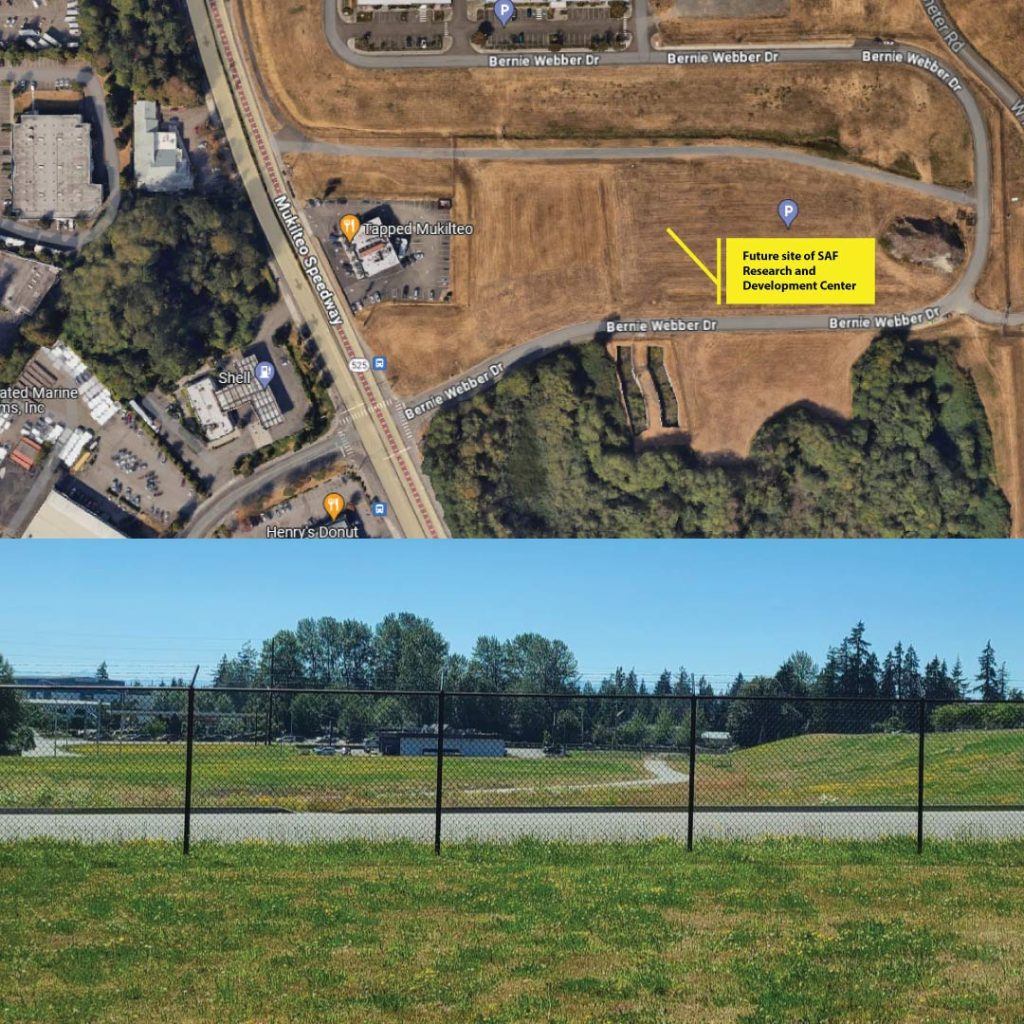
The state allocated $6.5 million for the SAF Center in the 2023-25 Transportation Budget and hopes to be receiving an FAA FAST-SAF grant of approximately $35 million. The grant is critical to commence construction of the facility that will be located on eight acres just behind Tapped Mukilteo. Congressional delegation members Representatives Suzan DelBene (WA-01), Rick Larsen (WA-02), and Kim Shrier (WA-08), and Senator Maria Cantwell (D-Washington) are advocating in D.C. for the grant on behalf of Snohomish County residents.
A huge benefit to SAFs than alternative green aviation solutions such as electric- and hydrogen- powered aircraft fleets is the minimal disruption to implement into existing infrastructure. It is cost beneficial to ensure that manufacturers do not have to redesign engines nor aircraft, and that fuel suppliers and airports do not have to build new fuel delivery systems.
Sustainable aviation fuel (SAF) is the most viable pathway today to significantly reduce aviation emissions. Cascadia has the natural resources, research expertise, policy environment, infrastructure, workforce and industry leadership needed to become a global leader in SAF production.
The launch of CSAA marks a major step toward aligning public policy, private investment, research and community support to secure long-term economic and environmental benefits for our region. The launch is made possible by $10 million in state funding and a $10 million private gift.
The Cascadia region has been a trailblazer in aerospace innovation for over a century, and today it is uniquely positioned as a global center of aviation innovation, with an opportunity to unlock the next generation of sustainable fuel. With access to local, low carbon feedstocks, affordable clean energy, established infrastructure and a skilled workforce, the region has all the elements necessary to support production of up to one billion gallons of sustainable aviation fuel by 2035. Scaling production at this level would drive economic prosperity and development, strengthen regional energy security and independence, support state and regional climate initiatives and build on Cascadia’s long legacy as an aviation innovator.
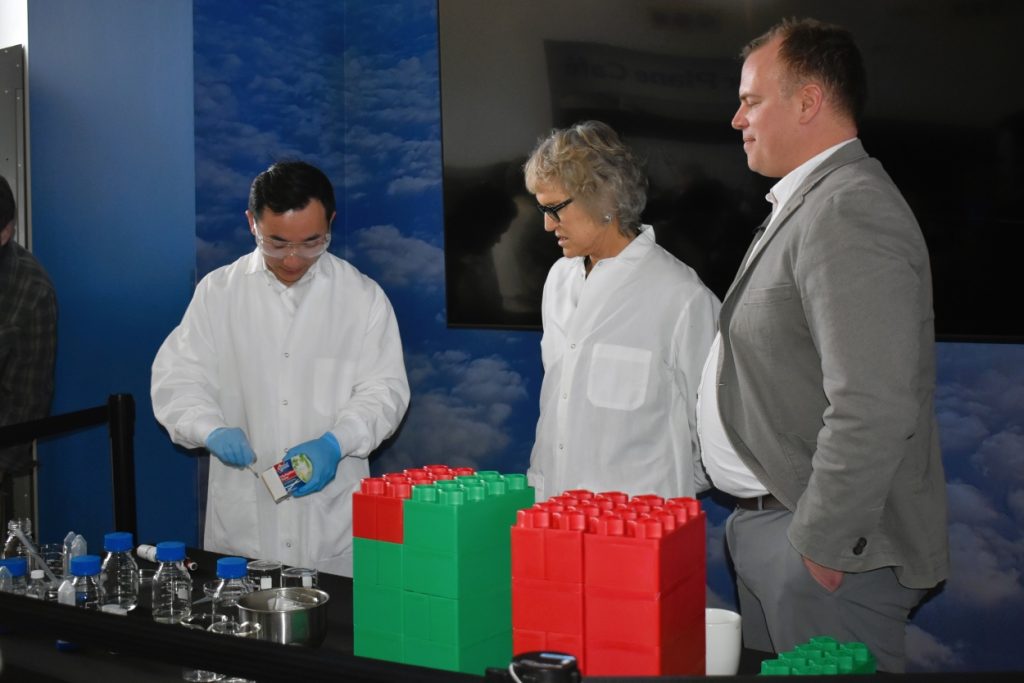
The global aviation industry, which generates some $4.1 trillion in economic activity and supports 86.5 million jobs, currently accounts for approximately 2-3% of global carbon dioxide emissions, in addition to other environmental impacts. SAF is a safe, effective drop-in solution projected to be used for the next 70-plus years that can reduce emissions by 80% compared to fossil-based fuels and the transition to a thriving circular economy through locally produced SAF.
“For the last six decades in Snohomish County, Boeing has relied on strong community partnerships to turn ambitious ideas into reality,” said Bill McSherry, Boeing vice president of Government Operations. “Cascadia is a concrete example of that collaboration toward meaningful progress on a Sustainable Aviation Fuel ecosystem right here at home.”
Other speakers included Washington State Department of Commerce Director Joe Nguyen, Washington State University President Elizabeth Cantwell, Hawaiian Airlines President and CEO Diana Birkett Rakow, and Boeing Vice President of State and Local Government Operations Bill McSherry. State, tribal, and community leaders were also in attendance to show their support.
What is Sustainable Aviation Fuel (SAF)?
SAF’s are a biofuel with similar properties and safety requirements as conventional jet fuel used in aircraft but with a smaller carbon footprint. Unlike traditional jet fuel, SAF is formulated from sustainable feedstocks, like crop seed oil, agricultural and forestry waste.
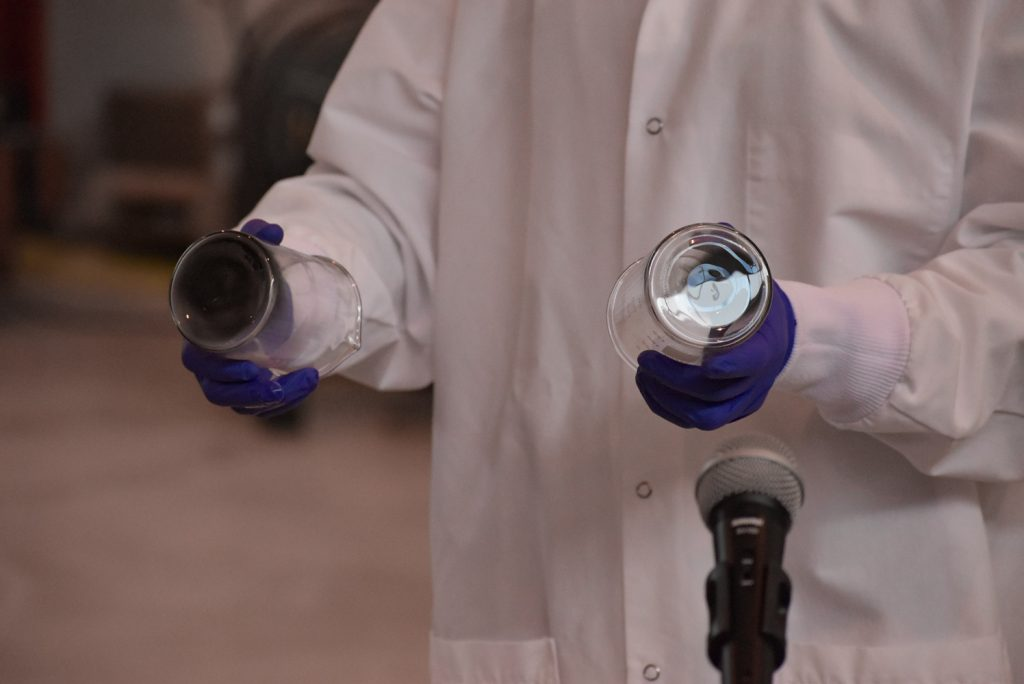
These certified “Jet-A1” fuels are made by blending conventional kerosene (fossil-based) with renewable hydrocarbon. Currently, SAFs are used as a “drop-in” replacement to conventional petroleum-based jet fuel that when combined called a blend. The minimal acceptance blend is 10% SAF to a high of 50%. The goal is a certified 100% replacement blend of SAF to conventional jet fuel.
A huge benefit to SAFs than alternative green aviation solutions such as electric and hydrogen powered aircraft fleets is the minimal disruption to implement into existing infrastructure. It is cost beneficial to ensure that manufacturers do not have to redesign engines nor aircraft, and that fuel suppliers and airports do not have to build new fuel delivery systems.
SkyNRG Secures Key Environmental Approvals to Advance Sustainable Aviation Fuel in Eastern Washington
Following Thursday’s remarks and panel discussion, SkyNRG announced a key milestone for Project Wigeon, a planned sustainable aviation fuel facility in Eastern Washington, after securing environmental approvals from the Washington State Department of Ecology and Walla Walla County.
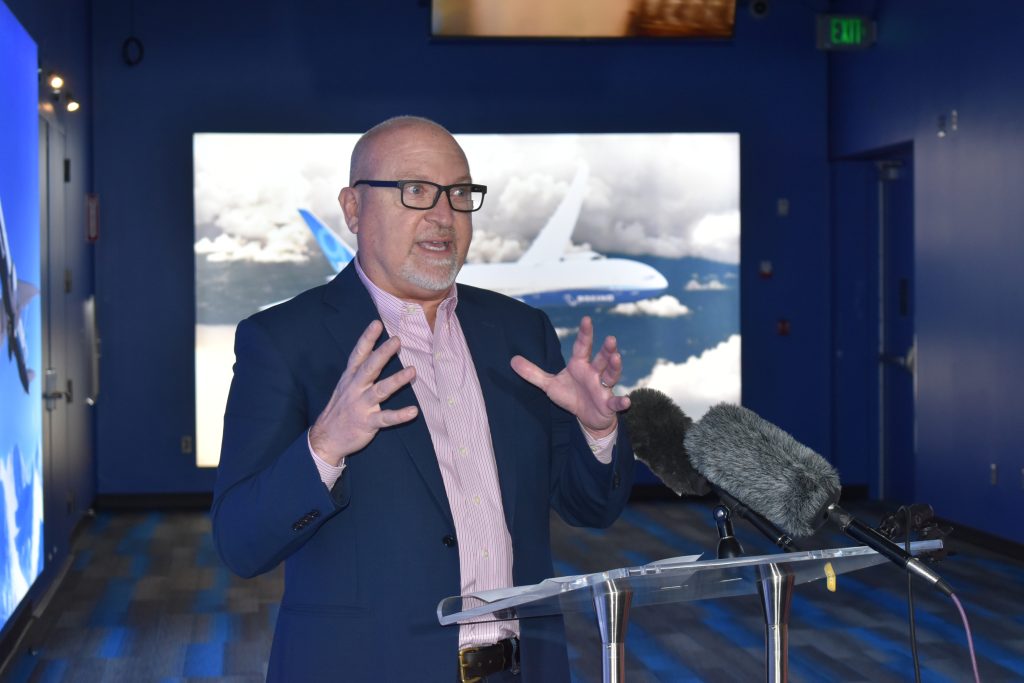
The approvals confirm that the project meets state and local environmental standards, including requirements related to land use, water protection, and fuel transportation. Project Wigeon will be among North America’s first commercial-scale SAF projects producing jet fuel from renewable natural gas (RNG).
“Aviation is one of the hardest sectors to reduce harmful emissions, which is why SkyNRG is building SAF facilities such as Project Wigeon around the world,” said John Plaza, Chief Executive Officer of SkyRNG Americas. “The Department of Ecology’s environmental review and Walla Walla County’s approval demonstrate our commitment to building this facility the right way – using industry-leading technology and conducting robust analysis of environmental impacts. This milestone allows SkyNRG to continue delivering clean fuel to major airports, building economic opportunity in Eastern Washington, and protecting natural resources and community health for years to come.”
SkyNRG’s new facility will support a fast-expanding global demand, which is projected to reach five billion gallons by 2030 and more than 12 billion gallons by 2035.

Author: Kienan Briscoe





One Response
Chaincapital stands out as the top crypto investment platform in my experience. I was able to achieve a 3x return in under six months. Their investment plans are straightforward and easy to understand, and their customer support team is responsive and helpful whenever you need assistance.