

When we talk about public safety in Washington, the conversation rightly begins with the men and women in blue. The crisis in recruitment and retention of law-enforcement officers remains a paramount concern; we cannot have safety without a proactive presence on our streets.

However, a mission isn’t completed just because the first phase is successful. If an officer makes an arrest but the case languishes in a broken system, we haven’t achieved justice—we’ve only created paperwork.



Public safety is a chain, and right now, several links are under immense strain. We have a systemic bottleneck crisis that is quietly undermining the rule of law. This is why I am encouraged that Governor Ferguson recently signed two critical pieces of legislation I prime-sponsored: Senate Bill 5868 and Senate Bill 5880. These measures target the unseen barriers to justice that occur long after the handcuffs are clicked shut.
One of the most significant clogs is in forensic testing. The Washington State Patrol’s toxicology laboratories are overloaded with a backlog of roughly 16,000 cases. The law created by SB 5880 addresses this head-on by allowing certified private labs to shoulder some of the load.
During committee testimony on the bill, experts noted that in some jurisdictions, it can take 22 months to get results.




This delay isn’t just a statistic; it has a body count. Consider the tragic case of 24-year-old Taylor Goehring. She was riding her bicycle in Renton when she was struck by Vern Henderson, who was driving 50 to 60 mph in a center turn lane while under the influence of PCP and other drugs.

At the time of that fatal crash, Henderson was already awaiting trial for a previous DUI arrest from a year prior. Because the system was backed up, he was back on the road without the strict court-imposed restrictions or ignition-interlock requirements that a timely conviction would have provided. When a suspect can continue driving freely for nearly two years because the state is still waiting on a blood test, it poses a clear threat to every Washington family on our roads.

The second bottleneck is judicial capacity. The office that administers courts in our state has documented a caseload crisis that makes the constitutional promise of a speedy trial nearly impossible to keep. The law created by SB 5868 authorizes an additional Superior Court judge in both Skagit and Yakima counties to address this volume.
When judges are overwhelmed, they are forced into a choice between rushed justice and delayed justice. Neither is acceptable. In Skagit County, our judges are working tirelessly, but when criminal cases rightfully take priority to meet speedy-trial requirements, civil cases—including family law and property disputes—are frequently bumped. For our democracy to function, members of the public need to believe they can get a timely and fair hearing.
As a member of the minority party in Olympia, I am acutely aware of how difficult it is to move priorities through the legislative process. However, these two bills succeeded because they preserve a core policy we can all agree on: We must have a justice system that actually functions.
When these new laws take effect on June 11, they will represent a pragmatic step toward a system that honors the rights of the accused while prioritizing the safety of the public and the dignity of victims like Taylor Goehring.

While hiring, training and retaining law-enforcement officers is a must, so is ensuring the rest of the system is ready to do its part. Justice delayed is justice denied; it is time we cleared the path.
By Sen. Keith Wagoner, R-Sedro-Woolley, represents the 39th Legislative District and serves on the Senate Law and Justice Committee.
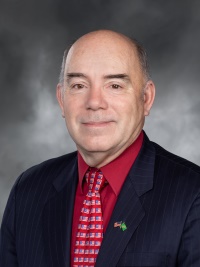
Keith grew up on a goat farm in Alger, Washington, graduating from Burlington-Edison High School with the Class of 1979.
A retired U.S. Navy Commander, he attended Washington State University until receiving an appointment to the U.S. Naval Academy in Annapolis, Maryland. After graduating from Annapolis in 1984 with a Bachelor of Science degree in physical oceanography, he was commissioned a second lieutenant in the U.S. Marine Corps. After completing Marine Officer Training at Quantico, Virginia, he accepted an inter-service transfer to the Navy flight training program at Pensacola, Florida, earning his pilot’s Wings of Gold in 1986.
As a naval aviator, he flew CH-53E Super Stallion and CH-46 Sea Knight helicopters during the next 23 years of his career. Keith and his wife Wen were stationed in Sicily, Okinawa, Guam, Seoul and Tokyo, among many other duty stations.


Keith retired and returned to Skagit County in 2007 where he served as mayor of Sedro-Woolley for two years after five years on the city council.
He holds a master’s degree in global leadership from the University of San Diego.
COMMENTARY DISCLAIMER: The views and comments expressed are those of the writer and not necessarily those of the Lynnwood Times nor any of its affiliates.

Author: Lynnwood Times Contributor