


MALTBY—A long-running dispute between Snohomish County and Flower World has escalated over whether the 46-acre nursery and greenhouse operation should be classified as an agricultural enterprise or a retail business, a distinction that could carry major consequences for permitting requirements, taxes and the future of similar farms across the county.
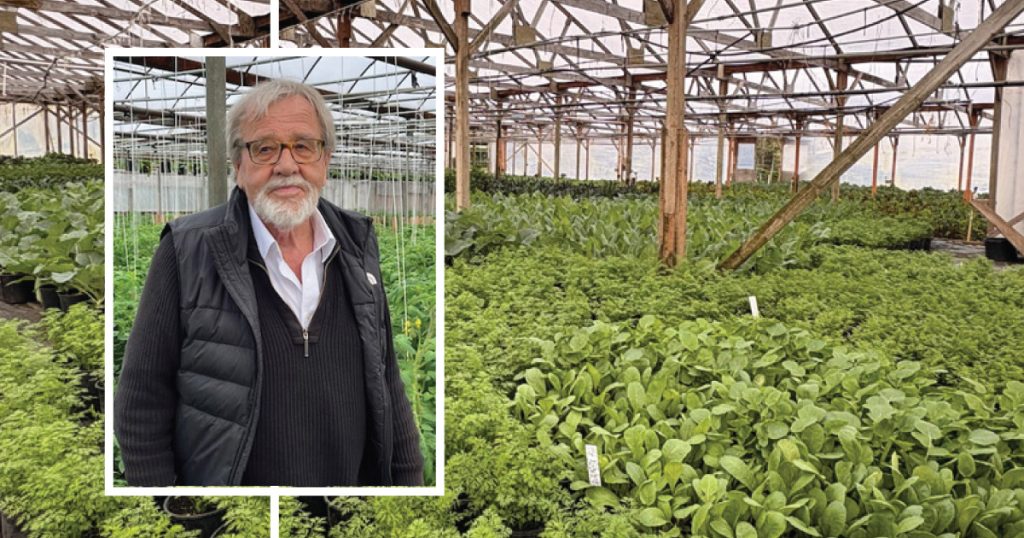
It’s the latest county-led challenge to Flower World after a long history of challenges throughout its 57 years of operation—from arguing that a park project was on a protected wetland (which a court determined it was not), to pushing back against cider production (ruling they could not sell unpasteurized products that requires refrigeration), to requiring a solid waste permits to accept yard debris from customers to name a few.

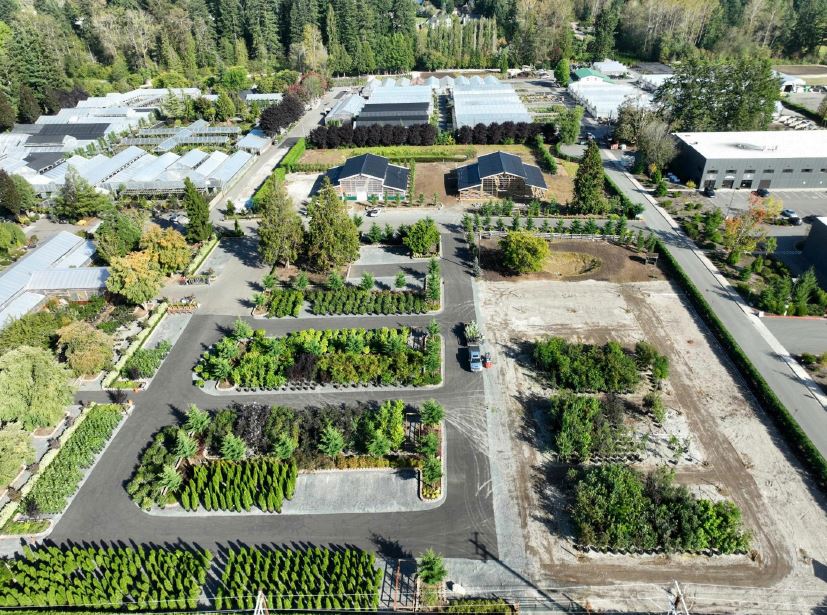
The most recent pushback relates to clearing a former single-family home on two parcels immediately south of the main 15-acre nursery, constructing two 4,500-square-foot pole buildings with sheet metal roofing, paving and gravelling roughly 45,920 square feet for a mixed-use parking and plant-holding area, and installing a new driveway entrance onto 200th Street SE with a connecting paved roadway. County officials said the work triggered land-disturbing activity (LDA) permits under Snohomish County Codes 30.63A and 30.63B because it exceeded thresholds for new impervious surface and clearing.
Flower World Owner John Postema refers back to a citizens initiative called the ‘Right to Plow’ which was passed in 2001, by a vote of 56.78%, and essentially gave farmers distinct rights from developers, allowing farmers to construct, and maintain, fences, bridges, roads, ponds, drains, waterways, conversion of streambanks, and conversion of one agricultural activity to another without the same permits developers would need to obtain.


“What did we do different here?” Postema stated. “In the last 50 years we’ve done the same thing we’ve already done.”

In addition to this, Postema told the Lynnwood Times, according to the Snohomish County LDA, “agricultural activities” are exempt from certain regulations including the acquisition of building permits. The question is, however, whether Flower World constitutes as an agricultural center and not a retail store, Postema said. The Snohomish County Hearing Examiner Peter Camp decision and subsequent Superior Court Judge Jennifer R. Langbehn ruling in January 2026 rejected Flower World’s claim that its latest project qualified for an agricultural exemption.

Postema’s attorney Richard M. Stephens of Stephens & Klinge LLP, argued that Flower World is a farm in accordance with SCC 30.91F.120, which defines “farm” to include not only growing plants but also “promotion, sale, packaging and distribution of agricultural products wholly or partly from the farm site.” He also reference SCC 30.91A.090 which defines “agricultural activities” as “a condition or activity which occurs on a farm in connection with the commercial production of farm products and includes, but is not limited to, marketed produce at roadside stands or farm markets…”
Stephens further argued that retail parking and access roads are logically “connected” to the farm’s production and sales — just like a barn parking lot for hay buyers or a farm-stand driveway.
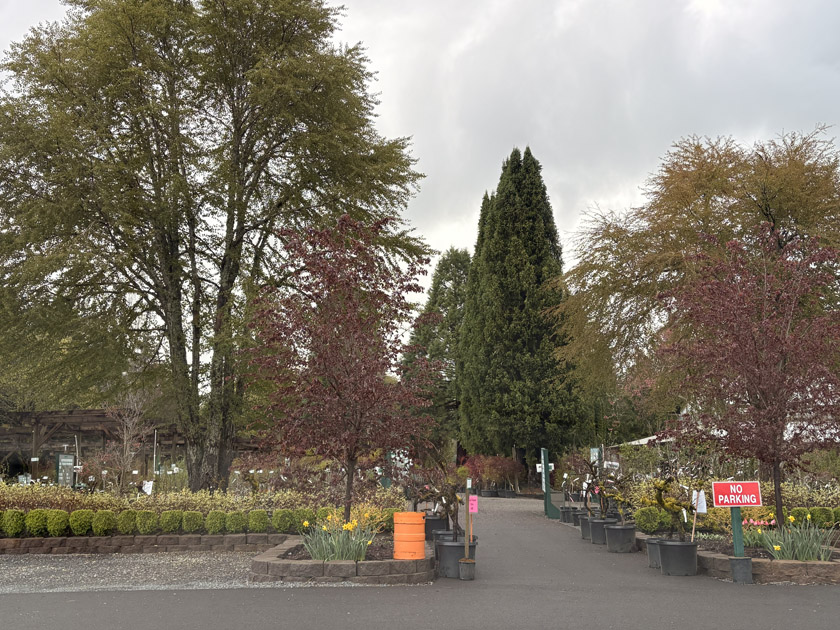
Judge Langbehn rejected these points stating that the parking lot and driveway failed the exemption’s conditions because they were primarily used for large-scale retail customer parking and access — not routine farm production. The judge agreed with the Hearing Examiner that a 45,920 sq. ft. paved/graveled area advertised as a customer parking lot for a 15-acre retail nursery was not the same as “normal” farm roads or internal access for moving equipment. It was commercial development serving the public.
“In that hearing the county had witnesses who were asked if they had ever visited a nursery – no. If they have visited Flower World – no. They don’t know about anything that is going on at the farm,” said Postema. “Only farmers markets – which are usually in cities – and produce stands could be agriculture, that was the Judge’s decision going completely against the Right to Plow.”
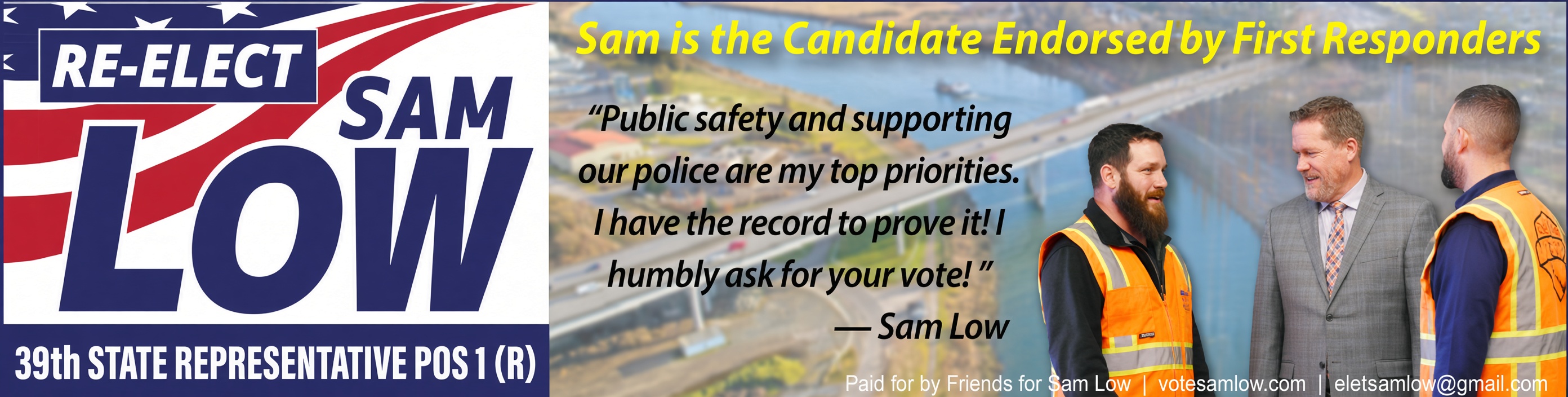
The county’s reasoning pointed to Flower World’s parking lot (a capacity of 500 cars including the new 110 parking stalls), among other things, but Postema argues that “customers have to park their cars somewhere.”
“When you go to a pumpkin patch where do you leave your car?” Postema told the Lynnwood Times, drawing comparisons to agrotourism activities like pumpkin patches, U-pick operations, and Christmas tree farms which, in his opinion, are considered agricultural activities but sell their products on-site (trees, pumpkins, fruit, and so on) similar to Flower World.
Postema further argues that due to how Flower World’s boundaries are zoned, Flower World could not legally operate as a retail store in an area designated as rural – though its boundaries do line up with an industrial area (where the nearby winery and whiskey distillery are located).
“We didn’t get permits because we didn’t need them,” said Postema.
Though Flower World has been paying, on average, approximately $100,000 a year on attorney fees to fight the county, Postema informed the Lynnwood Times he refuses to pay the $200,000 permit fees the county is requesting because, by doing so, he would admit that their designation of “retail store” would stand…and that would have irrevocable consequences not only for Flower World, but for agricultural centers throughout Snohomish County.
For one, by residing in a zone currently designated as “rural” he would have to close shop, Postema said, and two, it would forever redefine other similar farm operations (including pumpkin patches, Christmas tree farms, and U-pick operations) as retail.
“Once you accept that than everything else doesn’t work. To say that we’re retail you open up an entire can of worms,” said Postema. “If you do not accept that Flower World is not agriculture then the whole world is going to be different. Forget about Flower World.”
Postema continued that even if you had a single acre and decided to grow something – “who would you sell it to?”
In addition, if Flower World is considered a retail operation it no longer qualifies for the open-air tax exemption, meaning they would be responsible for paying property taxes (and likely retroactive back taxes).
“We’re talking about $100,000 for some farmers,” said Postema. “We’re lucky that we’re big enough to fight the county on this issue but a lot of little farms are not.”
According to Postema, a judge from Oklahoma—with experience bringing cases to the U.S. Supreme Court—reviewed his case and sided with him on the matter. Postema informed the Lynnwood Times this judge will be assisting him in this case in future proceedings moving forward.
Flower World grows approximately 95% of everything it sells, which separates it from retail stores like Home Depot, Postema said.
“If you don’t allow farmers to sell to the public anymore where is your food coming from? We are the single operation in Washington State that grows almost everything,” said Postema. “We are the only produce market that operates year-round in the state. We do that because we operate in greenhouses.”
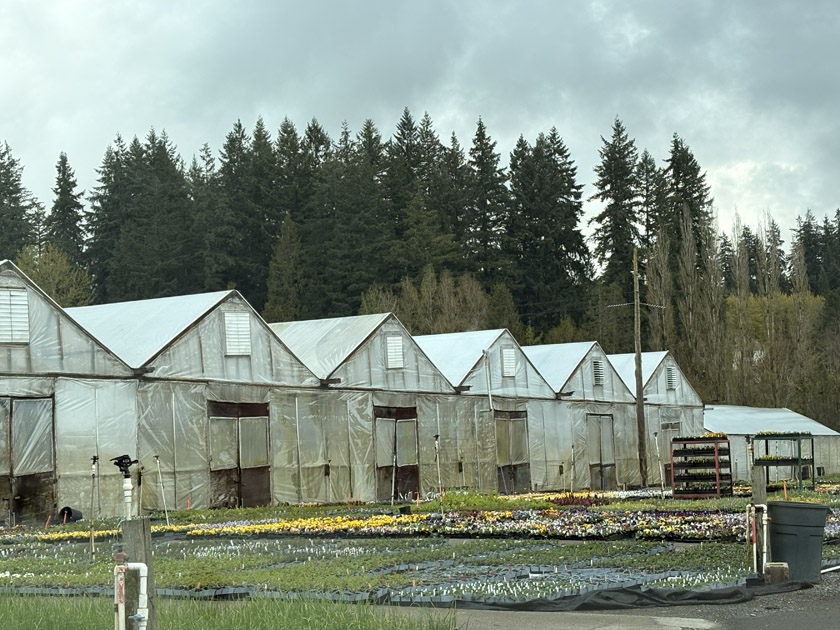
Flower World has four acres of greenhouses where they grow vegetables – including potatoes year-round, which Postema said is rare to find. Because their produce is grown in greenhouses, they also can operate completely pesticide free and maximize their production by protecting their crops from animals. All the water used to water the produce is recycled from collected rainwater and greenhouse evaporation, and the stocks of vegetables (the unsellable parts) are recycled into pellets to be used as food for their goats and chickens.
“There’s no waste,” Postema added.
If the appellate court agrees with Snohomish County Hearing Examiner decision and Judge Langbehn’s ruling, Flower World, Postema said, would be considered a retail operation which would leave him scrambling to figure out what to do with his land and to lessen the impact on his 40 shareholders and 80 employees. By current code, he does have the right to build up to nine cluster houses on his property, which he said could be an option.
Cluster houses are a form of high-density residential development where single-family detached or semi-detached homes are grouped closely together on smaller lots.
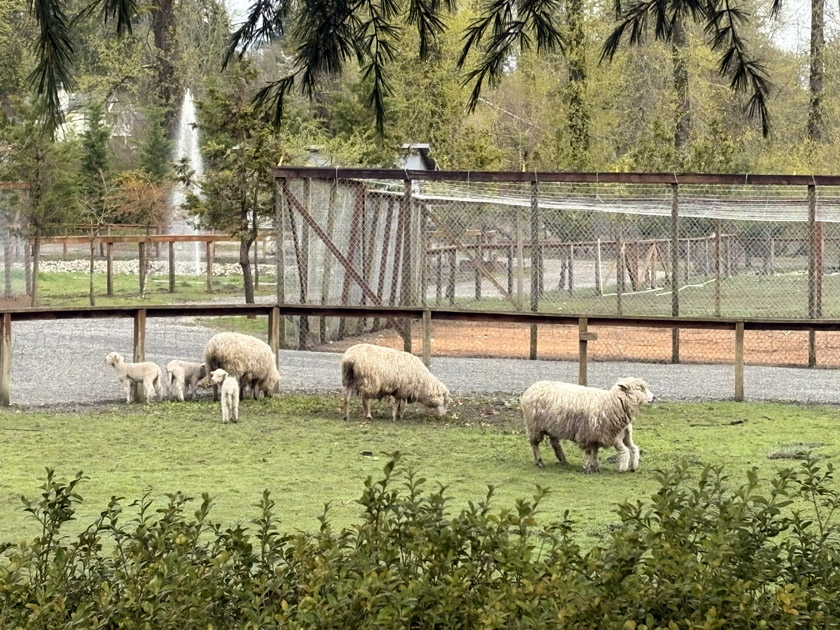
Postema suspects the County may be arguing that Flower World is a retail operation to extend its Urban Growth Boundary. Snohomish County’s Urban Growth Boundary (UGA) designates areas for urban density development and eventual city annexation, separating them from rural lands.
For example, in 2015, when the County was reviewing its zoning codes and county code they removed the “greenhouses, nurseries, and wholesale” and replaced it with “retail” saying “it doesn’t make any difference because they do both,” according to Postema.
“We have to assume the County means business or else why would they take me to court?” Postema said.
He plans to work with the County Council on this potential zoning issue, he informed the Lynnwood Times.
Postema previously served on the Snohomish County Planning Commission and served as the President of the Snohomish County Farm Bureau, representing numerous farms and worked with Linda Neunzig – coordinator of agricultural services – on the county’s proposed $60 million Food and Farming Center in McCollum Park.
Postema immigrated to Washington State from Holland in 1964. Growing up on farms, he was promised work on a job in Eastern Washington but at the time the farmer’s union did not hire immigrants. He decided to do handyman jobs to get by, working in landscaping and operating heavy equipment.
He eventually secured a employment working at Molbak’s Greenhouses where he managed for three years before founding Flower World in 1968 by building a single greenhouse.
At that time, Flower World was strictly wholesale, growing products (like primroses) for stores like Kmart and Sears. He expanded his operation by purchasing cheap land in South America, where he grew indoor foliage plants and shipped them back to the U.S., but when a coup granted independence from the Dutch, he withdrew his operation.
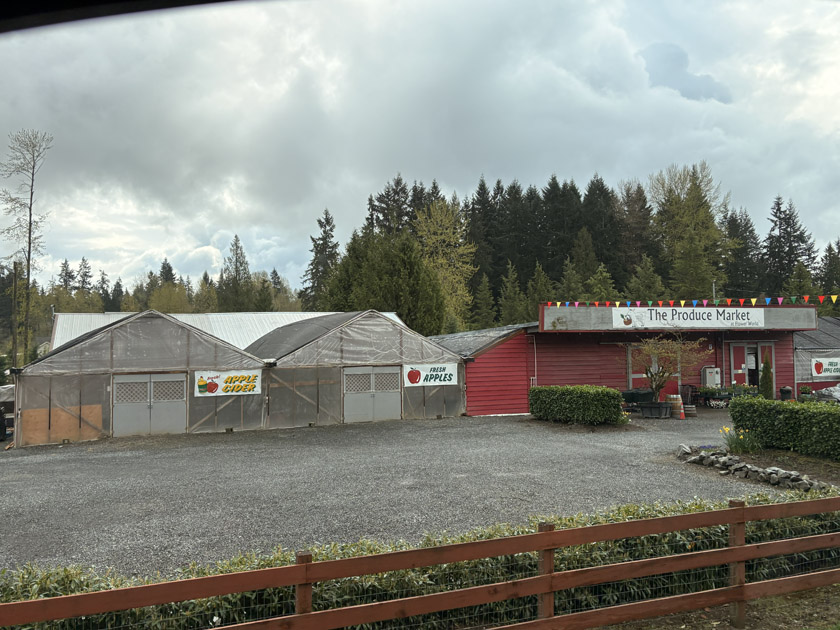
Over the years Flower World continued to expand its operation to 46 acres, acquiring the nearby Walster Brother’s Dairy Farm, transitioning the property from dairy to a nursery, to most recently a full-scale greenhouse operation. They also have several storefronts on the property including, but not limited to, a fresh produce store and a plant shop – the basis of the County’s “retail” designation.
Flower World has 100 employees seasonally and about 80 full-time employees. The farm produces lettuce, broccoli, potatoes, herbs, plants and trees, among other things.
RELATED ARTICLE(S)

Author: Kienan Briscoe



2 Responses
Yeah, building a parking lot for retail customers is not agricultural use. Hope this help.
Whether it’s Flower World or other agricultural production, the one party rule in this state is anti-farm.
Washington state lost 3,717 farms between 2017 and 2022; an average of 743 farms a year.
Washington state’s harsh anti-agriculture policies lead to decline in farms and ranches https://www.washingtonpolicy.org/publications/detail/washington-states-harsh-anti-agriculture-policies-lead-to-decline-in-farms-and-ranches
WA is losing farms and food-producing land. Does anyone care?
https://www.seattletimes.com/opinion/wa-is-losing-farms-and-food-producing-land-does-anyone-care/
Fourteen farms a week vanished from Washington state every week during the last five years.