

EVERETT— Students at Sno-Isle TECH Skills Center aren’t just learning about fiber optics — they’re building the backbone of tomorrow’s internet by hand. Through a first-of-its-kind high school program, students spend months mastering the technical precision and craftsmanship required to assemble fiber optic systems, preparing them to enter the workforce immediately after graduation.
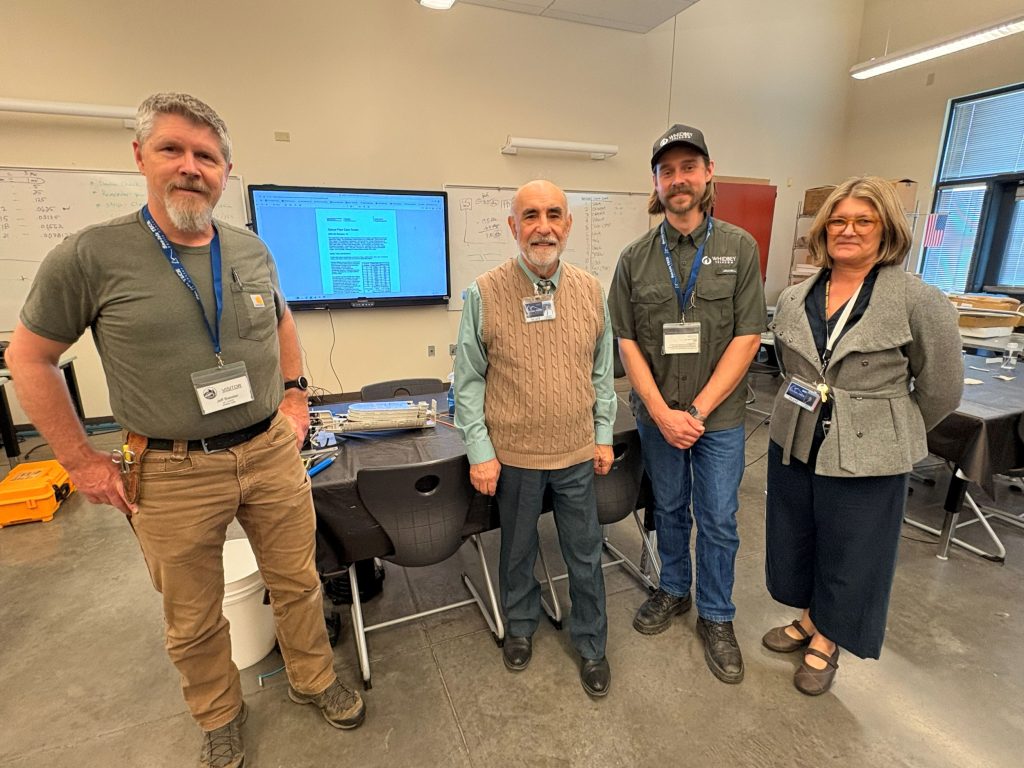
In several weeks students learn all the little steps that go into building a fiber optics closure, from bringing the cable in, breaking the cable out, cutting things to length, routing them to splice trays, and so on. By the end of the course, they’ll have dedicated 144 hours to learning fiber optics and should be interview-ready for a job right out of high school.

Sno-Isle partners with Whidbey Telecom for the hands-on portion, who bring with them real life work experiences and challenges – in addition to providing the professional equipment.
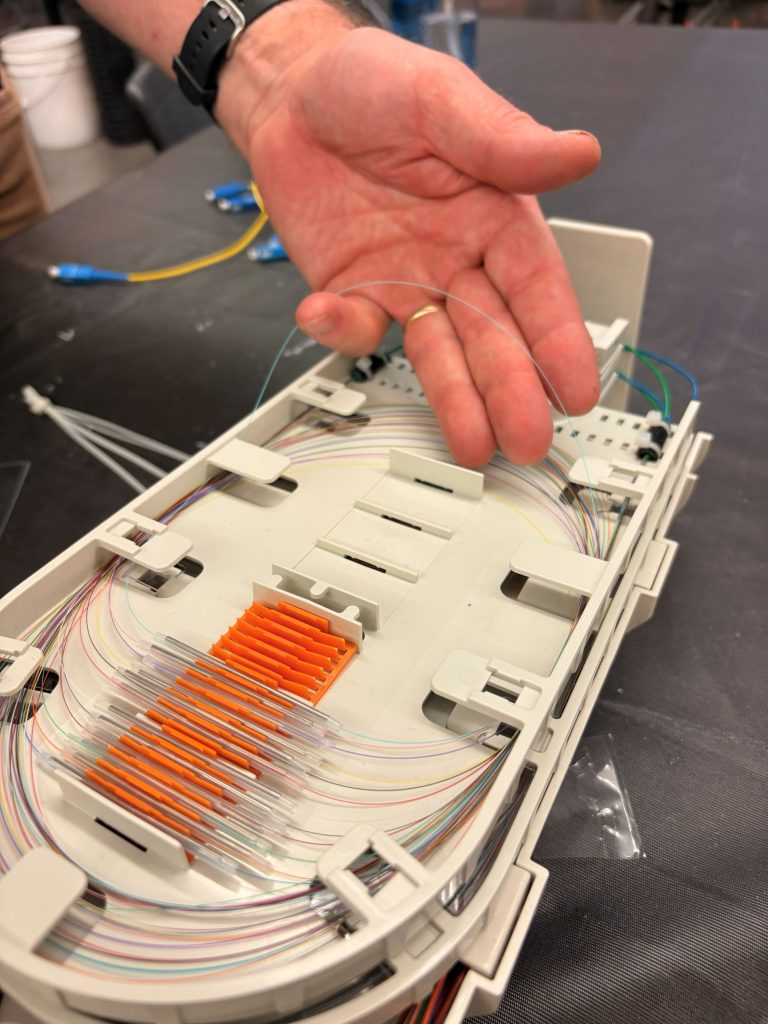
“Basically, they’re dressing the whole closure with the appropriate amount of length, both in the slack storage tray and the splice tray so that they end up with a beautiful closure on the inside,” Jeff Baesler, Lead Fiber Tech at Whidbey Telecom, told the Lynnwood Times. “If it looks really good, chances are it’s going to work fine. If it works like a rat’s nest chances are it’s going to be problematic.”




The program is divided into 15 modules and based on a curriculum designed by the Fiber Broadband Association (FBA) – written by some members who have been a part of the movement since its inception.


The FBA approached the Mukilteo School District back in 2023 about implementing a fiber technician training program at the Sno-Isle TECH skills center. When Technology Instructor Ted Rodriguez was approached with the idea, his eyes lit up and he enthusiastically agreed to instruct.


Though three-day certificate programs for fiber technicians existed prior, the FBA wanted to take this one step further and create a program that included 80 hours of hands-on experience, plus another 80 hours of classroom time. This is the first (and only) time in the nation a fiber technician program has ever been taught at a high school level.
The FBA suggested the school district partner with Whidbey Telecom who, they called, one of the most skilled fiber technicians in the area.
“For me it’s passing on the craft to the next generation,” said Whidbey Telecom Lead Fiber Tech Jeff Baesler. “There’s a lot of technicians out there who know how to do it, they’re just not very good at it. So this is our opportunity to show kids options in the world, but also what makes the good, the better, and best, and how to be a real asset to their employer and the community.”
For Baesler, one of the best things about having the opportunity to teach kids the ins, and outs, of fiber tech is to train the next generation of fiber technicians; but only that, to teach them ethics and craftmanship which goes a long way.
“The network that you’re building is only going to be good as its weakest link – the first day you build it. And it’s only going to go downhill from there, as people get in and fix things and break things and need to troubleshoot. If they’re going out in the field as technicians, that’s why they’re craftmanship is so important and we love being able to teach that,” added Kaegan Beumer, Whidbey Telecom Fiber technician.
Several Sno-Isle TECH Skills Center alumni have even gone on to secure jobs at Whidbey Telecom after graduation.
Baesler continued that the need for properly trained fiber optics technicians is dire now than ever before and has been steadily increasing since COVID when many people were working from home and in need of bandwidth for zoom meetings and so on.
“Instead of bringing a small pizza home to a hungry family of four, fiber is like an all you can eat buffet,” said Baesler.
“It opens up the world,” added Tech Instructor Ted Rodriguez.
Rodriguez began his education career at Skagit Valley College in 1969 where he developed a telecom program, engineering program, and technology program. Rodriguez’s program closed in 2011 when he retired from the college system. He joined the Mukilteo School District as an instructor 15 years ago, bringing with him four decades of hands-on technical (and college-level academic) experience.
The course begins with an academic segment, instructed by Rodriguez, where students learn terminology, safety, ethics, and the basics before even beginning hands on work.
“We don’t give our students directly, they have to take the information they’ve received from me, with all the support with FBA,” said Rodriguez.
Ethics, according to Baesler, is not technically part of the curriculum but an important addition that, without, could have disastrous (and often dangerous) consequences.
“The fiberoptic cables are tinier than a human hair and I’ve caught contractors throwing them on the ground. That’s like taking hundreds of hypodermic needles and scattering them among the community – but it’s even worse. A hypodermic needle will at least rust twenty years ago and become less of a danger than it is now, but fiberoptics are just as threatening 100 years from now as they are now,” said Baesler. “So that’s the sort of thing we get to teach these kids.”
The curriculum is designed, and certified, by the FBA – by some members who have been a part of the fiber movement since its inception.
The modules are divided into safety, terminology, fiber optic theory (ex: what is a photon and how it works), cable prep, enclosures, installation, splicing, splitters, connectors, tools, craftsmanship, leading up into creating an enclosure as a final project.
Students meet daily for a two-hour block (from January to June), with hands-on workshops with Whidbey Telecom every Tuesday and Thursday.
Interested students can expect to be employable at any fiber optic company, or installer, by the end of the course. At the very least, comfortably tell interviewers that they’ve built a preformed line products closure, spliced on two different fiber splicers (Fiber Fox and Alcoa), and be able to answer questions about color codes, or the difference between OTDR and what it stands for.
“The ultimate goal is to give them enough of the basic skillsets to be an asset right away to an employer. They’re not going to be an expert right away, by any means, but they will for sure be an asset where they can say I can work with you and we can start there,” said Baesler.
Sno-Isle SKILLS Center also hosts a number of resume building workshops and career fairs to maximize school-to-career pathways.

Author: Kienan Briscoe