

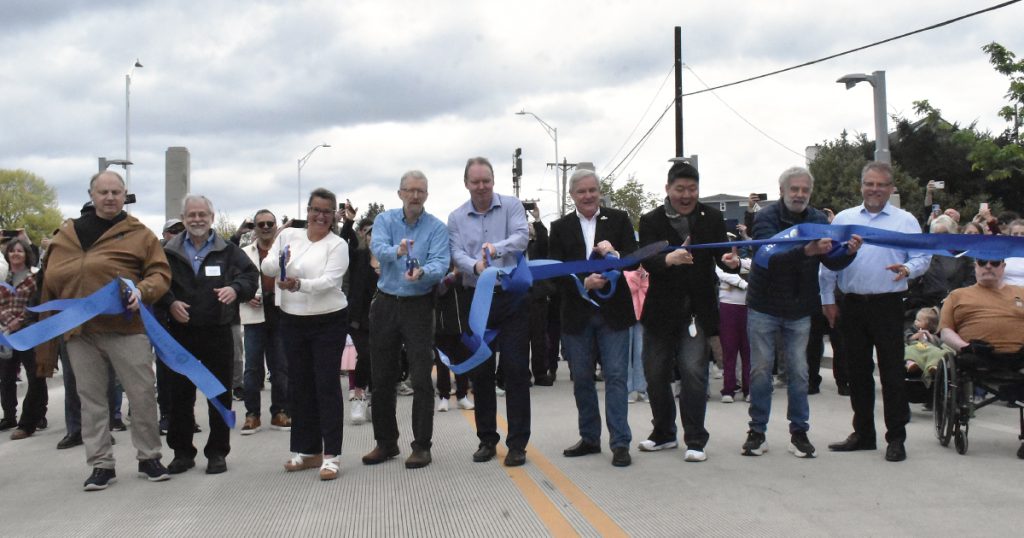
MUKILTEO & EVERETT—The cities of Mukilteo and Everett collectively cut the ribbon on the Edgewater Bridge replacement Monday, April 27, which carries West Mukilteo Boulevard to the western limits of Everett. The bridge will officially open to traffic tomorrow, April 28, after two years of closure.
For the last 80 years, the Edgewater Bridge carried thousands of commuters between cities but – 80-years-later neared the end of its useful life and required critical seismic improvements. Though the old bridge (operating under load restrictions) was safe for daily use it was “functionally obsolete,” the city said, and highly susceptible to structurally damage during major earthquakes.


The City identified several areas along West Mukilteo Boulevard that were at risk of isolation after a major earthquake and the three bridges that connect these areas – The Maple Heights Bridge (retrofitted in 2020), the Edgewater Bridge, and the Merill and Ring Bridge (currently in design and estimated to be replaced in 2029).
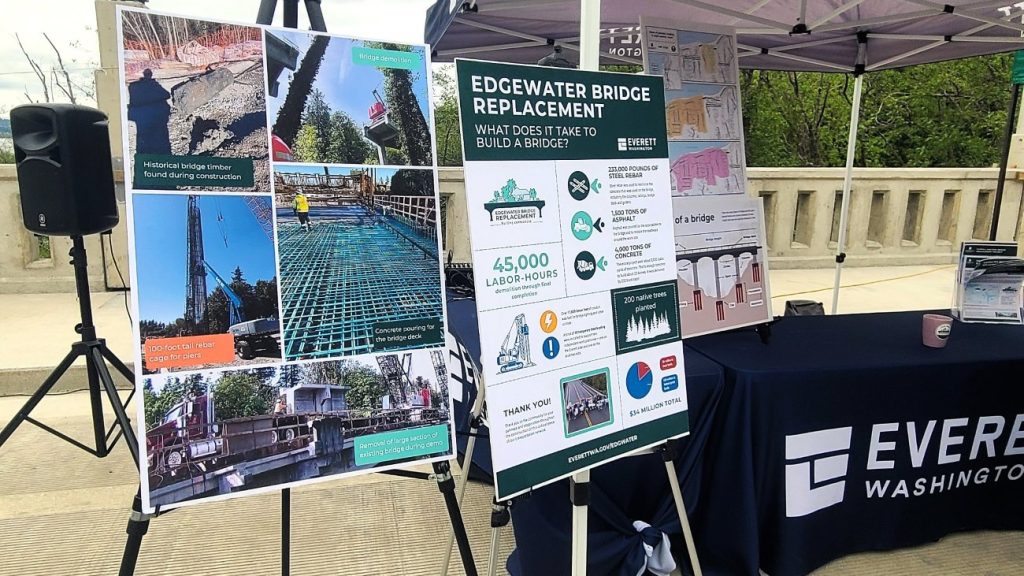
Replacing the bridge required a massive and highly complex undertaking. It included removing a 366-foot-long, 60-foot-tall concrete bridge and building three new bridges: the new Edgewater Bridge and two work platforms on either side of the ravine from which the new bridge was built. All of this was done on a deep, steeply sloped ravine while crews had to protect a sensitive habitat in the creek below and the steep slopes on each side of the creek. Construction crews did this by drilling and pouring four piers that are nearly 100 feet deep, and the contractor had to move heavy equipment in and out of a small space with little room to maneuver.




All-in-all the bridge took 450,000 labor hours (from demolition through final completion), 2,000 cubic yards of concrete (weighing approximately 4,000 tons), 1,500 tons of asphalt, 233,000 pounds of rebar, 17,000 linear feet of conduit, 48 temporary trestle piling, and 200 native trees planted.

The total cost was $34 million, $28 million of which was funded by federal grants through the Local Bridge Program and congressionally directed spending via an earmark from Representative Rick Larsen. The remaining $6 million came from local City of Everett funds, including arterial improvement and traffic mitigation funds.

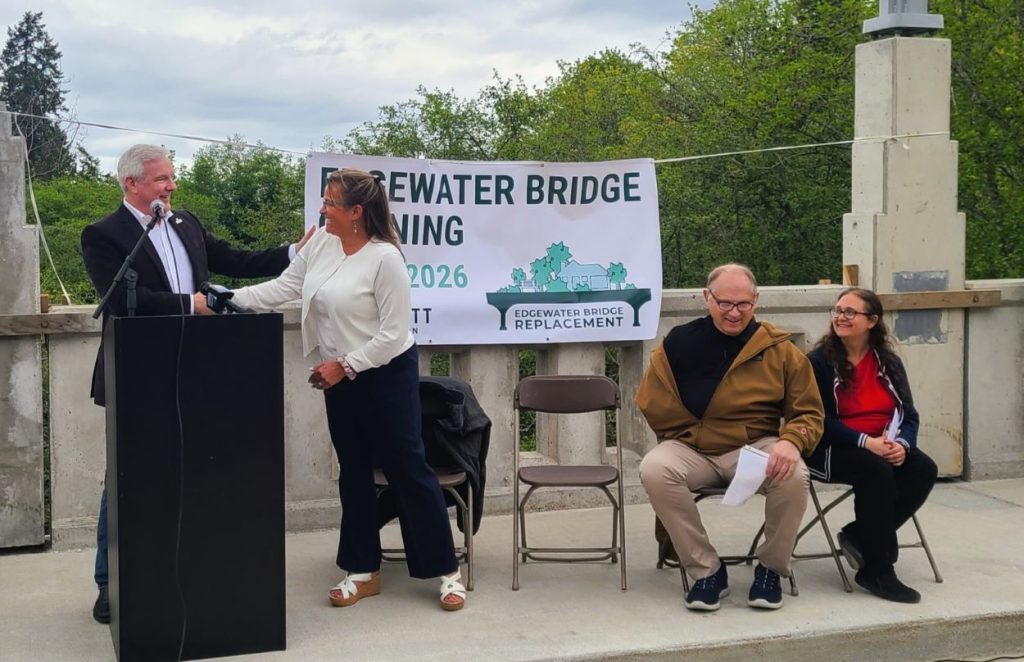
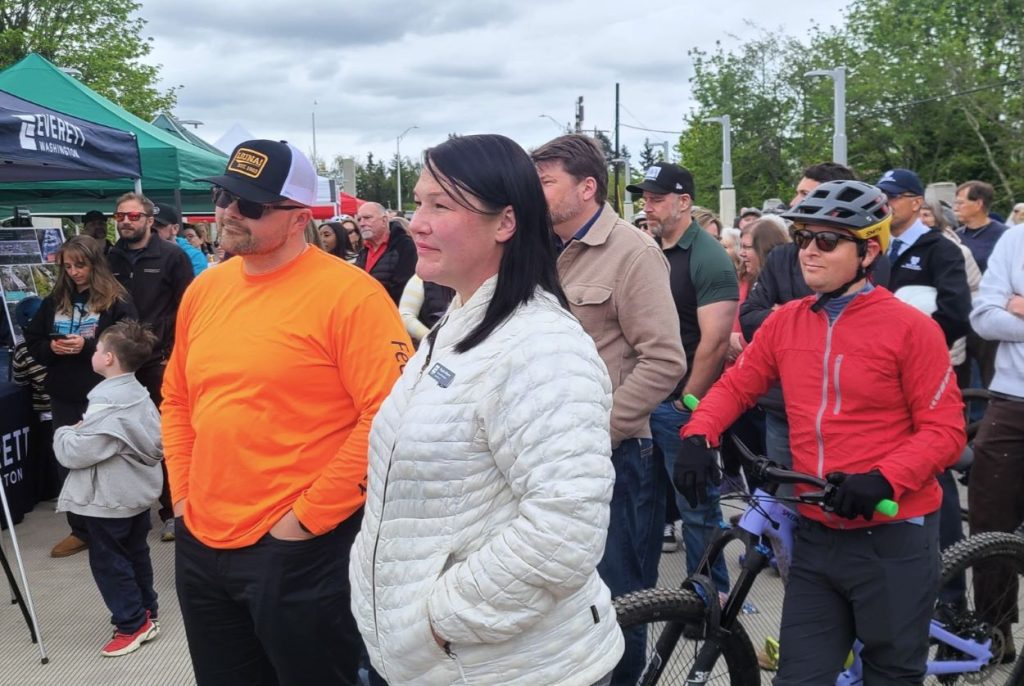
At Monday’s ribbon cutting ceremony, both cities’ Mayors shared a few words beginning with Everett Mayor Cassie Franklin.
“This is a very important infrastructure project, and it was worth time, and attention, to make sure we got it right,” said Mayor Franklin, thanking the Public Works team and the contractors who ensured the project was delivered safely for the community. “Maintaining and ensuring fabulous infrastructure is an essential in city government and we take a lot of pride in the work that we do.”
Mukilteo Mayor Joe Marine followed Mayor Franklin to shared that this project is “literally Mukilteo and Everett building bridges” together.
“It’s not lost on me how connected these two communities are and you feel that more today, bringing it back together – you don’t know what you have until it’s gone, and it’s about that connection,” said Mayor Marine. “It is amazing the difference one small bridge makes, to not only your community but also to business owners and businesses. We want people from Everett to come to our waterfront, and we want our residents to go to Everett.”

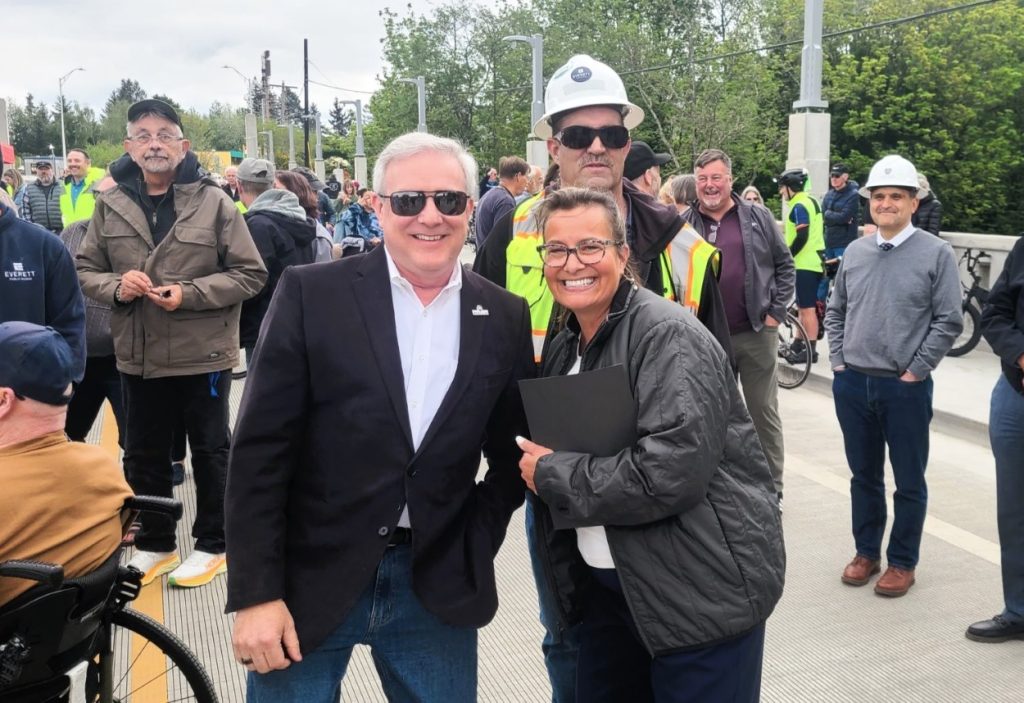
Everett Council President Don Schwab was next to speak, sharing that the project is near-and-dear to his heart as someone who lives not too far from the bridge.
“Bridges connect people and they can also disconnect people. I didn’t realize how much of our community was connected to this bridge,” said Schwab. “It’s very cool to see a piece of infrastructure that connects, and unites, communities, businesses, and families.”
Also in attendance was Mukilteo Council President Jason Moon, Mukilteo Council Vice President Richard Emery, council members Donna Vago, Don Doran, and James Sterba, Everett Council Vice President Paula Rhyne, and Ben Zarlingo, and Washington State representative Julio Cortez (D-Everett).
Jessica Corbin, representing Congressman Rick Larsen (D-WA) – who was unable to attend the ribbon cutting in person – followed Council President Schwab to speak on his behalf.
“Success has many parents and failure is an orphan. This project is no exception. This project would not be possible without local, state, and federal support. Thanks to the vision and hard work of Everett and Mukilteo, members of the community can once again travel between two cities on a structurally sound and resilient bridge,” said Corbin on behalf of Rep. Larsen.


Lastly, Ryan Sass, Public Works Director for the City of Everett closed the speaking portion of the evening before the ribbon was ceremoniously cut.
Sass touched on the continuous bridge inspections conducted by the city every two years that resulted in identifying the deficiencies in the bridges previously mentioned, needing replacements and improvements.
“One of the competitive advantages of this bridge was to protect the communities against isolation in the event of a large earthquake,” said Sass, touching on the competitive bidding process.
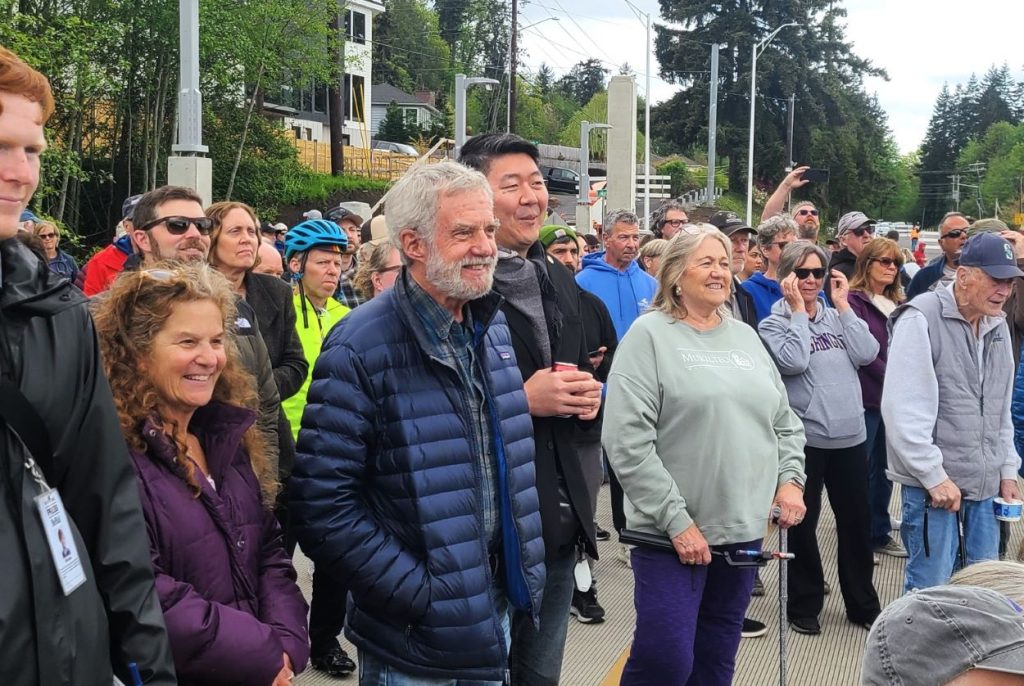
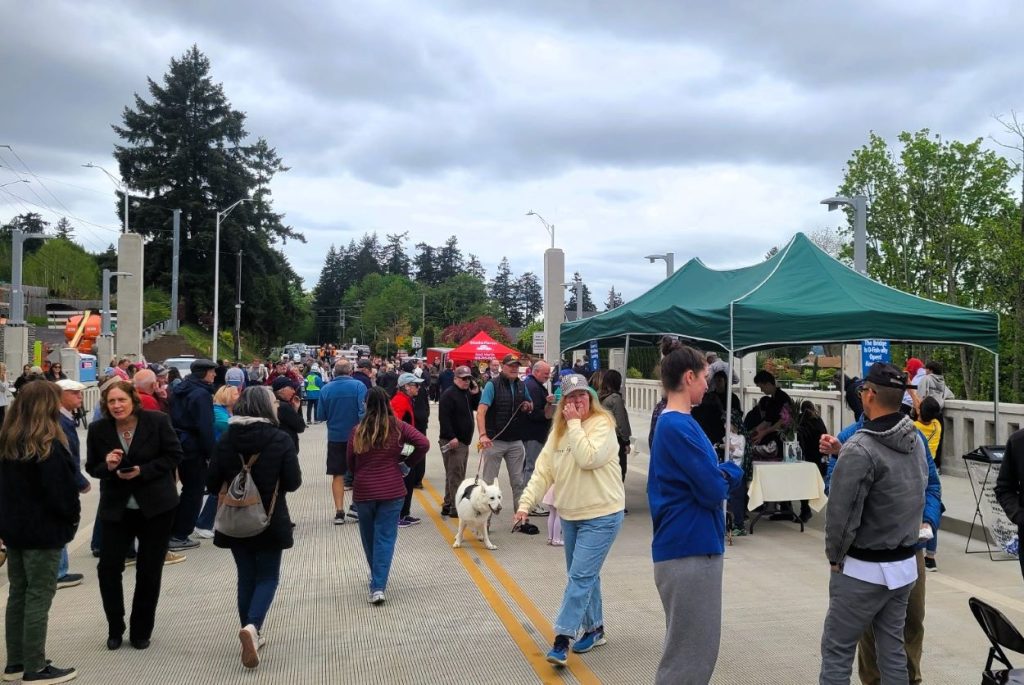
After Sass’ remarks the community gathered on the bridge to witness elected officials and partners cut the ribbon signifying the end of a three-years in the making.
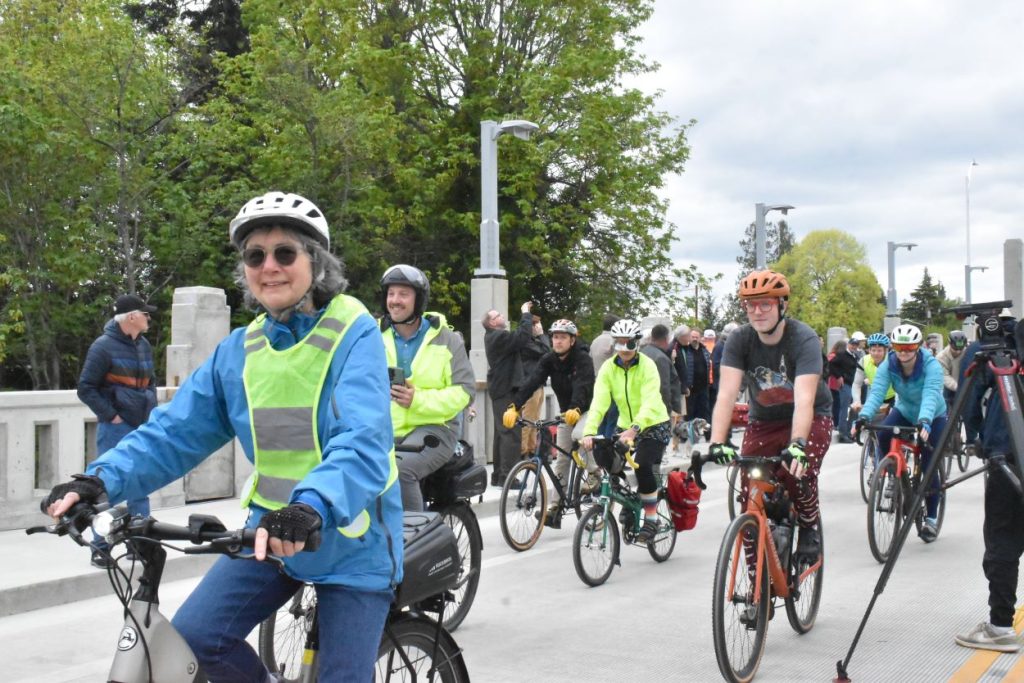
Then, a group of bicyclists zipped down the bridge showcasing its bicycle-friendly lanes.
But speeches, bicycle parades, and ribbons being cut wasn’t the only draw of the evening. Several local Mukilteo businesses commemorated the occasion with free food and gifts including Ivar’s, Hook and Cleever, and more.
Prior to 1914, traveling between Everett and Mukilteo was by boat or rail only. The two cities first connected by roadway in 1914 though “Mukilteo Boulevard” did not begin appearing on maps until the 1920’s.
Similar to Monday’s event, when that roadway opened on August 5, 1914, it was met with much fanfare including food, prominent local speakers, and tours of the Mukilteo lighthouse.
While the recently demolished concrete bridge was built in 1946, earlier bridges would likely have been wood construction. Debris form earlier bridge construction was one of the main causes of delays during drilling in the ravine.
Though the Edgewater bridge opens for traffic tomorrow, Tuesday, April 28, beautification improvements are ongoing.

Author: Kienan Briscoe