

EVERETT—Zap Energy on Wednesday announced the appointment of Zabrina Johal as Chief Executive Officer, marking a defining step in the company’s evolution into an integrated nuclear platform spanning both fission and fusion. Cofounder Benj Conway will transition to President, focusing on strategy, partnerships, and long-term technology development.
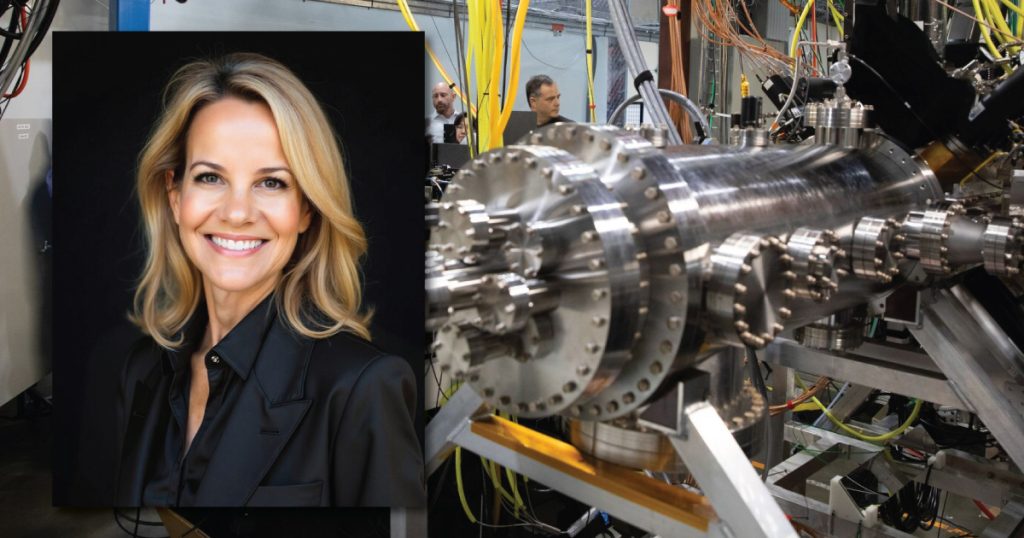
The leadership transition comes as Zap formalizes a strategy developed over the past year to combine near-term fission deployment with the long-term breakthrough potential of fusion.



“Zap is entering its next phase—bringing fission and fusion together to accelerate innovation across the entire system, from core technologies to deployment,” said Johal. “This alignment allows us to accelerate progress, reduce complexity, and deliver power on timelines that match demand.”
Expansion to an Integrated Nuclear Platform




Zap’s strategy is grounded in a simple observation: fission and fusion are not separate industries, but deeply connected disciplines that share materials, engineering challenges, supply chains, and system architectures. Rather than pursuing fusion in isolation, Zap is building an integrated platform designed to:


- Deliver near-term, bankable power through compact, modular fission systems
- Exploit deep technology overlap between fission and fusion, particularly in liquid metals, neutron environments, and high-power-density design, to speed progress across both
- Leverage AI advances, AI-driven demand, and regulatory momentum to accelerate nuclear deployment
- Build upgradeable nuclear assets that can evolve from fission to fusion over multi-decade lifetimes
“Fission and fusion are two expressions of the same underlying physics,” said Conway. “This isn’t a pivot—by integrating them into a single platform, we can move faster, reduce risk, and build a more enduring company.”


AI’s emergence also underlies the new strategy — catalyzing faster innovation in both fission and fusion while simultaneously heightening demand for stable baseload power generation.
Zap is initially targeting distributed, industrial, and data-intensive energy applications where modular systems can be deployed on accelerated timelines.
Leadership to Execute at Scale
Johal brings deep experience across nuclear technology, commercialization, and large-scale project delivery, with prior leadership roles at AtkinsRéalis and General Atomics. She also served as an officer in the U.S. Navy’s Nuclear Power Program.
Her appointment reflects Zap’s shift from a research-driven organization to one focused on deployment, industrialization, and global scale.
“Zabrina is a proven operator with deep credibility across the nuclear ecosystem,” said Conway. “Her leadership significantly strengthens our ability to execute—commercially, technically, and operationally—as we move toward deployment.”
Zap has also expanded its fission leadership team, including the appointment of Daniel Walter, former project lead for TerraPower’s Molten Chloride Reactor Experiment, as Director of Nuclear Engineering. Matthew C. Thompson, Zap’s SVP of Fission Technology, will lead development across integrated platform technologies.
Near-Term Deployment, Long-Term Advantage
Zap is advancing a modular fission system designed for early deployment across grid-connected, distributed energy, and industrial applications, establishing a commercial foundation while leveraging technologies shared with its fusion platform.
At the same time, the company continues to make rapid progress in fusion, achieving new milestones on its FuZE-3 device and bringing its next-generation FuZE-A system online.
Zap is also a participant in the U.S. Department of Energy’s Milestone-Based Fusion Development Program and is advancing toward a pilot plant design later this decade.
Building a New Category of Nuclear Company
Zap’s approach reflects a broader shift in how nuclear systems are developed and deployed.
Rather than treating fission as a bridge or fusion as a distant goal, Zap is building a unified platform designed to scale with demand.
“Demand for reliable power is moving faster than traditional energy systems can respond. Meeting that demand requires simpler, more adaptable systems and a faster path to deployment. Fission gives us a path to deploy. Fusion gives us a path to transform. Bringing them together is how we do both,” said Johal.
Source: Zap Energy

Author: Lynnwood Times Staff