

More than 85 times each day, on average, firefighters in southwest Snohomish County respond to someone’s call for emergency medical help. Those calls can range from cardiac arrest to falls or injuries.
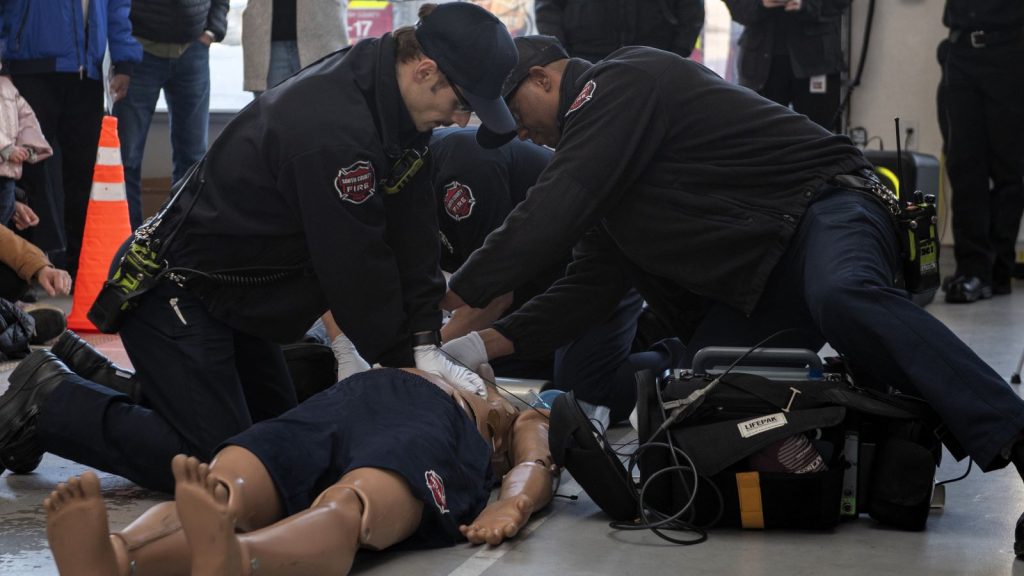
“Most of our calls – more than 80% – are medical emergencies,” said Joe Hughes, South County Fire’s Assistant Chief of EMS, Health and Safety. “The fire service has evolved to meet those needs for our community. Firefighters are cross-trained to be ready when you need them to put out a fire, conduct a rescue or help you during a heart attack.”


Every South County firefighter is certified as an Emergency Medical Technician (EMT) or paramedic. EMT’s can now provide more advanced care, thanks to changes in Washington State laws over the last several years. That means every firefighter is able to administer life-saving medications including epinephrine for an allergic reaction or naloxone for an overdose, and carry out other advanced interventions.
“We know people often wonder why a fire engine shows up to a medical call,” Hughes said. “The firefighters on that engine are carrying all those life-saving tools and are trained to use them. If the engine is the closest unit to you, that’s what will be dispatched so you get help as fast as possible. An ambulance may arrive at the same time or later – because in the vast majority of cases, data shows stabilizing the patient before transport is the most effective method.”




South County Fire’s cardiac arrest save rate is higher than both the state and national averages. High-performance CPR is a major focus for the department, with firefighters trained in very specific roles to increase the patient’s chance of leaving the hospital and resuming a normal life.

Another focus is also having a big impact on patient outcomes while saving tax dollars. South County’s Community Resource Paramedic program aims to reduce unnecessary emergency room visits by connecting frequent 911 callers to the resources they really need. Data shows calls to 911 by patients in the program decrease by 50 percent.


“This is about giving compassionate, coordinated intervention for people experiencing behavioral health crises, substance use disorder or people who may just not know how to navigate the health care system,” said Keith Sharp, CRP Battalion Chief.
The program also allows paramedics to administer the prescription drug buprenorphine to overdose patients, lessening their withdrawal symptoms and providing a crucial window when a patient may be more willing to undergo treatment.
“We know that nearly 75% of patients contacted by our team have gone into recovery,” Sharp said. “That means fewer ambulance transports, emergency visits and 911 calls.”
Emergency Medical Services Week is May 17 through 23. Learn more about South County Fire’s emergency services at www.southsnofire.org.
Source: South County Fire

Author: Lynnwood Times Staff