

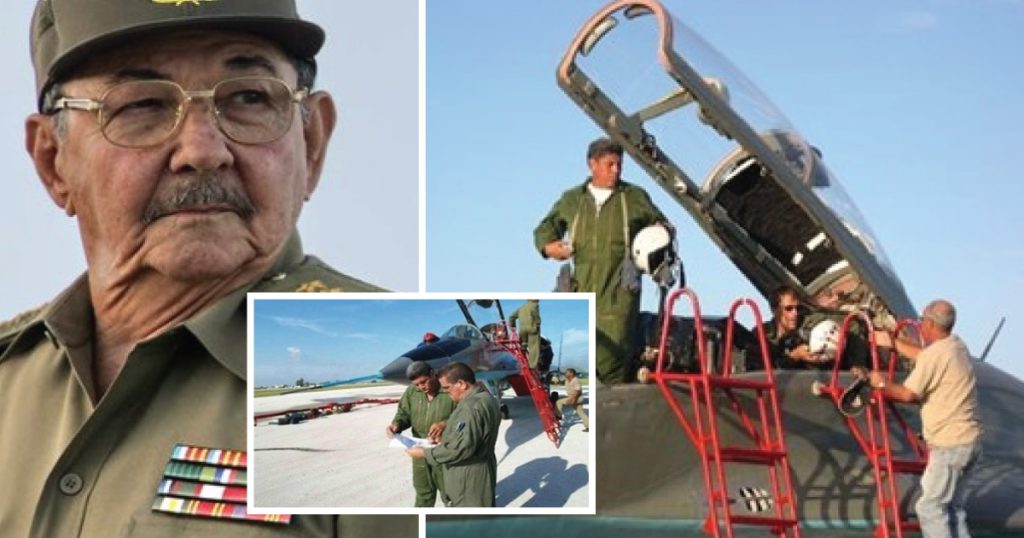
MIAMI — The Department of Justice unsealed a superseding indictment charging former Cuban President Raul Modesto Castro Ruz and five Cuban MiG fighter pilots with orchestrating the 1996 shootdown of two unarmed civilian aircraft operated by Brothers to the Rescue, killing four people over international waters in the Florida Straits.
“If you kill Americans, we will pursue you,” Acting Attorney General Todd Blanche said. “No matter who you are. No matter what title you hold.”

The indictment filed on April 23 in U.S. District Court in Miami and unsealed Wednesday, May 20, names Raul Modesto Castro Ruz, then Cuba’s minister of the Revolutionary Armed Forces, along with Lorenzo Alberto Perez-Perez, Emilio Jose Palacio Blanco, Jose Fidel Gual Barzaga, Raul Simanca Cardenas and Luis Raul Gonzalez-Pardo Rodriguez. It accuses them of using intelligence from Cuban spies in Miami to target the humanitarian flights as part of a broader effort to crush opposition to the Castro regime.
The charges include one count of conspiracy to kill U.S. nationals outside the United States, two counts of destruction of aircraft and four counts of murder. If convicted, the defendants face a maximum of death or life in prison on the conspiracy and murder counts. Castro Ruz and Perez-Perez also face up to five years in prison on each destruction-of-aircraft count.




Cuba’s government dismissed the indictment as a political maneuver without legal basis, insisting the action was taken in self-defense of its sovereignty.

Brothers to the Rescue, also known as Hermanos al Rescate, was a Miami-based organization founded by Cuban exiles. In the 1990s, its pilots flew small, unarmed Cessna aircraft over the Florida Straits to spot and rescue Cuban migrants fleeing the communist island on rafts, inner tubes and makeshift vessels amid economic hardship and political repression. Many Cuban migrants did not survive the crossing. The group later expanded its missions to support pro-democracy movements inside Cuba, dropping leaflets urging respect for human rights.

Tensions escalated after the group’s flights in January 1996, when its aircraft dropped leaflets containing excerpts from the United Nations Universal Declaration of Human Rights that landed on Cuban soil. According to the indictment, Cuban intelligence, through the so-called Wasp Network of spies who had infiltrated Brothers to the Rescue and monitored the group. In response, the Cuban military — under Castro Ruz’s command as head of the armed forces — conducted training exercises with MiG fighter jets to practice intercepting slow-moving civilian planes like those used by Brothers to the Rescue.

On Feb. 24, 1996, three Brothers to the Rescue Cessnas took off from Opa-Locka Airport in South Florida. Cuban MiG pilots, including Perez-Perez, shot down two of the aircraft — tail numbers N2456S and N5485S — while they were flying in international airspace, well north of Cuba’s territorial waters and heading away from the island.
The missiles struck without warning, killing all four people aboard: pilot Carlos Costa and passengers Armando Alejandre Jr., Mario de la Peña and Pablo Morales, three of them U.S. citizens. A third plane escaped after being pursued near the 24th parallel.
The 19-page indictment details how Castro Ruz authorized the use of deadly force against the group following the January leaflet drops. It describes Operation Scorpion, a Cuban intelligence plan to confront Brothers to the Rescue, and alleges that information from spies aided the military in timing the attack to coincide with a planned pro-democracy activity in Cuba. The chain of command ran from the San Antonio de los Baños air base through the air force command to the ministry led by Castro Ruz.


One defendant, Luis Raul Gonzalez-Pardo Rodriguez, is already in U.S. custody pending sentencing in a separate immigration case in Florida. The others remain in Cuba.
No bounties were announced in connection with Wednesday’s indictment announcement. Federal officials have not detailed specific plans to apprehend the remaining defendant in Cuba, a nation with no extradition treaty with the United States.

Author: Mario Lotmore