

WASHINGTON, D.C. — The United States Supreme Court, in a 6-3 decision, ruled on June 29 that police officers conducted a “Fourth Amendment search” when they obtained Okello T. Chatrie’s detailed cell-phone location records from Google through a geofence warrant.
“The Court’s decision provides critical protection against invasive and overbroad government searches of our personal information,” wrote Brett Max Kaufman, senior counsel with ACLU’s Center for Democracy. “Although Google already changed its system so it no longer has access to the same data the government had been seeking through geofence warrants, similar kinds of reverse searches of sensitive data held by other companies will continue to be a threat to privacy. Law enforcement and courts are on notice that new technology does not open up surveillance loopholes, and strict adherence to the Fourth Amendment’s protections is required.”



Justice Elena Kagan wrote the opinion of the Court, joined by Chief Justice John G. Roberts Jr. and Justices Sonia Sotomayor, Brett M. Kavanaugh, and Ketanji Brown Jackson. The decision held that an individual has a reasonable expectation of privacy in records about his cell phone’s location. Police therefore intrude on a constitutionally protected interest when they demand that information from a third-party tech company, even for a limited time. The ruling applies nationwide.
Law enforcement agencies in every state, including Washington state, must now account for the fact that demanding Google Location History records constitutes a search. Officers can no longer rely on the view that no warrant is required or that the third-party doctrine fully shields such requests. Criminal defendants now gain a stronger basis to challenge geofence-derived location data as the product of an unconstitutional search. Courts must evaluate whether warrants authorizing access to detailed, retrospective location records meet constitutional standards rather than treating the requests as routine third-party subpoenas.




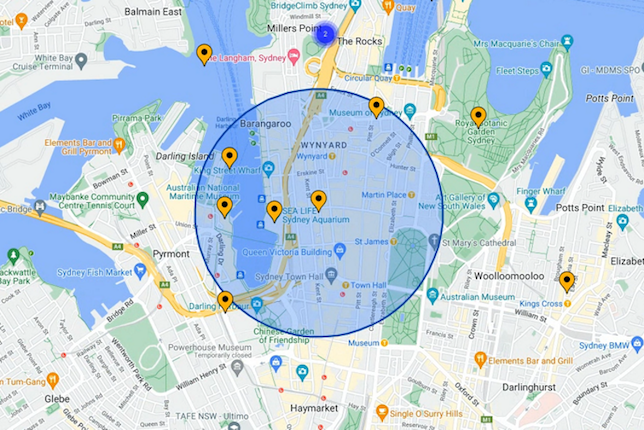
The case arose from a May 20, 2019, armed robbery of a credit union in Midlothian, Virginia. Officers applied for and received a geofence warrant directing Google to produce Location History data. The warrant outlined a three-step process. At step one, Google would provide anonymized location data for all devices within a 150-meter radius of the credit union for the hour surrounding the robbery. At step two, officers would narrow the list and receive additional anonymized data covering a two-hour window both inside and outside the geofence. At step three, officers would further narrow the list and Google would disclose identifying information, including names and phone numbers, for the remaining users.

Google ultimately identified three users, including Chatrie. His data showed he entered the geofenced area about ten minutes before the robbery and left toward a residential area afterward. A federal grand jury charged him with robbery and firearms offenses. Chatrie moved to suppress the Location History evidence, arguing the geofence warrant violated the Fourth Amendment.


The district court found the warrant “plainly violates the rights enshrined in [the Fourth] Amendment” but denied suppression under the good-faith exception. A divided Fourth Circuit panel held no search occurred because Chatrie lacked a reasonable expectation of privacy in two hours of Location History data voluntarily exposed to Google. The en banc court affirmed in a one-sentence per curiam opinion while dividing evenly on whether a search had taken place.
The Supreme Court granted certiorari solely on whether obtaining Chatrie’s location data violated the Fourth Amendment and answered yes. The Court extended its 2018 decision in Carpenter v. United States, which held that accessing cell-site location information (CSLI) from wireless carriers constitutes a search. Justice Kagan explained that everything the Court relied on in Carpenter applies as well or better to Google’s Location History data.
Location History records a user’s location every two minutes or so using Wi-Fi, Bluetooth, cell sites, GPS, and IP data, achieving roughly 20-meter accuracy and estimating elevation to determine which floor of a building a phone occupies. It produces a daily average of about 720 location points compared with roughly 101 for CSLI. The data enables police to reconstruct a person’s movements retrospectively across public and private spaces with minimal effort, creating what the Court described as the capacity for “tireless and absolute surveillance.”

Google users regularly access the data as a personal journal or timeline of their movements. Google stores the records in the cloud on its servers, where users view them through apps.
The Court rejected the government’s argument that the third-party doctrine defeats any expectation of privacy. In Carpenter, the Court declined to apply the doctrine to CSLI because the information is qualitatively different from telephone numbers or bank records—it is highly revealing and not truly shared in the ordinary sense. The same distinctions hold, and apply even more strongly, for Location History.
The Court also rejected the claim that accessing only a short period of data—here, two hours—avoids Fourth Amendment scrutiny. Even short-term monitoring can reveal intimate details about a person’s associations and activities. Where the Fourth Amendment applies, it applies regardless of the quantity of information obtained. Law enforcement’s ability to select a limited slice from an all-encompassing database does not change the analysis.
The government’s argument that turning on Location History is a voluntary choice also failed. Google repeatedly prompts users to enable the service, sometimes warning that devices will not “work correctly” otherwise, while providing limited disclosure about recording frequency, precision, or potential government access. The Court observed that modern cell-phone use requires numerous affirmative steps beyond powering on a device, and users should not lose Fourth Amendment protection simply by using ordinary smartphone features and services.
The ruling establishes that obtaining Location History data through a geofence warrant triggers Fourth Amendment protections. It does not, however, resolve whether the specific warrant in Chatrie’s case satisfied the Amendment’s requirements of particularity and probable cause at each of its three steps.
Because the Supreme Court is “a court of review, not of first view,” it vacated the judgment and remanded for the lower court to decide whether the multi-step warrant process complied with the Fourth Amendment.
Justice Samuel A. Alito Jr. filed a dissenting opinion, joined in part by Justice Clarence Thomas and in other parts by Justice Amy Coney Barrett. Justice Alito expressed concern that the decision, building on Carpenter, creates ongoing line-drawing problems for courts and law enforcement. He questioned how the boundary between Carpenter and traditional third-party doctrine cases will be drawn for other categories of digital records, such as purchase histories, search histories, or transaction logs, which can also reveal detailed pictures of private life.

Author: Lynnwood Times Staff