

LYNNWOOD — As home prices and the cost of living continue to put homeownership out of reach for many Snohomish County residents, Habitat for Humanity of Snohomish County is preparing to expand its efforts to create affordable housing.
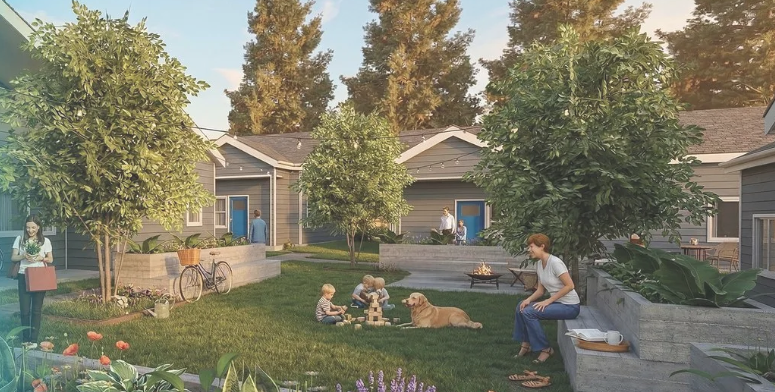
The organization’s latest annual report highlights a year of growth, record revenue at its Habitat Stores and continued development of an eight-home cottage community in Lynnwood that officials say could provide a new model for permanently affordable homeownership in the county.


The 2026 fiscal year also marked two milestones for the organization: the 50th anniversary of Habitat for Humanity’s global movement and 35 years of Habitat for Humanity’s work in Snohomish County.
“While we celebrate that success, the need for affordable housing has never been greater,” Executive Director Steven Li wrote in the annual report.




Habitat officials point to rising housing costs and a shortage of attainable homes as major factors contributing to housing instability throughout the region. The organization says housing costs are increasingly forcing working families to make difficult choices between keeping up with housing expenses and paying for necessities such as food, health care, transportation and education.


Habitat’s approach centers on helping qualified families become homeowners rather than simply providing temporary housing assistance.

Applicants for Habitat homes must demonstrate a need for housing, the ability to pay an affordable mortgage and a willingness to contribute “sweat equity” hours and meet other program requirements.
Once accepted, homeowners work alongside Habitat and community volunteers to help build their homes before purchasing them with an affordable mortgage.
The model is based on the idea that affordable homeownership can provide families with greater financial stability and predictability in a housing market where rents and home prices can change significantly.
Eight new homes planned in Lynnwood
One of the largest developments highlighted in the annual report is Willow Path Cottages, an eight-home cottage housing community planned in Lynnwood.
The project is Habitat Snohomish’s largest homeownership development to date, according to the report.
The homes are intended for first-time homebuyers and will remain permanently affordable, meaning the affordability of the properties will extend beyond the initial homeowners.
During fiscal year 2026, Habitat continued planning for the project and worked to build community support. Construction is anticipated in the coming year.
The development is designed to take advantage of cottage housing — smaller homes clustered together in a community — while fitting into an existing neighborhood.
Its location also puts residents near schools, public transportation and neighborhood services, according to Habitat.
The organization says the long-term impact of the project could extend well beyond its first eight homeowners.
Because the homes are intended to remain permanently affordable, they can eventually become opportunities for other qualified buyers rather than simply leaving the affordable-housing market when the first homeowners sell.
“Each home will help another family build equity, achieve greater financial stability, and create a lasting foundation for generations to come,” the report states.
Habitat said it will continue seeking financial support from sponsors, donors and grant partners to increase affordability and broaden access to the homes.
The project has received support from former state Rep. Ruth Kagi, Access Architecture, Exxel Pacific, the Housing Authority of Snohomish County and the city of Lynnwood, according to the report.
Habitat Stores provide $1.3 million
While construction and homeownership remain at the center of Habitat’s mission, the organization’s retail operations also played a significant role during the past fiscal year.
Habitat Snohomish reported its highest-grossing retail year in organizational history, with both of its Habitat Stores recording multiple record sales months.

The stores in Lynnwood and Everett generated approximately $1.3 million in revenue during fiscal year 2026, with proceeds supporting Habitat’s affordable housing and home repair programs.
The organization said 37,101 customers shopped at the stores during the year.
The stores also diverted an estimated 13 million pounds of material from landfills through the resale of approximately 1.2 million recycled items.
The retail operations accept donated furniture, household goods and building materials, which are then sold to customers. The revenue helps fund Habitat’s housing programs while giving residents an opportunity to purchase goods at lower prices and keep usable materials out of the waste stream.
Habitat operates stores at 16929 Highway 99, Suite 100, in Lynnwood and 2302 Broadway in Everett.
Volunteers remain central to mission
Volunteers also remain a major component of Habitat’s operations.
According to the annual report, volunteers contribute to home construction and repair projects as well as the organization’s stores, committees and administrative operations.
The report recognizes hundreds of volunteers who reached various service milestones during the year, ranging from 100 hours to more than 4,000 hours.
Habitat divides its long-term volunteers into several categories, including Core volunteers who have contributed 100 to 249 hours, Mentors with 250 to 499 hours, Ambassadors with 500 to 999 hours, Experts with 1,000 to 3,999 hours and Lifetime volunteers with more than 4,000 hours.
The organization also highlighted the community aspect of volunteering.
“Everyone here; the whole team, feels like a little family,” Jessica, an Everett Store volunteer, said in the report. “We all just mesh so well.”
Vehicle donations add another source of funding
Habitat’s Cars for Homes program provided another source of support for local housing efforts.
During the fiscal year, the organization received 140 donated vehicles, including cars, trucks, boats and recreational vehicles. The donations generated more than $60,000.
Net proceeds from the sale of donated vehicles go toward building and repairing affordable homes in Snohomish County.
The program offers residents another way to contribute to Habitat’s work without making a traditional cash donation.
Looking ahead
For Habitat Snohomish, the past year was characterized less by a large number of completed projects than by building the organization’s capacity for future housing work.
The annual report describes fiscal year 2026 as a year of “growth and preparation,” citing new staff members, stronger organizational systems, partnerships and increased revenue from the Habitat Stores.
That groundwork comes as the county faces continued pressure on its housing market.
Habitat Snohomish’s Willow Path Cottages project represents one attempt to address that pressure by creating homeownership opportunities that are intended to remain affordable for generations.
As the organization enters its 36th year serving Snohomish County, Habitat officials say the goal remains straightforward: create more opportunities for families to obtain stable, affordable homes while bringing volunteers, donors, businesses and community organizations together in the process.
“Together, we are building homes, communities, and hope,” Li wrote in the annual report, “and moving closer to a future where everyone has a decent place to live.”

Author: Kienan Briscoe