

EVERETT — Congresswoman Suzan DelBene (WA-01) on Thursday, August 13, delivered a $5 million ceremonial check for the Food & Farming Center in Snohomish County. Rep. DelBene secured the investment in the FY24 federal funding law.
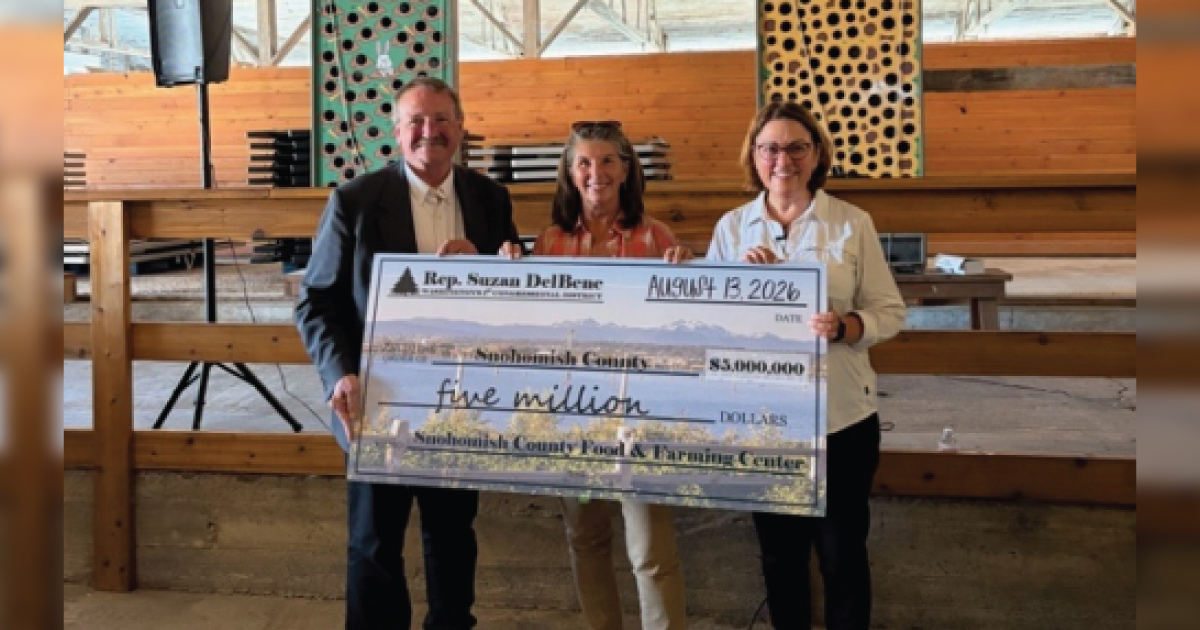
“Our region is home to a strong local farming community,” said DelBene. “We must make sure we are looking out for our farmers and provide them with the tools they need to successfully operate their farms and share their wonderful locally grown produce. As farmers face unprecedented challenges from high fuel and fertilizer costs, Trump’s tariffs, and a weak economy, federal funding will aid Snohomish County in supporting them and further developing this project.”


Following the presentation of the ceremonial check, DelBene held a listening session with Snohomish County farmers at Bob’s Corn and Pumpkin Farm to hear about the problems they’re facing. Producers discussed disaster preparedness, workforce challenges, land use policies, and infrastructure funding.
“Snohomish County has a long legacy of family farms that have fed our community for generations, when the new Food and Farming Center opens it will secure this legacy for future generations,” said Snohomish County Executive Dave Somers. “I am grateful to Rep. DelBene and our federal delegation for their partnership and collaboration to fund this important investment to support farmers and food security at a challenging time.”



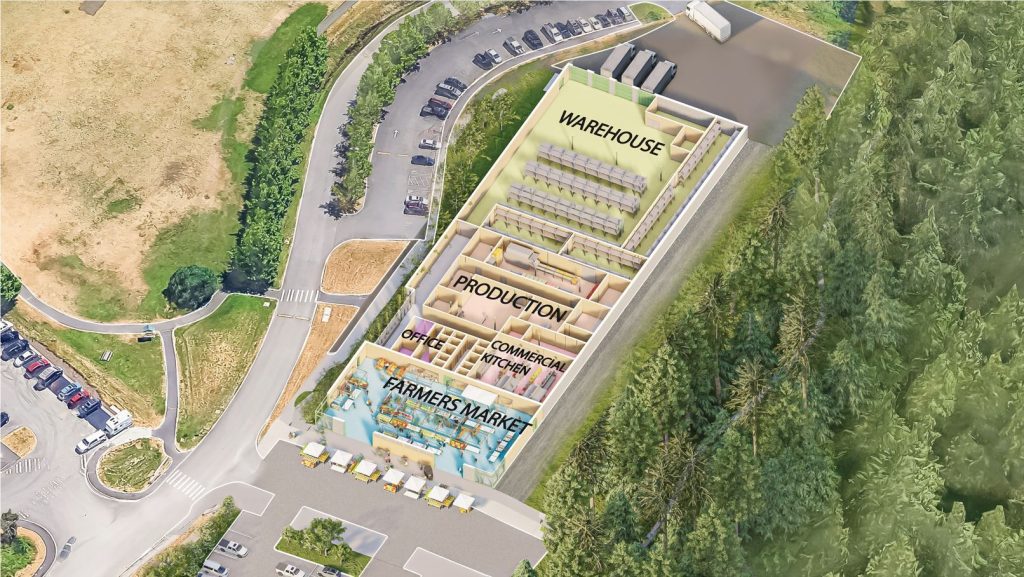
The Snohomish County Food & Farming Center is designed to support local farmers and strengthen the regional food system. The facility will feature equipment and infrastructure for processing, aggregation, distribution and value-added production of fresh local produce and other farm products, a commercial kitchen, and a year-round, indoor farmers market, creating opportunities for farmers, food entrepreneurs, and the broader community.

The Snohomish County Food & Farming Center is a key component of the County’s broader commitment to strengthening local agriculture, enhancing food security, and supporting sustainable economic development, county officials shared.

The decision to build a Food and Farming Center stemmed from a county-led outreach effort, asking local farmers what tools and resources they need to be economically viable. Overwhelmingly, farmers expressed a need for processing fresh local products as well as aggregation and distribution.
As it stands, most farmers located in Snohomish County and surrounding areas are responsible for processing, aggregation, and distribution—there’s simply nowhere in the surrounding area for products to be sliced, diced, and packaged.
To address this, the Food and Farming Center will offer core operational functions, which include aggregation, processing, distribution and marketing, as well as space and equipment for storage and value‐added processing. This space will allow for processing, group distribution, and sales. Washing, slicing, packaging, freezing and other services to be identified by the agricultural community will also be available.
The Center will only deal with fruits and vegetables, no livestock. There are a number of new USDA certified meat processing facilities in Snohomish and Skagit counties, that are easily able to cover the needs of local farmers, Linda Neunzig, Snohomish County Agriculture Office Manager. informed the Lynnwood Times back in a 2025 interview.

Local farmers also identified the lack of a commercial kitchen where they can do value-added product; for example, using strawberries to make strawberry jam or chickens to make chicken pot pie.
The Food and Farming Center will have an on-sight commercial kitchen which will allow for valued added production providing year-round income for producers and potential export products. A shared-use kitchen, where individuals can rent existing infrastructure for hourly or daily time blocks, provides a convenient way for food entrepreneurs to access existing infrastructure without the high startup costs, the county says.
The kitchen will also contain a commissary, whose business model is to rent out kitchen time, equipment, and storage; and two incubator kitchens that will provide business development assistance, and business counseling.
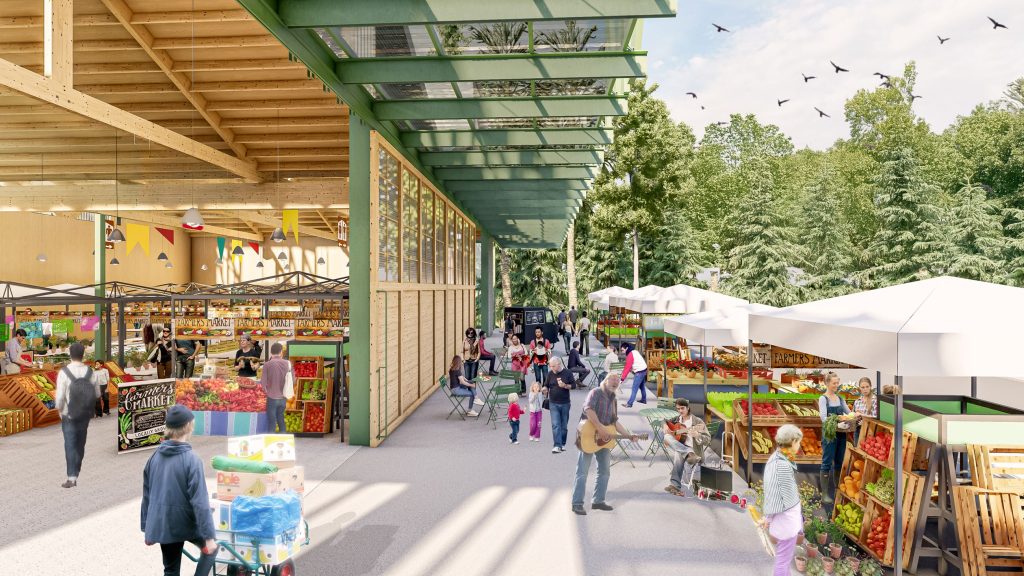
The Food and Farmer Center will also have an indoor, year-round Farmer’s Market open to the public two-to-three days a week. While the specific location of the Food and Farming Center within McCollum Park has yet to be decided, the attached farmers market is planned to be located right off 128th Street to allow visitors easy access.
Since education is also a key factor of the project, educational seminars and cooking classes will also be held at the farmers market, though the specifics are still in the works.
Having an alternative option where locals can buy their groceries has its benefits both nutritionally and economically, Neunzig informed the Lynnwood Times.
Most supermarket produce, for example, travels thousands of miles from a farm before it reaches its shelves. By buying groceries directly from the farmers, patrons will get fresher fruits and vegetables that will last longer, have more nutritional value, and generally cost less because transportation costs are greatly reduced.
To address food insecurity in the region, the county has partnered with Volunteers of America of Western Washington to start a Seed to Food program which includes farmers growing food specifically intended to be donated to local food banks which can be picked up on sight, delivered straight to the food bank, or distributed directly through VOA’s distribution hub in Arlington.
When the Center opens, the County will be run by individual operators, not county employees. The County is currently progressing the NEPA environmental review process.
Congresswoman DelBene secured over $18 million for 15 community projects across Washington’s 1st Congressional District in the FY24 federal funding package.

Author: Mario Lotmore