


SNOHOMISH—Snohomish County Executive Dave Somers proposed a $3.37 billion budget for 2027-28 that would address a projected $56 million deficit through spending cuts, new revenue and the use of previously banked property tax capacity.
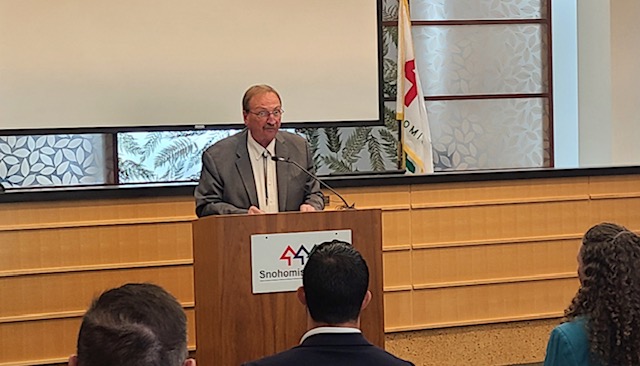
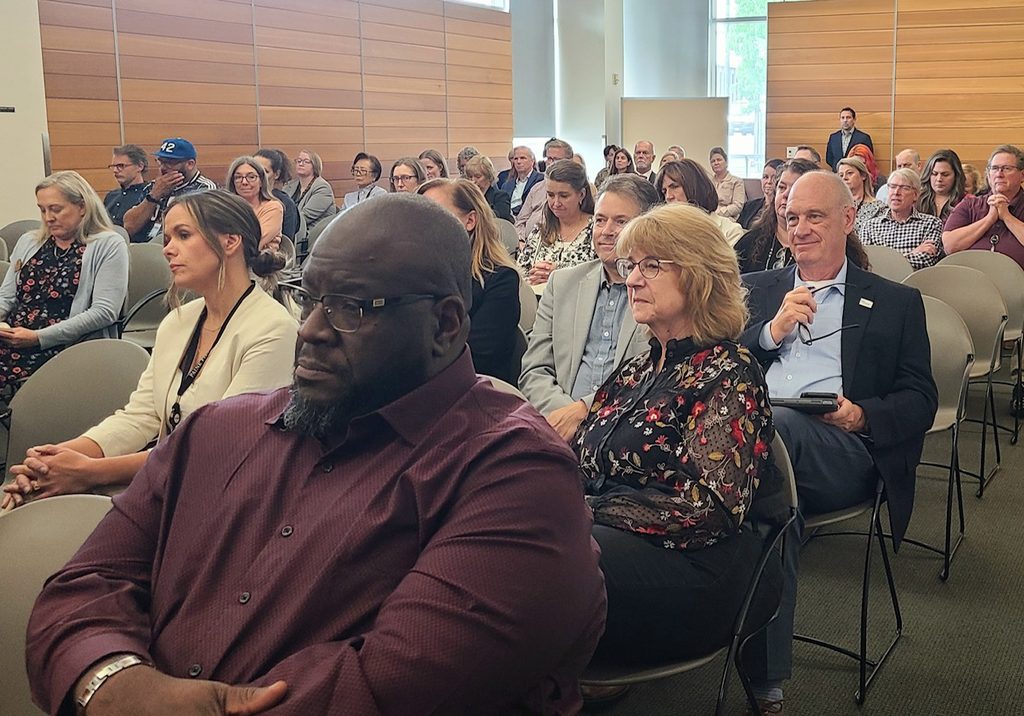
Somers presented his recommended biennial budget to the Snohomish County Council on Tuesday, September 1, saying the proposal seeks to preserve core county services while making difficult reductions as the county faces inflation, rising service costs, population growth and uncertainty over federal and state funding.
“This is the tenth time I have come before this body to recommend a budget. And every time I have committed to one thing: helping build a future for this region where everyone can thrive. That means we create the future we choose, not allow circumstances to dictate what happens to us,” said Somers. “That commitment has never changed. I have always recommended a balanced budget, one that looks at budget realities, not wishful thinking or political ideology.”
The recommended budget includes $786.6 million for the county’s general fund, its most flexible source of funding. The remainder is restricted to specific purposes through laws, grants or contracts.



Somers said the county entered the budget process with a $56 million gap based on the previous adopted budget. That figure does not include subsequent salary, and benefit increases or other costs that could emerge during the budget cycle.

The county is also contending with inflation that Somers said has increased overall costs by about 30% since early 2020 — with construction costs rising substantially more. At the same time, the county’s population has grown from about 260,000 residents, when Somers moved to the area in the 1970s, to more than 870,000 today.

Cuts and staffing reductions
The budget proposal calls for roughly $22 million in spending reductions after Somers directed every county department to identify at least 3% in cuts.
The reductions include eliminating 79 vacant positions across departments, leaving nine additional positions unfunded and holding at least 32 other positions open to reduce spending.
The Health Department and Planning and Development Services would lose 31 positions, including 11 occupied positions. Public Works would have 51 fewer positions, while Planning and Development Services would have 14 fewer.
The proposal also eliminates an animal control officer, reduces the Human Resources Wellness Team by one position and cuts rapid testing capacity in the Medical Examiner’s Office, which Somers said will result in longer waits for some death-investigation results.
“We have not been trimming extra features. We’re making tough choices with real, tangible consequences,” Somers said, adding that the elimination of vacant positions will help limit the number of layoffs. “That wasn’t luck, it was strategy and care shown by county leaders.”
The proposed reductions come after several years of rising personnel costs. Somers said the number of employees supported by the county’s general fund is lower than it was in 2010, while the cost of staffing has increased 81%.
“The last time I gave a budget address in 2024, I was relieved to present a budget without layoffs. Unfortunately, I cannot say the same this time,” Somers said.
New revenue and higher property taxes
Somers’ proposal also relies on several sources of new revenue.
The budget would take the allowable 1% annual increase in the county’s property tax levy and use remaining banked capacity from previous years when the county did not take the full increase available under state law.
Somers said the county’s property tax revenue has struggled to keep pace with inflation because state law generally limits annual increases in the county’s total property tax levy to 1%.
“If we’re not willing to take the full capacity that is available, we’re backing ourselves further into the corner,” Somers said.
The combination of the annual increase banked capacity, and changes to certain dedicated levies is expected to cost the owner of an average $741,000 home about $41 more per year, according to Somers’ presentation.
The budget also includes the Justice Fund and Transportation Benefit District, which Somers said will help support public safety and transportation investments.
The Transportation Benefit District is particularly important for leveraging outside funding, according to Somers. For every local dollar invested, the county can leverage about $3 in external funding.
The impact of higher taxes on residents was not lost to Somers.
“I know this will hit some families harder than others,” Somers said. “It is our responsibility to make sure that money goes toward services that reduce burdens in other parts of their lives and reflect the priorities of our community.”
County Council Vice President Sam Low told the Lynnwood Times that he “highly doubts the County Council will allow taxes to go that high.”
“We need to make sure that people can provide for their families,” said Low, thanking county staff for their hard work and dedication to the budget process adding that he deeply appreciates all the work that they do.
County Councilman Jared Mead added that it’s important to calculate what the “total burden” of a household is before voting to raise taxes.
“Less than a month ago we just did a sales tax increase, that’s going to hit the average household with, let’s say, $50 plus a year and we raised car tabs $20 per vehicle. Let’s say the average household has two vehicles, if you have kids you have more than that, $20, $40, $60 more in car tabs. Not to mention the bill Somers mentioned about the levy separation, that’s an additional $27 in annual obligations on the average resident’s property tax,” said Mead. “I think it’s important that we have that context when we think about the budget. Not just what we’re doing next month, as far as revenue, but what we did last month to make this budget the way that it does.”
In a year where “everyone is struggling economically” Mead said it’s important not to blame everything on the federal government, adding that there is a “role we play at the local level as well” to relieve economic pressure. For example, with $300 million coming in from COVID relief funds Mead says, “you spend money a little differently.” He added that the county is already “pulling every lever” to balance the budget but will be looking at the county’s budget in the next five years, not just the next two, to see which revenue strategies stick.
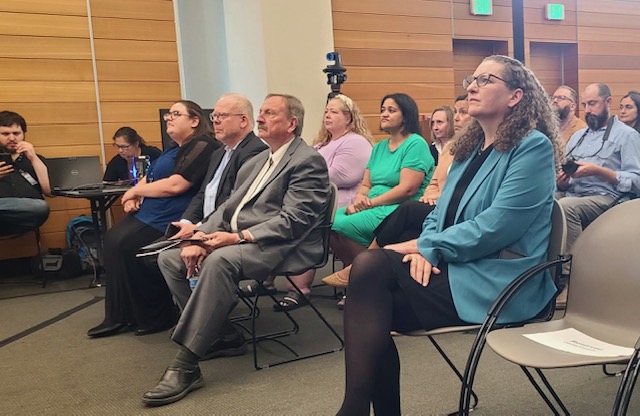
County Council Chair Megan Dunn chimed in on the elimination of full-time positions (FTES) at the Health Department, Planning Department, and Public Works Department.
“We do hate to lose staff, but we did have to move forward with that, where we saw reduction in revenue,” Dunn told the Lynnwood Times. “Unfortunately, we are faced with inflationary costs in both healthcare and increased costs in contradicted employees. In that case we will see reduction in services. It’s a balance and we have to balance between raising revenue, impact to families, cuts to our employees and their work-life balance.”
Housing, behavioral health and public safety
The proposal maintains investments in housing and behavioral health, including $45 million in capital investments over the next two years from the county’s affordable housing and behavioral health fund.
The funding includes $20 million for affordable housing, $6 million for supportive housing, $9 million for behavioral health facilities and $10 million for recovery housing.
Somers highlighted the Lynnwood Crisis Care Center, which opened this year with $6 million in county investment. The facility provides an alternative to emergency rooms or jail for people experiencing mental health or substance-use crises.
The county is also expanding bridge housing through its New Start Centers. The Edmonds center is already housing people experiencing homelessness, while the Everett center, which opened earlier this week, is expected to begin accepting residents this month.
Somers also pointed to the county’s broader network of behavioral health and public safety programs, including the SCOUT program, which pairs law enforcement officers with social workers.
Finding efficiencies
The budget includes several efforts to reduce costs without eliminating services.
At the county jail, Somers said the county plans to hire six full-time nurses and reduce reliance on contracted medical staff. The change is expected to save approximately $1.8 million annually.
District Court plans to expand defensive driving classes by adding program coordinators. Somers said the program can improve road safety while generating revenue to support county services.
The county’s Operational Excellence team has also worked with departments to identify smaller savings, including changes to cellphone contracts, expanded electronic signatures and converting paper-based processes to digital systems.
Somers said those efforts have already prevented hundreds of thousands of dollars in unnecessary expenses and saved thousands of staff hours.
“If we want a government that is both lean and effective, we must invest in continuous improvement,” Somers said.
Environmental investments
The proposed budget also maintains investments in environmental restoration and infrastructure.
The county’s Surface Water Management program would set aside $19.5 million for 26 culvert projects during the next biennium, with eight projects scheduled for construction.
The program worked on 35 culverts during the 2025-26 biennium, including 11 that were constructed during that period, according to Somers. The work represented a $17 million investment supported by Surface Water Management fees, real estate excise taxes and state and federal grants.
Somers said the work is necessary both for salmon recovery and to meet legal requirements related to fish passage.
The county also plans to continue restoration projects at places such as Smith Island and Chinook Marsh, which Somers said can provide natural flood protection while restoring habitat and preserving farmland.
Public input
Somers said the budget process included input from more than 500 community members through presentations, conversations and surveys conducted over the summer.
A Fiscal Sustainability Task Force also presented recommendations to the County Council back in March.
Somers said residents broadly agreed that the county should consider long-term consequences when making budget decisions, protect services for people with few alternatives, pursue efficiencies and outside funding, and be transparent about its finances.
Residents also identified emergency response and patrol capacity, services for families and seniors, road maintenance, parks and environmental protection as priorities.
The proposed budget maintains funding for Family Resource Centers and Senior Centers, Somers said, while preserving local funding intended to leverage outside transportation dollars and maintaining county park and environmental response teams.
Somers urged county leaders to avoid turning the budget process into a political fight between departments, cities or different levels of government.
“We cannot make this budget about silos and pitting people against each other,” Somers said. “We must focus on strategic decisions to serve the entire county…The deficit in our budget did not emerge in a single budget cycle. We know we can’t resolve it in a single cycle, either.”
The proposed budget will now go through review and deliberation by the Snohomish County Council before the final 2027-28 budget is adopted.
Somers said the two-year budget is intended to give the county time to address the structural imbalance between the cost of providing services and available revenue while maintaining the core functions residents rely on.
County Council Chair Megan Dunn informed the Lynnwood Times that she will be stewarding the budget process in a transparent, and fair way, so that the county council feels that they have all the tools at their disposal to make their decisions. Another priority of hers will be community outreach, including, but not limited to, encouraging the public to comment at Community Budget Forums and Community Hearings.

Author: Kienan Briscoe



2 Responses
Under the first photograph showing the attendees, you missed identifying Assessor Linda Hjelle sitting in front of Treasurer Brian Sullivan.
Added. Thank you.