

BOSTON — U.S. District Judge Indira Talwani on Friday issued a preliminary nationwide injunction blocking the United States Postal Service (USPS) from enforcing new mandatory rules on mail ballots for the November midterms, including required envelope designs, barcodes containing voter data, design approvals and uploads of voter lists to a federal portal. The DOJ appealed the new injunction to the 1st U.S. Circuit Court of Appeals on Friday, shortly after Talwani issued the order.
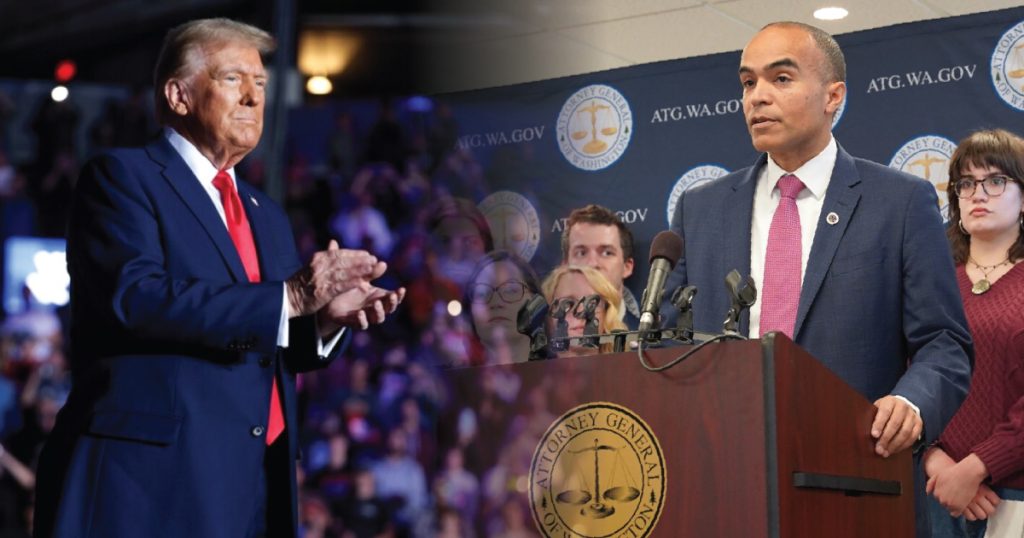
“The court finds that Defendants have not made a strong showing that they are likely to succeed on the merits, have shown no irreparable injury absent a stay, have not shown that a stay will not substantially injure the other parties interested in the proceeding, and have not shown that a stay would be in the public interest. Accordingly, the request for a stay pending appeal is DENIED,” Judge Talwani wrote in her ruling.

The federal judge’s order replaces a 14-day temporary restraining order she issued last week. It applies through the November 3 elections and comes after North Carolina began mailing ballots on Friday.
The new rules, finalized by USPS in late August to implement President Donald J Trump’s March Executive Order 14399, would have required states to submit lists of mail-ballot recipients, use approved envelope designs with unique Intelligent Mail barcodes, and risked having noncompliant ballots rejected or returned.



Secretary of State Steve Hobbs was pleased with Friday’s ruling saying that the new USPS final rule “would sow chaos” for the midterms.”

“What I want voters to know right now is simple: My office and election officials statewide are doing everything we can to ensure you will be able to cast a ballot and make your voice heard this November,” said Hobbs. “The midterm elections will be safe, secure, and accessible here in Washington. Regardless of what the federal government says, their attempts to intrude in state election administration remain unconstitutional. We will not back down when it comes to defending our state’s constitutional right to administer elections and every voter’s right to vote by mail.”

Judge Talwani found the measures “explicitly and exclusively” regulate election mail rather than ordinary postal operations. She ruled Congress never delegated Elections Clause authority to USPS and that last-minute implementation “nearly guarantee[s] significant disenfranchisement.”
“As the court previously said, states’ compliance with this illegal order would be ‘practically impossible’ before the November elections given the unprecedented demands it would put on state and local elections officials,” Washington state Attorney Nick Brown said on the ruling. “The chaos that would cause is exactly what Trump wants. That’s why we continue to fight for a fair and properly administered election.”
The latest ruling follows an August 24 U.S. Supreme Court decision that lifted an earlier Talwani injunction against parts of the March executive order, finding that challenge premature because USPS had not yet issued a final rule. After the agency published the rule, on August 26, Attorney General Brown co-led a coalition of 25 states in filing a lawsuit to block the unlawful rule. On August 28, the court granted the coalition’s request for a temporary restraining order, finding that compliance with the rule before the November elections was “practically impossible” and that it created a significant risk of disenfranchisement.
Postmaster General David Steiner said Friday that USPS “acted within our legal authority” to comply with the executive order, “but ultimately the courts will decide that question, and we will follow the court’s determination.” USPS separately stated its system was developed on an accelerated schedule but that “quality and security standards were not compromised.”
The preliminary injunction is appealable, allowing the administration to request a stay, which it has done, from the 1st U.S. Circuit Court of Appeals while the litigation proceeds.
U.S. Supreme Court Justice Ketanji Brown Jackson is handling the Trump administration’s emergency Supreme Court application (docket 26A297) that was filed Thursday to lift Talwani’s earlier temporary restraining order. As the circuit justice for the 1st Circuit, she set a Tuesday, September 8 deadline for the states and voting-rights groups to respond. Talwani’s Friday preliminary injunction replaced the 14-day TRO; however, the DOJ is expected to file a new or supplemental application seeking a stay of Friday’s nationwide injunction.

Author: Mario Lotmore