

SAN SALVADOR, El Salvador — Students in 171 Salvadoran public schools that took part in a year-plus education pilot featuring artificial intelligence tutors scored above the country’s national averages in reading, mathematics and science and at levels comparable to Germany and Sweden on a 2022 international benchmark, President Nayib Bukele and the World Bank said this weekend.
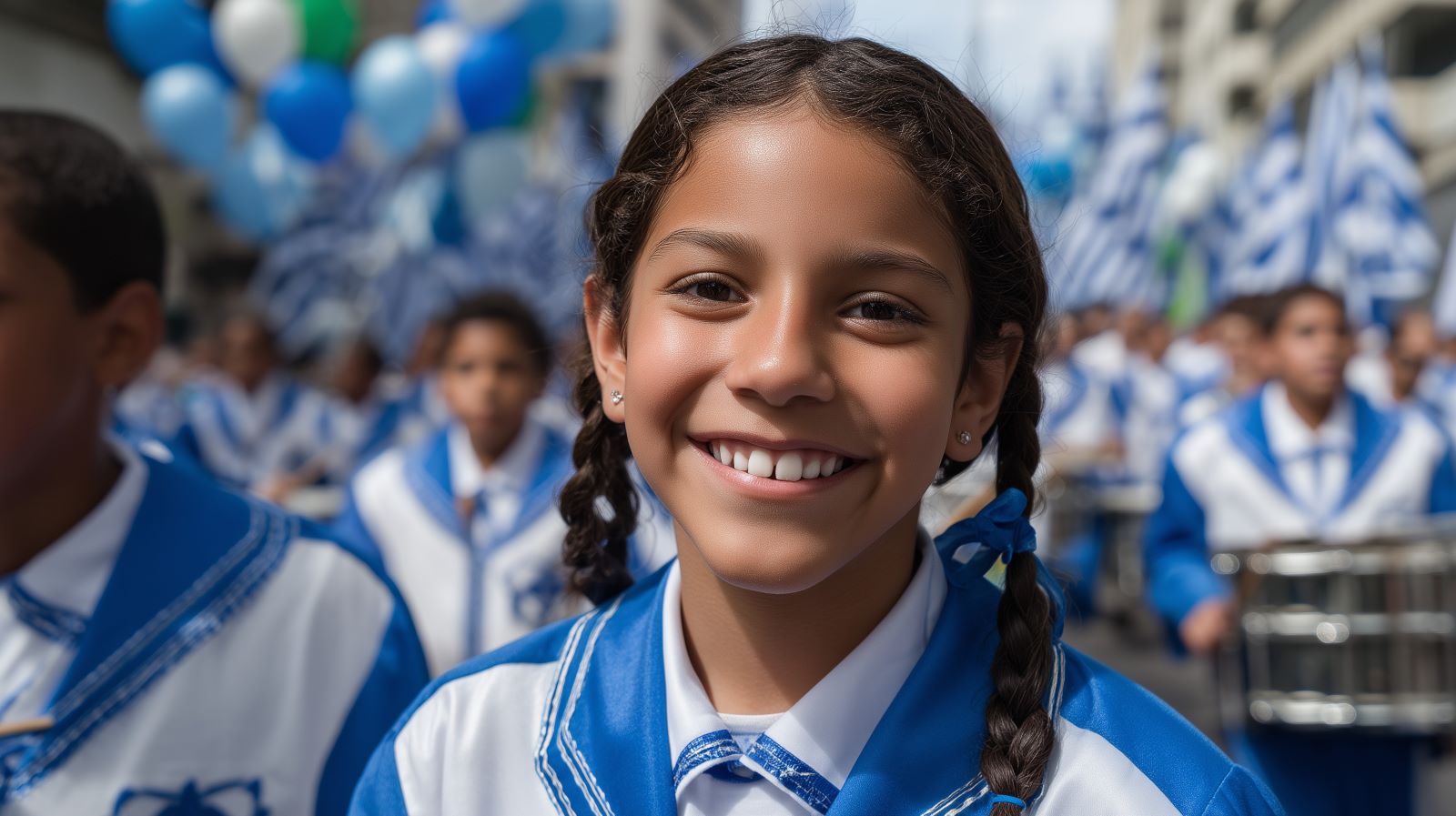
The results come from a PISA for Schools assessment given in June 2026 to 1,198 volunteer students in schools already using the government’s education modernization program. Officials presented the findings as early evidence that combining structured teaching, teacher coaching and digital tools — including AI tutors — can lift learning in a system that ranked near the bottom of Latin America on its first national PISA test four years earlier.
PISA, the Programme for International Student Assessment, is a test run by the Organisation for Economic Co-operation and Development. Every few years it measures how well 15-year-olds can apply reading, math and science knowledge to real-world problems, not just recite classroom facts. National PISA scores allow countries to compare their school systems. PISA for Schools is a related but separate, voluntary exam that uses the same scale so individual schools or groups of schools can see how their students stack up against those international averages.
El Salvador first sat for the full national PISA in 2022. Its 15-year-olds averaged 343 in math, 365 in reading and 373 in science — well below the OECD averages of roughly 472, 476 and 485 and far behind Germany (475, 480 and 492) and Sweden (482, 487 and 494). About 63% of Salvadoran students performed poorly across all three subjects that year.




Official scores for 2025 will be released September 8, but officials announced Friday that scores from June 2026 pilot program exceeded El Salvador’s national averages and were comparable to those two European countries’ 2022 results.

The highly promising results from El Salvador’s first PISA for Schools assessment show what education reform can achieve when student learning is placed at the center—and change reaches the classroom.
What is at stake is more than a score. It is a generation’s future and its…— World Bank Group (@WorldBankGroup) September 5, 2026
The World Bank, which is helping finance the broader reform, called the pilot results “surprising and very encouraging” but stressed they apply only to the participating schools adding that they still show “immense potential” when reforms reach the classroom and are implemented rigorously.
President Bukele said the pilot, which includes AI tutors, has already expanded from 171 schools to more than 1,000 and is scheduled to reach every public school in about 18 months.
“In a few years, El Salvador will inspire the world,” he wrote on X. In December 2025 the government and xAI, the company behind the Grok chatbot, announced a plan to deploy personalized AI tutoring nationwide.


“Over the next two years, we’ll deploy Grok across more than 5,000 public schools, delivering personalized learning to over one million students and empowering thousands of teachers as collaborative partners in education,” xAI wrote in a statement. “This initiative will create adaptive, curriculum-aligned tutoring that adjusts to each student’s pace, preferences, and mastery level—ensuring every child, from urban centers to rural communities, receives world-class education tailored to their needs.”
The El Salvador pilot is not an AI-only experiment. It sits inside a larger overhaul that includes structured pedagogy, remediation programs, school-management tools and infrastructure upgrades.
World Bank documents reviewed by the Lynnwood Times convey a phased rollout that began with a small proof of concept that is now scaling with $501 million in financing under the AprendES program. Learning poverty — the share of 10-year-olds who cannot read and understand a simple text — remained high in El Salvador as recently as 2024, which is why officials and lenders have treated classroom-level change as urgent.
Khan Academy’s AI tutor is the nearest U.S. equivalent of a student-facing AI tutor inside public schools. It is used in hundreds of districts. Student use grew from roughly 400,000 in 2023–24 to about 700,000 in 2024–25, with expectations of around 1 million in 2025–26. Districts typically pay about $15 per student per year. North Carolina lawmakers have proposed tens of millions in state money to make Khanmigo a statewide option.

Author: Mario Lotmore