


EVERETT — Everett residents face a pending decision that would raise the city’s sales tax by 0.6 percentage points and end Everett Transit as a standalone agency all without a vote of the people. The Everett City Council and the Community Transit board could act as soon as October. Residents who object to a tax increase imposed without a ballot measure still have a narrow window to tell council members so.
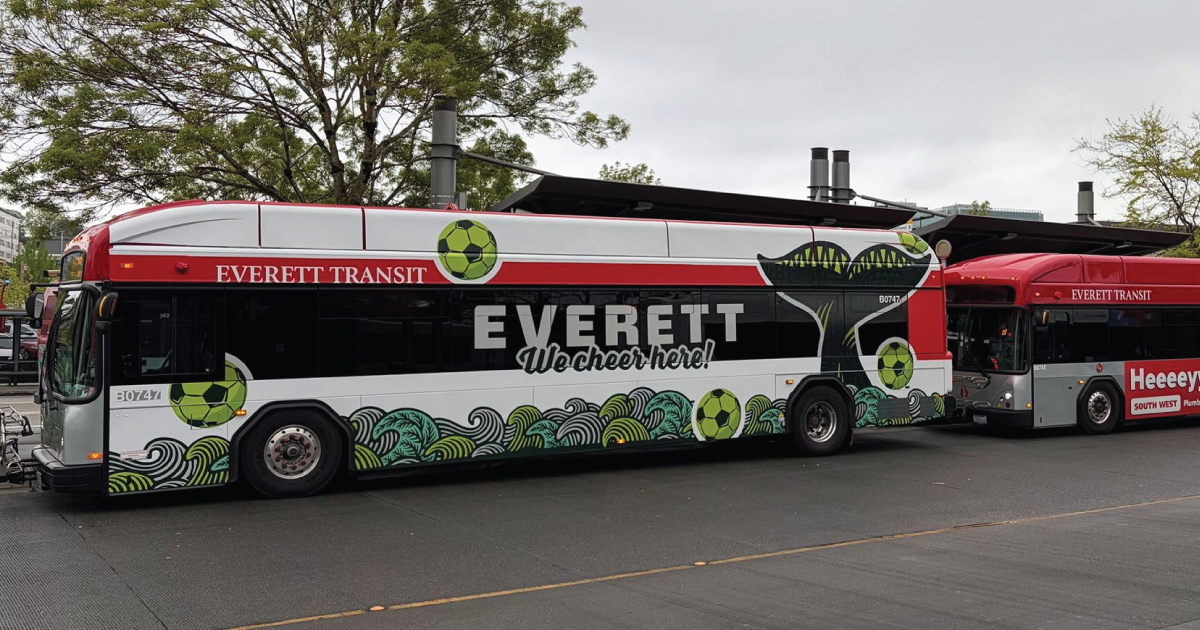
The proposal would annex Everett Transit into Community Transit’s Public Transportation Benefit Area dissolving Everett Transit. Its routes, buses, facilities and employees would transfer to the countywide agency. The dedicated transit sales tax inside the city would double from 0.6% to 1.2%, lifting the overall local rate from 9.90% to 10.50%—one of the highest in Washington state.
City figures put the new money at about $29 million a year starting in 2027 and about $158.3 million from 2027 through 2031. Keep Everett Transit, which opposes the merger, estimates an average family of four could see its monthly transit-tax burden rise from about $94 to $188. Adult fares could move from $2 to $2.50; senior and disabled fixed-route fares from 50 cents to $1.50.
The tax path excluding a public vote exists because of Senate Bill 5801, enacted in 2025. The law lets a public transportation benefit area absorb a municipal system through an interlocal agreement approved by the city council and the transit board after public hearings—no public vote.



Mayor Cassie Franklin has said that is how representative government works and that she intends to send a package to the council, not to the ballot.
“We were elected to office to make these decisions,” she told The Daily Herald.
Franklin has also said she will not bring a plan forward unless it sharply expands city bus service, preserves current paratransit levels and protects wages and benefits for transferring workers.
Amalgamated Transit Union Local 883 President Steve Oss has called the hike “the largest sales tax increase in the history of the state of Washington without a vote of the citizens of that taxed region.” He wants the question on a ballot, even if only as an advisory measure.
ATU Locals 883 and 1576 have publicly voiced “serious concerns.” Union members picketed outside council chambers on Sept. 2. Oss told the council he wants to hear “no, no merger” when the vote comes. Keep Everett Transit, developed with Local 883, argues the right to vote was removed “without your consent” and that the change would be permanent.
Supporters of the merger say the extra six-tenths of a point is the only way to fund the service Everett will need as the city grows and as Link light rail moves north. Franklin and Community Transit CEO Ric Ilgenfritz have said even a voter-approved 0.3-point increase in 2030, which Everett Transit has discussed if it remains independent, would still not be able to match the service possible at Community Transit’s 1.2%.
They point to more frequent buses, fewer transfers at the city line and stronger connections to light rail. Ilgenfritz has said there is “no scenario” in which Everett service gets worse. Community Transit is the larger agency, with hundreds of vehicles and a budget many times Everett Transit’s $47 million 2026 operating-and-capital plan.
The fiscal fight is not only about the rate. Sales taxes hit household goods, restaurant meals and many retail purchases. Oss has warned that a higher city rate could push shoppers toward neighboring cities. Councilmember Scott Bader has said he still has questions, including what extra service residents would actually receive and whether a merger would spare the city the cost of a new transit maintenance and operations base.
Those are the questions residents can still put directly to the people who will cast the votes.
A draft interlocal agreement was expected in September. Implementation, if approved, would take years. Existing routes would remain largely in place at first; a more integrated network might begin phasing in around March 2028 and could take up to four years to finish. Officials have verbally pledge to keep Everett’s current paratransit coverage whole for people who already use it.
Because the tax increase no longer goes to the ballot, the upcoming council vote is your last opportunity to have your voice heard.
Keep Everett Transit urges residents to contact their City Council representative. Council meetings are at 6:30 p.m. on the first three Wednesdays of the month and at 12:30 p.m. on the last Wednesday. Residents can speak during public comment, write council members before an October vote, and ask whether they will raise the transit sales tax without sending the question to voters.
The decision, Franklin has said, “will be up to them.”
For Everett residents who do not want a 0.6-point sales-tax increase locked in without a public vote, now is the time to say so.
Contact Everett City Councilmembers now to voice your position on taxation without a public vote by emailing council@everettwa.gov:
- Erica Weir (District 1)
- Paula Rhyne (District 2)
- Don Schwab (District 3 — Council President)
- Luis Burbano (District 4)
- Ben Zarlingo (District 5
- Scott Bader (At Large)
- Judy Tuohy (At Large)
About Future 42 Snohomish County
By turning frustration into action, we are building a diverse and engaged community of Washingtonians and Snohomish County citizens and fueling a wave of empowerment. We provide a means for citizens to make their voices heard and their actions count by respectfully communicating with local lawmakers on timely and topical issues including: Creating a safe and livable state, ensuring a more affordable cost of living, lowering our taxes, and providing an environment for our citizens and business to thrive.
Sign up for our newsletter at Future42.org for Snohomish County updates and call to action emails!
Source: Paid for by Project 42

Author: Future 42



One Response
Spokane Transit put a measure to renew part of their transit sales tax-0.2%-in August. Their total transit sales tax is 0.8%. The city of Seattle is putting a 0.3% transit sales tax in front of their voters in November. The state’s behemoth transit agency, King County Metro, roughly 10x the size of Community Transit and which encompasses the city, has a transit sales tax of 0.9%. Pierce Transit is asking voters for a 0.3% increase in their transit sales tax, to 0.9%. In fact, Community Transit sought voter approval to increase its sales tax to the highest in the state at 1.2% several years ago. The only other transit agency to have that rate, Intercity Transit in Thurston County, doesn’t charge fares, even on its commuter service, and has three transit riders on its board. Everett Transit is not broken. It is a well-run, flat organization that was first in Snohomish County in electric buses, installed shields on its buses during the COVID pandemic, offers free service to community events, and pivoted to offer free shuttles when the Evergreen Way Fred Meyer closed. All of this is gone with this potential takeover. As Mayor Franklin said in her role last Sound Transit board member when trying to convince them to approve Link to Everett, the city has more low-income residents than the other areas under consideration for cuts in that agency’s recent “Enterprise Initiative.” In this role, a legislator from Mukilteo, in Community Transit’s service area, not Everett’s, was persuaded to get the legislation written to bypass the voters autocrat style with a potential doubling of the transit portion of the regressive sales tax that hits low-income taxpayers hardest. This should raise suspicions as to her motivation. In addition, Everett will lose local control-seven Everett councilmember/residents oversee it now-vs. 1 of 12 post-acquisition-and the few who ride will get higher fares with no guarantee of a doubled level of service-and where the demand isn’t there at present. It appears that this is a subtle means to get out from under the city’s financial woes and not based on need.