

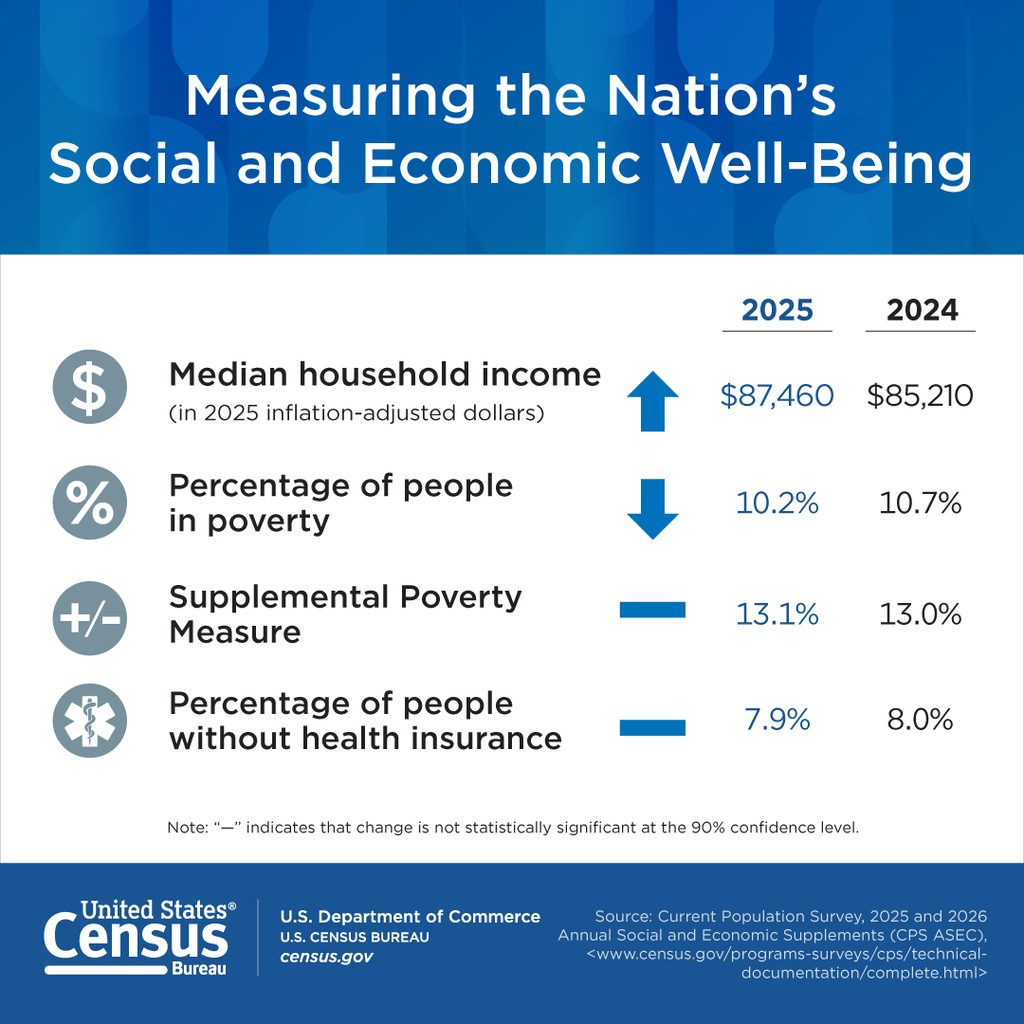
WASHINGTON, D.C. — Real median household income in the United States rose to a record $87,460 in 2025, and the official poverty rate declined to 10.2%, the Census Bureau reported Tuesday. The share of people without health insurance for the entire year was statistically unchanged.
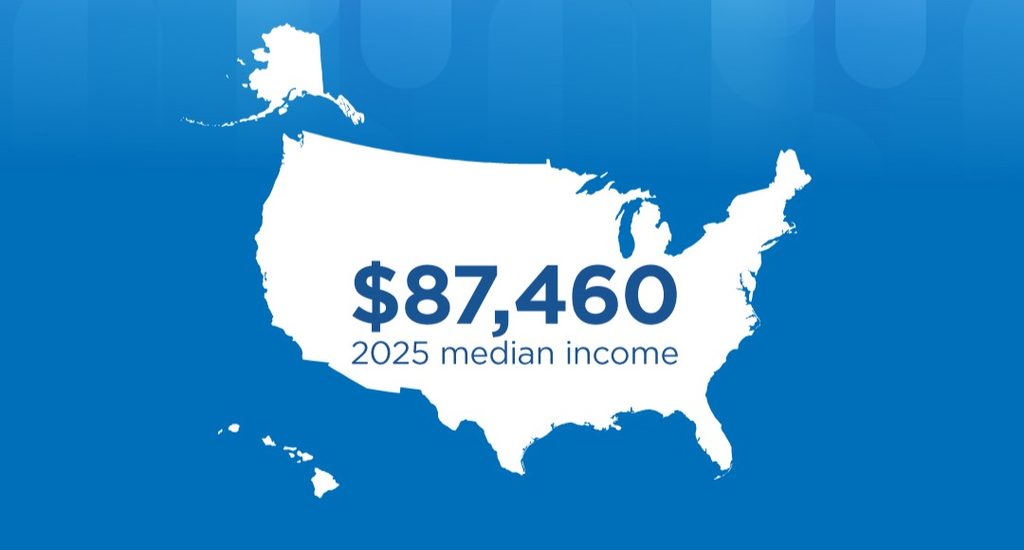
The bureau wrote that inflation-adjusted median household income increased 2.6% from $85,210 in 2024 and was the highest since the agency began publishing the series in 1967. The 2024 figure had not been statistically different from 2019, the last full year before the COVID-19 pandemic and the previous peak. The 2025 estimate surpassed both of those earlier highs, according to a Census analysis of the new income data.



The findings come from three reports — “Income in the United States: 2025,” “Poverty in the United States: 2025” and “Health Insurance Coverage in the United States: 2025” — based on the 2026 Current Population Survey Annual Social and Economic Supplement, which asks households about the prior calendar year. Income figures are pretax money income unless otherwise noted and do not include the value of in-kind benefits. Additional materials are collected in the bureau’s income, poverty and health insurance press kit.
Median post-tax household income, which subtracts federal and state taxes and payroll taxes and adds credits, rose 3.1% to $76,060 from $73,760. That measure did not exceed the highs of 2020 and 2021, when pandemic stimulus payments and other credits temporarily lifted after-tax resources. Inequality was 8.7% lower when measured with post-tax income than with pretax income.




Median income rose 3.0% for White households, 2.9% for non-Hispanic White households and 4.8% for Black households.


Among full-time, year-round workers, women’s median earnings rose 3.2%, while men’s earnings did not change significantly. The female-to-male earnings ratio increased to 83.9% from 80.6%.
The official poverty rate fell 0.5 percentage point from 10.7% in 2024 to 10.2%. About 34.5 million people still live below the poverty line. The weighted average threshold for a family of four was $32,970 and child poverty fell to a record low of 13.4%. The official poverty rate for Hispanic people fell 1.2 percentage points to 13.9%, also a record low in data available since 1973, when the rate was 21.9%, the bureau said in a separate analysis of Hispanic poverty.
Hispanic people still accounted for 28.1% of those in official poverty while making up 20.7% of the population. Black and American Indian and Alaska Native people were also overrepresented in poverty; non-Hispanic White and Asian people were underrepresented.
Washington’s official poverty rate still remains lower than the national rate of 10.2% released on Tuesday. For states, the Census Bureau uses three-year averages (2023 to 2025), so the official poverty rate for Washington states is currently 8.9%.
The Supplemental Poverty Measure, which accounts for taxes, benefits and local housing costs, was 10.5% in Washington and 13.0% nationally over the same three-year period. Census said Washington state was among 26 states plus D.C. where the SPM within the state (10.5%) was higher than the state’s official rate at 8.9%.

Author: Lynnwood Times Staff