


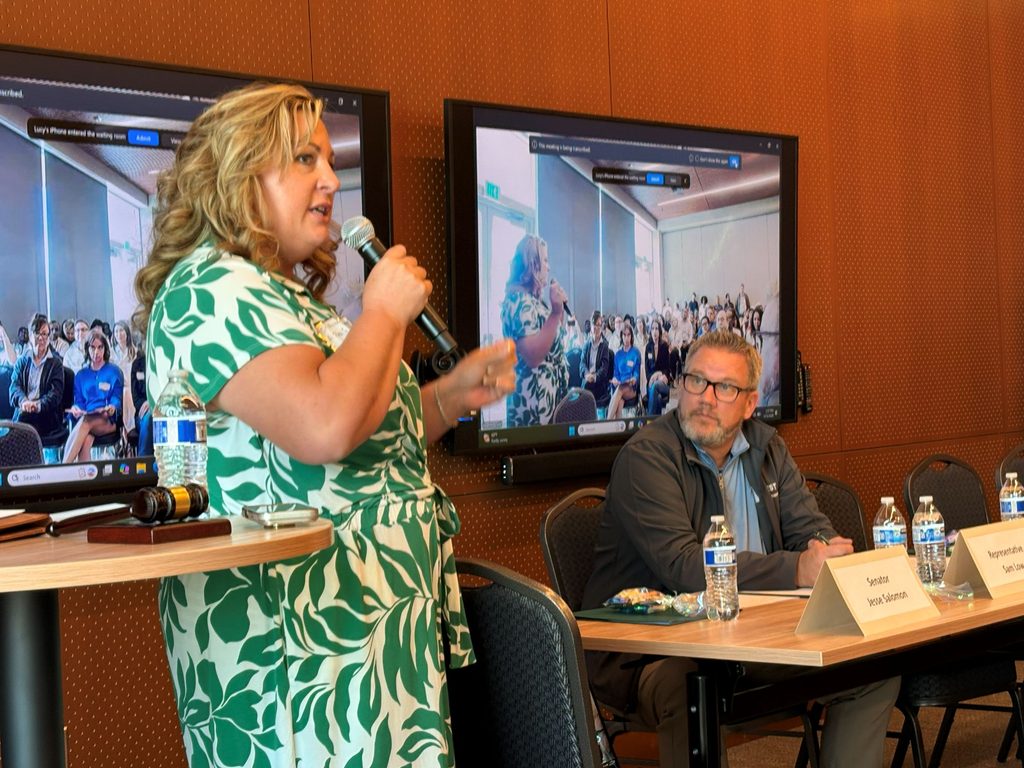
LYNNWOOD—Washington State Representative Sam Low heard from Adult Family Home providers, caregivers, families, and community members about the problems facing the long-term-care system in Washington and where to go from here.
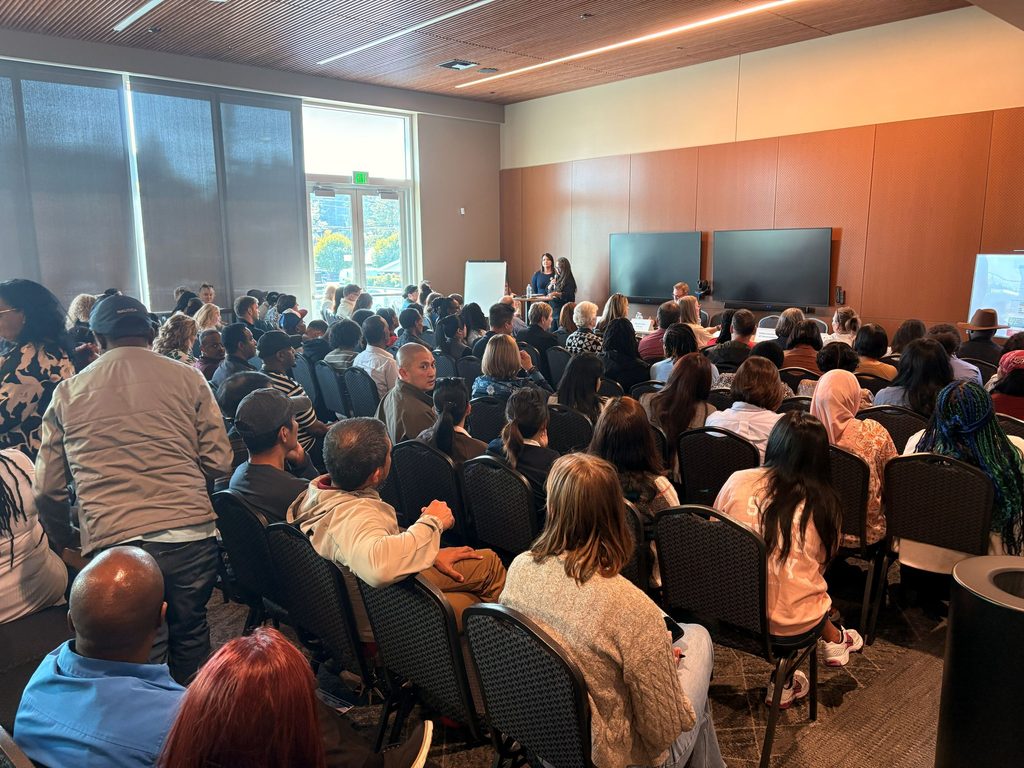
Adult Family Homes care for some of the region’s most vulnerable neighbors: seniors, people living with dementia, adults with disabilities and complex medical needs, and those approaching the end of life.



Yet the providers doing this work are facing increasing regulations and costs, workforce challenges, Medicaid reimbursement concerns, and state policy decisions that directly affect their ability to provide quality care.
“This is not just a provider issue. It is a community issue. These are our parents, grandparents, spouses, friends and neighbors, and the decisions being made today will help determine what care is available to all of us tomorrow,” said Jo Ann Adiele, Owner and Provider at Hiljay Homes Inc.




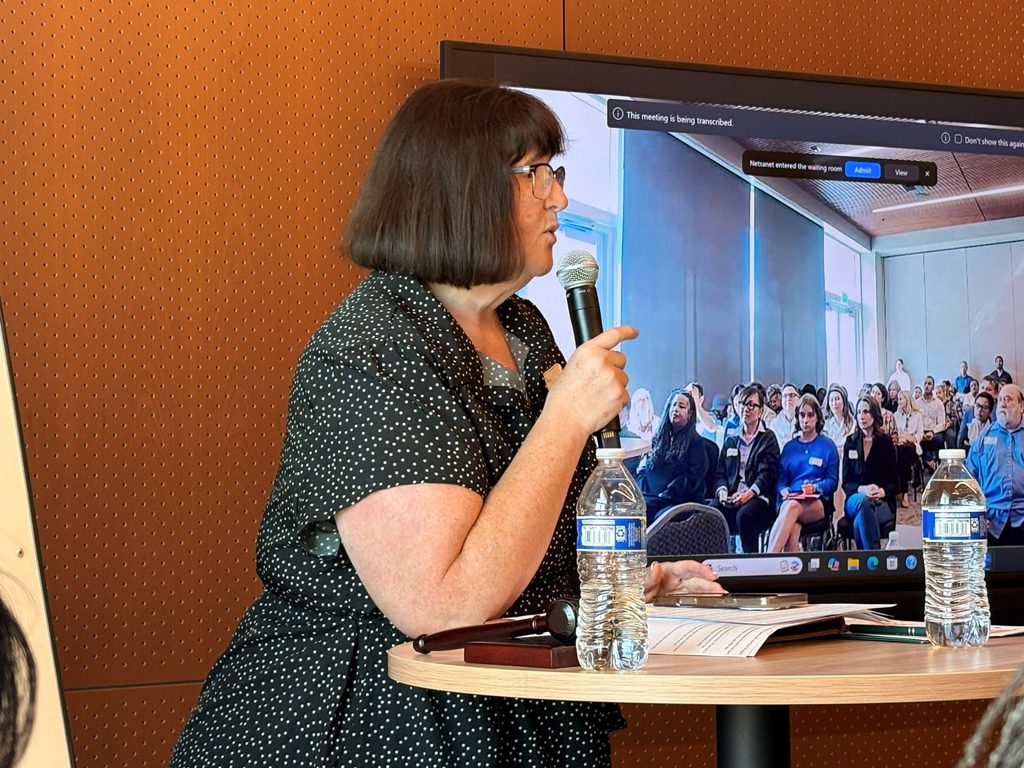
The town hall was hosted by Caring Adult Family Homes of North Sound and took place at the Lynnwood Neighborhood Center on Tuesday, September 15.


Out of the six legislators invited to the panel, only Representative Low attended. The other legislators who did not attend include Senator Jesse Salomon, Representative Mary Fosse, Representative Carolyn Eslick, 39th District candidate Kathryn Lewandowsky, and Representative Lauren Davis.
Low, who sits on the Healthcare Committee and is ranking member of the Housing Committee, shared Tuesday that his first exposure with working with disabled adults was in the 1970’s when his church bus would pick up individuals from Adult Family Care centers and he would hitch a ride and learn about how they live.
“This topic is near and dear to my heart,” said Low.
Sharon Shirley, a family member impacted by some of the challenges facing log-term care, shared her personal story of walking six loved ones through, what she calls, the “third act of life.”
“I’m not here to advocate for adult family homes. I’m here today to advocate for quality adult family homes,” said Shirley. “Quality matters. Most people don’t want to leave their homes if they can’t care for themselves. But the numbers show differently. Nobody wants to be warehoused, no human deserves to be just warehoused, quality of life is what we all want and what we all deserve.”
Shirley cared for her brother for two years, prior to his death, by commuting two-and-a-half hours (one way) up Interstate 5. She said it was exhausting, taking an emotional, physical, and financial toll on her. But when her brother died he had no plan in place for what was going to happen to his wife of more than 55 years.
A month after Shirley’s brother passed away, she moved his wife, Patsy, into an adult family home where she lived for 14 years before she died.
“Despite grieving her husband of 55 years, I can tell you I have zero regrets. I know that she had a phenomenal 14 months. She accomplished things living in that quality adult family home that I hadn’t seen her accomplish in decades,” said Shirley. “She exercised for the first time ever in her adult life, she was moving more and eating less – eating healthy, quality foods. She told me stories about the people that she lived with and the friends that she made. I can truly say that she loved the people there and they loved her.”
What quality long-term care means for Shirley is caretakers who are compensated fairly for the work that they do, it’s physical therapy; it’s music therapy,; it’s pet therapy; it’s enrichment; it’s more than just sitting in a lounge chair staring at a screen.
Viola Mirzaei-Nejad, co-host and organizer for Caring Adult Family Homes of the North Sound, spoke about some of the “obstacles” long-term care providers have to go through, from navigating new legislation, to fees, and rates.
“I could have stayed in nursing and made more money. I don’t make any money doing this. We’re here because we care for the most vulnerable in our state,” said Jo Ann Adiele.
On July 9, 2026, the Washington Supreme Court ruled in Bolina v. AssureCare Adult Home, LLC that the state’s minimum wage and overtime exemption for live-in caregivers is unconstitutional. This, according to Jessica Claybrook, long-term care provider, could substantially increase the cost of providing 24/7 coverage.
“Compensation we definitely need to address but I think it’s more than compensation. My conversations in Olympia this next year will be making sure we take care of the whole worker, because the whole worker is important to me to,” said Rep. Low.

According to Sue Reep, with Caring Adult Family Homes of North Sound, the average rate for long-term care workers is $20/an hour in the Seattle area. To hire four people, working 7 a.m. to 7 p.m. it costs $25,208, without overtime, per month. Adding state tax, federal tax, medicare, L&I, unemployment, social security, the sub total amounts to $29,315 without overtime, for four employees.
The P&L (profit and loss statement), based on Medicaid pay, rate varies from $148 to $300 though $190 is the average rate for most providers. If a long-term care center had six residents at that rate its gross would be $34,000, not counting empty beds. However, mortgage costs an average of $6,000, payroll cost close to $30,000, and food costs $3,000. If beds were increase to eight this cost burden would drop significantly, Reep said.
“We’re in the short of $19,000. With eight residents we’re short of $8,000. So how do we make up the difference? We have to pay, we have to shortfall, we have to cut pay. We have to cut food, cut home maintenance or buying quality supplies,” said Reep. “Washington cannot build a stable, long-term care system under a rate that requires providers to lose money every day. It’s just not possible.”
Washington State has already approved Adult Family Homes to increase bed size from six to eight. However, the problem lies in inspection times – with most inspections, which typically take one year, taking four to six years (for the first inspection, out of two necessary to upgrade).
“We have a bunch of homes waiting to graduate to eight beds but they can’t get an inspection for eight years,” said Billy Sarno, Co-Owner of Reimagine Adult Family Homes. “The bottleneck is really happening because of the backlog in inspections.”
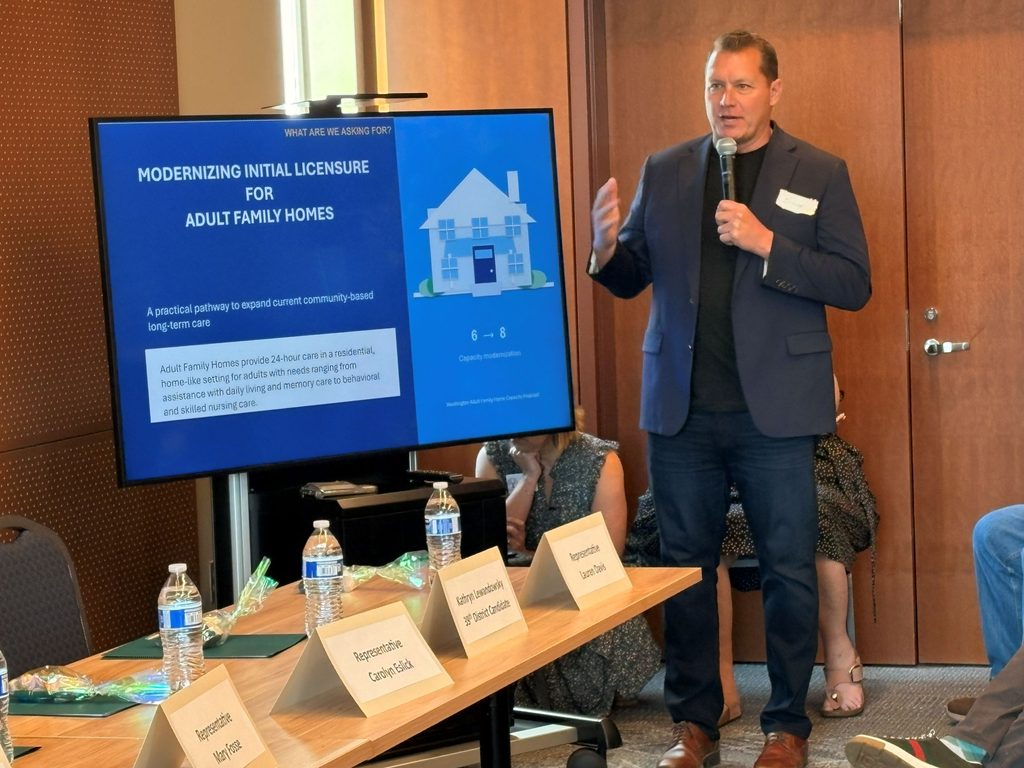
Sarno said the Supreme Court’s ruling impacted both Medicaid facilities as well as private pay facilities. While many long-term caregivers stand together to see the Medicaid rate increase he also asked the legislature to “modernize the initial licenser for adult family homes.”
“Other than raising Medicaid, which by the way is not going to help private pay homes, modernizing initial licenser from six up to eight beds,” said Sarno. “Let’s increase Medicaid pay but let’s also look for other ways to bring in income to these home.”
DSHS did a study looking at what will happen in adult family care homes, from 2025 to 2050, where 52% rejected increase in Medicaid in long-term caseloads in the next 25 years.
There is a 260% projected increase in Washington’s aging 85 plus population which Sarno called the “Silver Tsunami,” leaving long-term healthcare providers scrambling to build large adult family care centers.
Just last year alone, 850 medically ready patients faced medical discharge barriers in Washington State. Additionally, 50% of clients who are on Medicaid go into Adult Family Homes. The other 50% go into assisted living and nursing facilities.
The solution, according to Dr. Michelle Simmons, Owner of A Place to Call Home LLC – one of the state’s first adult family homes to upgrade to eight beds – lies in legislation that would change the law for initial adult family home license to be automatically eight beds.
This, Simmons added, is also more comparable to other states in the nation with Arizona’s being set at 10 beds, Nevada at eight, Michigan 12, and Georgia with no limit at all.
“What this is doing is eight beds is allowing the adult family homes to be financially feasible. With the new law from the Supreme Court, as well as the state doubling the bed fees, the state increasing minimum wage, the state increasing property tax, cost of living, all of those are really charging us out of business,” said Simmons. “My question to you, the legislator, the DSHS, that we’re proposing, is if you’re not going to support the AFHs and the regulations and the finances, what is your plan for 50% of long-term care Medicaid residents?”
Representative Low, after hearing the presentation, said “when there’s a will, there’s a way,” and committed to having conversations with the Healthcare Committee on these issues next session.

Author: Kienan Briscoe





One Response
Thank you for sharing your personal experience Sharon. Valuable insight