

The Washington state Supreme Court has once again decided that the people’s vote is merely a suggestion subject to interpretation. In its ruling overturning I-2066, the citizen driven initiative that was passed in 2024, intended to protect access to clean and abundant natural gas and prevent state policies from effectively banning it, has been invalidated. But the court did much more than interpret a statute. It erased a law approved by the voters and in the process, reinforced a deeply disturbing pattern; initiatives of the people face one set of rules, while laws produced by the Democrat legislature receive another.
The partisan courts message is difficult to miss. When the legislature passes a bill advancing the progressive political establishment agenda, courts are expected to defer, stretch, and rationalize. However, when voters themselves approve an initiative that disrupts that agenda, the judicial microscope rapidly emerges. Definitions are dissected, clauses are isolated, and hypotheticals are inflated into fatal defects. The court then announces with some self-imposed moral superiority that the people’s law cannot stand.


I-2066 was not smuggled into the legal code by an obscure bureaucratic memo, it was placed before Washington voters, debated publicly, and approved through the state’s constitutional initiative process. That process exists for a reason; it gives citizens a direct avenue to legislate when elected officials refuse to listen to its citizenry; or when a legislature becomes captive to party partisanship, special interest groups, or ideological power brokers.
Let get one thing straight, the initiative process is not there for decoration. It is not a civic participation exercise designed to make voters feel involved. It is a constitutional mechanism for citizens to make laws. Yet Washington’s Supreme Court treats the people’s law as a suspicious document drafted by amateurs who must be rescued from their own ignorance.




In this case, the justices focused on alleged inconsistencies and constitutional problems in the initiative such as “logrolling,” presenting themselves as neutral referees protecting legal order. But this kind of zealous scrutiny raises an obvious question. Why does the same level of aggressive scrutiny not seem to apply when the Democrat legislature passes overly complicated, or intentionally contradictory laws? The Washington legislature frequently packs bills with amendments, exemptions, and vague mandates that impose costs on families, employers, and local government without any meaningful public vote. And yet the courts regularly find ways to preserve them.


The court attempts to insist it is merely applying constitutional doctrine, but legal doctrine does not operate in a vacuum. Washington’s progressive judges choose how aggressively to scrutinize, how to generously interpret, whether to sever a problematic provision, or whether to preserve the remainder of a law. In the case of I-2066, the court should have recognized the central purpose of the initiative that clearly expressed the voter’s intent.

Instead, it chose the most destructive remedy possible, invalidating the entire law of the people; and returning control to the same political machine the initiative process was designed to check. None of those six justices that voted for erasure of I-2066 deserve another minute on the bench.
The court had a legal responsibility to demonstrate that a genuine constitutional conflict existed, and that the conflict was so substantial that invalidation was abundantly necessary, rather than a matter of convenience. The court’s decision to invalidate I-2066 irreparably injured the voters of Washington. It tells voters that even when they gather signatures, survive political opposition, win an election, and obtain a majority on election day, the results can be discarded by a small group of radicalized robes.

The court’s recent ruling effectively turns the initiative process into a cruel joke. Over the last two decades, numerous initiatives of the people have been overturned by technicalities, constitutional theories, and interpretive gymnastics, which has disenfranchised the voters of Washington. The people of Washington do not need supreme court judges to agree with every initiative. They need these judges to respect the constitutional structure that gives the initiative process the constitutional weight it deserves. A court that routinely treats direct democracy as an inferior form of lawmaking will eventually destroy public confidence in the entire system.
Justice’s Sal Mungia, Sheryl Gordon McCloud, and Charles Johnson dissented in the court’s opinion. Justice Mungia wrote the dissenting opinion arguing that much of I-2066 could have and should have been upheld as constitutional rather than striking down the entire measure.
He made it clear that the initiative had been debated publicly and voted democratically; and most of the law ought to have stayed in place. “Courts are required to construe initiatives in favor of constitutionality when possible. This court can uphold much of I-2066 as constitutional and should do so,” Justice Mungia wrote in his dissent.
They say elections have consequences, and I’d truly like to believe that. This year’s general election has five supreme court justices on the ballot. Make sure those six people clad in black robes, wrapping themselves in “procedural necessity,” and funded by the climate change movement are never given another chance to erase the will of the electorate.
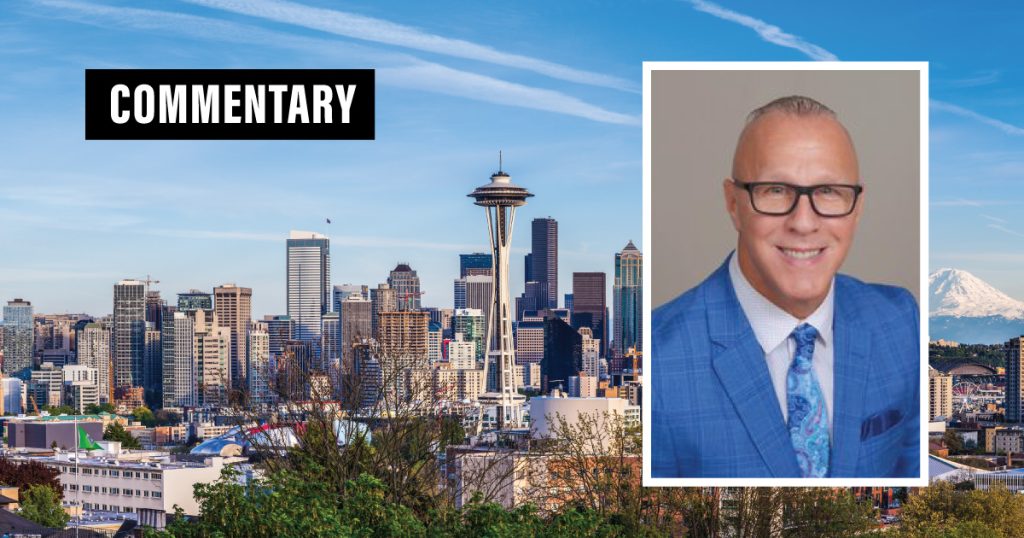
Vincent Cavaleri, Mill Creek Councilman
Vincent Cavaleri is a Mill Creek City Council member (Position 5) and a longtime Snohomish County sheriff’s deputy. A U.S. Army Reserve veteran, he has lived in Mill Creek since 2004 and has served on the council since 2015. He writes on local government, public safety, and voter-driven lawmaking.
COMMENTARY DISCLAIMER: The views and comments expressed are those of the writer and not necessarily those of the Lynnwood Times nor any of its affiliates.

Author: Lynnwood Times Contributor