

ARLINGTON—The Arlington City Council on October 5, 2026, approved an ordinance establishing rules for electric-assisted bicycles (e-bikes), micromobility devices, and other powered personal transporters. The measure creates a new Chapter 10.86 of the Arlington Municipal Code and repeals portions of the previous Chapter 10.84.
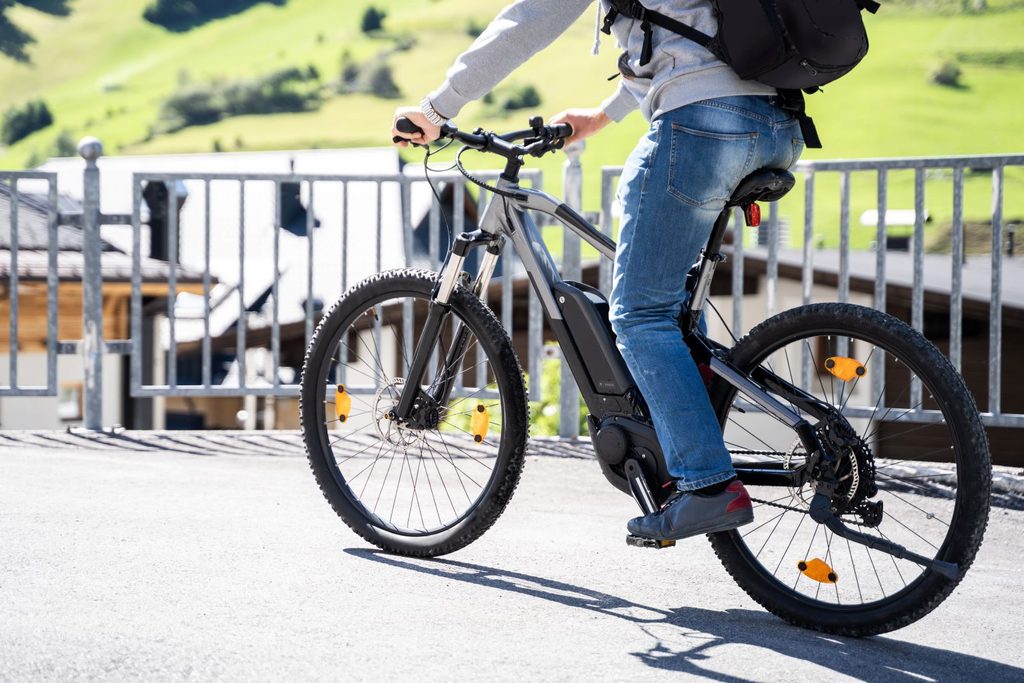
Mayor Don Vanney initiated the effort amid rising use of e-bikes, e-scooters, and similar devices.



“As more families use e-bikes and other electric mobility devices, Arlington needs clear expectations that help keep everyone safe,” Vanney said. “The City is bringing forward practical rules that protect people walking, biking and riding, while allowing these devices to be used responsibly.”
Ordinance 2026-023 builds on Washington state law, which defines electric-assisted bicycles as having fully operable pedals, an electric motor of 750 watts or less, and one of three classes:




- Class 1 provides pedal-assist only, stopping at 20 mph.
- Class 2 may be propelled by the motor alone but cannot provide assistance at 20 mph or greater.
- Class 3 provides pedal-assist only, stopping at 28 mph, and must have a speedometer.
Devices capable of exceeding 20 mph solely on motor power are excluded from the e-bike definition under state law (as clarified by ESSB 6110 in 2026) and are treated as electric motorcycles or other categories subject to different rules.


Where and How Devices May Be Used
Class 1 and Class 2 e-bikes, along with micromobility devices such as motorized foot scooters limited to 20 mph or less, may operate on shared-use paths. Class 3 e-bikes and powered personal transporters (devices capable of higher motor-only speeds, including certain high-speed scooters, electric skateboards, and similar equipment) may not be operated on shared-use paths, consistent with state law. This restriction applies to the Centennial Trail, where Class 3 e-bikes are not permitted. Regional or county-managed trail segments may also be subject to additional Snohomish County or other agency rules; riders must follow posted signs.


Bicycles, e-bikes of any class, and powered personal transporters generally may not be ridden on sidewalks, except in limited cases: to enter or leave adjacent property, on sections designated and signed as trails or shared-use paths, or on mobility corridors designated by the Public Works Director. Motorized foot scooters and similar micromobility devices may not be used on city streets with speed limits above 30 mph unless operated in a designated bicycle lane.
On shared-use paths and sidewalks where operation is allowed, riders must not exceed 15 mph and must slow to 10 mph or less within 50 feet of pedestrians or in congested areas. Operators must obey all traffic laws and control devices, yield to pedestrians and human-powered devices, and give an audible signal before passing. Devices are also prohibited on city property where restricted by code or posted signs. Walking a device is permitted where riding is prohibited.
In city parks, operation of e-bikes, micromobility devices, and powered personal transporters is generally unlawful except for Class 1 and Class 2 e-bikes and devices limited to 20 mph or less in areas designated by posted signs, or in motor-vehicle areas such as parking lots. Shared-use paths through parks follow the path rules in the chapter.

Age, Helmet, and Equipment Requirements
No driver’s license is required. Persons under 16 may not operate a Class 3 e-bike or a powered personal transporter capable of exceeding 20 mph solely on its motor. Children under 11 may operate e-bikes, micromobility devices, or powered personal transporters only under the direct supervision of a person age 18 or older.
Helmets are mandatory for operators of Class 3 e-bikes, powered personal transporters capable of exceeding 20 mph on motor power alone, and all operators under 16 on any class of e-bike, micromobility device, or powered personal transporter.
E-bikes sold, repaired, or operated in the city must meet state class-labeling and anti-tampering requirements. Class 3 e-bikes must have a speedometer. All e-bikes must have working brakes capable of skidding the wheels on dry pavement and must meet lighting requirements when used during hours of darkness. Gasoline-powered devices must have mufflers in good working order.
Enforcement and Penalties
The Arlington Police Department has authority to enforce the chapter. Devices may be impounded for public safety or evidentiary purposes, with a $50 fee for impound and processing; under-16 operators’ devices may be released only to a parent or legal guardian if not impounded. Unclaimed devices may be disposed of under state law.
Most violations are traffic infractions punishable by a $50 fine for a first offense and $150 for subsequent offenses. Negligent operation (failure to exercise ordinary care that endangers persons or property) carries a $250 penalty. Unlawful tampering or modification of an e-bike that changes its class or increases assisted speed also carries a $250 fine. Reckless endangerment that creates a substantial risk of serious physical injury is a gross misdemeanor. Parents or guardians who knowingly authorize or permit a person under 16 to operate in violation of the chapter can be held liable. First-time juvenile violations may allow completion of a safety course in lieu of civil penalties at the city’s discretion. The court may order restitution up to $5,000.
Exemptions apply to police officers performing duties, mobility devices used as reasonable accommodations under the ADA, and devices operated under a city permit for special events.
City Administrator Paul Ellis said the rules “are intended to help people safely share our streets, sidewalks, parks, and trails. Clear expectations for riders will help protect pedestrians, support responsible use of these devices, and keep Arlington’s public spaces safe and welcoming for everyone.”
The ordinance takes effect five days after publication of its title in the city’s official newspaper. The city encourages riders and families to review the rules, wear appropriate safety equipment, and follow posted signs.

Author: Mario Lotmore