

EVERETT — Washington Attorney General Nick Brown joined law enforcement leaders, police oversight officials, community advocates and researchers Thursday evening at the Henry M. Jackson Conference Center to mark more than a year of data collection under the Washington State Data Exchange for Public Safety (WADEPS), the state’s centralized public platform for reportable police use-of-force incidents.
“Transparency and access to information are essential to building trust,” Brown said. “This data tool empowers the public, policymakers, and law enforcement agencies to better understand interactions between the police and the community and make informed decisions about policing practices. Our partnership with law enforcement agencies across the state is key to delivering this vital information to Washingtonians.”



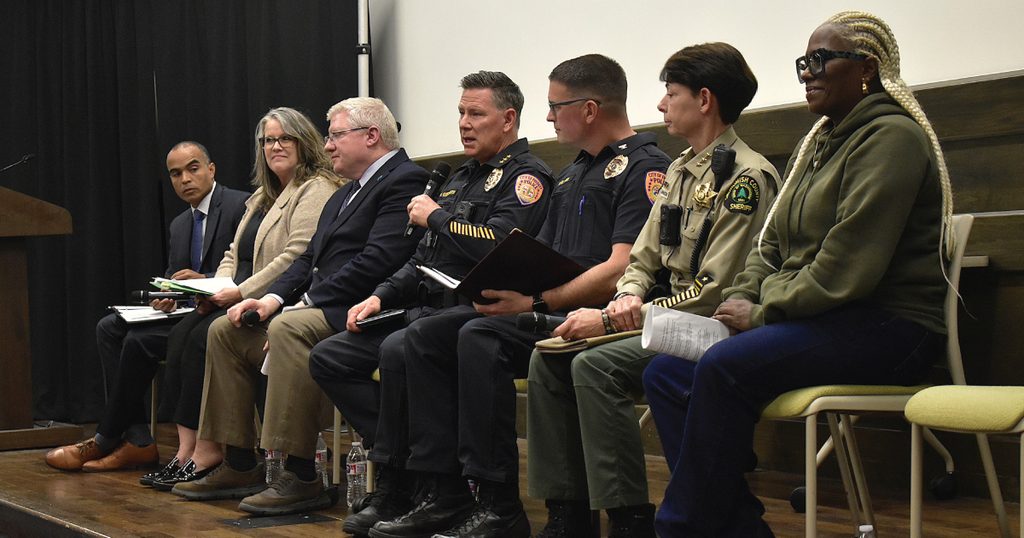
The forum focused on what the early data shows about police activity statewide, how agencies are participating, and how residents can use the interactive dashboards to examine use-of-force patterns in their own communities. Speakers included Everett Police Chief Robert Goetz and Inspector Brandon Gill, Snohomish County Sheriff Susanna Johnson, Spokane Police Ombuds Bart Logue, Nickeia Hunter of the Washington Coalition for Police Accountability, Teresa Taylor of the Washington Council of Police and Sheriffs, and David Makin, WADEPS director and a Washington State University criminal justice professor.

WADEPS developed through a collaboration involving the Attorney General’s Office, WSU, law enforcement agencies, researchers and community stakeholders, began collecting incident data in September 2025. It grew out of Senate Bill 5259, sponsored by Sen. T’wana Nobles (D-Tacoma) and co-sponsored by Sens. Marko Liias (D-Edmonds) and June Robinson (D-Everett). The bi-partisan legislation passed overwhelmingly in both the House and Senate with 99% and 95% support respectively. The 2021 legislation, codified as Chapter 10.118 RCW, requires law enforcement agencies throughout the state to report specific use-of-force incidents and established a framework for standardized, publicly accessible data.




Before WADEPS, agencies collected their own information using varying definitions and methods, which made consistent comparisons across jurisdictions difficult. The new platform standardizes reporting and integrates contextual information so that force can be examined relative to overall police activity rather than in isolation.


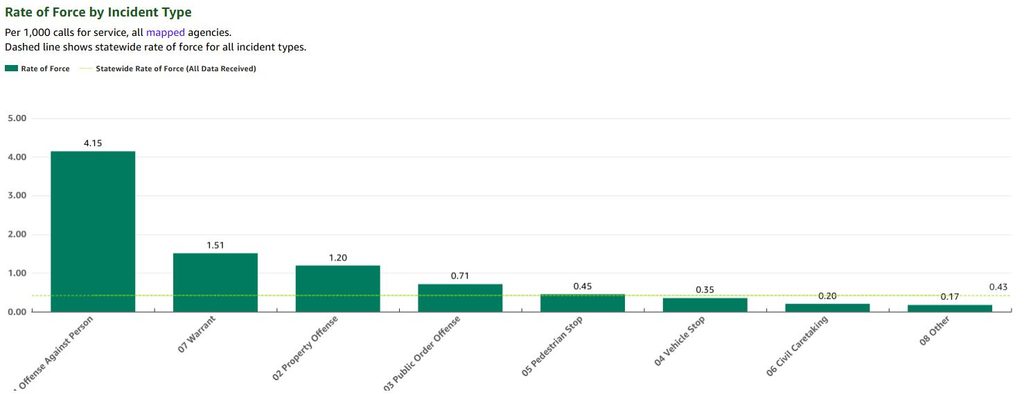
According to WADEPS, from Jan. 1 through September 2026, agencies that supplied both use-of-force and calls-for-service data reported 1,096 incidents involving one or more reportable uses of force and 2,654,439 calls for service. That produced a rate of 0.56 reportable use-of-force incidents per 1,000 calls for service.


“Transparency in policing is the foundation upon which public trust is built. By providing a comprehensive, streamlined, and publicly available database, WADEPs serves to ensure efficient accessibility to use-of-force data and improves transparency between law enforcement agencies and the communities they serve,” said Chief Goetz, Everett Police Department. “Moving forward, WADEPs will help agencies across the state make evidence-based policy decisions and continue to prioritize safety for all.”
As of September 2026, WADEPS shows Everett Police Department with a rate of 0.21 reportable use-of-force incidents per 1,000 calls for service, Arlington shows 0.95, Edmonds has 0.50, Lake Stevens shows 0.16, Lynnwood has 0.10, Marysville is 0.44, Mill Creek shows 0.64, Mukilteo is 0.48, Mountlake Terrace shows 0.17, and the Snohomish County Sheriff’s Office shows 0.73.
Under Washington law, physical force by peace officers is defined in RCW 10.120 as any act reasonably likely to cause physical pain or injury, or any other act exerted upon a person’s body to compel, control, constrain or restrain movement. It does not include pat-downs, incidental touching, verbal commands or compliant handcuffing that does not cause pain or injury.
Officers may use physical force only to the extent necessary for specific purposes, such as protecting against a crime when there is probable cause, effecting an arrest, preventing escape or protecting against an imminent threat of bodily injury.


Deadly force, defined in RCW 9A.16.010, means the intentional application of force through firearms or other means reasonably likely to cause death or serious physical injury.
Deadly force is limited to situations involving an immediate threat of serious physical injury or death. State law also requires officers to use reasonable care, including de-escalation tactics when possible, the least amount of force necessary, consideration of a person’s characteristics and conditions, and less-lethal alternatives before deadly force when feasible.
WADEPS collects roughly 70 required data points across six categories for reportable incidents: incident details such as date, time, location, contact initiation and number of officers and subjects involved; type of force used; subject information including demographics, impairment, whether the person was armed, injury and resistance; officer information such as assignment, years of service and injury; administrative follow-up including review status and outcomes; and limited incident-based dispatch data. Reportable force includes actions such as pointing or discharging a firearm, using an electronic control weapon or chemical irritant, deploying a police canine, striking a person with an officer’s body or an impact weapon, using a vehicle to intentionally strike a person, and certain other force that results in substantial injury, great bodily harm or death.
“Trust has to be earned through a process people can examine. I appreciate WADEPS and everyone building it. We strengthen that investment by making sure every required incident is reported, identifying where information came from, and checking it against other evidence,” said Nickeia Hunter, Washington Coalition for Police Accountability. “The answer to skepticism is verification: show what is known, what remains disputed, what is missing, and who is responsible for resolving it.”
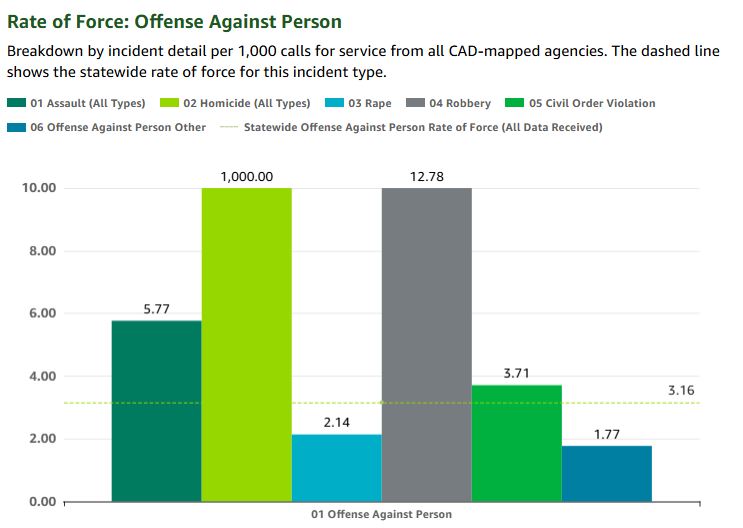
WADEPS’ public dashboards, updated daily, allow users to view statewide trends, examine individual agencies, compare jurisdictions and explore aspects such as what happened during incidents, who was affected, who applied force and administrative outcomes. Users can apply filters and download data, including the full reportable use-of-force dataset, which contains more than 200 variables per record.
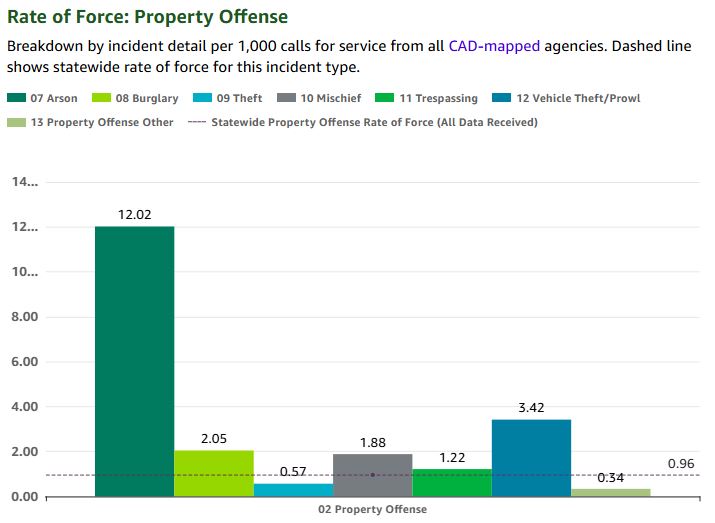
Snohomish County Sheriff Susanna Johnson shared with the Lynnwood Times that the data shows that force is used in a very small share of contacts and is authorized only to overcome resistance.
“You’ll see using force is a very low, low percentile,” Johnson said. “And it’s only authorized to overcome resistance. So, when you see use of force, what we’re looking for is just the lawful amount used to overcome and get that person into custody or control. So, the behavior of the person we’re contacting is what dictates that.”
Sheriff Johnson offered some specific examples of when use of force may be applied such as when a suspect is presenting a weapon, a higher level of force may be needed compared to when someone just pulls away from an officer during an arrest. The number of officers available, the time elapsed before force is used, the seriousness of the alleged crime and whether the agency is urban or rural can all influence outcomes she added.

“If you wait for more officers, you should be able to use less force,” Johnson said. “But if you’re in a rural agency, maybe you’re going to see more because you’ve got one deputy or two deputies versus the city of Everett who might be able to have six officers arrive quickly.”
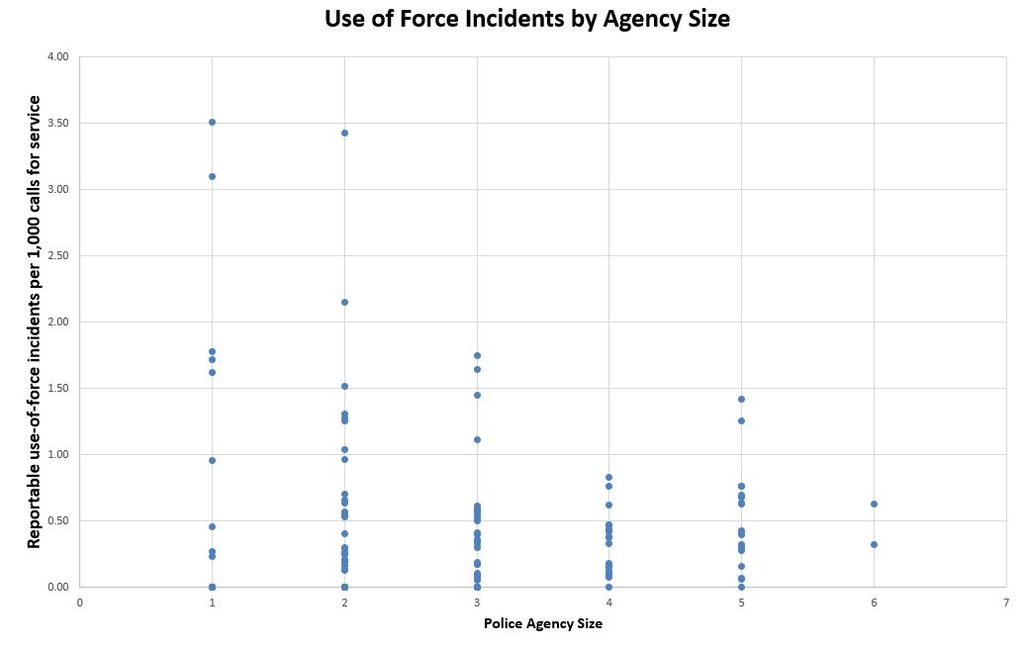
Johnson also linked higher staffing levels to de-escalation opportunities and risk.
“More officers, we know, allows for more de-escalation options, we know, and that lowers risk and liability, injury to the officers, injury to subjects,” she said. “Litigation claims against the state or county…all those things fall in line with having the right amount of people. That’s why having enough deputy sheriffs to do it safely not only is better for the community and our deputies but also to the bottom line.”
Makin, the WADEPS director, addressed questions about privacy protection and data security. The system uses one-way cryptographic hashes for officer identifiers and subject initials so that records can be uniquely linked without revealing names, he told the Lynnwood Times.
“We have confidential linking IDs for all officers. It’s a one-way cryptographic hash. It means that we can’t undo it,” Makin said. “We do that to protect the officer because that’s what the state law required. The other is we do the exact same thing for the subject initials.”
WADEPS is hosted in a secure Amazon Web Services (AWS) environment separate from the public website, undergoes external security audits, and maintains history tables so changes can be tracked and rolled back if needed.
Makin said the project is already using machine-learning techniques for data quality audits to flag inconsistencies, such as conflicting information from different officers about whether an arrest occurred in the same incident. Longer term, the linked officer identifiers could support analyses such as change-point detection to identify unusual shifts in patterns over an officer’s career, though he cautioned that the system is designed for surface questions rather than provide definitive answers.
“The best the data exchange will ever do is surface the questions,” Makin said. “It’s never going to give you the definitive answer to it.”
He described the potential value of more timely data for detecting emerging issues, citing the earlier catalytic-converter theft wave as an example of a problem that standardized, frequent reporting might have flagged sooner.
The WADEPS site itself cautions that use-of-force data alone has limited actionable value and that comparisons are more meaningful when considered alongside call volume, agency characteristics, incident circumstances and data completeness. A higher number of reported incidents does not by itself establish that an agency uses force at a higher rate or that individual incidents were unjustified.
WADEPS operates under a five-year contract with about a year and a half remaining; Makin said he has agreed to continue the work and that semi-annual reports are published on the website.
By law, 218 agencies with general or limited law enforcement authority are required to report. Tribal agencies are not covered by the mandate but may participate. Contracted agencies that receive service from a larger department, such as a sheriff’s office, are reflected in the parent agency’s data.
Achieving full participation from law enforcement agencies, Makin said, takes time because of leadership changes, limited information-technology resources, staffing for data entry and other organizational factors. Agencies have up to 30 days to submit most incident information and an additional window after the completion of any administrative review. Records can therefore be incomplete at any given moment and may be updated later.
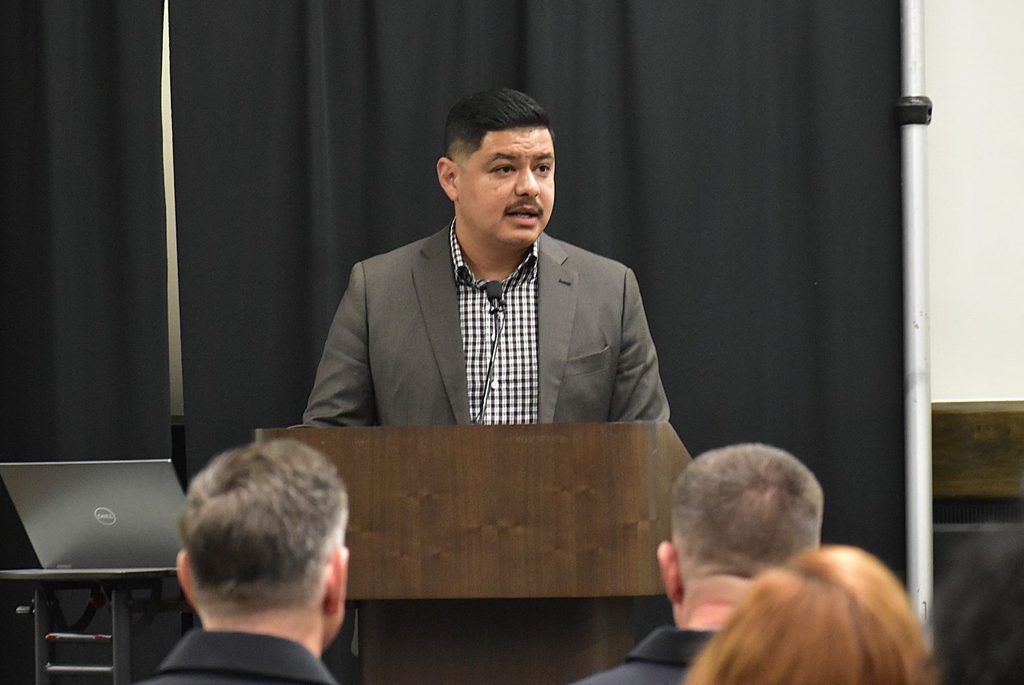
“Public data dashboards provide a much-needed window into the trends and contributing factors surrounding the use of force by police,” Makin wrote in a statement. “As more and more data is added, WADEPS has the potential to become a powerful tool that the public, policymakers, and law enforcement agencies can use collectively to improve transparency and affect positive outcomes for public safety in Washington state.”
Notable attendees at Thursday’s forum were Sens. June Robinson and John Lovick, and Reps. Mary Fosse and Julio Cortes.
The Lynnwood Times will deep dive into the latest WADEPS data and report its findings in a future article.
Editor’s Note: Mario Lotmore contributed to this article.

Author: Kienan Briscoe