

LYNNWOOD — The Lynnwood City Council unanimously approved a resolution Monday opposing two statewide ballot initiatives on the November 2026 ballot, citing concerns about student safety, LGBTQIA2+ protections and equity in public education and athletics.
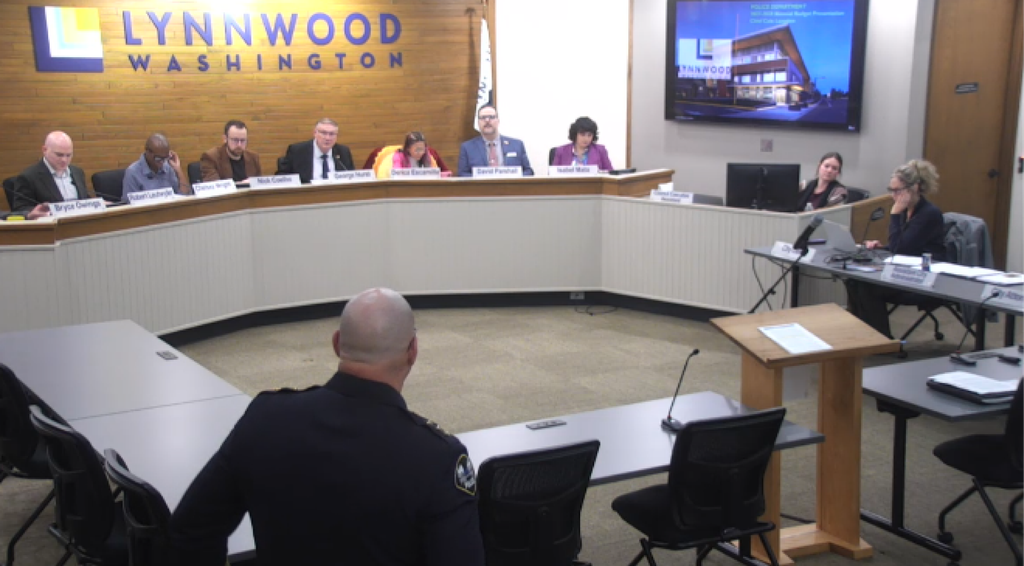
The resolution, introduced by Councilmember Isabel Mata, formally opposes Initiative IL26-001, which concerns parental rights relating to children in public school, and Initiative IL26-638, which concerns participation in athletics at K-12 schools. Mata, who has publicly identified as queer, has previously urged the council to take a position on the measures, arguing they raise questions about student privacy, access to support and equal treatment in the community.

The resolution contends that IL26-001 could weaken protections for students experiencing abuse, domestic violence or bullying by discouraging confidential outreach to trusted school staff and potentially exposing LGBTQ+ youth to unsafe home environments. It also opposes IL26-638’s requirement that students seeking to participate in designated female sports obtain verification of biological sex from a healthcare provider. The council said both measures conflict with Lynnwood’s stated values of diversity, equity, inclusion and equal opportunity, and that no financial impact to the city is anticipated beyond staff time.
IL26-001 would repeal amendments made by the Legislature in 2025 and re-enact the original version of the parental-rights statute as passed in 2024 by Initiative to the Legislature 2081. That earlier measure passed with bipartisan support, receiving a unanimous 49-0 vote in the Senate and an 82-15 vote in the House.




Supporters, including the initiative’s sponsor Let’s Go Washington, say the initiative would restore parents’ rights to be notified before their child receives medical or mental health services, return the deadline for schools to provide requested records from 45 days to 10 business days, and reinstate access to instructional materials along with opt-out options for certain activities. They describe it as restoring transparency and parental involvement after 2025 changes reduced access.


The second initiative, IL26-638, would prohibit students defined as “biologically male” from competing in school athletic activities intended for female students only and would require those seeking to participate in such activities to submit a form signed by their personal healthcare provider verifying biological sex based on reproductive anatomy, genetic makeup or normal endogenously produced testosterone levels.

Under current state law and Washington Interscholastic Activities Association (WIAA) rules, students typically need a routine sports physical or clearance for interscholastic participation, but that process does not include the specific biological-sex verification the initiative would mandate. Schools may offer separate teams by sex, while state regulations prohibit discrimination based on sex and gender identity, and WIAA policies have allowed participation consistent with gender identity.
In April 2025, the WIAA Representative Assembly considered two advisory amendments related to transgender participation. One would have restricted girls’ sports to biological females; the other would have created separate athletic programs for boys, girls, and an open division. Neither reached the 60 percent threshold required for passage. The association’s existing policy—encouraging students to participate in athletics consistent with their gender identity—remained in effect, aligned with Washington state anti-discrimination law.
Supporters of IL26-638, including Let’s Go Washington, argue the measure would protect fairness, safety and equal athletic opportunity for girls by recognizing sports-relevant biological differences. They note that female-only categories were established under Title IX to expand opportunities for girls and women.
In March 2026, the International Olympic Committee approved a policy limiting eligibility for female-category events at the Olympic Games and other IOC events (effective for the LA28 Games) to biological females, determined by one-time SRY gene screening. IOC President Kirsty Coventry stated that it would not be fair for biological males to compete in the female category and that in some sports it would not be safe.
Similar restrictions to biological males competing in the female category have been adopted by World Athletics, World Aquatics, the NCAA and World Rugby, among others. Those policies generally leave the male category open and major sports governing bodies have not imposed parallel bans on transgender men (biological females identifying as men) competing in male sport categories, arguing that the performance and safety concerns for female categories do not apply symmetrically.
The initiatives were certified after Let’s Go Washington submitted more than 400,000 signatures for each. The Legislature took no action, sending both to voters this November.
Several other Washington cities, including Shoreline and Spokane, have adopted resolutions opposing one or both measures. The Lynnwood resolution is a formal statement of the council’s position and does not alter state law or local school policies. It is non-binding and will not nullify public votes for or against the two ballot initiatives.

Author: Mario Lotmore