

In a KOMO News interview with reporter Jeremy Harris on Thursday, Washington Secretary of State Steve Hobbs repeatedly asserted that Department of Justice (DOJ) claims about noncitizens on state voter rolls are wrong, even as he acknowledged that the state does not systematically check citizenship status against federal databases.
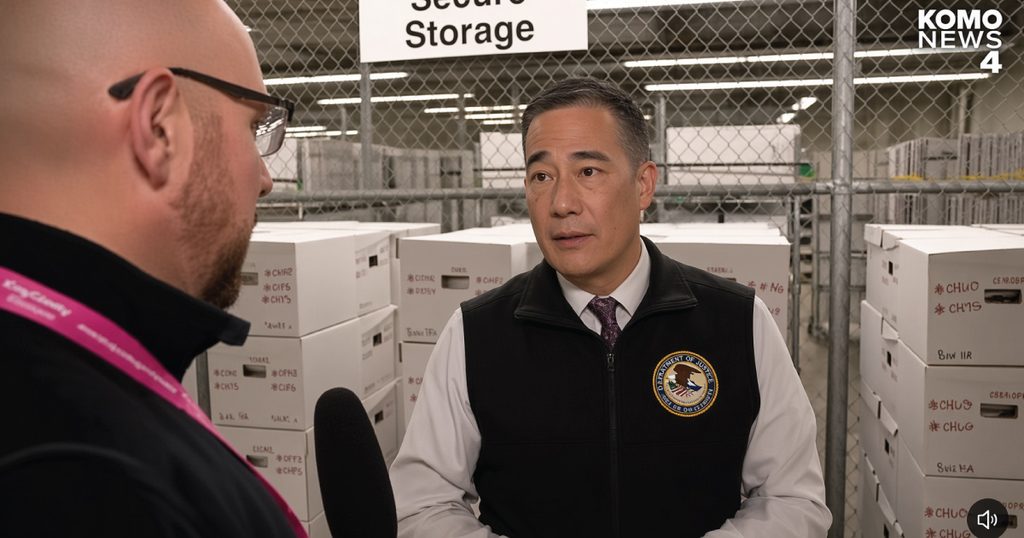
The exchange between Harris and Hobbs exposed a clear gap in Hobbs’ defense. He repeatedly treated the small number of noncitizen voting cases the state has caught as proof the problem isn’t widespread, even while pressed multiple times on how the state can be sure without proactive checks — a classic form of the argument from ignorance standpoint by treating the absence of evidence as evidence of absence.
“So, because it’s so rare in which actual non-citizens vote,” Hobbs responded to how he can claim that noncitizens are not widespread voting in Washington elections when by his own admission, the state’s not checking this. “And if you compare the number of non-citizens that have been caught, the 15 over the course since 1982, versus the other issues of fraud, or not really fraud, but mistakes that happen like rejected ballots due to signature.”
UPDATE: I was able to ask @secstatewa about the claims of noncitizens on Washington voter rolls. He insists it’s not a widespread issue but also admits the state has no mechanism for checking voter registration against citizenship.
Live report at 6 @komonews https://t.co/Vh67Sd07H8 pic.twitter.com/I1q2EcNgqL— Jeremy Harris (@JeremyHarrisTV) October 30, 2026
Later, Harris pressed him again stating, “But you’re still not answering the question here, which I think is fundamental, which is how do you know this isn’t a widespread issue if it’s not being checked?”
“Well, look, again… People attest to this every single time,” Hobbs said. “We see the instances of non-citizens who vote, again, it’s been 15 times since 1982. I do know that there are non-citizens that do show up in the rolls, but the question is, are they actually voting? That is a crime.”

This is the core of Hobbs’ argument in the interview. The 15 cases since 1982 are documented, caught instances under Washington’s system of self-attestation plus occasional reports, challenges, and referrals to prosecutors. He treats that low observed rate, combined with high personal consequences for voting, as effectively proving the problem is not widespread.
Harris further pointed out to Hobbs that the state does not systematically match voter rolls against citizenship or immigration data. Therefore, low detection is not the same as affirmative proof that the rolls are clean of noncitizens who might vote.


Hobbs later acknowledged that noncitizens appear on the rolls but insisted voting itself remains rare.
The interview took place amid the DOJ’s October 26, 2026, letter to Hobbs from Western District Acting U.S. Attorneys Neil Floyd and Eastern District Pete Serrano that provided a list of 405 people they said matched as noncitizens of which many were lawful permanent residents who had cast approximately 1,500 ballots over years or decades.
Their request was specific: instruct election officials to set aside and not tabulate any ballots those individuals cast in the current election until citizenship could be confirmed. It was not a demand to remove anyone from the voter rolls.
Hobbs’ office rejected the DOJ’s request in a formal response, calling the list unreliable alleging it included U.S. citizens and inactive or non-registered names, and arguing that declining to process ballots without individualized proof would violate the law.
Conflating Ballot Holds with Voter Removal
When Harris asked why the state would not simply share the rolls so the DOJ could perform the check itself, Hobbs shifted to privacy protections and removal procedures.
“Because it’s against the Federal Privacy Act,” said Hobbs. “We are protected by the Constitution to do so. And we’ve won every court case. And if you look across the United States, there’s been 25, 26 court cases on getting this information, and it’s been rejected by the courts. I have no problem working with them with the public data that we have available, which they can use.”
Hobbs then described the process required to remove someone from the voter roster.
“There’s a process in which it’s done,” said Hobbs. “You can’t just say to a person, you’re a non-citizen, I’m going to remove you from the voter rolls. What you have to do is present evidence to the county prosecutor, and then there’s a process. The voter itself has to be able to respond. You can’t just simply remove them. It is against the law to do that. We have seen cases where non-citizens or citizens are being accused of being non-citizens. It happened in Texas.”
The DOJ’s letter did not request removal from the voter rolls or bulk data sharing of the kind previously litigated in federal court. It requested temporary sequestration and non-tabulation of ballots cast by the roughly 405 people on its list until citizenship could be confirmed—similar to how the state already set aside certain ballots for signature verification in the adjudication process.
Hobbs’ formal written response to the DOJ was more precise than what he told Harris. His written response focused on the request to hold and not tabulate specific ballots, referring to Voting Rights Act protections against willfully failing to count a qualified voter’s ballot and arguing that individualized proof was required before any ballot could be set aside.
In the interview, by contrast, he repeatedly answered Harris’ question regarding sharing data and checking the list, by shifting to the rules for removing voters from the rolls and to the earlier court fights over full voter files. Hobbs conflated the request to temporarily set aside the 405 ballots as if it were a demand for bulk data or for immediate removal of registered voters—two issues the DOJ letter did not raise.

Author: Mario Lotmore