


LYNNWOOD—At its Business Meeting on Monday, July 28, the Council adopted revisions to its Council Rules of Procedure, approved an $800,000 settlement with Marshbank Construction, and further discussed the City’s, now $11 million, budget crisis.
Revisions to Resolution 2024-08 Council Rules
Below is a summary of proposed changes to the Council Rules of Procedure that Council President Nick Coelho motioned to approve with support of Council Vice President Joshua Binda at Monday’s meeting:
- Elected officials “must” be visible on the video of remote meetings.
- Council members will be allowed to attend up to 10 remote meetings per year, up from a maximum of three. Also removed is the three virtual meeting restriction to count as an unexcused absence. This rule change, financially benefits council members – see Lynnwood Times explanation below.
- A lost connection in virtual attendance by a council member will no longer be counted towards the virtual attendance threshold of 10 remote meetings per year.
- Council members are no longer required to be visible on the video of remote meetings for Executive Session.
- Established a cadence deadline for upcoming meeting materials.
- Public comments during Public Hearings & Quasi-Judicial Proceedings will be limited to five minutes.
- General housekeeping and grammatical corrections.
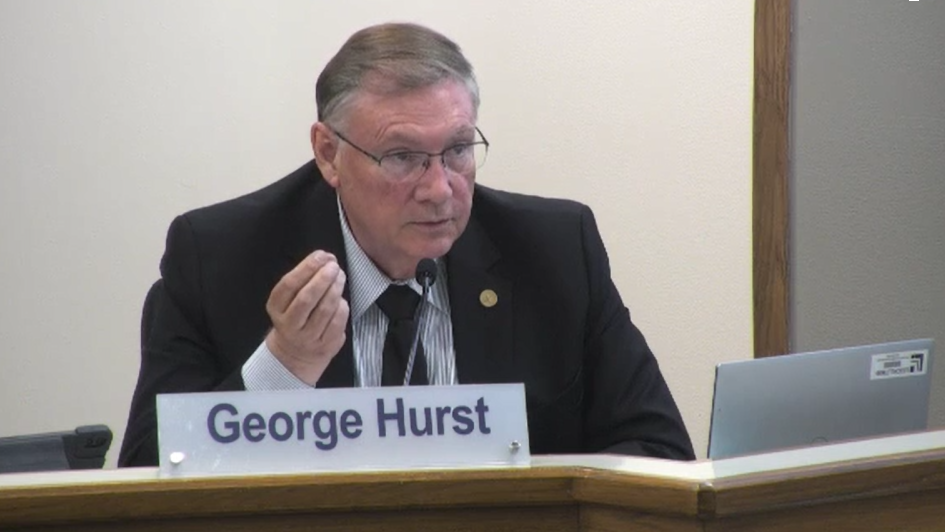
Council members Goerge Hurst, Patrick Decker, and Derica Escamilla proposed the following series of amendments to the original motion that were approved changing the final proposed Council Rules of Procedure changes to the following:
- Elected officials “must” be visible on the video “throughout” remote meetings.
- Council members will be allowed to attend up to 10 remote meetings per year, up from a maximum of three. Also removed is the three virtual meeting restriction to count as an unexcused absence. This rule change, financially benefits council members – see Lynnwood Times explanation below.
- A lost connection in virtual attendance by a council member will no longer be counted towards the virtual attendance threshold of 10 remote meetings per year.
- Council members are no longer required to be visible on the video of remote meetings for Executive Session.
- Established a cadence deadline for upcoming meeting materials.
- Public comments from individuals during Public Hearings & Quasi-Judicial Proceedings will be limited to “ten” minutes.
- General housekeeping and grammatical corrections.
The main motion passed unanimously 7 to 0.


Increasing the number of meetings a council member may attend from three per year to 10, comes with a financial benefit to a council member, at a time the City is facing an $11 million budget challenge.

According to Lynnwood Municipal Code 2.04.072, Compensation of councilmembers, council members are to receive a base compensation per month in the amount of $900 plus a “per meeting” payment of $150 up to a maximum accumulated bank of $750. However, the LMC reads that “for councilmembers attending less than the five regular scheduled council meetings per month, a $150.00 deduction for the ‘per meeting’ payment bank shall occur for each meeting missed” except “if fewer than five regular council meetings are scheduled in a month” or if a council member is using one of four “excused absences, at their [councilmember] discretion, during any calendar year.”

In other words, council members will not receive full compensation of the $750 monthly portion of the meeting compensation for meetings missed in excess of four meetings. According to the currently approved Lynnwood Council Rules of Procedure, “After three virtual meetings, more [virtual meetings] shall be counted as an unexcused absence.”
By the council moving forward with the proposed rule change striking the verbiage that removes the three virtual meeting restriction to count as an unexcused absence, then a council member would receive a financial benefit to the rule change by receiving full pay in accordance with the Lynnwood Municipal Code. As written, the proposed rule change relaxes the financial incentive for council members to attend meetings in person.
“We have the most stringent remote attendance rules in our area, no other city has any issues with this at all, and I think we all understand why these rules were created, it was a chaotic time and they were trying to figure out what works best and I think these rules reflect our council a little bit better,” Council President Coelho said.
$11 Million 2025-26 Biennium Lynnwood Budget Shortfall
Mayor Christine Frizzell, in her opening statement to the Lynnwood City Council on the City’s current budget crisis, shared with the council that her administration is considering a reduction in force (RIF)
“As our city grows, so does the number of employees as we respond to the needs we hear from our community. Now that we are looking at scaling back some levels of service, unfortunately we will need to reduce the numbers of associated personnel. Decisions for a reduction in force have been difficult and at times emotional,” said Mayor Frizzell.
The mayor, refuting claims by Finance Committee Chair and Councilman George Hurst in a Sunday commentary of an “inaccurate” 2025-26 budget presented to the council that was adopted with a 4-3 vote last year which included a property tax levy of $7.2 million (equivalent to a 52% out-of-pocket property tax increase), said that the budget was created with a “purposeful and thoughtful mindset.”
In sharing that the economic forecasts in the biennium Lynnwood budget had a “growth mindset,” Financial Director Michelle Meyer then revealed that in running the final numbers, the General fund is now projected end 2026 with a $10.76 million deficit, up from the reported $3 million discussed last week.
The revised General Fund ending fund balance for 2026 is now expected to be at least $20.7 million less than the council adopted November 25, 2024, with a now revised amount of negative $10.7 million.

“We put forward a 2025-26 budget really with a growth mindset that was discussed a lot in the budget process; we expected some continued growth, and we are not seeing that just like most other jurisdictions in the nation right now,” Director Meyer shared.
The lower-than-expected revenue forecasts Meyer said were due to impacts from tariffs and high interest rates resulting in stalled construction tax revenue.
The revised revenue forecasts now show a $21.2 million reduction in three main areas:
- Sales Taxes, revised downward by $7.8 million
- Development Services, revised downward by $5.2 million due to revised DBS forecasts
- Photo Enforcement Fines, revised downward by $8.2 million due to incorrect redlight camera predictive analysis

The Frizzell administration is working on a plan to reduce expenditures by $12.3 million which would shrink the shortfall to roughly $8.9 million ($21.2 million in revenue reductions – $12.3 million in proposed expenditure reductions).
Council President Coelho confirmed with Meyer that levying the remaining 33.5 percent in councilmatic bank capacity onto residents would reduce the budget shortfall by $3.6 million.
In Washington state, there is a 1% limit on annual increases to property tax levies, but local governments can use “banked capacity,” in layman’s terms, unused property tax levies that is “banked” over the years to exceed the 1% annual threshold against residents without a public vote by residents. If enacted by the council, this would equate to an additional $211 per household Meyer shared.
Councilman Hurst pressed Meyer for the details on the administration’s proposed $12.3 million in expenditure reductions but to no avail.
“It depends on the department, it is anywhere from a three to 20 percent operating reduction,” said Meyer. “It is still a work in progress. There are positions that are included in these estimates ad that all haven’t been finalized yet. So aren’t at a point right now where we can say firmly what those cuts will be.”
“So, we are face with not a lot of specifics which is real concerning,” said Hurst.
Hurst, referring to Mayor Frizell’s eight bullet points to reduce expenditures in her July 21st memo again asked for expected cost avoidance numbers for each item in order for the council to make informed decisions to address the budget shortfall.
“I would suggest the city council not take a summer break, and that we have meetings all through August, and I would suggest we have a Finance Committee meeting as a whole; we did this during COVID,” said Hurst. “The Council needs to have some sort of figures to deal with to be able to come up with what we think are adequate solutions.”
To address the City not being compliant with its 2.5-month fund balance reserve requirement for 2025, approximately $13 million, the council could relax the requirement to a 2-month requirement temporarily but would need to be at the 2.5-month requirement by the end of 2026. Doing so, Meyer said would reduce the $ 4 million reserve gap to $1 million for end of 2025 but it comes with consequences.

According to the new Government Finance Officers Association policies, Meyer shared, entities would need to disclose this as “financial stressors” which risk a credit downgrade from the City’s current AA+ bond rating impacting the City’s ability to issue debt.
Director Michelle Meyer and Finance Committee Chair Hurst reviewed the City’s 2nd Quarter 2025 Financial and Sales Tax reports on Wednesday, July 23. Which at the time showed a the City projecting a $5.1 million shortfall in the General Fund through second quarter in addition to an already projected $4.2 million deficit.
In a July 21st memo, Mayor Frizzell chalked the shortfall up to Lynnwood’s rapidly expanding growth (and by extension an increased demand for city services), inflation, unexpected operating costs of the new Community Justice Center (CJC), increased costs for prosecutorial and indigent defense services, lower than projected sales tax collection (which makes up about 44% of the city’s general fund revenue), and a far less-than-anticipated revenue stream generated by the new photo enforcement program.
Mayor Frizzell updated her Budget Management Plan calling on City Departments to reduce their General Fund operating costs by a target of 10%, while requesting Finance Director Meyers to re-forecast Lynnwood’s 2025-2026 to reflect zero percent growth in the city’s State Sales Tax, Development Service Charges, and Photo Enforcement revenues, which the council discuss on July 28.
The council will further discuss options to address the City’s budget challenges in upcoming weeks as the council seemed to agree not to forgo its summer recess.
Marshbank $800,000 Settlement
The council coming out of Executive Session agreed to pay an $800,000 settlement agreement with Marshbank Construction, a general contractor in Lake Stevens, related to the 196th Street Southwest project.
The details of the settlement were not shared with the public by the council and it is unknown of the impact the $800,000 settlement will have to the City’s current financial crisis and/or its Liability & Property insurance. Also, there are no details of any claims listed with Marshbank Construction in the state’s Labor & Industries database.


Author: Mario Lotmore



One Response
What is the cost of social justice initiatives established by the city of lynnwood? If any. do these initiatives benefit all residents of Lynnwood or only a small portion?