


MALTBY — Flower World, a family-run retail nursery that has operated on the same Maltby property for more than 50 years, has taken its latest clash with Snohomish County Planning and Development Services (PDS) to the Washington Court of Appeals after a Snohomish County superior court judge upheld findings that the business built a large customer parking area, a building, and new driveway without any permits.
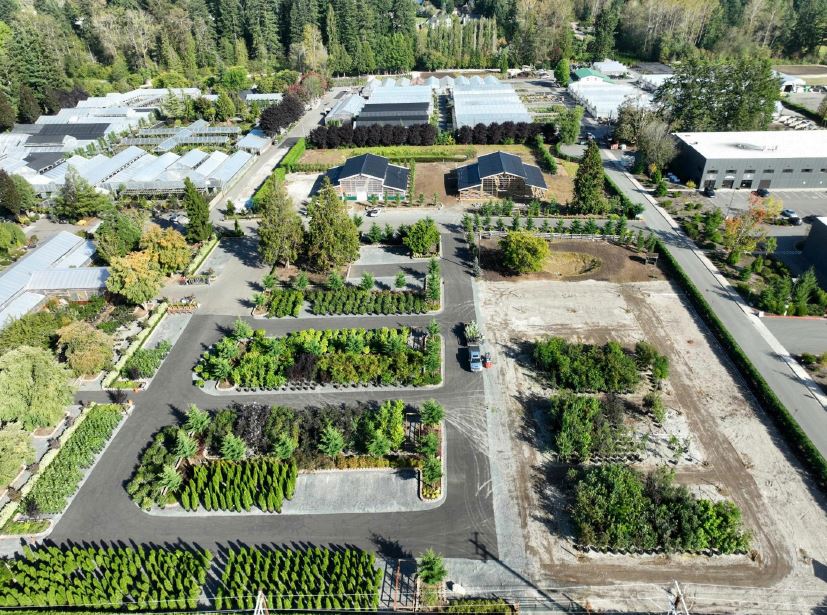
On January 28, 2026, the nursery filed a notice of appeal with Division I seeking to overturn Snohomish County Superior Court Judge Jennifer R. Langbehn’s January 8, 2026, order in Case No. 25-2-06240-31. Langbehn affirmed in full a June 27, 2025, decision by Hearing Examiner Peter Camp that rejected Flower World’s claim the 2023 work qualified for an agricultural exemption.


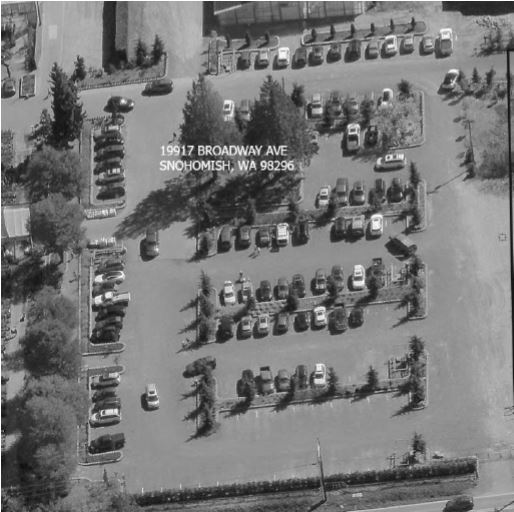
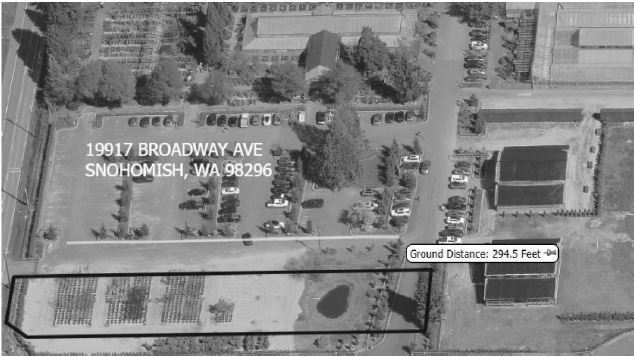
The project in question involved clearing a former single-family home on two parcels immediately south of the main 15-acre nursery, constructing two 4,500-square-foot pole buildings with sheet metal roofing, paving and gravelling roughly 45,920 square feet for a mixed-use parking and plant-holding area, and installing a new driveway entrance onto 200th Street SE with a connecting paved roadway. County officials said the work triggered land-disturbing activity (LDA) permits under Snohomish County Codes 30.63A and 30.63B because it exceeded thresholds for new impervious surface and clearing.
Hearing Examiner Camp affirmed violations for the parking/plant-container area, the North Building footprint—rigid wood siding with sheet metal roofing instead of polyethylene, polyvinyl, or similar flexible synthetic roofing material—and the driveway but dismissed the South Building violation as moot after PDS withdrew it and reversed the pond violation after PDS conceded the pond’s use exempted it from a land disturbing activity permit applied.



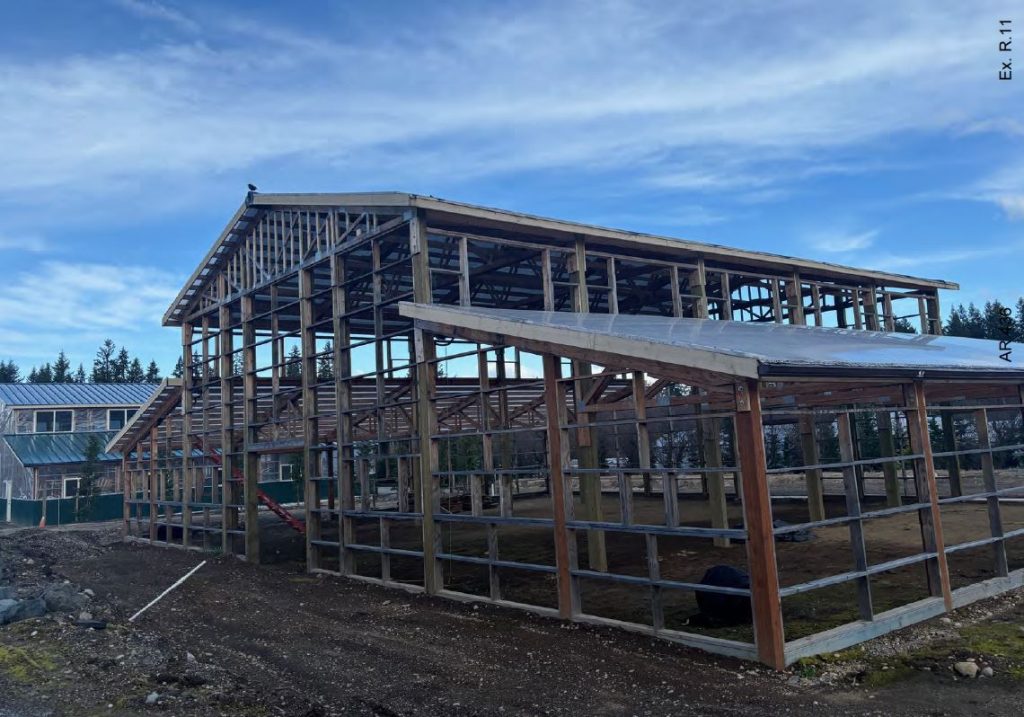
The two narrow wins in the Hearing Examiner’s appeal for Flower World did not alter the core outcome: violations related to permitting requirements for clearing and grading over an acre of land including asphalt paving and striping for 110 parking stalls; constructing a 4,500 square foot barn building (North Building); graded and paved a new commercial driveway access for customers to enter Flower World from 200th Street SE including pavement of a new drive isle covering over 4,000 square feet connecting the new driveway access to the main north/south ingress and egress to Flower World.
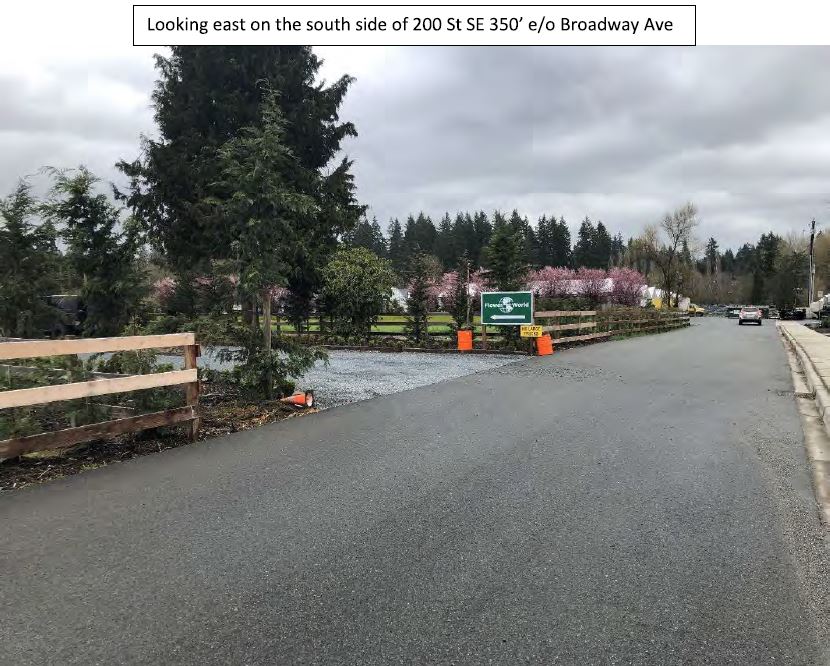
The Hearing Examiner and superior court both concluded the activities primarily served the nursery’s large-scale retail operations rather than routine agricultural production.
Langbehn’s order adopted the examiner’s findings of fact as supported by substantial evidence and agreed that the commercial retail use of the parking area and new driveway (200th Street SE) fell outside the narrow definition of “agricultural activities” in county code, so the exemption in SCC 30.63B.070(5) did not apply. Judge Langbehn also upheld the examiner’s conclusion that a separate D1 right-of-way access permit will be required for the new driveway under Title 13.
Court ruling carries real-world consequences
Hearing Examiner Camp in his June 27, 2025, decision set a compliance deadline of December 31, 2025, which has passed. County Planning and Development assistance bulletins explain that projects creating 2,000 square feet or more of new impervious surface or disturbing 7,000 square feet or more of land require a full LDA permit, stormwater site plan, soil-erosion controls and fees that can exceed at least $14,000 for Flower Word. The parking lot alone pushed the project into the highest fee tiers, according to fee tables.
Additional permits Flower World may need to be compliant are:
- Stormwater site plan engineering (civil engineer) — $8,000 – $15,000
- D1 Right-of-Way Access Permit (for the new 200th St driveway) — $2,000 – $5,000
- Possible building permit revisions for the North Building — $1,500 – $3,000
Daily monetary penalties under the commercial-violation schedule in SCC 30.85.170 began accruing on Flower World after the December 31 deadline and is at least $25,000 per violation for a total of at least $125,000 (five pending violations).
From court records and hundreds of pages extensively reviewed by the Lynnwood Times, the County appears to only be seeking Postema and Flower World to obtain the required permits for its retail nursery business and become compliant. Nowhere in the hear examiner’s decision nor court ruling is the County attempting to seize the farm nor force it close.
Flower World takes its grievance public
In an April 9 open letter posted on the Flower World website, President John Postema turned to customers for help, framing the dispute as part of a larger threat to local agriculture and farms. He wrote that four years of litigation had created “significant financial and operational strain” and that his board had begun exploring options with a land-development firm, including possible rezoning for industrial use or clustered residential housing.
“Throughout this entire process, we have not sought public assistance,” Postema wrote. “Now, however, we believe the stakes extend far beyond our survival.”
He urged patrons to email all five county council members and ask whether they would “remain silent and allow the end of farming in Snohomish County.”
Postema’s plea has not fallen on deaf ears. In reviewing hundreds of comments to Facebook regarding Flower World, many were residents highly critical of the county accusing county officials of forcing the 200-acre farm that includes one of the largest retail nurseries on the West Coast covering 15 acres, to close.
“We’ve already lost Molbaks and now they are trying to close Flower World! Really sad,” one person wrote.
Another person wrote, “They want to shut down Flower World and Maltby Produce Market to put in more housing. Which is absolutely insane considering they are doing so literally just down the street in every direction.”
An another post with scores more like it, “The county is trying to shut them down, and the nursery could use a few minutes of your time to support them & send an email, or call, to object to the local government threats to this small business. Perhaps they should focus their efforts on the important issues like preventing crime, etc!”
Postema in his court case also invoked the 2001 “Right to Plow” initiative he helped lead as Farm Bureau president to argue that the County misapplied (or ignored) the spirit of the 2001 voter-approved farm protection. Codified in SCC 30.32B.230, the voter-approved measure protects normal “agricultural activities” such as plowing and building farm roads from being regulated as development projects.
Postema’s attorney Richard M. Stephens of Stephens & Klinge LLP, argued that Flower World is a farm in accordance with SCC 30.91F.120, which defines “farm” to include not only growing plants but also “promotion, sale, packaging and distribution of agricultural products wholly or partly from the farm site.” He also reference SCC 30.91A.090 which defines “agricultural activities” as “a condition or activity which occurs on a farm in connection with the commercial production of farm products and includes, but is not limited to, marketed produce at roadside stands or farm markets…”
Stephens further argued that retail parking and access roads are logically “connected” to the farm’s production and sales — just like a barn parking lot for hay buyers or a farm-stand driveway.
However, Judge Langbehn rejected these points stating that the parking lot and driveway failed the exemption’s conditions because they were primarily used for large-scale retail customer parking and access — not routine farm production. The judge agreed with the Hearing Examiner that a 45,920 sq. ft. paved/graveled area advertised as a customer parking lot for a 15-acre retail nursery was not the same as “normal” farm roads or internal access for moving equipment. It was commercial development serving the public.
Also, the Right to Plow itself contains an exception that when “normal agricultural activities” includes development that requires another permit, in this case exceeding LDA thresholds (2,000 sq. ft. new impervious surface and 7,000 sq. ft. clearing) and both an LDA permit and a D1 right-of-way access permit, the Right to Plow exception applied.
The Lynnwood Times has made several attempts to contact Postema for statements regarding his ongoing dispute with the Country but has not received a response as of the publication of this article.
County government responds
In a statement to the Lynnwood Times regarding Flower World’s President John Postema letter criticizing the County, Chief of Staff for the Council Heidi Beazizo, writing on behalf of the Snohomish County Council, wrote, “As there are active legal proceedings involving some of Flower World’s activities, I am unable to comment on specifics at this time.”
She explained that the council’s legislative role does not include code enforcement, which belongs exclusively to the executive branch under County Executive Dave Somers and that Snohomish County Council members must remain neutral.
Kent Patton, Deputy Executive speaking for the County Executive’s Office, wrote that the county generally does not comment on ongoing litigation but will be addressing “a couple of items” to “set the record straight.”
“Also, we strongly support our agricultural community and have a long track record of doing so,” Patton added, while requesting time for a formal, attorney-reviewed reply.
Snohomish County Councilman Sam Low, who represents the district where Flower World is located shared with the Lynnwood Times that he also cannot comment on the matter.
“I can’t comment on this specific legal proceeding,” Low told the Lynnwood Times, “However, I have a long track record of working on bills in Olympia to help farmers.”
Snohomish County, Agriculture, and Farms
Since 1982, Snohomish County has prepared agriculture plans and has included it in its comprehensive plans.
Over the last four decades Agriculture in Snohomish County has shifted from dairy farms to smaller diversified crop farms, agri-tourism, and pumpkin patches. The county’s Agricultural Advisory Board, county staff, the county council, and the Executive’s office together with local farmers over the decades have taken steps to increase the economic viability of agriculture in Snohomish County with the following:
- Implemented the Transfer of Development Rights (TDR) and Purchase of Development Rights Programs;
- Unified Development Code (UDC) Agricultural Exemptions;
- Right to Plow Initiative;
- Snohomish County Comprehensive Plan – Agricultural Lands Policies;
- Regional agricultural summits;
- Focus on Farming & Forestry Conference;
- Agriculture Resilience Plan;
- Agrivillage Demonstration Program to allow a cooperative “village” concept on agricultural land currently zoned for housing;
- Sustainable Lands Strategy Initiative (SLS) to accommodate both habitat restoration and protection of agricultural resource lands;
- Participation in a regional agriculture product marketing campaign – Puget Sound Fresh;
- Harvest Celebrations;
- Education initiatives for the next generation of farmers; and
- Farmers’ markets and farm stands as a new outlet for farm products.
In the 2025 legislative session, in his role as Washington State Representative, Sam Low (R-39th District) was the prime sponsor of House Bill 1261 that passed the legislature and was signed into law and then took effect on July 27, 2025. The bill protects family farms that offer agritourism activities (pumpkin patches, hayrides, farm tours, weddings, events, etc.) from losing their special “open space” property tax classification to help farms diversify income without jeopardizing their agricultural tax break.
Snohomish County Councilwoman (now President) Megan Dunn and County Executive Somers both supported the bill during hearings. The bill was co-sponsored by fellow Snohomish County Councilman and State Rep. Strom Peterson (D-32nd District) and Snohomish County State Rep. April Berg (D-44th District).
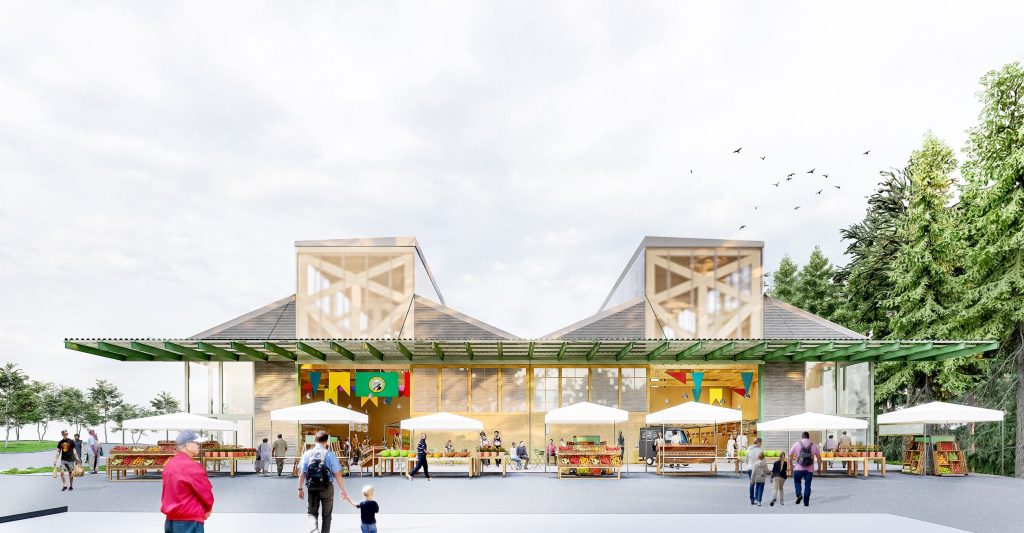
Councilman Nate Nehring, in his “Nate’s Corner” column with the Lynnwood Times shared last year that the County is investing in the new Food and Farming Center at McCollum Park, a first-of-its-kind facility in Snohomish County. The Center, scheduled to open in 2028, will provide fruit and vegetable farmers with access to shared space and equipment to process and distribute their produce directly to consumers and wholesale markets.
The legal path Flower World followed was the one required by state law
After the Notice of Violation (NOV) by Snohomish County Planning and Development Services (PDS) in October 2024, Flower World appealed to the Snohomish County Hearing Examiner as the mandatory administrative step. Once Hearing Examiner Camp issued his decision on June 27, 2025, the exclusive next step was a Land Use Petition Act appeal to Snohomish County Superior Court which was filed electronically on July 11, 2025. The case is now at the Court of Appeals Division I after the Snohomish County Superior Court affirmed the hearing examiner’s June 2025 decision.
The Snohomish County Council has no legal jurisdiction to review nor overturn specific enforcement rulings on an individual property; it can only amend codes prospectively (not retroactively) or express general policy support for agriculture.
The county council can consider amending its code for “agricultural activities” in SCC 30.91A.090 to encompass any and all commercial retail sales activities associated with the sale of farm products however doing so would open the door to retail businesses (e.g. large parking lots, big-box stores, or auto dealers) to masquerade as farms by simply adding a small greenhouse or produce stand and claim it as their entire operation. This could also lead to agricultural land being converted into high-intensity retail which is taxed at lower property taxes.
Without LDA permits, large-scale grading, paving, and drainage work would escape stormwater controls, erosion rules, and critical-area protections resulting in increased flooding, sedimentation in streams, and drainage disputes an attorney told the Lynnwood Times adding that a broad definition for “agricultural activities” would undermine rural zoning and allow commercial sprawl.
Flower World is no stranger to legal disputes
Postema and Flower World are no strangers to such legal battles with the County. The Snohomish County Hearing Examiner website lists 12 cases associated with Flower World and/or its President John Postema. For more than two decades Postema has appeared in numerous other Snohomish County Court cases such as:
- In 1994 the Court of Appeals upheld a grading violation against Flower World for unauthorized topsoil scraping and gravel work.
- A 1996 challenge to growth-management statutes was dismissed on standing grounds.
- A 1998 neighbor nuisance suit over altered drainage of wetlands. Postema invoked the “common enemy doctrine” arguing that surface water is a common enemy that landowners may redirect. Postema won at trial but lost on appeal.
- A 2000 water-rights dispute with the Department of Ecology and Pollution Control Hearings Board produced a mixed Washington State Supreme Court ruling with the court agreeing with the state that it can deny Flower World permits for pumping groundwater if it harms Bear Creek stream’s required minimum flow or older water rights. The court also sent Postema’s case back for more fact-finding saying the lower board still needed to prove that his wells would cause harm to Bear Creek stream.
- A 2003 family-business dispute tied to Postema Enterprises, Inc., the company behind Flower World nursery. After a trial, Postema tried to raise a brand-new legal theory in a post-trial motion. The trial court refused to consider it. On appeal, the Court of Appeals ruled that the trial court was correct: you cannot wait until after the trial is over to introduce an entirely new argument. The appeal was denied, and the original judgment stood.
- In 2019 Postema faced an investigation of first-degree assault after an alleged bulldozer incident involving his son at the nursery; the criminal matter was resolved without public trial. The July 4, 2019, incident at Flower World involved John Postema (then 78) allegedly using a bulldozer to push his son Albert Postema’s SUV (with Albert inside) through a fence and down an embankment after a long-running family/property dispute.
- A 2022-2025 health-department case over food permits at the adjacent Maltby Produce Market ended with the Court of Appeals affirming that a permit was required. The Maltby Produce Market sold produce plus temperature-controlled-for-safety foods without a food-establishment permit under WAC 246-215. Snohomish Superior Court ruled that Maltby Produce Market must obtain a permit within 90 days or stop selling regulated foods. Postema appealed to Court of Appeals Division I and lost.
Editor’s Note: Kienan Briscoe contributed to this article.

Author: Mario Lotmore




31 Responses
This makes no sense to me other than for political gain :(! I say giving attention to our roads should be the focus for our politicians today for they are in such need of attention and repair!
Enforcing the law doesn’t make sense to you?
I hate government more every day
So, Move
Nice Hit article against the little guy. Going through and dredging up every court document and family matter of the guy fighting the government. What a hack journalist.
Little guy? John is a multi-millionaire who owns corporate farms and a hotel in South America, Europe, and the US. You’ve been tricked into thinking Scrooge is poor.
Envy much? So what if he’s well off? He’s obviously worked for it and the results have been not only beneficial to his family, his employees, but to the community here and abroad. What exactly have you done to improve the lives of people here or elsewhere? Scrooge. Probably doesn’t add up to what Flower World has done.
Clearly it appears that the government is taking aim at Flower World for whatever reason. The one-party rule in this state does not like small businesses and has the habit of picking the winners and losers.
John is no little guy. The water dispute flooded the back end of my land as he changed the flow of the creek so he could use it for irrigation. No permits, the work was done on weekends to avoid the county. He is a stubborn old man who could give a sh##t about the rest of you.
Postema has a habit of ignoring laws and business regulations he doesn’t like. Imagine if we all did that. I will not shop there and encourage others to ask themselves if they want to support a business like this.
He wouldn’t let employees wear masks during covid before the vaccine. He is bully.
Not true!!! He didn’t enforce masks! I shopped there all during COVID!
100% They tried like the county does to smear him because he wouldn’t force the mask issue. The county ignored the proven fact that mask offer no proven benefit to stopping a virus.
Will – You shouldn’t voice an opinion about something (masks offer no proven benefit…) if you know nothing about it or if you refuse to accept indisputable facts. You and Mr. Postema seem to have the same problem: say and do things your own way and to hell with everyone else.
@ A gardener. Anyone still wearing a face mask is not following the science as they do more harm than good. That’s not opinion; it’s fact. The state’s demand to wear masks wasn’t about controlling covid, it was about controlling the people under their power. Mr. Postema saw thru it, just as millions of others as well. No one in government should be telling people to wear a face mask or take an unproven, untested drug, in the case of the ‘vaccines’ from an industry that is exempt from liability.
Why aren’t they grandfathered-in if Flower World was established long before the newer rules were in place?
Why are the authorities running an old established business out?
Why are the authorities micromanaging what a business needs to do to economically survive?
Who is being harmed by a parking lot and a building?
Seems like the authorities need a wisdom, discernment, judgement permits.
Leave our beloved plant world the hell alone!!! They should be grandfathered in as they were there before the stupid rules were!!
Dont piss off the residents, you can and will be overruled!!
Because he’s building new things that fall under the new codes. Why should a corporate farmer get to break the law?
John Postema seems to think he is the only one that doesn’t have to follow the law. I think he knew what the law said he needed to do and chose to ignore it. Now he wants everyone to think he’s the victim.
WOW! I wish people were this upset at the overbearing, over taxing, destructive one party rule in Olympia than going after a small but contributing business to the community.
Look, the business did a bunch of retail improvements and didn’t get permits. They feel they dont need to. I need to, plus every other retail farm operation. Let’s stop pretending they’re being ganged up on. They arent above the laws or rules. Other farms and nurseries have to pay the permit fees for work like this. Giving the largest nursery in the county a pass wouldnt exactly be fair to their competitors right?
They don’t want to follow the rules. That’s what this is about.
More like hearsay rather than fact. Proof?
My family history is 175 years old. All farming and logging families from Snohomish, eatablished long before county laws. Old farm families that are still running farms, produce and agro sustained entertainment for their families and families all over washington state, as the dairy farms where put out if business by big industry and aging farms. We are all very privleged to be able to purchase the hard works of these families including the produce and vegetation provided by flower world. I have been shopping there with my family since I was a child I am 58. The flowers and plants grow in the yards of snohomish county families creates pollen distribution for the valley as a whole. The fresh produce wich is a large organic grown produce, on property, provides nutrients to the local commumity that you can not find in retail chain stores with plastic food. I shop at the produce market for all my produce. This family bussiness supports so many good things about our community. I am sick and tired of the disregard of the benefit of these businesses and am upset that there may be more agenda to create more land for development and destruction of natural resources. I do not live here with my family for any other reason than history and natural beauty. I feel as the board and the county have ignored this important aspect of this community, as we see in the DR Horton land developement taking place and destroying natural wildlife habitat and polluting the water runoff into the valley, displacing animals, and causing us to spend billions in dollars to move a bridge and expand a hwy onto beautiful farm land, all lost in appeal with a vote in by snohomish county.. Lets not continue this destruction. Mr. Postema, apparently is similiar to my grandfather, an old snohomomish man, not interested in county regulations on his land. I get it. I do know everyone unfortunatley is ruled by our county laws and permitting. We need to find a solution to save an institution that is valuable and find a way to live within the boundries of the law. Please take into consideration the impact of not one stubborn mans actions but how it affects all persons, as those are the real victims here. Creativity and community support would prevail.
Readers, please see Executive Orders and Agricultural Action Plan from 2005 https://snohomishcountywa.gov/DocumentCenter/View/8153/Response-to-Executive-Order-for-Agriculture-Action-Plan?bidId=
The permitting process is still convoluted and lengthy. We can not support a government run indoor farmers market and let this one of a kind family run nursery and farm close. Additional collaboration efforts are needed. Perhaps a rural stewardship plan is needed to preserve this valuable community resource.
https://urldefense.com/v3/__https://kingcounty.gov/en/dept/executive-services/data-information-services/policies/rules/utilities/put820pr__;!!K-Hz7m0Vt54!maZeTwizIIaxE1QUudVkYXpH0UR1hxzmvN-obx-b0dwkTNHW1M3ntJ5d5Wc1grbrcd_oCVlilUfE3K9g$
Readers, please see Executive Orders and Agricultural Action Plan from 2005
https://snohomishcountywa.gov/DocumentCenter/View/8153/Response-to-Executive-Order-for-Agriculture-Action-Plan?bidId=
The permitting process is still convoluted and lengthy. We cannot support a government run indoor farmers market and let this one of a kind family run nursery and farm close. Additional collaboration efforts are needed. Perhaps a Rural Stewardship Plan is needed to preserve this valuable community resource.
https://kingcounty.gov/en/dept/executive-services/data-information-services/policies/rules/utilities/put820pr
Appealing to the public’s sense of nostalgia is a cynical move by a millionaire. The same millionaire who apparently does not have any patience for inconvenient law.
I was drawn in by that appeal, it was effective. But when I saw the physical extent of the structure and the road infrastructure for it, I realized that I had been duped. Failure to get permits is an attempt to gain advantage over his competitors. The farm is using its history as a cloak for extensive retail business.
If the penalties that have accrued are a threat to the existence of the farm, that is not the fault of the law. That is the responsibility of the law breaker. Maybe the people who take over the farm and the retail business will be more responsible.
Envy, envy, envy; is that all you have? Trouble is there are too many like yourself who see someone who has more than you and somehow believe they shouldn’t and want government to take them down. Sickening. Mr. Postema has obviously worked his butt off over the years, employed many and thus contributed mightily to the community in many ways. So what if he’s wealthy? Good for him. You should try it instead of throwing stones at someone who actually has contributed to society. What have you done; if anything? Maybe by your standards, others should look at your ‘financial’ standing and perhaps take more of it to redistribute it. The one party rule in Olympia believes every penny is theirs for the taking while they continually waste and redistribute to their special interests and demand more each and every year. Time for you to contribute.
Owner is well known to screw over people. Talk to anybody who was around 55 years ago. And how he screwed over another nursery
I believe this is a well written and researched article and I appreciate it. I read the post on Flower World’s web site and came away thinking the county/court system had over reached. But with this article which includes more details about the court decision and the existing regulations, I now understand that it was Flower World playing the victim card. There are regulations in place and Flower World is trying to ignore them. I want to keep Flower World around, I use it. But Snohomish County has the authority to regulate commercial operations and their land use.
There was an Agriculture Action Plan in place in 2005 to address similar issues (can be found in full via web search) and yet, one could argue that the permitting process is still convoluted and lengthy. We can not support a government run indoor farmers market and let this one of a kind family run nursery, market and farm close. Additional collaboration efforts are needed. Perhaps a Rural Stewardship Plan is needed to preserve this valuable community resource.
Please Do Not Close Flower World. I have shopped there since the late 70’s. They sold primroses for 25 cents & house plants were $1.25. Over the years they had many changes, selling mostly house plants, then slowly adding annuals & perennials. We have lost so many local Nurseries over the years. Please Please don’t loose this too. Sincerely , Sherry Sutin.
Just wondering- is this the same Snohomish County Council that wanted to increase Port of Everett taxation to all Snohomish County residents?