


EVERETT — Everett Mayor Cassie Franklin and Community Transit Chief Executive Officer Ric Ilgenfritz spoke with members of the city’s Transportation Advisory Committee on June 18 about a possible consolidation that would fold Everett Transit into the regional transit agency.
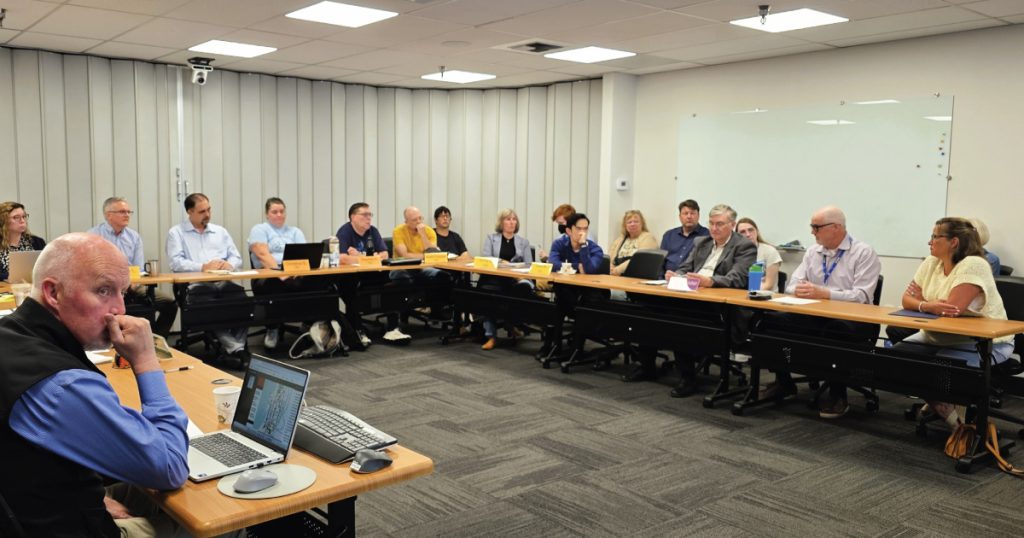
Thursday’s Q&A session followed an April 22 announcement that the City of Everett and Community Transit would develop an interlocal agreement to annex Everett Transit into Community Transit’s Public Transportation Benefit Area. Under the plan, Everett Transit would cease to operate as a separate agency. Its services, routes, fleet, facilities and employees would transfer to Community Transit. Everett’s dedicated transit sales tax would rise from 0.6 percent to 1.2 percent, lifting the overall local sales tax rate from 9.90 percent to 10.50 percent to generate an estimated additional $29 million annually for transit beginning in 2027, according to city figures. The change would produce roughly $158.3 million in new transit revenue from 2027 through 2031.

The interlocal agreement would need to be approved by both the Everett City Council and the Community Transit board after public hearings. It relies on a pathway created by state Senate Bill 5801, which removed the requirement for a public vote on such an annexation. Steve Oss, president of Amalgamated Transit Union Local 883, which represents Everett Transit drivers and maintenance workers, has opposed the process without a ballot measure and has urged for the council to let residents vote on the consolidation.
Residents and transit users have expressed concern that Everett’s current paratransit program, which serves a broader population and applies a more flexible eligibility standard than Community Transit’s DART service, and could face cuts or reduced access if the consolidation would go through.




Mayor Franklin shared that she is committed that any agreement with Community Transit must protect the existing level of paratransit service so that current users continue without interruption.


“A lot of concern expressed around paratransit,” Mayor Franklin said, “And the fact is that our paratransit service is far more robust than community transit. We serve a broader population. It’s easier to be eligible to paratransit services in Everett than it is for community transit, and we serve more of the city. And so that’s something that I’ve been fiercely advocating to CT, that we have to protect and keep it whole. If people are currently using paratransit services, we want them to continue using paratransit services.”
Community Transit CEO Ilgenfritz added that nobody using paratransit in Everett today would lose access under an integrated system.
“We’ve taken a hard look already at the paratransit network as it is today and it would be under an expanded and integrated system and there are no gaps in coverage,” Ilgenfritz said. “So, people will continue to be able to enjoy that service. Same with the employees.”
He added that paratransit drivers currently employed by Everett Transit would keep their jobs as state and federal law require it.
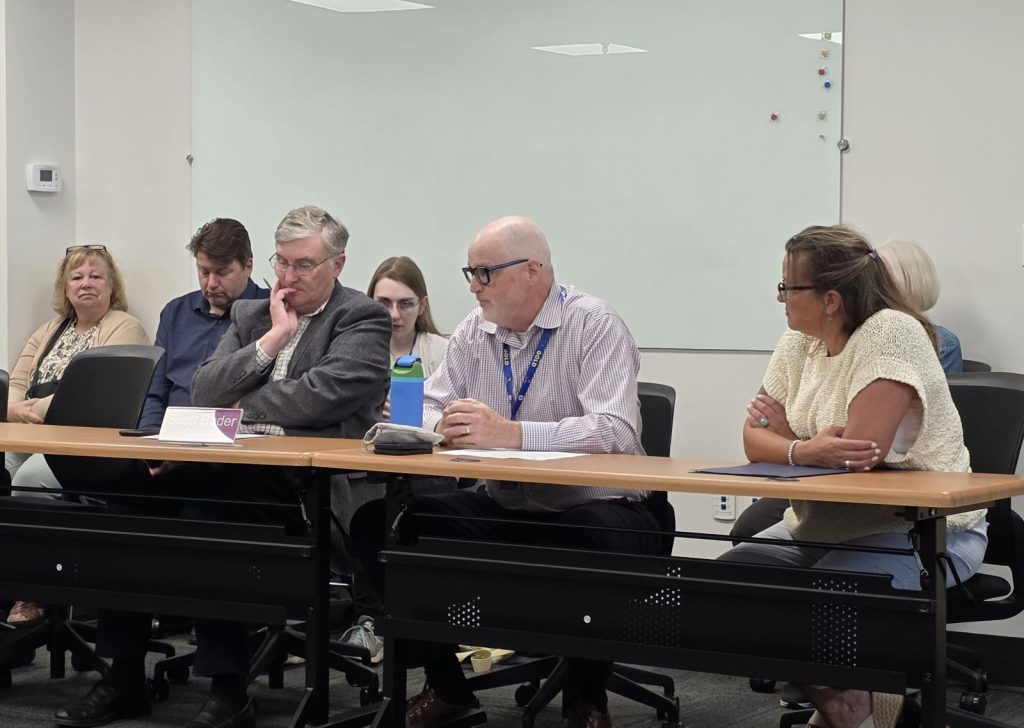
Some committee members voiced concerned that Community Transit’s model, which they described as more oriented toward longer routes between cities, might reduce the frequent local stops and flexible shuttles that Everett Transit provides inside city limits—that neighborhood-level service Everett residents have gotten to expect.
Mayor Franklin acknowledged the feedback she has received from neighborhood groups pointing to the lack of neighborhood service CT provides in Arlington. However, she stressed that unlike more rural and suburban areas, Everett is a dense urban city which will make it feasible for CT to offer more frequent service.
“I’ve been talking to neighborhood groups and folks and there’s a real fear of losing neighborhood service because CT doesn’t provide a ton of neighborhood service in Arlington,” Franklin said. “Well, Arlington doesn’t have the density that Everett does. You can’t serve Everett without providing neighborhood service.”
Ilgenfritz added that one of his agency’s intentions is to bring BRT to North Everett through the Broadway corridor.
“That would provide attention to headway all the way up and down Broadway all day long,” he said.
He also said Everett residents can expect Zip/microtransit options as well: “It’s even offering some advantages over DART….Because you can book it on demand. So, you know, microtransit is something that we’re interested in scaling down the line.”
Ilgenfritz pointed to Community Transit’s experience in Lynwood as an example of how integration best works in practice as to how Everett will gain similar operational density and efficiency.
“It’s really remarkable to see what that integrated operation looks like,” said Ilgenfritz. “During the morning, we’ve got a bus coming into that bus hole every 30 to 45 seconds from every point on the compass.”
Ilgenfritz also provided examples of CT stepping up to provide Special-event and community shuttles service: “Tim Dodger used to call and asked, when AquaFest was getting started in Lake Stevens, like when you run a special route around the end of the lake for AquaFest to help people get in and out of the park. Of course we can do that. State fair, special service for things like that. Super Bowl parades, making sure we’ve got extra capacity and extra personnel on hand to help people make that trip.”
Mayor Franklin added that in her conversations with Community Transit board members, they have expressed a similar willingness by Ilgenfritz to accommodate special community requests of Community Transit.
Both Franklin and Ilgenfritz shared they valued the close connection between Everett Transit drivers and residents, of which many she has learned know residents by name after years of service. They pledged to ensure that team members continue in their roles under any new structure.
“We want to welcome all the Everett Transit operating employees into Community Transit,” Ilgenfritz said. “The simple fact of the matter is Everett Transit employees know their customers and know this community. We have so much we can learn from that cohort of folks as we get acquainted with the City of Everett and the people who use transit. So we look forward to that and we want to welcome all those employees with open arms. Especially the paratransit drivers.”
Two big reveals came out of Thursday’s TAC meeting, Everett would receive one seat on the Community Transit Board and that Franklin would push for a second seat, and that cities can leave the Transit Benefit Area if things don’t work out but no city in CT’s 50 years has left the Transit Benefit Area Ilgenfritz was quick to add.
Ilgenfritz explained the current board structure is two county council members and seven city representatives divided into large-, medium- and small-city caucuses. If the annexation were to proceed, he said, state law would require a board composition meeting involving all jurisdictions in the county to reallocate seats. Everett’s population would qualify it for at least one seat under the population-based formula,
“And given the population of Everett, Everett would obviously have a seat on the board and the mayors and came up with, well, maybe we should have two seats because the population sort of gets you about one and a half if you do it strictly on the math.” Ilgenfritz said.
Committee members pressed on whether sales tax collected in Everett post-annexation would remain dedicated to service inside the city. Ilgenfritz said Community Transit levies a countywide sales tax. Once the higher rate applies in Everett, the agency would collect the revenue and direct it toward transit service in the city rather than billing Everett separately for projects or operations. Franklin said residents want assurance that dollars generated locally stay local and support robust service within Everett boundaries, which she is committed to supporting and that it is a condition the Everett City Council will need to fight for in the agreement.
“So, I want to get all the information to make sure that I’m giving them [Everett City Council] a good option to vote yes on, but it will be up to them [Everett City Council],” Mayor Franklin said. “But they are also gonna be passionate about ensuring that those sales tax dollars that are collected in Everett are spent in Everett to provide transit services in Everett. We want to see that robust transit services. That’s the whole purpose behind this.”
The broader rationale for consolidation shared by Franklin and Ilgenfritz centered on long-term growth and financial stability.
“We are one of the only cities left that is a super full-service city. We have our own transit, we have our own library, we have our own fire department, we operate the animal shelter for the entire county,” said Franklin. “We have our water utility that serves far outside of Everett. We have our own police department. It is an incredibly expensive, complicated city to run. There are efficiencies of scale that we can’t achieve because as amazing as we are, we don’t, we’re constantly competing with larger regional systems that can do the work differently.”
She recalled a period before the pandemic when Everett Transit faced route cuts and struggled to maintain basic service. One-time federal infrastructure funding helped stabilize the agency, but that support will not continue indefinitely, she told TAC members. Even if Everett raised its own transit sales tax to the maximum of 0.9% (a 50% increase), Everett Transit could not match the service levels possible under Community Transit’s 1.2% rate, she said. The city would eventually need to draw from its general fund to close gaps, an outcome she described as unsustainable.
“So, I’m looking at not right now, what’s in the best interest right now, I’m looking at what’s in the best interest 10, 15 years from now,” Mayor Franklin firmly stated.
Franklin tied the discussion of financial solvency to Everett’s projected population growth. which the city is currently in the process of annexing between 20,000 and 35,000 residents with more than 50,000 people in annexable lands. Additional growth of 65,000 residents is anticipated in addition to this annexation she said which will require a transit service scaled to match—something Community Transit can meet.
“I believe that CT can provide more robust transit services than we can,” said Franklin. “And yes, we would lose being able to call the shots on every single thing. We would have to rely on working collaboratively with our board and making decisions as a board for the agency. And should CT not perform, that’s where CT leadership loses their job, as you’ve seen in transit agencies.”
Ilgenfritz quipped, “First of all, I’ve been in this job for five and a half years. I’m on my fourth Sound Transit CEO, so [here is] to your point about performance and accountability.”
He outlined Community Transit’s current scale of operation with roughly 1,200 employees, an annual budget near $500 million split between operations and capital, He shared that the transit agency is focused on customers and employees, including a collaborative relationship with its unions that represent about two-thirds of the workforce. The addition of Everett, he added, would fill a gap in the middle of the county’s network that will improve connections for residents traveling into and out of Everett, including workers from places such as Lake Stevens heading to the waterfront.
“The Everett station that Sound Transit built isn’t just gonna be there to serve the people of Everett, but that’s gonna be a big part of it,” said Ilgenfritz. “It’s gonna be the place people from Island, Skagit, the rest of Snohomish County come to get access to that regional area. Coming in from the north and from the east and from the northwest that isn’t there today. And each of these cities upstream, Marysville, Arlington, Lake Stevens, even up into Mount Vernon, they’re all zoning for density.”
The change in state law that allows the annexation without a public vote drew direct questions from TAC members about public input.
Mayor Franklin shared that the legislature periodically adds and removes “tools” available to cities for raising revenue. Property tax limits for example she said, have tightened over time resulting in budget constraints.
“We used to, as a city, raise property tax, 6% a year. And then that tool was taken away. And we can only raise sales, property tax 1%,” Franklin shared. “And so that’s what we do. We raise it 1% every year. We don’t have the ability to raise it more than that. And it has been harder and harder to run our cities and do this work. And so, I have been working with our council for years to address budget shortfalls and figure out how to continue to run and grow all the things that we do as a city. Using the tools we have.”
She added that accountability rests with voters at election time and if they disagree with her approach, they can remove her from office.
“So, this is now a tool that we have. And I have asked our council to consider all of the tools in our toolbox that we can enact,” Franklin told TAC members.
Mayor Franklin and Ilgenfritz shared with the Lynnwood Times that plan to complete the interlocal agreement and present it for consideration by the City Council and the Community Transit board later this year.

Author: Mario Lotmore




One Response
I am currently the most senior employee at community transit.
Community transit has never in its history taken money in the form of taxes without a vote of the people. I am apposed to the city of everett imposing a tax. Just because the laws changed for everett to do so. Our 2020 possibility of a merger with everett was scuttled by the possibility of vote of the citizens of everett.
I pleaded with our CEO to ask everett to have a vote of its citizens.
This is not the Community Transit I have worked forty one and half years for.
FLASH.