

SNOHOMISH—Snohomish County Public Works held a press conference on Wednesday, September 9, highlighting transportation investments included in the recently released budget from County Executive Dave Somers.
Executive Somers’ key themes that guided the county’s work on the budget including an emphasis on critical public services and infrastructure, as well as a continued commitment to protecting public safety.


The budget also includes funding from the Transportation Benefit District (TBD) and associated vehicle license fees, which were approved by the County Council. The new revenue source supports maintenance and operations of the county road network and allows Public Works to continue work on grant-funded projects that required local match dollars. One such project, scour mitigation on Snohomish River Bridge 1 (where the event was held), was specifically highlighted Wednesday.
“This bridge, and the work that we will be doing here, exemplify both,” Snohomish County Executive Director Tom Teigen said Wednesday of the Snohomish River Bridge 1 project. “It’s not always easy for the public to see the impacts of deferred maintenance. If it’s not broken then it can be delayed, but that creates problems down the road, as we’ve seen over the last couple of decades. That’s why it’s important to include funding in the proposed county budget to invest in transportation infrastructure.”



Teigen added that Snohomish River Bridge 1 is part of a “seismic lifeline route” which means in the event of an earthquake, it’s an essential route for first responders to reach people and for residents to evacuate.
Budgeting for maintenance for bridges like the Snohomish River Bridge 1 prevents them from failing and lets the Public Works team identify problems early before they become much more dangerous and expensive. Without investing in maintenance, it increases the chances of a road failing, Tiegen said, which then causes road closures causing travel delays but more importantly cutting off emergency services.
However, thanks to the added revenue generated by the TBD, these funds will be instrumental in filling in the county’s short-term funding gap, restoring maintenance and operations, and helps with securing match grants for key capital projects. On the other hand, it does not fund the 40 projects that have been reduced, or differed, recently – some of which are being scheduled for a decade, or longer, into the future due to supply costs and inflation.
“We continue explore additional resources for the future so we can address things the community wants, like traffic relief,” said Teigen.
County Councilman and Washington State Representative Sam Low, who also chairs the Public Infrastructure and Conservation Committee, supported the TBD stating that he believes in supporting infrastructure and there are “deep needs” in Snohomish County.
The Snohomish River Bridge 1, for example, is just one of over 200 bridges in Snohomish County that the county works on every year. However, as the county continues to invest in infrastructure costs increase, Low said Wednesday.
“Funding doesn’t keep up with the needs,” said Low, emphasizing the stress that was put on the Snohomish River Bridge 1 due to recent record-breaking flooding in the area. “Had we not established the TBD we probably would have lost [critical] matching funds. WE have about $6 million in matching funds all over the county that were in jeopardy but those will now be saved with this TBD and we will now continue to do projects like the one behind us.”
Snohomish County plans to begin work on the Snohomish River Bridge 1 beginning of next year to help prevent future erosion and repair current damage.
Natalie Reber, with the Master Builders Association of King and Snohomish Counties, followed Low by sharing how investments in infrastructure impact the building industry.
“Reliable transportation infrastructure is essential to delivering housing and supporting growing communities. Without roads we cannot support the growth that’s needed for this region. This is why we’re pleased to see county leadership take steps to prioritize spending on road infrastructure. Everyone, literally everyone, needs roads. We need them to get places and have services reach us,” said Reber. “We also really appreciate the TBD and vehicle license fee creates a new revenue stream, helping ensure infrastructure costs are shared broadly across road users, property users, and those who are building new houses and businesses in our region.”
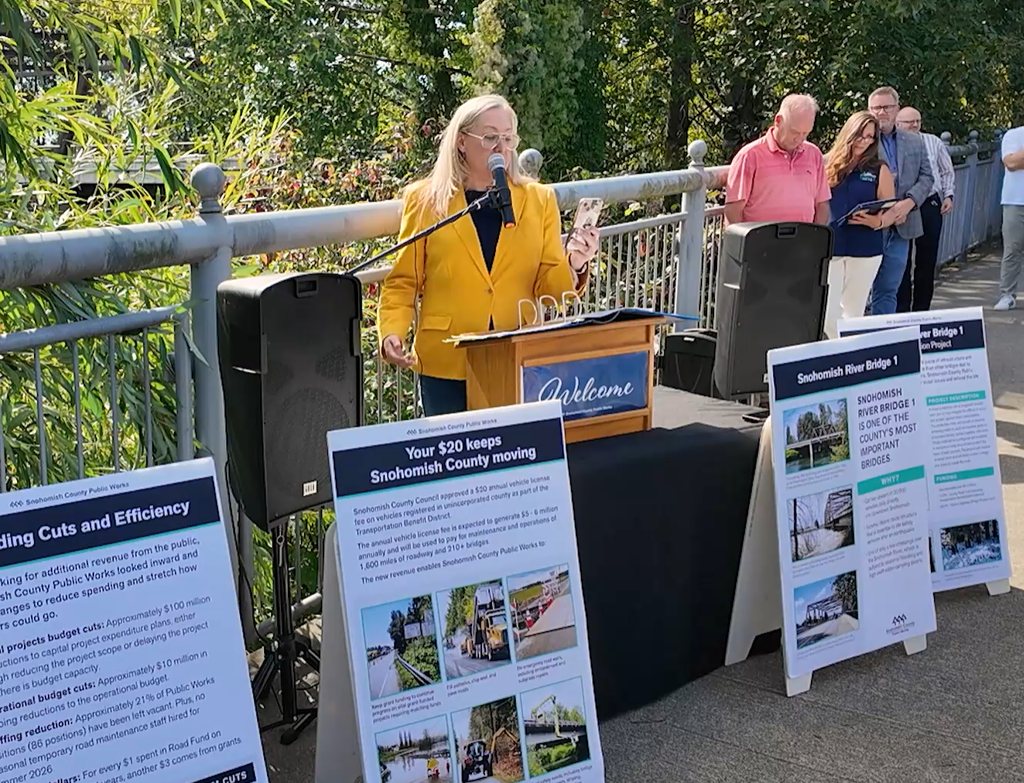
Lance Calloway, Northern District Manager Associated General Contractors of Washington added that reliable roads and infrastructure are key to protecting our public safety, supporting economic development, but more importantly connecting people to jobs and opportunities.
“If we don’t maintain these assets right now we’re going to pay more than double, or even triple, on what we’re currently spending on just to maintain these so it’s better to do this sooner than later,” said Calloway. “Without functioning roads we can’t build homes, businesses, and facilities our communities need.”
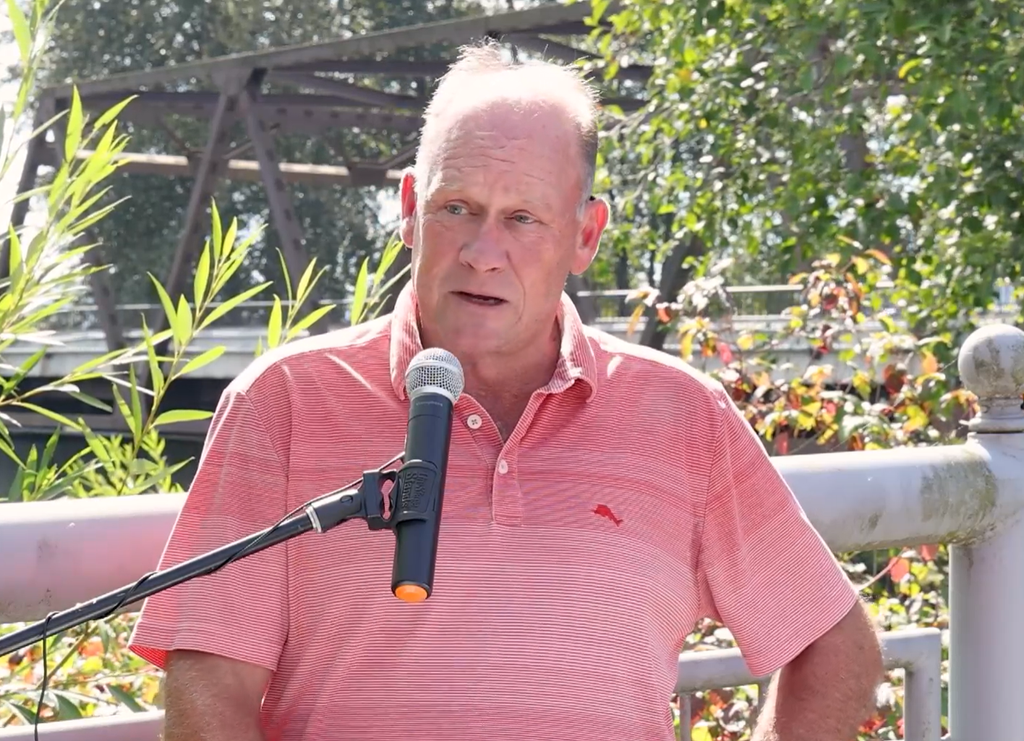
Carrie Caffrey, AFSCME Council 2 with the Snohomish County Public Works, said AFSCME Council is grateful that the county recognizes the importance of infrastructure and are backing that commitment with real investments.
“Infrastructure is more than just roads, bridges, and equipment, it also depends on the skill of public employees who maintain these systems every day and respond when emergencies occur. Public Work employees care for the county road networks that residents, businesses, and emergency responders rely on,” said Caffrey. “This is an investment on public safety, reliable services, and a future of Snohomish County.
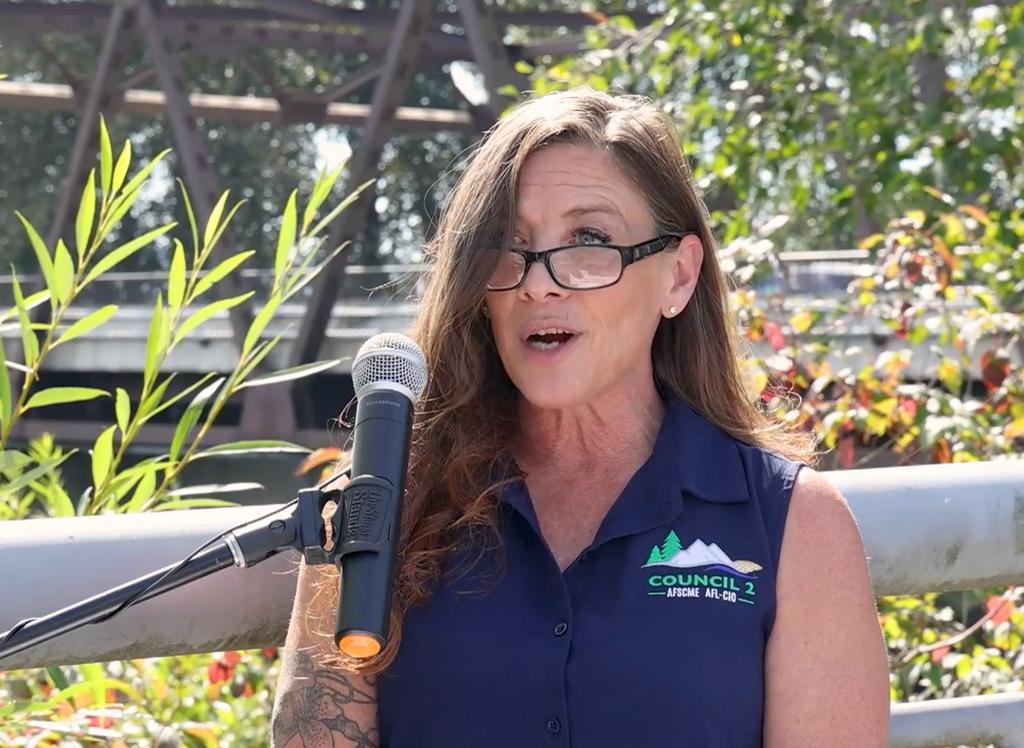
Public Works Director Kelly Snyder closed last Wednesday’s presser by taking questions and speaking more on the Snohomish River Bridge 1 project.
Snohomish River Bridge 1, built in 1983, carries heavy traffic on Airport Way and Avenue D into the downtown center of Snohomish, between 10,000 – 20,000 daily trips.
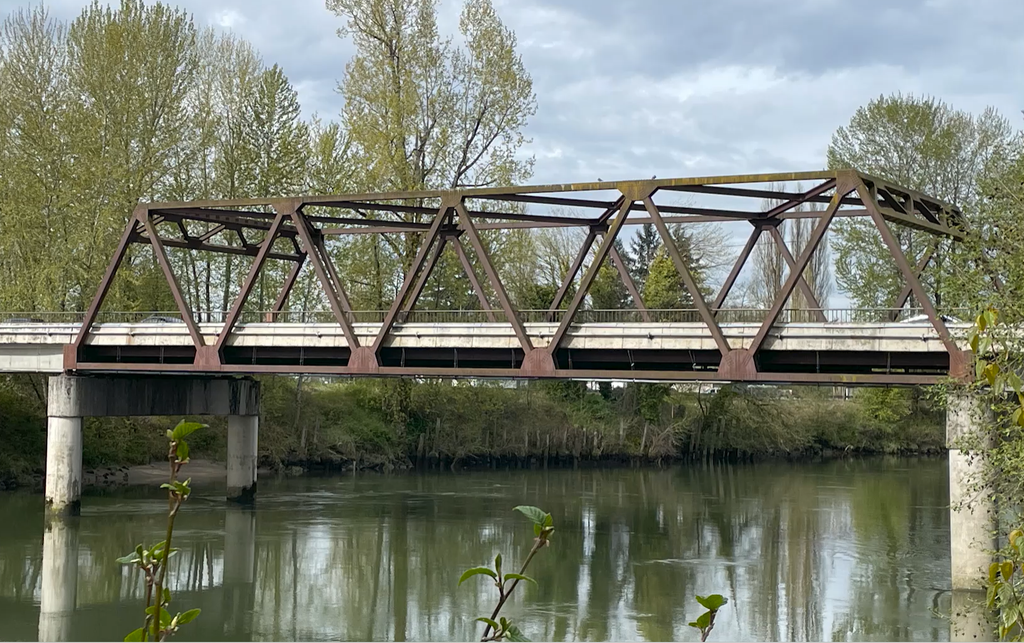
Two of the bridge’s in-water piers are subject to scour, which occurs when fast-moving waters remove sediment from a bridge foundation.
The proposed project will install armoring to mitigate the effects of scour that has occurred around the pier columns and help protect against future scour. A scour protection mat installed around each pier will consist of channel armoring material such as concrete jacks or articulated blocks cabled together into mats. The mats would be configured and installed in sections to ensure they wrap around and protect the base of each column. Installation of the scour protection mats would likely be accomplished using barges on the river.
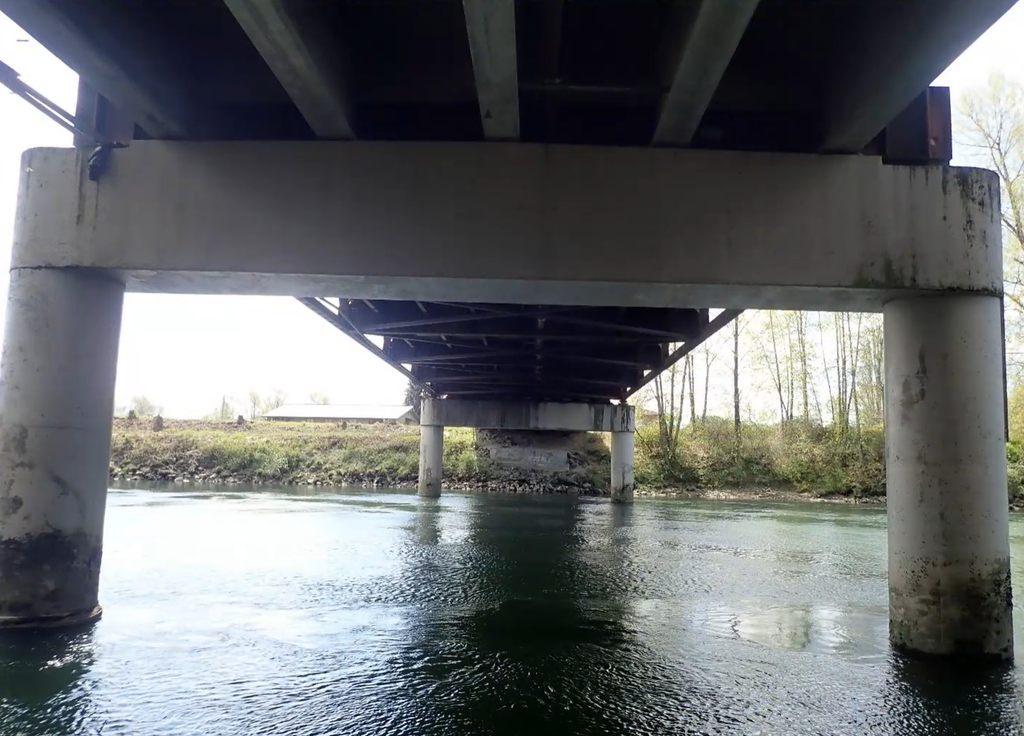
Construction is scheduled to begin in 2028 and will cost an estimated $8.2 million. During construction, short-term closures are anticipated.
Snohomish River Bridge 1 has a rich history. The existing 360-foot-long steel bridge was built in 1983 by the Washington State Department of Transportation (WSDOT) before Snohomish County took ownership in 1989. It replaced a swing span bridge built by the County in 1911 that was turned over to the State in the 1940’s. That structure replaced a wooden bridge that was built in 1891. Prior to 1891, a ferry took travelers across the river.

Author: Kienan Briscoe