


OLYMPIA, Wash., April 24, 2023—The 2023 legislative session ended last night without the passage of a new state law on the possession of controlled substances, leaving it now up to counties and cities to put local drug-possession laws in place once the state law adopted in 2021 expires on July 1.
SB-5536, also known as the “Blake Fix,” concerning controlled substances, counterfeit substances, and legend drug possession and treatment, passed the Senate on March 3, with 28 yeas and 21 nays. The Senate’s version increased the penalty for the possession of hard drugs to a gross misdemeanor from its current misdemeanor status that occurred as a result of the 2021 passage of SB-5476 in response to the state Supreme Court’s 2021 Blake decision.
On April 11, the House amended the Senate’s version of SB-5536, with 54 yeas and 41 nays, to limit the charge for possession back to a misdemeanor and expunge a conviction if that person has no additional arrests, charges, or convictions within a two-year period of the present conviction. The House’s version would also make knowingly possessing and using controlled substances in a public place by injection, inhalation, ingestion, or any other means a misdemeanor and subject to diversion programs, undercutting recent ordinances passed by local municipalities.
After the controversial placing of an Opioid Treatment Program (OTP) next to a local Boys & Girls Club in Lynnwood earlier this year which erupted in weeks of protests, the House’s amendment surprisingly would remove the requirement for Washington State Department of Health (DOH) to hold public hearings of the locations of OTPs within the local community.


After the Senate refused to go along with this weaker version in a concurrence on Friday, April 21, negotiators from the House and Senate chambers emerged with a new proposal Saturday evening that was rejected by the House on Sunday, April 23, by a 43-55 vote.

The Senate version of SB-5536, sponsored by June Robinson (D-Everett), was also supported by Snohomish County Senators: Marko Liias (D-Mukilteo), John Lovick (D-Mill Creek), Jesse Salomon (D-Shoreline), and Keith Wagonor (R-Granite Falls). The Senate’s version was also supported by the Washington Association of Sheriffs and Police Chiefs (WASPC).

“We supported policies to provide incentives that encourage drug rehabilitation and treatment while holding those who are in unlawful possession of drugs accountable in a compassionate manner,” WASPC released in a statement on April 24. “We supported the bill as it passed the Senate as it was a balanced approach to incentivize those found in possession of drugs to successfully complete treatment. In return, those individuals would not have a criminal record and not spend any time in jail following conviction. Only those who refused treatment would be subject to serving any time in jail.”
The Association of Washington Cities (AWC) opposed language in the House version that required a prosecutor to vacate (expunge) a case after two years if there are no new criminal arrests/convictions. The AWC explained that doing so, “will add substantial administrative burden for the prosecutor, and will encourage prosecutors to not charge simple possession, eliminating the treatment pathways envisioned in the bill for that individual.”
AWC also criticized the House’s version believing the pre-trial diversion program as established in the House version is not workable in most jurisdictions.
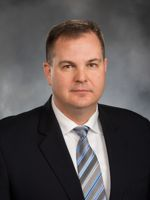
Republican Senate Leader John Braun in a statement today blames the absence of a statewide statue regarding the possession of controlled substances “a complete failure” by House Democratic leadership.
“It’s as though they are heartless about the death and despair that fentanyl and other hard drugs have caused across our state, including their own districts, for most of the past two years,” Braun said.
Senate Majority leader Andy Billig (D-Spokane) blamed the failure of a “Blake fix” on House Republicans stating that not one member of the Republican caucus voted for the House version Sunday night.
“I expected a bipartisan vote on this compromise bill,” Billig said. “Instead, not one House Republican voted for a bill that would have made drug possession a gross misdemeanor throughout our state, as they’ve requested all session.”
However, according to the roll call vote on Sunday, 15 Democratic members joined their Republican colleagues in the House to kill the bill such as Representatives Emily Alvarado (D-Seattle), Liz Berry (D-Seattle) and Mia Gregerson (D-SeaTac).
Governor Jay Inslee pleased with the passing of his “go-big proposals” on housing, increased funding for education, and policies to address behavioral health, public safety, and reproductive freedom this legislature session, called a failure to the Blake fix, “unacceptable.”
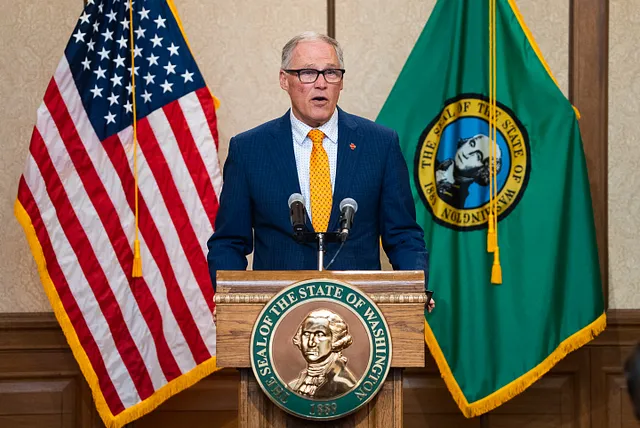
“I hope the successes of this session aren’t overshadowed by the way tonight ended with the failure of the Blake bill in the House,” Inslee said. “But what happened tonight was unacceptable. Decriminalization is not an option for me, and it is not an option for the state of Washington. I expect legislators to deliver a solution.”
Because SB-5476 that passed in 2021 was a temporary resolution to the state Supreme Court’s 2021 Blake decision, the conditions criminalizing the possession of controlled substances such as methamphetamine and fentanyl expire on July 1, 2023. If the state does nothing, technically, possessing controlled substances in Washington state will no longer be a criminal offense at the state-level. Local governments will have to enact policies and ordinances for their communities in the absence of state statute.
It is unsure if Governor Inslee will call a special session to address this upcoming public health and safety quagmire. Senator Braun shared that he doesn’t see what a special session would accomplish.
“It’s not clear what they [Democrat-led House and Senate] would accomplish in a special session that they couldn’t get done in this 105-day session. At this point our communities would probably be better off to trust their local prosecutors, law-enforcement leaders and mayors to deal with this at the community level, with their own drug-possession laws.”

Snohomish County Councilman Nate Nehring isn’t wasting anytime addressing what he calls “the scourge of deadly drugs on our streets” by announcing he will be introducing a county ordinance this week outlawing drug possession “due to the legislature’s inaction.”
“This is unfortunate but opens the door for counties and cities to address this issue at the local level,” Councilman Nehring said. “The scourge of deadly drugs on our streets is among the most pressing public safety issues our communities face. I look forward to working with my colleagues at Snohomish County to adopt reasonable regulations which lead with compassion and emphasize treatment while also holding individuals accountable for their actions.”
In 2020, Oregon became the first state in the country to decriminalize hard drugs with the passing of statewide Measure 110. If no action is taken by the legislative by July 1, 2023, the absence of a statewide policy on the possession of controlled substances will create a checkered and confusing set of varying policies by municipalities throughout Washington state.
SB-5476 and the Blake Decision of 2021
The 5-4 decision by the Washington State Supreme Court stated that RCW 69.50.4013(1) – the statute that criminalized the possession of a controlled substance without a prescription – did not include “an intent requirement” and hence also violated the requirement for uniform interpretation of the Uniform Controlled Substances Act among the states, ruling the entire statute unconstitutional
Therefore, to correct this, a mens rea element, “knowingly” was added to the statutes pertaining to possession of a controlled substance, possession of a counterfeit substance, and possession of a legend drug.
SB-5476 amended state law to reducing penalties for the possession of controlled substances from felonies to a misdemeanor and where a case is legally sufficient, the prosecutor must divert a case for treatment if the alleged violation is the person’s first or second violation for possession. This would decriminalize all hard drugs within the state of Washington, lessening criminal penalties for offenders.
However, for a person’s third and subsequent violations, the prosecutor is not required to divert the case for treatment; hence, the accused may be subject to class B or C felonies. Also, use or delivery of drug paraphernalia no longer became a criminal offense if the use or delivery is for the purpose of testing, analyzing, packing, repacking, storing, containing, concealing, injecting, ingesting, inhaling, or otherwise introducing a controlled substance into the human body.
Republican Senators Keith Wagoner and Mike Padden introduced SB-5471 back in 2021 addressing the state Supreme Court’s Blake’s decision by adding conditions and penalties related to a person “knowingly” in possession of a controlled and counterfeit substances. However, the bill never made it past the Democrat-led Law & Justice committee.
FEATURED PHOTO SOURCE: King County Sheriff’s Office

Author: Mario Lotmore



25 Responses
We need to ck interlock laws. How judges can change a sentence from another court and make it a criminal charge in his and give them 30. Days and 60 days for not having interlock for a totol of 90 days. Even after 2 avaluations saying no issues with drugs and alcohol.
being charged for same crime in another court. 4 yrs later. Need to explain law better. Caught driving without interlock punishment in 1 court now the other court doing punishment again.
Let us all follow like sheep it is what we are use to .The law is the law I know no different. First the old law did not work unless you call serving insane time in jail worked well ?? It did not. So can we all try some thing different ?? Hay I got a idea let’s look at other country’s laws on drugs and data and be open to taking the best and applying it here. Sounds good to me. There are meny places in the world that don’t have the drug problems we do. Let’s not go back to what did not work because we are used to it. Let’s be brave and try something new ?? In a free country when is it ok to put in jail a person that decides to take a drug that harm’s no one else but the user him self that no you can’t and if you do you go to jail. That does not sound like a free country to me ?? Let’s have a good conversation about all this with data and trust this data and come up with something new ??
Omg now even more of our loved ones will die from overdosing. You can’t uphold our present laws so you change them to easy the burden of justice! No wonder justice released my son even though he was intending on blowing up something or someone in Seattle last September. The Judge Released him!
What is going on? How can anyone believe that not having a control substance law in place is acceptable? We has successfully gave the entire Seattle area to drugged out individuals and now our state representatives are going to take one step further? I can’t believe that this is even a thing that could fall out of place. We have to protect our kids from drugs. I’m sure everyone can put together that if you have drugs you are willing to sell drugs. Think about it and act like a person that cares about out homes or families and our future. Get it together!!!
They can’t control it so they are accepting it. Passing the buck down to local levels.
God help us.
Exactly…I totally agree…drug addiction is self inflicted…these people made a choice to use substances…I am concerned at the fact that society is attempting to cater to these people in all sorts of ways…what ever happened to personal responsibility…all that happens now is lots of excuses
So. What you Really mean to say, is that the State of Washington has no room in jails, won’t continue to pay for drug recovery and rehabilitation – oh and by the way – Fail constituents by conceding to the war on drugs as a loss cause, and drug addicts can just die off.
Wow!!
A few things … We should look back before the Blake decision and hold whoever wrote the law (with the poor language and legal structure that was inadequate) somewhat accountable. Also the professionals and politicians that let it go for so long too should be held accountable. Seriously their ineptitude contributed to today’s issues. After that blame the parents, and society in general that raised all these people that can only cope by being constantly high. I think the aforementioned people should be blamed before the user themselves. That’s why the president of Mexico suggested Americans hug their children and stop blaming the cartels for the drug use. And I agree with him on that. With all that said now I need to break the news to many of you. You can’t make it illegal once it’s legalized. It doesn’t work that way. BTW treatment doesn’t work either. That’s a medical scam. The problem isn’t addiction. The use and abuse that comes with self medicating is a band aid over the gaping wound of bad parenting in the first place. But pointing fingers at anyone other than corporations that influence our culture and control economics wouldn’t be fair.
Well said , by both Ms Johnson AND the president of Mexico!
Clearly the biden administration has allowed the cartel to freely and openly bring in drugs into this country unchecked particularly fentanyl and the cartel are getting it from the Chinese I wonder what kind of kick back Biden is getting killing Americans. They’re not smuggling drugs across the border anymore smuggling is the intent of hiding something they’re not hiding it anymore. Biden is a communist traitor and him and insley need to be hung for treason according to the laws of Constitution. The Democratic party has completely destroyed our national security, and the Republican party you don’t have a two-party system that was a lie from day one they’re both United in the common goal and that’s to destroy this country now. That was biden’s job all along to destroy America. He certainly did that
Now tell us what you really feel. You lost me when you started blaming Biden.
Very true. There’s no effort to stop the cartels or China from importing harmful drugs and our society suffers the consequences of soft on crime policies. It doesn’t help when Democrat run jurisdictions make it easier to do drugs with free (taxpayer funded) needles, drugs or otherwise as it exacerbates the problem thus creating more victims. The call for ‘methadone clinics’ is only exchanging an illegal drug dealer on the street corner for a legalized Big Pharma drug operation in a nice facility, like putting lipstick on a pig. Much of this is being funded by taxpayers funds too so now government expands their Vice operations and the public suffers.
While I agree with a few points you’ve made, I totally disagree with most. You can’t blame the parents unless they themselves are feeding that crap to their children. Drugs don’t discriminate. They don’t care about social economics, or your upbringing. You can teach your children give them all the information but ultimately, it’s their choice. I have a friend that came from a loving,healthy family, became a drug and alcohol counselor and 15 years later for reasons only known to her started using methamphetamine and then picked up Fentanyl. So No, it’s nobodies fault but the individual.
While I agree with a few points you’ve made, I totally disagree with most. You can’t blame the parents unless they themselves are feeding that crap to their children. Drugs don’t discriminate. They don’t care about social economics, or your upbringing. You can teach your children give them all the information but ultimately, it’s their choice. I have a friend that came from a loving,healthy family, became a drug and alcohol counselor and 15 years later for reasons only known to her started using methamphetamine and then picked up Fentanyl. So No, it’s nobodies fault but the individual.
WTH? Of course treatment works but there must be follow through as in ‘personal responsibility’. It’s an individual choice to use drugs and it’s absurd to blame parents or corporations for their drug addiction. The problem is that so many want to blame others for what they themselves do for their scapegoat. It’s also a moral issue and it’s a government/legal issue that should punish those who commit crimes. Using drugs doesn’t just harm the individual; that’s just where it starts.
This call for allowing use of controlled substances has never worked. The soft on drugs policies in the Netherlands are proof positive that all they got in return was more drug use, addiction, crime, deaths, etc. That’s not something we should be instigating here but rather severe penalties, treatment and renewed calls for individual responsibility.
Anyone knowingly and willingly selling anything containing Fentanyl to anyone, especially minors and the minor dies. Needs to be put in prison for life. Homicide by fentanyl poisoning! THIS NEEDS TO BE THE LAW ACROSS COUNTY!
This is all being purposely done! Turn your heads to human suffering won’t get you very far! Prayers for change 🙏
For all you naysayers & neer changers who obviously know very little about the real issues….
LISTEN UP.
The drug war was a failure. We’ve known it for decades. With a five year recidivism rate that has never EVER dipped below 78% since it was added to the ncic datasets TO be tracked (in 1983) told us it was never a problem solvable by police. Lets stop lying to ourselves. What has the entirety of the drug war gained for us?
–jammed courts
–jammed jails
–eroded constitutional protections
–49% of all police departments work hours and 56% of their budgets either directly or indirectly wasted on interdiction efforts better spent chasing kiddie humpers, ,rapists murderers.
–a taxpayer fed fiscal black hole
–fentynal. Yes. You heard me. If there hadnt been constant incentive to make the smuggled products more compact and potent we would be losing hundreds of people to accidental OD every day.
–funds the very worst people on both sides of the law with staggerimg sums of cash
–encourages corruption and grift. And thats BEFORE we include the criminals
This is a medical problem, not a legal one. Stop pretending otherwise. I dont want to see whats next after fentynal because everyone wants to live in denial.
Exactly!
Fentanyl is killing our brothers and sisters, mothers, father’s, aunt’s and uncles. I live in a town over ridden by this drug, my friends have turned into zombies, robbing and sometimes killing each other. Whole generations of families are being wiped out. How can our leaders let this go on. I’ve been addicted to it myself and thank God I’m clean today but at a steep price loss my job my wife and my dog
Now I’m homeless and have no one. I overdosed 5 times. When will they learn???
Good they shouldn’t be punished for having it, a lot of people are addicted and can’t help it. But if you are caught trafficking large amount, I mean huge amounts, or selling to kids yea you should be charged. Not life in prison but a few years and give them resources to be able to get real jobs when they leave.
This is the most insane thing Insanely has done in combination. Make all these Drugs legal, and on the opposite, take the guns away from law abiding citizens.
Now, does anybody doubt, that they opened the insane asylum doors, let them all out, and run the state and federal government.