

MUKILTEO—Tucked along the waterfront near Boeing’s Everett assembly plant, Electroimpact has quietly become one of the world’s most influential aerospace manufacturing firms, designing the massive automated systems and tooling that help assemble modern commercial aircraft and spacecraft.
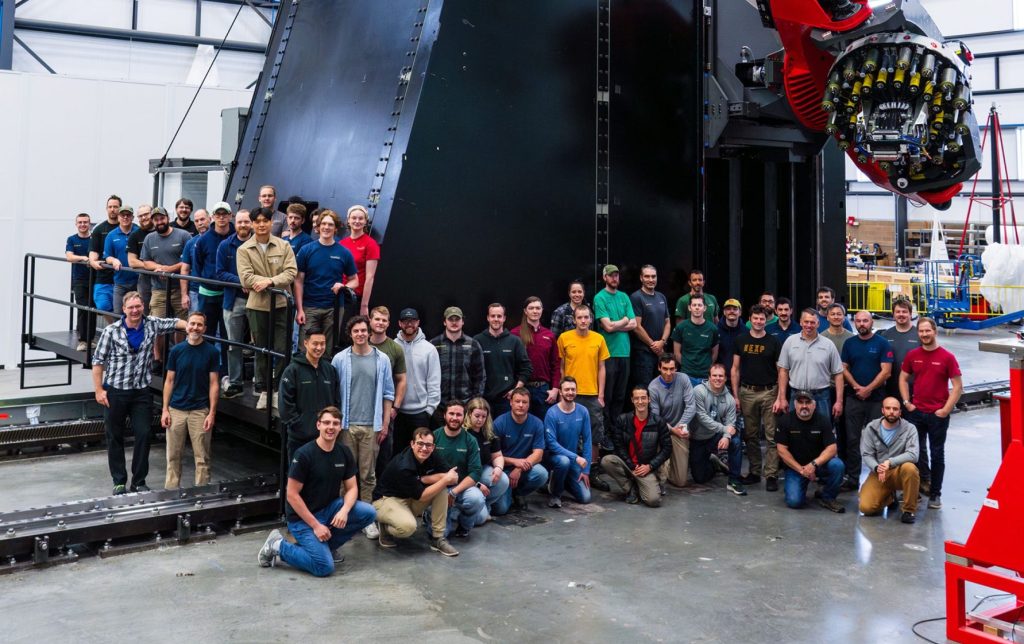
Founded in 1986 by mechanical engineer Peter Zieve, the Mukilteo company has grown from a small Seattle startup selling riveting machines into what it describes as the world’s largest integrator of aircraft assembly lines. Today, its customers include aerospace giants Boeing, Airbus, Northrop Grumman, Embraer and Blue Origin, among others.



While the company’s name is not widely recognized outside aerospace and manufacturing circles, its machinery has played a major role in the production of aircraft such as Boeing’s 787 Dreamliner and the 777X, whose carbon-fiber composite wings required new levels of manufacturing precision and automation.
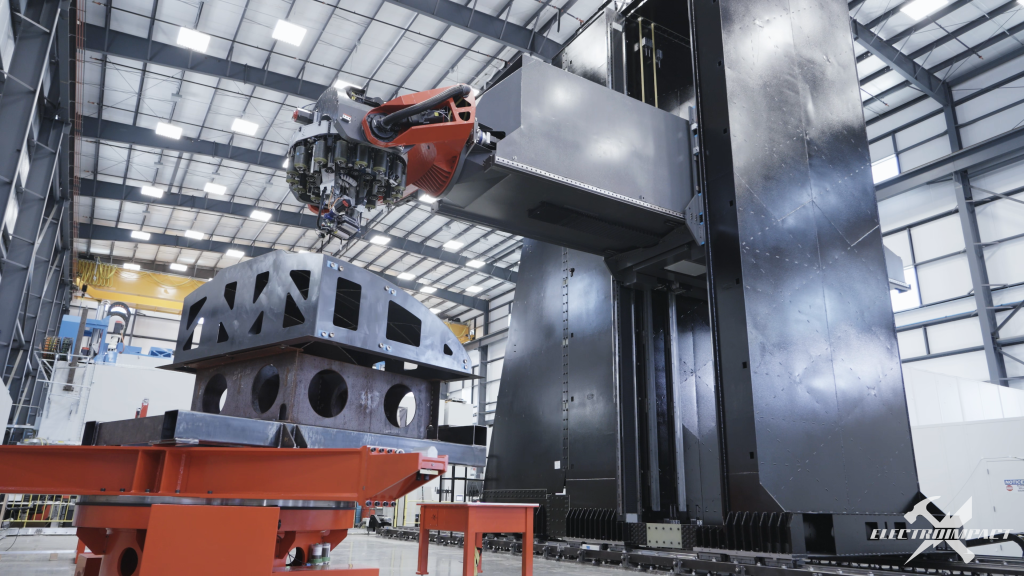
Electroimpact specializes in aerospace automation — the highly technical systems used to build aircraft structures with speed, consistency and accuracy. Its projects range from robotic assembly systems and automated riveting machines to fiber placement systems capable of laying composite materials used in modern aircraft and rockets.




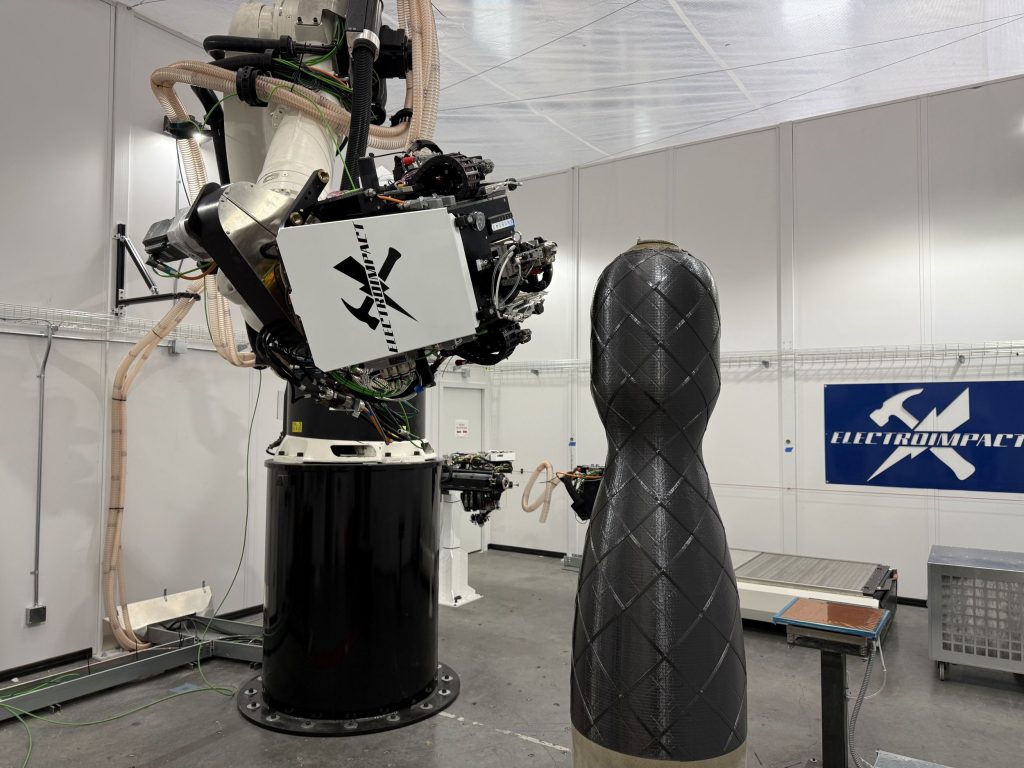
The company also designs spacecraft handling equipment and large-scale production systems used in commercial aviation, defense and space exploration. In recent years, Electroimpact highlighted its work supporting Rocket Lab’s Neutron rocket program through advanced automated fiber placement technology.


What distinguishes Electroimpact from many traditional aerospace manufacturers is its engineering culture.

According to the company, engineers remain involved throughout nearly every stage of a project — from design and drafting to manufacturing, assembly and final installation. The company says this “vertical responsibility” structure reduces bureaucracy while giving engineers direct ownership over their work.
That philosophy has become central to the company’s identity.
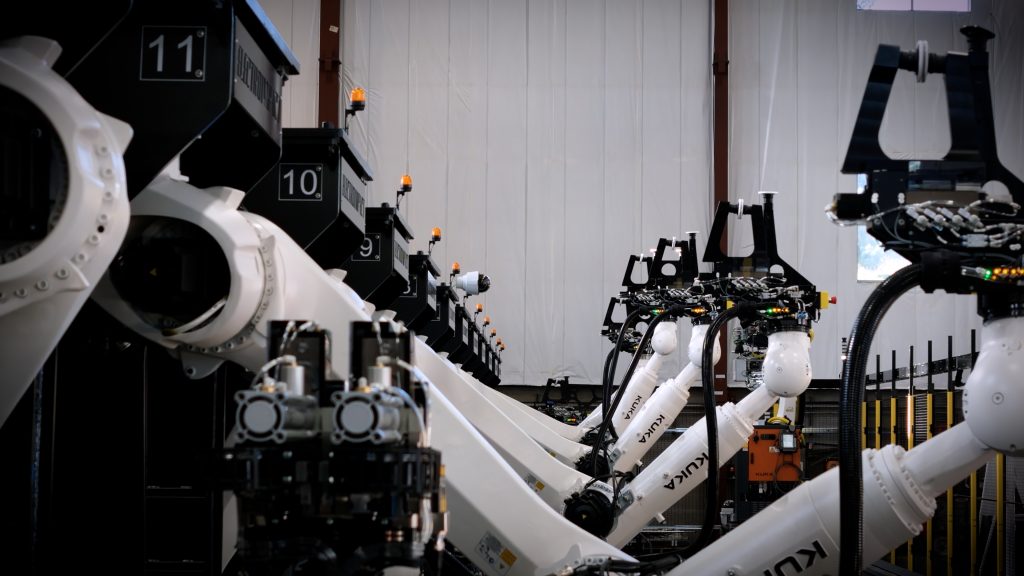
Electroimpact described itself as a haven for engineers and innovators, emphasizing a culture that values hands-on problem solving and entrepreneurial thinking. The company has employed roughly 500 engineers and technical professionals, many involved in designing the complex systems that underpin global aircraft production.
The implementation of the production automation equipment is designed to be part of an entire series of steps and not just a singular work position. That engineering-first mentality has also shaped how Electroimpact recruits talent.
Chief Operating Officer Austin Clark said the company’s approach allows engineers to remain connected to the practical realities of their designs.

“At Electroimpact, engineering isn’t confined to a desk,” Clark said. “Our engineers are holistically involved in all project phases, from sales and design to assembly, delivery, installation, and ongoing support.”
That approach appears to resonate with aerospace customers increasingly seeking automated manufacturing solutions as aircraft designs grow more advanced and production demands intensify.
Composite aircraft structures — lighter, stronger materials increasingly common in modern aviation — require specialized automation equipment to ensure precision manufacturing. Electroimpact has become one of the leading suppliers in that niche, particularly in automated fiber placement systems used to build large composite components.
The company’s rise has mirrored the transformation of the aerospace industry itself.
When Zieve founded Electroimpact in the mid-1980s, aerospace manufacturing still relied heavily on manual assembly methods. Automated riveting and robotic systems were relatively uncommon. Over time, however, aircraft manufacturers demanded faster production speeds, tighter tolerances and greater efficiency — creating opportunities for companies specializing in advanced automation.
Zieve entered aerospace with little industry experience, not even knowing what a rivet looked like. Three years later, he launched Electroimpact to sell riveting machines to aerospace companies.
Since then, the company has expanded globally, operating satellite offices in the United Kingdom and supporting projects on multiple continents. Over the years, Industry groups have taken notice with the Pacific Northwest Aerospace Alliance naming Electroimpact its Aerospace Company of the Year, citing the firm’s tooling innovations, engineering culture and contributions to STEM education and workforce development.
The company has also maintained a visible presence in the local community.
During the COVID-19 pandemic, Electroimpact repurposed portions of its manufacturing capabilities to produce face shields for healthcare workers while donating N95 masks to Providence Regional Medical Center Everett.
The company later created a temporary in-house classroom to support employees’ children during pandemic-era remote learning. The program provided students with supervised learning spaces, educational support and technology assistance while parents continued working onsite.

Electroimpact has also become known locally for its elaborate annual Christmas light display overlooking Mukilteo. The event, organized by employees, draws community visitors each holiday season and reflects what company officials often describe as an unusually informal and collaborative workplace culture.
That culture is perhaps best summarized by a company motto: “Electroimpact is an engineer centric company founded on the principle that good engineering practices in the design, manufacture, installation and servicing of Aerospace Manufacturing Solutions will result in the best overall solutions.”
Today, Electroimpact employs hundreds of workers worldwide, with engineers making up the majority of its workforce. Its Mukilteo campus includes large-scale manufacturing and testing facilities capable of housing some of the aerospace industry’s largest tooling and automation systems.
Despite its global reach, the company remains rooted in Mukilteo, where it continues to recruit engineers, expand aerospace automation capabilities and support the manufacturing backbone of the Pacific Northwest’s aviation economy.
As aircraft and spacecraft manufacturers continue pushing toward lighter materials, higher production rates and increasingly automated factories, companies like Electroimpact are expected to play an even larger role behind the scenes — designing the machines that build the future of aerospace.
What’s next on the horizon for Electroimpact is advancing automated fiber placement (AFP) technology for automated inspection with multi-sensor inputs, Siemens remote support integration, and streamlining the user experience.
The company also plans to expand its non-destructive inspection (NDI) capabilities for large-scale part inspection and complex geometries, offline program generation, and integrate process development and defect marketing.
It continues to revolutionize Cold Working technology with Electrompact’s seamless cold working process, enabling sleeve-free, uniform 360° hole expansion in aluminum and titaniun, and scaling FlexRiveter production as a cost-efficient, portable semi-automatic fastening solution with multiple configurations to support a wide range of assembly applications.

Author: Kienan Briscoe