

LYNNWOOD—The City of Lynnwood cut the ribbon on the third phase of its Scriber Creek Trail Redevelopment Project on Tuesday, September 8, which makes critical upgrades to a 4,000-linear‑foot section of shared‑use path from the Lynnwood Transit Center to Wilcox Park.
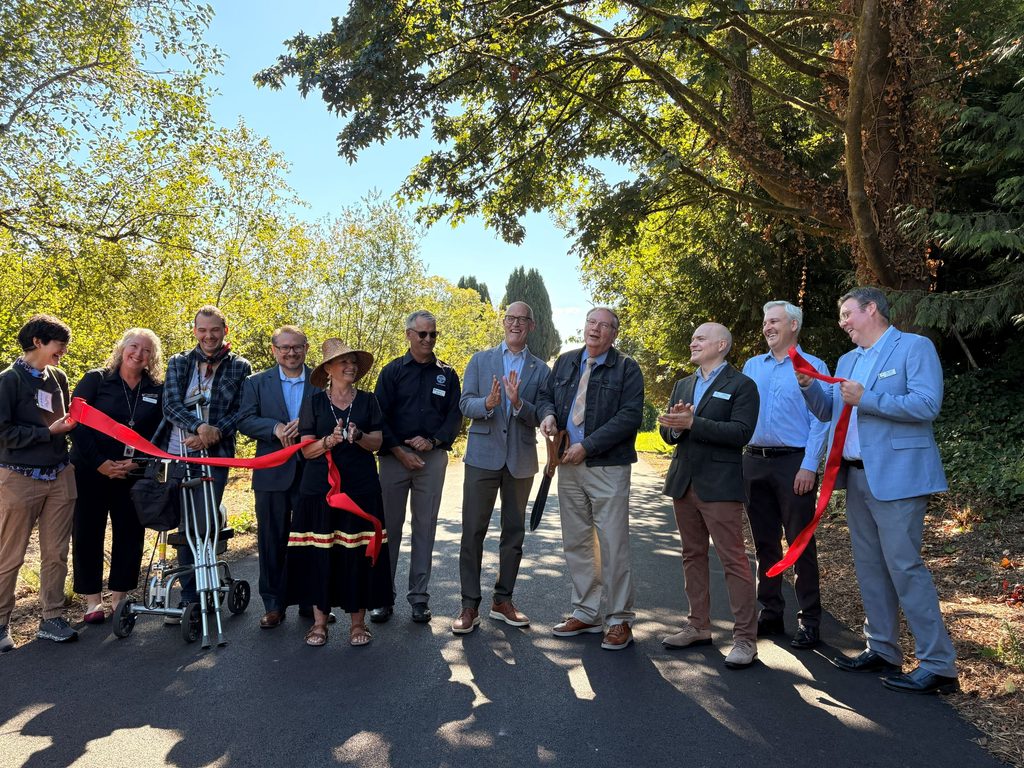
Phase 3 of the Scriber Creek Trail Redevelopment completes the redevelopment of the Scriber Creek Trail. The trail begins at 200th Street Southwest in an undeveloped right-of-way, moves through Scriber Lake Park, crosses SR525 (196th Street Southwest), and ends at Wilcox Park.

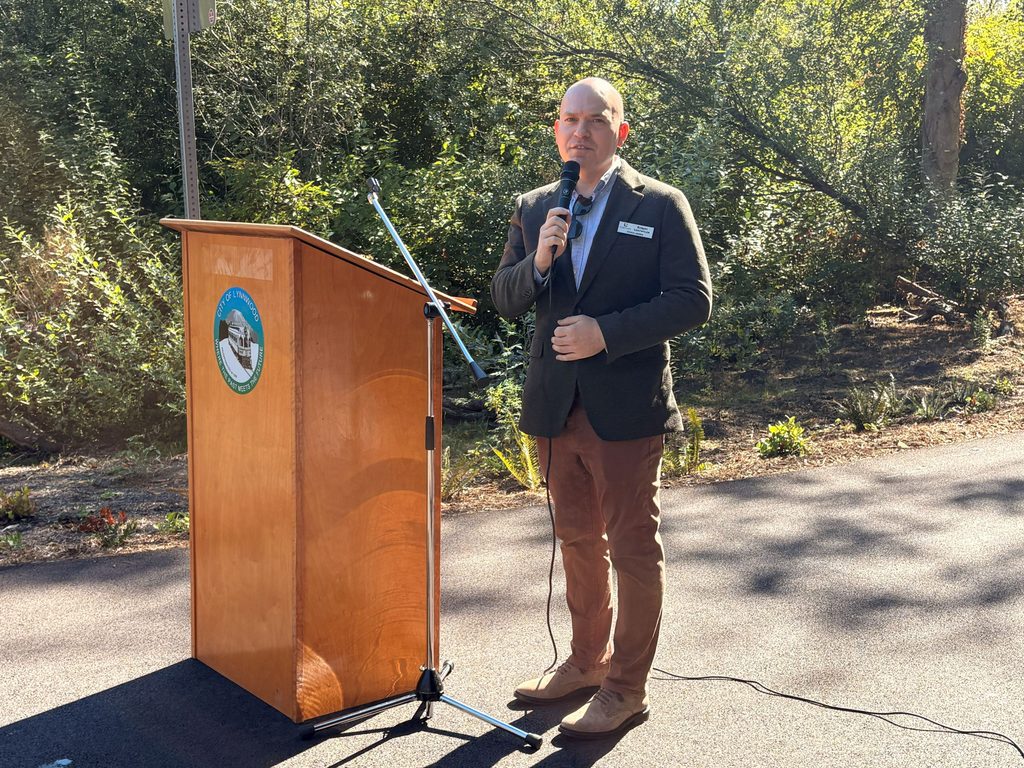
Lynnwood Parks and Recreation Director Joel Faber introduced a list of speakers during a ribbon cutting ceremony on September 8, beginning with Lynnwood Mayor George Hurst who called the project a “great example of the community’s long-term vision,” beginning with former Mayor Nicola Smith, and spanning through previous Mayor Christine Frizzell’s term.
“It’s an exciting, exciting, time for the city. We really have a beautiful trail that connects our community, in our own backyard,” said Hurst. “It’s really a testament to the city’s commitment to investing in infrastructure, connecting neighborhoods to parks, jobs, services, and really regional transit. But it’s also a testament to the tireless dedication of our city staff.”



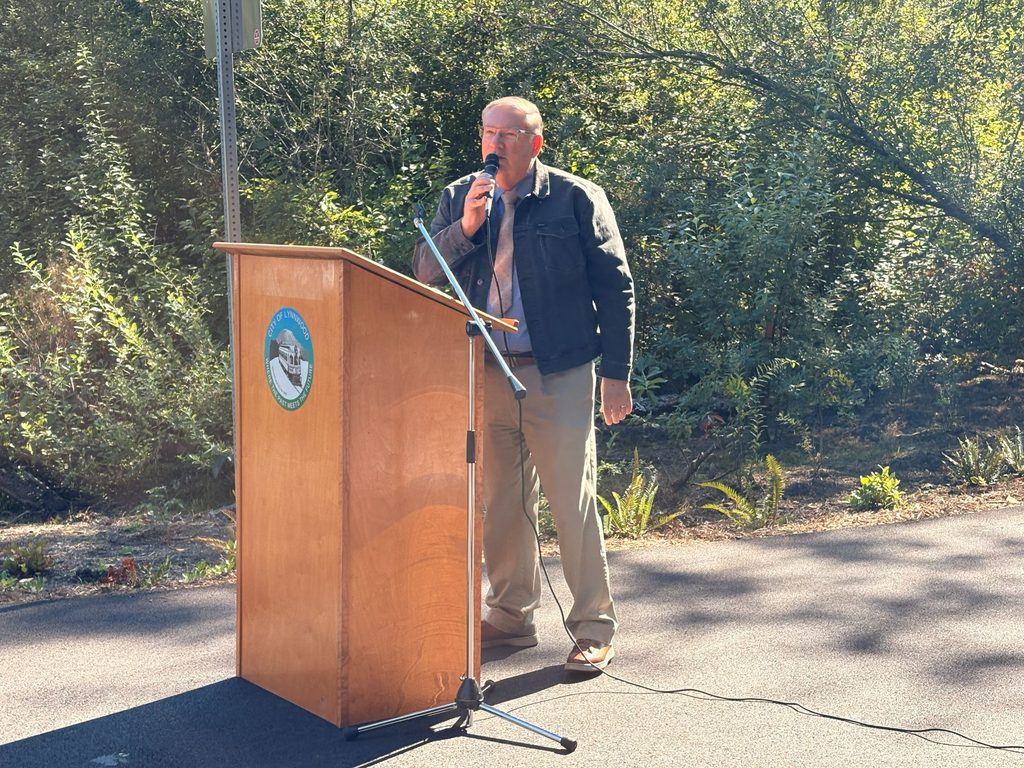
Lynnwood City Council member Robert Leutwyler shared that it truly “takes a village” to get a project like this completes, but it’s also a “baton relay,” he said, being in city government.


“You’re next truly across the finish line, there’s always more work to do and that’s why we need to celebrate the hard work that got us here, but also who’s the next generation who’s going to take the baton and keep delivering on behalf of the city of Lynnwood,” said Leutwyler, echoing Mayor Hurst’s gratitude for the community partners and staff who put in the tireless effort.

U.S. Representative Rick Larsen, who helped secure $500,000 for phase three of the project, and another $1 million for phase two, spoke on how good, affordable, public transportation keeps the economy moving and having access to public transportation makes it easier for people to get to their transit system.
“This project combines two really great things: expanding access to public transportation and local infrastructure that creates local jobs,” said Larsen Tuesday noting how much the trail looks vastly different from when he first got involved.
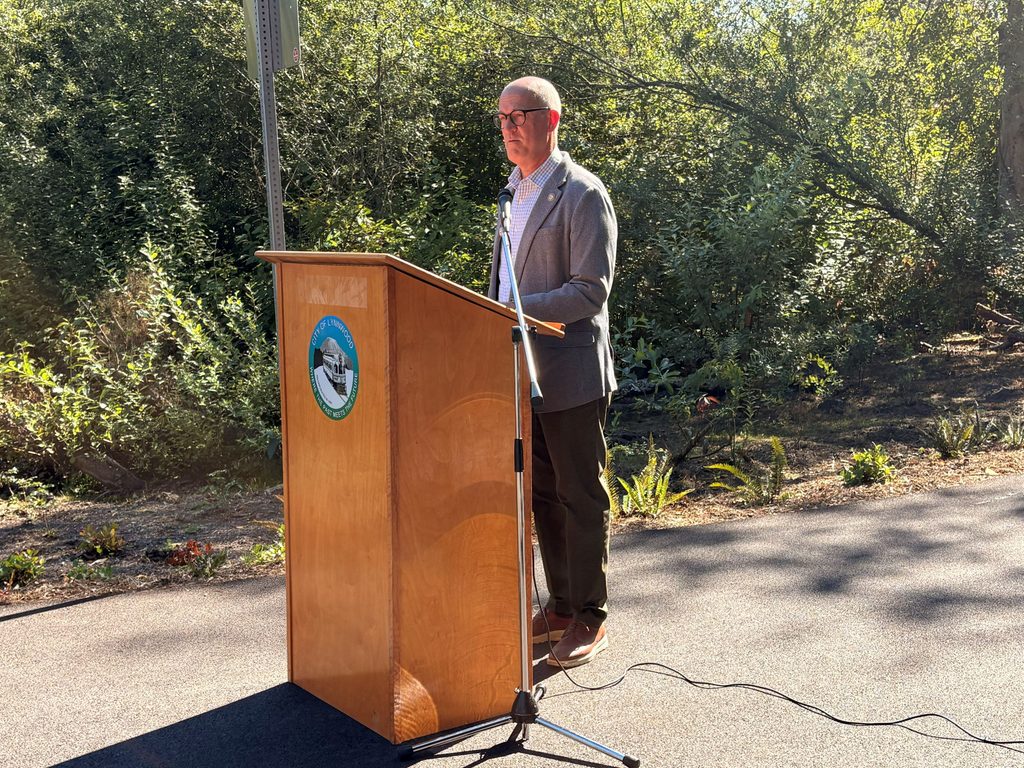
Larsen added that he looks forward to cutting more ribbons on future trail projects as he writes the next version of the Surface Transportation Law, which sets aside funds to build trails like Scriber Creek that connects communities to public transportation.
Washington Department of Transportation (WSDOT) Director of Local Programs Jay Drye spoke on behalf of the WSDOT
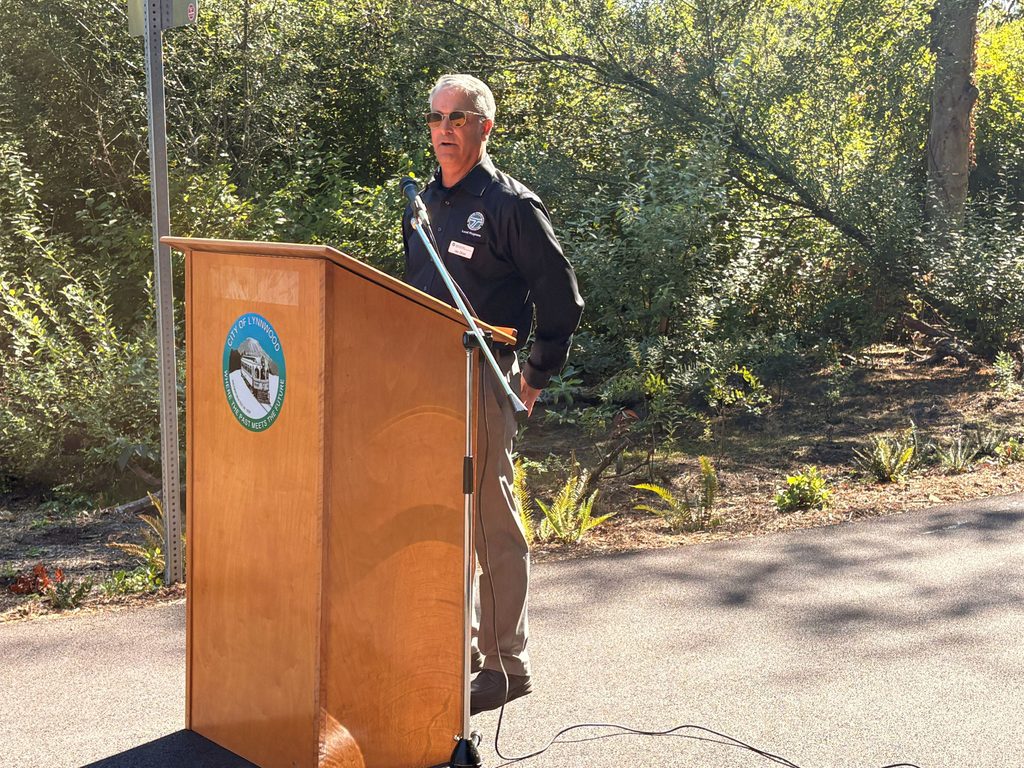
“This project gives families, commuters, and recreation users a safe, healthy, and accessible alternative to driving and it’s a perfect reflection of what our state pedestrian bicycle program aims to achieve; improving safety, boosting mobility, and making active transportation an active part of daily life,” said Drye.
Rachelle Lim, Outdoor Grants Manager for the Washington State Recreation and Conservation Office, spoke on behalf of the recreation and conservation funding board, which provides grant funding to local organizations for creating parks and trails like Scriber Creek and other outdoor recreation opportunities in addition to funding thousands of park projects statewide.
The board has spent nearly $11 million to fund a total of 24 Lynnwood City projects including South Lynnwood Park and Play Field.
The Scriber Creek Trail project, according to Lim, was ranked number one, out of sixteen, back in 2022 meaning the “scoring committee recognized the great community need as well as recognized the deep community engagement that went in to shaping the project.”
The State’s Recreation and Conservation Office (RCO) just published its preliminary results of its WWRP Local Parks and Lynnwood’s City Center Park Acquisition Project also ranked number one. Gold Park Restoration Project ranked number four, out of 58 projects, Lim announced.
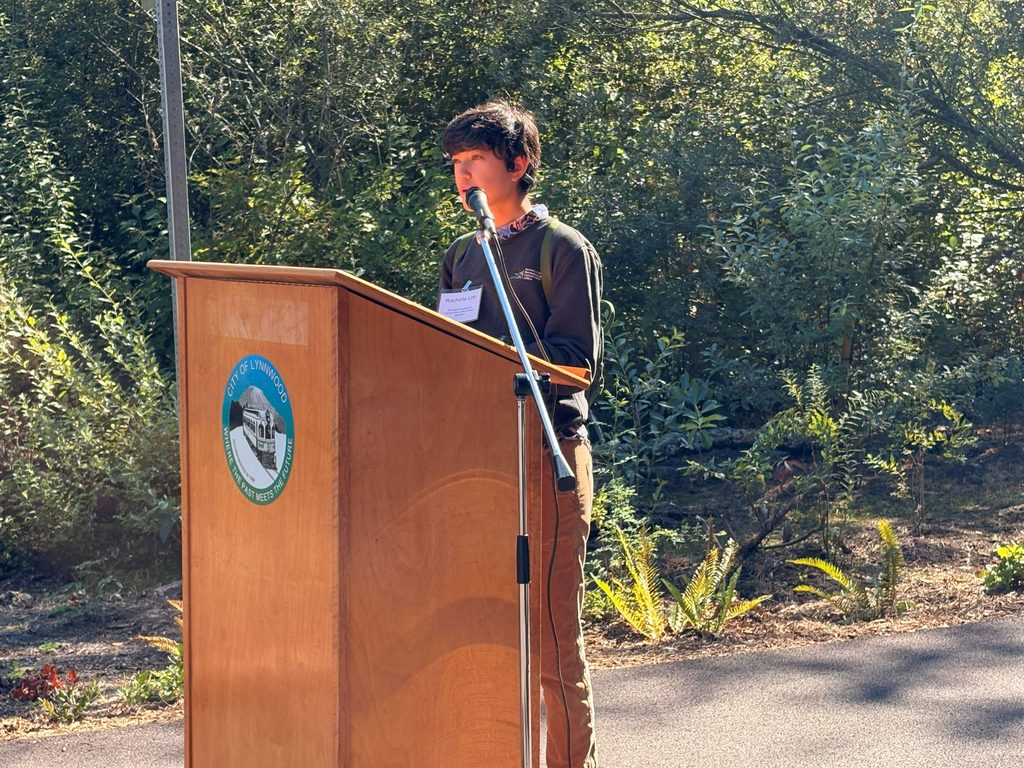
“This is an investment in helping people be happier, healthier, both mentally and physically, by providing an opportunity for them to get outdoors and get some exercise,” said Lim. “What a great example of what happens when people work together to make things happen.”
Since the Recreation and Conservation funding project was launched in 1990 it has leveraged over $2 billion to help fund nearly 1,700 projects in every corner of Washington State.
Executive Director of the Puget Sound Regional Council, Josh Brown, noted that the $3.2 million the RSRC donated to the project came from the Surface Transportation Law, which he thanked Congressman Larsen for specifically for championing for the funds in the capitol so that it could trickle back to the local level.
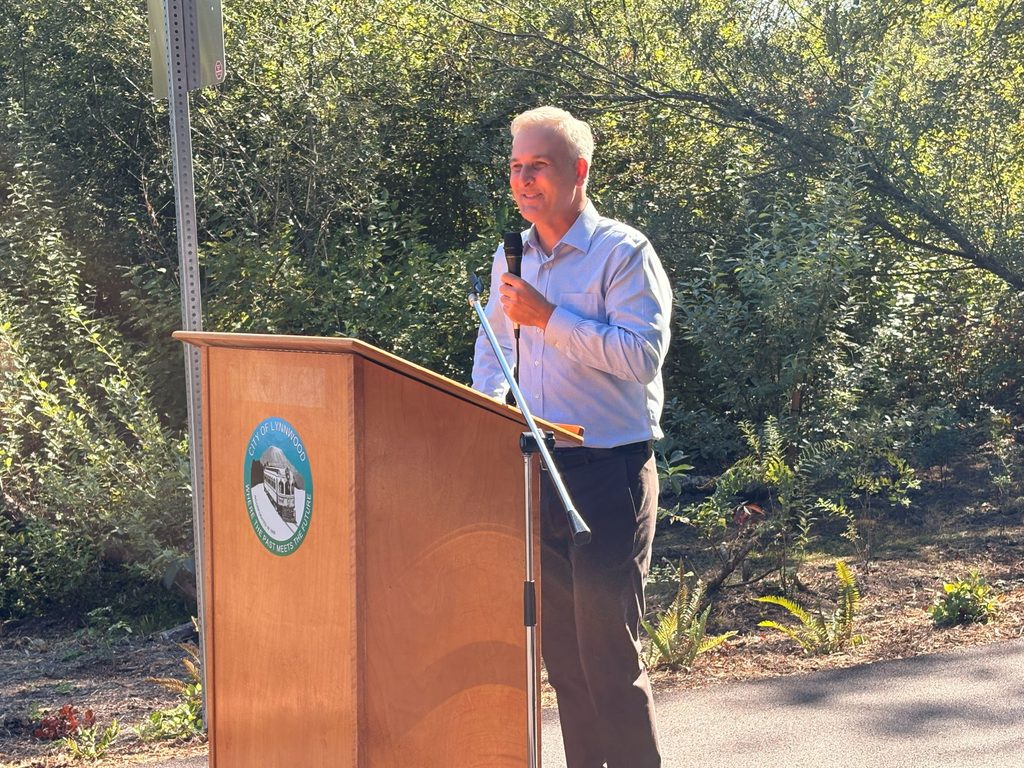
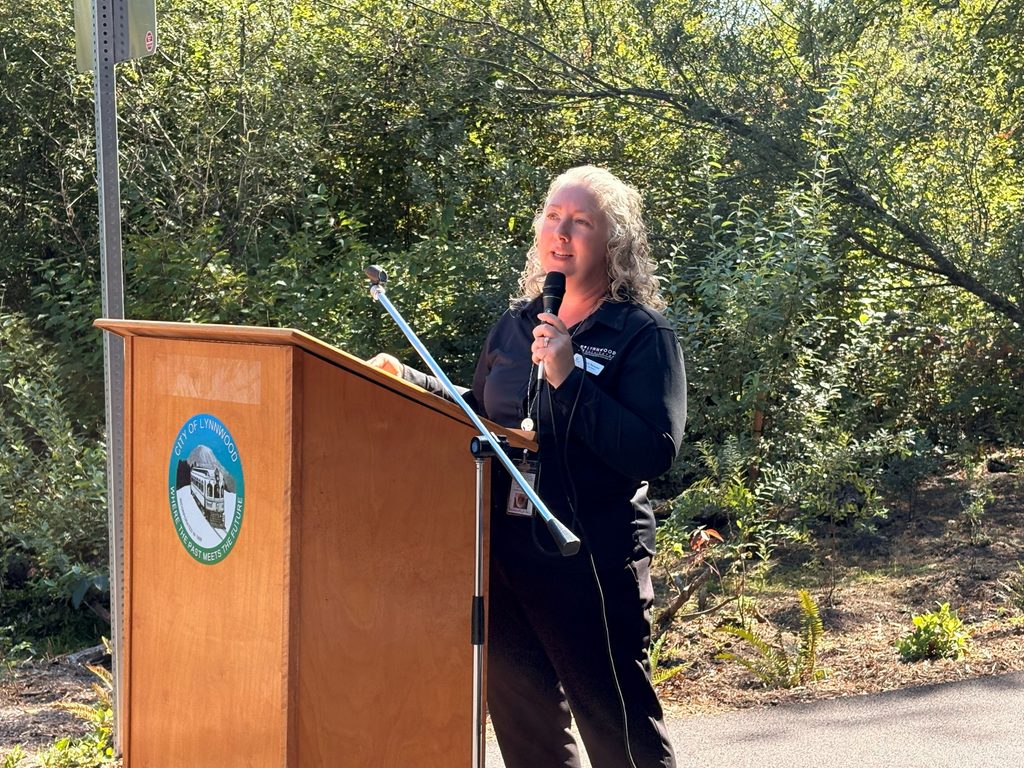
Quinn Van Order, Lynnwood Parks and Recreation Board Member, shared that he lives a short walk away from Scriber Creek Trail and considers it “his park,” adding that he purchased his first set of hiking boots when he moved to the area solely because when he would walk through Scriber Creek there would be mud up to his ankles.
“A lot of times people get really disconnected about what government is doing for them. This, this is what government is doing for you – this is where your tax dollars are going to, and I’m just thrilled to see work being put in that directly benefits the people of this city,” said Van Order.
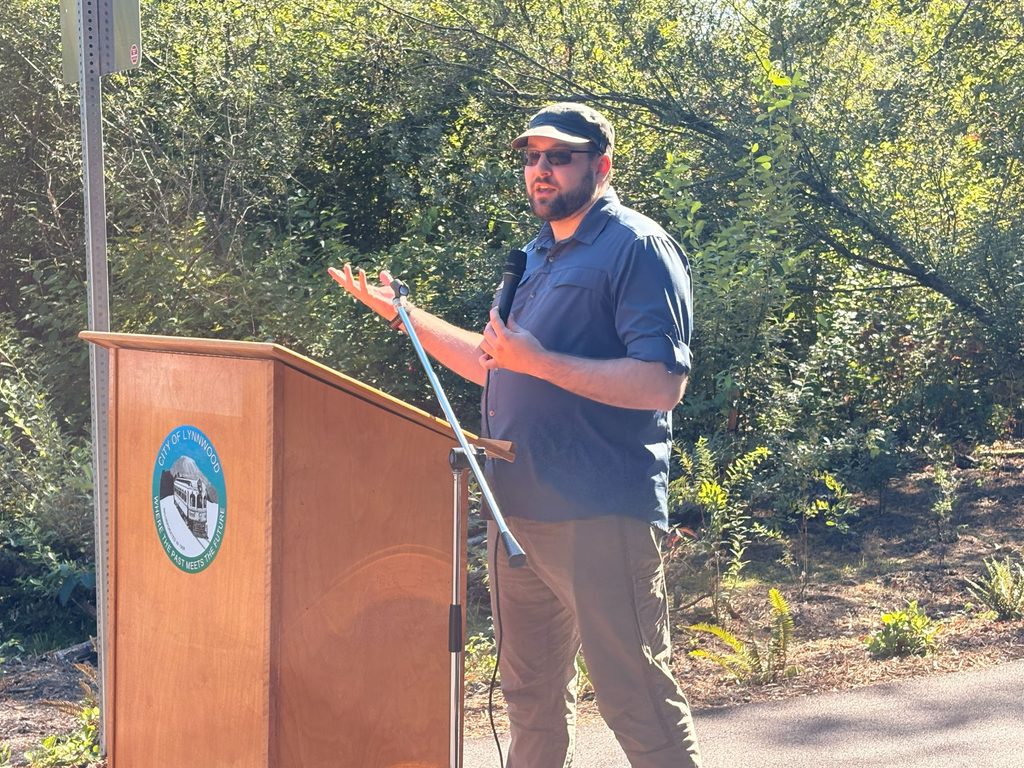
Lastly, Monica Thompson, Park Planning Superintendent at City of Lynnwood, thanked specific city staff members for their hard work and dedication – including former Lynnwood City Parks Deputy Director Sarah Olsen who she called her “favorite person to work with.”
“This is a combined project, it’s a transportation as well as a parks project so we really couldn’t have done this without our Public Works team,” said Thompson.
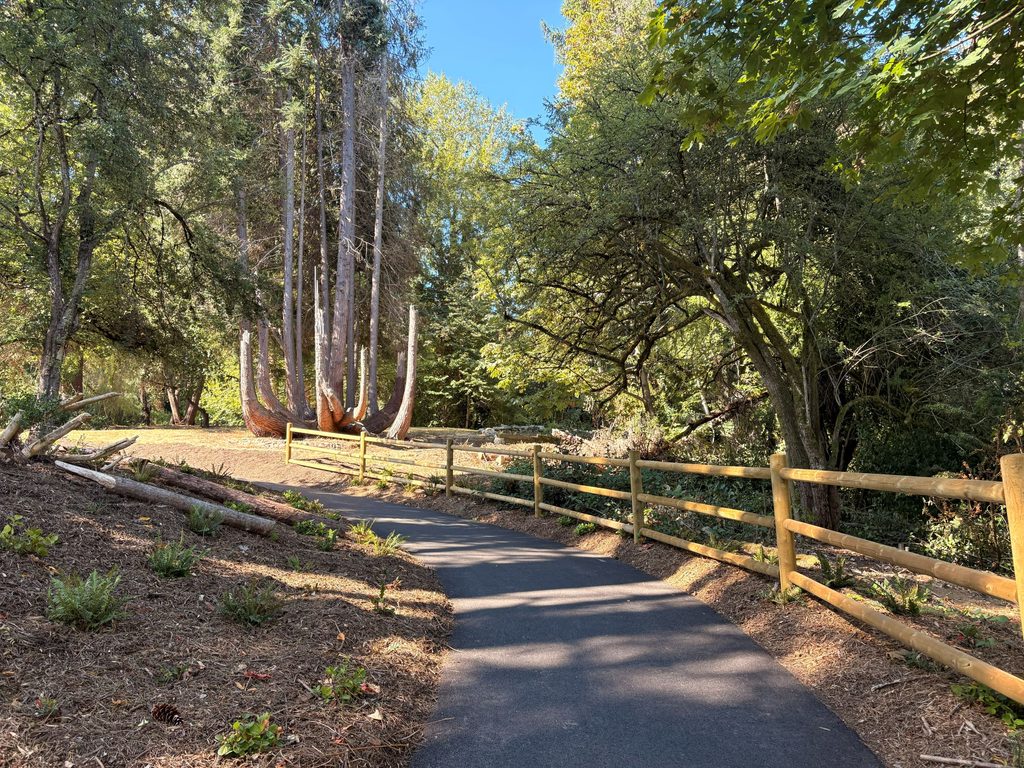
The Scriber Creek Trail project converts approximately 2,000 linear feet (.35 miles) of walking paths into a shared-use-multi-modal trail and improves the street crossing at the intersection of 196th Street Southwest and 52nd Avenue West.
Originally developed in 1991, the trail, prior to the redevelopment project, spanned approximately 1-mile and varied in width and surface (such as wood chips, asphalt, and wooden bridges). It meandered through a peat-fen/bog wetland complex and crosses Scriber Creek in two places.
The original trail had several issues including not meeting ADA requirements, with more than 60 identified barriers, and it flooded annually requiring the trail to be closed for much of the fall and winter.
According to cell phone data, acquired by the City of Lynnwood, the trail accommodated nearly 200,000 trips annually. The city believes use is expected to double since its redevelopment. Two trail counters have been installed to record actual usage.
The new and improved trail replaces a narrow, at-grade trail with a 14-foot wide accessible trail, and adds bridges and boardwalks over wetland streams which elevates the trail above floodplain. These improvements, the city says, provide year-round access for all ages and abilities, provides multi-modal connections to transit center, increases opportunities for outdoor recreation, and improves stream/wetland hydrology while creating a climate resilient trail infrastructure.
Multiple community partners assisted with the project including Sound Transit, Puget Sound Regional Council, Washington Department of Transportation, Washington Recreation and Conservation Office, Lynnwood Parks and Recreation Foundation, Stewards of South Lynnwood Parks, and U.S. Representative Rick Larsen.
The total cost of the project fell under budget at $7,550,297 (which includes preliminary design, final design, construction, and construction administration).
These funds were secured through the following:
- $2,000,000 from a 2022 RCO WWRP Trails grant
- $1,870,096 from a 2021 PSRC Transportation Alternatives Program
- $1,625,000 from a 2022 WSDOT Pedestrian and Bicycle Program
- $1,045,201 from local funds: Real Estate Excise Tax and Park Impact Fees
- $510,000 from ST2 Access Enhancement Fund (for the design)
- $500,000 from 2024 HUD Economic Development Initiative – Community Project Funding
The project underwent final design, permitting, funding obligations, and grant agreements from October 2022 through October 2024. From October 2024 through March 2025, the project underwent bidding, council approval and construction grant awards.
Construction spanned 14 months, from May 2025 through August of 2026.

Author: Kienan Briscoe