

U.S. Rep. Rick Larsen is making affordability and accountability central to his bid to retain his seat in Congress, pointing to tariffs, housing costs, infrastructure funding and the Trump administration’s policies as key issues facing Northwest Washington.
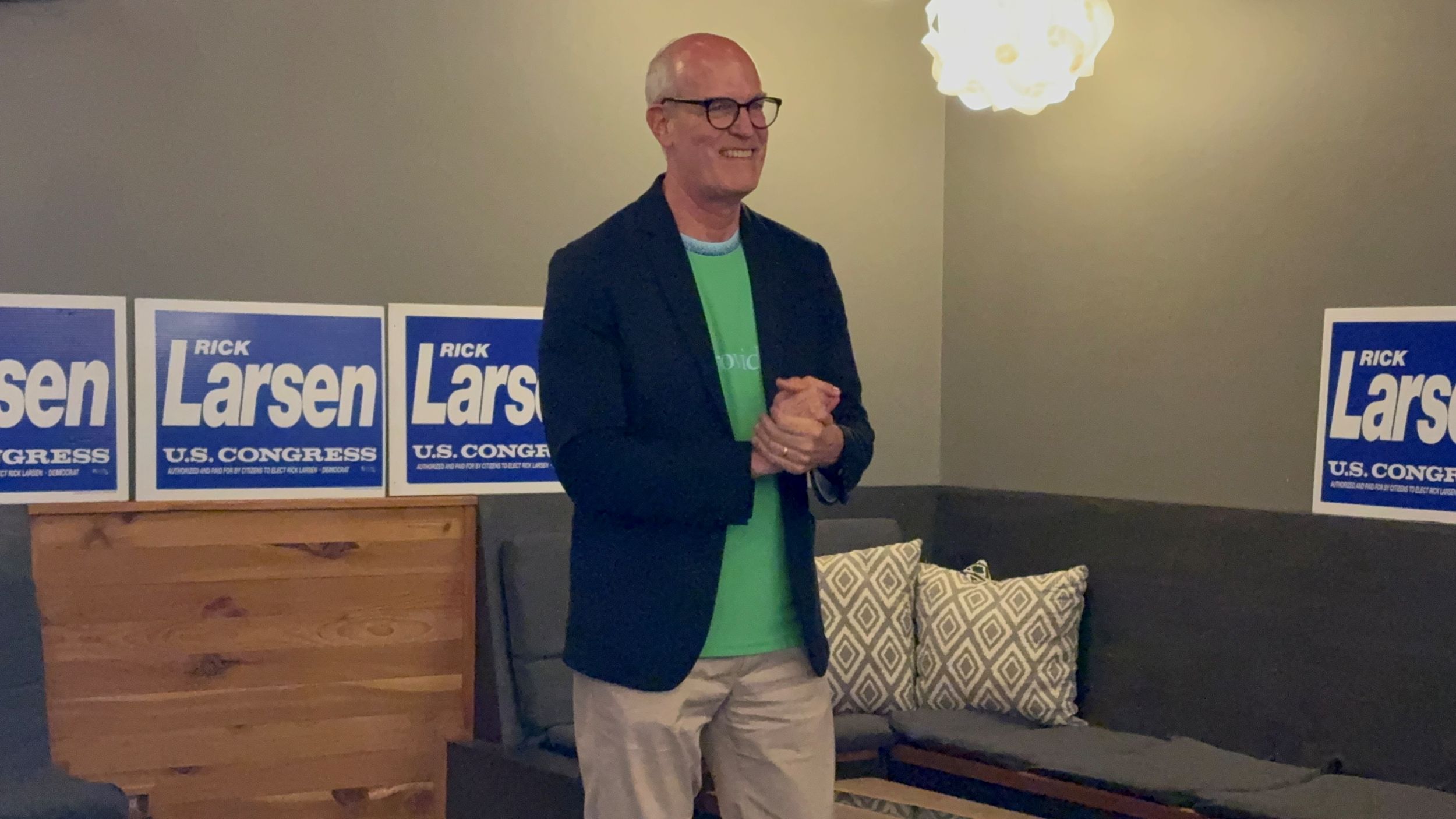
Larsen, a Democrat who represents Washington’s 2nd Congressional District, discussed those priorities in an interview with the Lynnwood Times recently, where he outlined his positions on trade, energy costs, housing, transportation and environmental protections while arguing that federal investment remains essential as communities such as Lynnwood continue to grow.
“The two top priorities in this election are affordability for you and accountability for the Trump administration,” Larsen told the Lynnwood Times.
As the top Democrat on the House Transportation and Infrastructure Committee, Larsen also highlighted his role in shaping transportation policy and securing federal funding for local projects. He said he would use congressional oversight to challenge the administration’s decisions and push for the release of infrastructure funding.



Tariffs and affordability
Larsen criticized President Donald Trump’s tariffs, particularly those affecting trade with Canada, arguing they are increasing costs for households and businesses while threatening jobs in Washington state.

“Trump’s tariffs against Canada are not leverage,” Larsen said. “They are yet another way that the Trump administration is raising your prices and sabotaging the American economy.”

Larsen cited projections that Washington state could lose between 20,000 and 25,000 jobs if the tariffs remain in place through 2029. He also cited an estimate that the tariffs could cost a typical middle-class household approximately $2,200 annually through higher prices.
Larsen said maintaining stable trade relationships with Canada and Mexico is important to Northwest Washington’s economy, pointing to conversations with constituents and businesses throughout the region.
“The U.S. must renegotiate the U.S.-Mexico-Canada trade agreement (USMCA) and end these pointless, reckless tariffs,” he said, adding that he wants to bring down costs and restore a more stable economic relationship with Canada.
Larsen also connected affordability concerns to energy prices, arguing that the war in Iran and tariffs have contributed to persistently high costs.
“The war in Iran must end, and the tariffs that have kept prices stickily high must be repealed,” he said.
Larsen continued that he opposes the war and has repeatedly voted to end it, arguing that the conflict is driving up prices and making the United States less safe. He also criticized Trump’s withdrawal from the Iran nuclear deal, saying the agreement had relied on diplomacy to prevent Iran from obtaining a nuclear weapon.
Housing and growing communities
Housing affordability remains another major concern for the congressman, who acknowledged that families across Northwest Washington are struggling with rising rents and uncertainty about whether they will be able to purchase homes.
Larsen pointed to increasing the supply of affordable housing, supporting first-time homebuyers and renters, strengthening housing tax incentives and investing in local infrastructure as necessary steps.
The bipartisan ROAD to Housing Act, which Larsen supports, was an important achievement, he said, but more work is needed.
“The ROAD to Housing Act was a significant bipartisan achievement, but it was only a first step to the kinds of reforms and investments necessary to make the dream of homeownership more attainable,” Larsen said.
He added that people should be able to purchase homes in the communities where they grew up and work.
As Lynnwood and surrounding communities experience continued growth, Larsen said the federal government has a responsibility to help pay for transportation infrastructure rather than leaving local governments to shoulder the costs alone.
“The federal government has a responsibility to be a reliable, long-term partner in making sure infrastructure and transit investments provide cleaner, greener, more accessible transportation options,” he said
Larsen pointed to the Bipartisan Infrastructure Law as an example of federal investment in roads, bridges, transit and rail. He also cited the BUILD America 250 Act, bipartisan legislation advanced out of the House Transportation and Infrastructure Committee, as a potential continuation of those investments.
“The federal government can and should do more to fund transit and end traffic and pedestrian fatalities,” Larsen said.
Transportation funding and Naval Station Everett
Transportation infrastructure is a central part of Larsen’s congressional agenda. He said the House Transportation and Infrastructure Committee is expected to advance major investments in roads, bridges, rail and transit over the next two years, alongside aviation and pipeline safety legislation.
When asked which major transportation projects he would prioritize for federal funding, Larsen highlighted the Interstate Bridge Replacement program, which aims to replace the aging bridge connecting Portland, Oregon, and Vancouver, Washington.
Larsen said the project is critical to the Pacific Northwest because it would create jobs and help keep people and commerce moving. He also pledged to continue fighting for funding for projects throughout Northwest Washington.
Beyond transportation, Larsen addressed the future of Naval Station Everett following the cancellation of the Navy’s Constellation-class frigate program that had been slated for the base.
Larsen said Everett remains a strong candidate to host the Navy’s next frigates, citing its facilities, available pier space, deep water, strategic location near the Indo-Pacific and skilled workforce.
“The path is clear: build on the Navy’s previous selection of Everett and work with Navy leadership and local partners to secure the next homeporting commitment for the frigates and the investments to support that decision,” Larsen said.
He said the region could also benefit from other Navy missions, including ship maintenance and unmanned vessels, even as the future of the frigate program remains uncertain.
“I am focused on turning those advantages into a sustained Navy presence and good local jobs,” Larsen said.
Data centers and energy costs
As large data centers draw increased attention across the region for their electricity and water demands, Larsen called for restrictions designed to protect utility customers and local communities.
He said data centers should not be allowed to drive up electricity rates for existing customers and should pay their fair share of grid connection and usage costs. He also called for union labor on construction, closed-loop water systems and the elimination of federal tax breaks for data center development.
Larsen said local jurisdictions should have the ability to enact temporary moratoriums while determining how to manage large data center projects.
“I will continue to work to ensure families in Northwest Washington have access to reliable and affordable electricity,” he said.
His position places the costs of expanding energy infrastructure and the potential effects on ratepayers at the center of the debate over large-scale data center development.
Pipeline proposal raises Salish Sea concerns
Larsen also voiced opposition to the proposed Pacific Link pipeline in British Columbia, raising concerns about its potential effects on the Salish Sea and the risks associated with increased oil tanker traffic.
He criticized plans to accelerate the project’s review timeline, arguing that communities need more information about potential environmental risks and emergency preparedness.
“The people I represent have serious concerns about this new pipeline and how it could harm the Salish Sea,” Larsen said.
He said residents deserve answers to their questions and updated oil spill response plans that account for additional tanker traffic.
Larsen said he would continue engaging with Canadian counterparts and pressing U.S. government agencies to identify potential gaps in oil spill prevention and response operations.
Oversight and federal spending
Larsen said that if Democrats regain control of the House, he would prioritize congressional oversight of the Trump administration, particularly decisions involving federal spending and infrastructure funding.
“Withholding infrastructure funds kills jobs,” Larsen said. “The Trump administration is withholding funding and killing jobs.”
He pledged to hold the administration accountable and push for the release of funding intended to support infrastructure projects and create jobs.
Larsen also discussed how his office evaluates requests for federal funding from local communities. He said projects are assessed based on whether they address a clear local need, have community support, are ready for implementation and meet federal eligibility requirements.
His office also considers whether applicants can commit the funding within a year and whether project timelines align with the federal funding process.
“Ultimately, applicants should make a detailed, compelling case for how their project will benefit people in Washington’s Second District,” Larsen said.
Larsen said he has helped secure more than $75 million for 55 projects in Northwest Washington through earmarks and has requested another $77 million for 20 projects for fiscal year 2027.
China strategy and national security
As co-chair of the U.S.-China Working Group, Larsen said his approach to China has remained consistent, emphasizing a strategy that accounts for competition while leaving room for cooperation.
He described his approach as a four-pillar strategy: recognizing areas of conflict and competition, expanding offensive and defensive measures, identifying opportunities for cooperation and addressing domestic priorities that affect the United States’ ability to compete.
Larsen said he outlined that strategy in white papers published in 2019, 2021 and 2023.
His comments reflect an approach that seeks to strengthen U.S. competitiveness while identifying areas in which cooperation between the two countries could serve mutual interests.
As voters prepare to decide whether to return Larsen to Congress, the issues he emphasized span local infrastructure and housing pressures to trade, energy policy, national security and executive accountability.
Larsen framed those priorities around lowering costs for families and ensuring federal resources reach the communities they are intended to serve.

Author: Kienan Briscoe