


EVERETT—The City of Everett and Community Transit announced April 22 they are resuming work on an interlocal agreement to annex Everett into Community Transit’s Public Transportation Benefit Area, a move that would dissolve Everett Transit as a separate agency and transfer its services, routes, fleet, facilities and employees to the larger regional provider while doubling Everett’s local transit sales tax from 0.6% to 1.2%, a 100% increase.
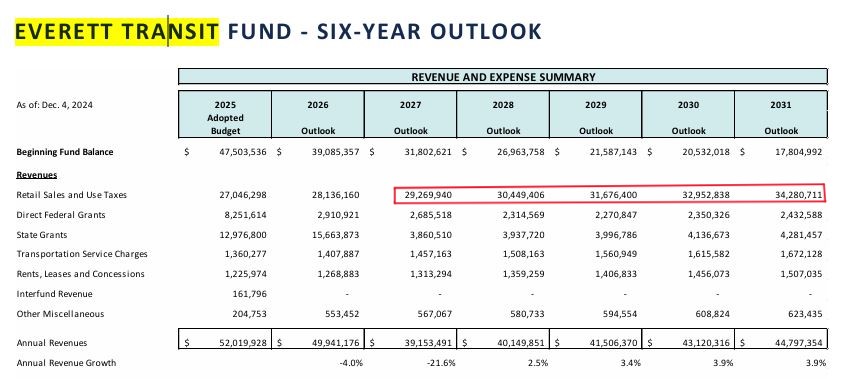
The annexation would raise the overall sales tax rate in Everett from 9.90% to 10.50%—a 0.6-point increase—and generate at least an additional $29 million annually for transit starting in 2027, if enacted by then, according to City of Everett figures. The 0.6-point tax increase would generate an estimated $158.3 million in new revenue from 2027 through 2031 towards transit.

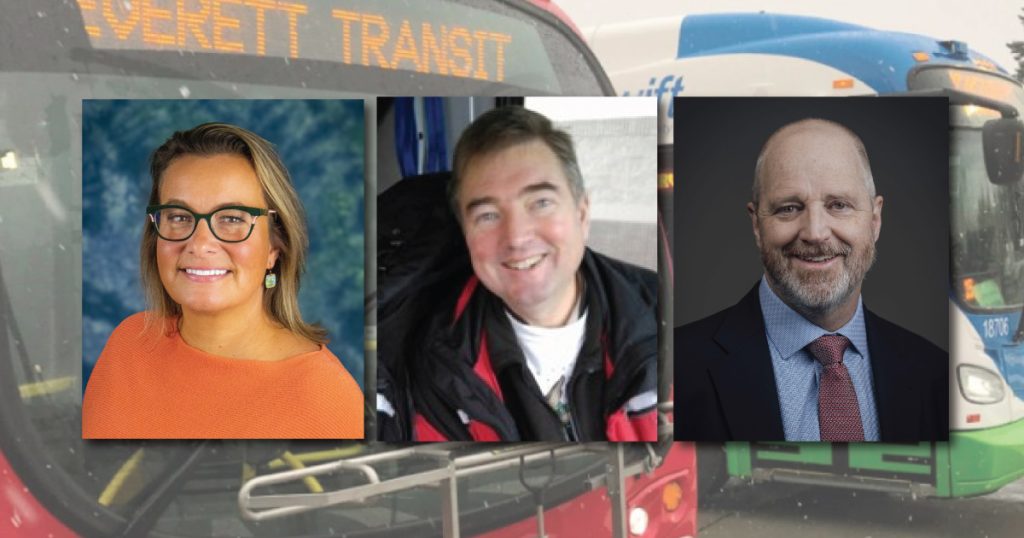
The proposal, which requires approval by both the Everett City Council and the Community Transit board after public hearings, follows a new pathway created by state Senate Bill 5801 which does not require a public vote. Everett Transit Local 883 Union President Steve Oss, who ran against Mayor Cassie Franklin in 2021, has called for the consolidation to go before Everett voters and has alleged the legislation was crafted specifically to allow the merger without one.
“This [annexation] would be the largest sales tax increase in the history of the state of Washington without a vote of the citizens of that taxed region in the history of Washington,” Oss told the Lynnwood Times in a phone interview strongly opposing the merger. “That’s not right. The citizens should have a right to vote.”



“The citizens have been taxed to help cover with Sound Transit and getting that light rail up here,” Oss added. “Residents already have that responsibility, they’re paying that responsibility. And that money is going, you know, you tell me [if] that money’s being well spent the way they’re spending it. Yeah. It’s going all over the place. It hasn’t got up here.”

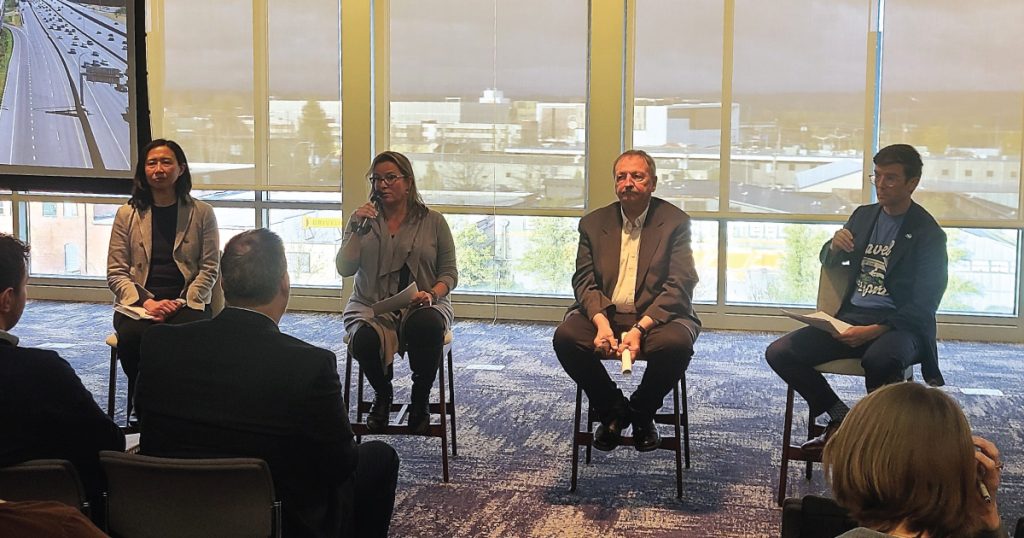
Mayor Franklin and Community Transit CEO Ric Ilgenfritz said the consolidation would create a more seamless and integrated regional network better connected to Sound Transit’s Link light rail system now operating in Lynnwood and planned for Everett. Both pledged to address employee concerns while complying with state and federal law during the merger.
“Consolidation will make it easier for people to travel between Everett and existing Link light rail service in Lynnwood, and throughout the county,” Franklin said. “It will provide the local bus connections essential to support future light rail service in Everett.”
Ilgenfritz added in their joint statement that riders will benefit from expanded service.
“Through this annexation we can offer Everett residents more connections, more destinations and more frequent buses,” Ilgenfritz wrote. “We [Community Transit] can provide shorter waits, with more service all day long and through the evening hours. We are in a position to make travel smoother and easier between Everett and other destinations across Snohomish County and our entire region.”
Oss said that Everett Transit already provides effective local service and special support that a regional agency might not replicate, including free shuttles for community events, response to the 2014 Oso landslide, aid to eastern Washington firefighters and temporary housing for fire victims.
Oss also raised concerns about how a higher sales tax within Everett City limits would impact businesses: “It’s going to put businesses out of business in Everett. The large ticket items in Everett where people might come into Everett because the sales tax is lower in Everett.”
Oss shared with the Lynnwood Times that over the coming months he will be educating the council on the merger and alternative options. A website called Keep Everett Transit has been started in a collaborative effort with Amalgamated Transit Union 883 to assist in this education effort.
“I am for the citizens of Everett, and if they want this, I’ll support it, but only if they are properly educated on it,” Oss said. “So right now I’m working on educating the council making sure we have all of them on board on the education train so that they know what it would mean to the citizens. I still think they should do an advisory vote with the citizens. If not a binding vote, they should at least find out what do the citizens of Everett want.”
Oss proposes a smaller, 0.3-point tax increase if Everett Transit remains independent that takes effect in 2030, not years earlier if the merger finalizes.
“We [Everett Transit] is looking at right now of asking the citizens for a three tenths of a percent sales tax increase to start around 2030,” Oss said. “So that’s not today or tomorrow. That’s in 2030. Three tenths of a percent sales tax increase. I wrote the last sales tax increase from three-tenths to six-tenths. And that was back in 2004. We needed it, brought it to the citizens, and the citizens said, yes, we’ll do that. And they’re not afraid of paying for the service, but we should not be deceiving the citizens about what’s going on.”
Everett City Councilman Scott Bader said he has questions but no firm position on the merger.
“At this point I just have questions for the Administration, and no real thoughts yet about whether this should move forward or not,” Councilman Bader said. “Some of those questions include what additional service Everett residents would see if we did merge, and ET has been moving forward with planning for a new (and needed) maintenance, operations, and administration base and could we avoid that cost if we merged.”
Snohomish County Executive Dave Somers called the plan to annex Everett Transit “a positive and forward-thinking step” that would help residents commute, study and travel. Sen. Liias said the county deserves robust transit access.
“As Everett gets ready for a transformational investment in light rail, it just makes sense that the city expands local transit service to improve these connections,” Sen. Liias said. “I appreciate Mayor Franklin’s leadership in exploring consolidation and look forward to a future with a truly regional multimodal transit system for all our residents.”
Allegation of a state bill written specifically to acquire Everett Transit
An allegation of a backdoor route has circulated because Mayor Franklin’s chief lobbyist, Jennifer Gregerson, and Senator Marko Liias (D-Edmonds), prime sponsor of SB-5801, have long professional ties from their time in Mukilteo. In May 2025 Franklin said at a council meeting that annexation was “not aligned with our current priorities.” Eleven months later the city and Community Transit announced they were using the exact process created by the bill to annex Everett Transit into Community Transit’s Public Transportation Benefit Area (PTBA).
“It’s around page 104 or something like that in the bill, where it takes the vote away from the citizens of Everett on a merger,” Oss said. “It allows a community transit to annex a neighboring transit agency. I wonder who that would be.”
Senate Bill 5801, titled “Concerning transportation resources,” is a bipartisan transportation revenue and policy bill passed during in 2025 legislative session that included legislation for an alternative annexation method specifically for public transit annexations/consolidations. The law allows the current Everett Transit and Community Transit merger to move forward via an interlocal agreement approved by the Everett City Council and Community Transit Board without needing a public vote.
This is a significant change from the assumptions in the 2023 More Transit Together Final Report, which pre-dated the 2025 law and assumed a ballot measure would be needed. While the new law does not require a public vote, the Everett City Council and/or Community Transit Board could voluntarily refer the issue to voters if it chooses.
The annexation process spelled out in SB-5801 requires:
- An agreement between the Everett City Council and the Community Transit Board
- At least one public hearing (by each body, separately or jointly).
- Approval of ordinance by Everett City Council
- Approval of a resolution by the Community Transit Board
Jason Kelly, spokesperson for the City of Everett, provided a full refutation.
“Neither Mayor Franklin nor Jennifer Gregerson requested that Sen. Liias (D-Edmonds) insert his legislative language regarding transit service consolidation in 2025 or 2026,” Kelly wrote in a statement to the Lynnwood Times. “Any assertion that City of Everett pursued this tool proactively is pure speculation and false.”
Mayor Franklin also denied any conspiracy and shared with the Lynnwood Times that what changed her mind to use the new legislative tool is a new reality now facing Everett as pressure is mounting to use monies being collected in the Snohomish County subarea from her constituents to fund Seattle and King County light rail extensions.
“We’re trying to advocate for this community and get light rail here and make sure nothing gets cut in Everett and get light rail here as quick as possible,” Franklin told the Lynnwood Times. “Any tool and every tool is on the table because we’re up against Seattle and King County. They don’t really understand our community or really care to invest in our community. And so, making a case for how ready we are matters now more than ever…. So, that’s the only thing that has really changed my mind…. Because I’ve always been neutral on it other than that. There is no conspiring on legislation to merge these systems between me and Marko.”
City of Everett eyes millions in savings
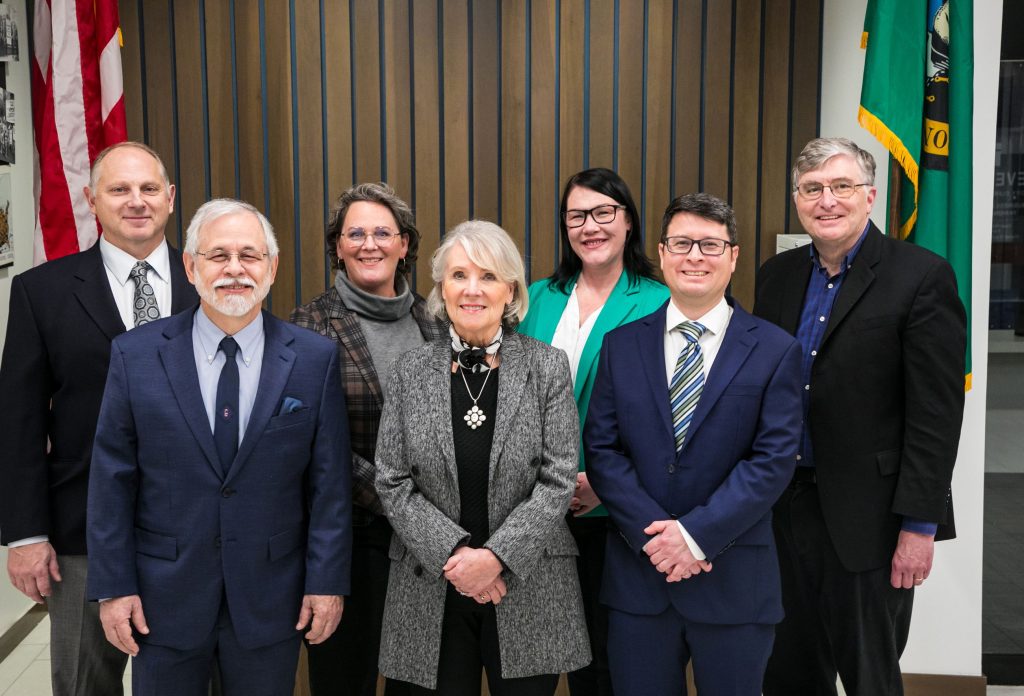
With a 79% public vote on June 1, 1976, Snohomish County voters approved the creation of the Snohomish County Public Transportation Benefit Area (SCPTBA)— the first PTBA in Washington state. Community Transit service officially launched four months later on October 4, 1976.
For more than 133 years, Everett Transit has served the residents of Snohomish County’s largest city, and it became a city-owned system in 1969. Everett Transit is now one of the few remaining municipal transit providers in Washington state and the only one in the Puget Sound region—not even Seattle operates its own transit agency.
The April 22, 2026, announcement to resume consolidation talks revived discussions that began with a 2022-2023 city study called Rethink Transit and a joint “More Transit Together” effort. The agencies released a report in September 2023 outlining a vision for consolidation but paused the process in early 2024. The renewed effort comes now as Everett, Snohomish County’s largest city, not only is advocating to the Sound Transit Board to prioritize the Everett-Tacoma spine but also faces ongoing budget pressures.
The annexation of Everett Transit into Community Transit’s Public Transportation Benefit Area (PTBA), would deliver financial relief to City finances, which has carried a recurring structural deficit in its general fund for more than 20 years. Franklin has closed nearly $100 million in cumulative deficits since taking office in 2018—the latest in 2025 when the City Council closed a projected $7.9 million gap for 2026 without layoffs by freezing non-essential spending, cutting grants, suspending some pension contributions and reducing street maintenance funding. The city now projects a $15 million structural deficit in 2027.
Initial projections by the Lynnwood Times based on the adopted city budget show that annexation could avoid $2.4 million to $3.7 million in annual cost by eliminating up to 12 full-time Everett Station positions and 15 full-time Everett Transit administrative positions—the positions could transfer out to Community Transit roles, or the employees can be reassigned to fill attrition from other City roles. The City of Everett would be compensated for transferred capital assets to Community Transit, potentially at least $10 million for 24 Gillig electric buses alone plus millions more from other assets. The Everett Transit Station could be leased back to the City rather than selling it to preserve the City’s bond capacity.
Also, if the interlocal agreement is approved by both the Everett City Council and Community Transit Board this fall, Community Transit’s reconfigured board would include new seats for Everett representatives and service changes would phase in for about a year, with the goals of a unified fare structure.
The 2023 More Transit Together report projected that consolidation would add six new routes in the near term, increase frequencies to 30 minutes on key corridors, extend evening service and improve regional connections.
Oss questioned Community Transit’s capacity to absorb expanded service.
“I call it a lie,” Oss said of claims of inundating Everett with service. “They can’t provide their service now. Right now, they drop roughly 4% or 5% of their service because they don’t have enough drivers. Not enough drivers. We, 0.0 something percent, we might drop service because we didn’t have a driver to cover it. That’s a huge difference between Community Transit and Everett Transit…. And they’re going to cover that when they can’t cover what they have already. And we know that not all of our drivers would go to community transit. So, with fewer drivers, they are going to cover more work. Well, that just doesn’t – that basic math doesn’t add up.”
Franklin in a phone interview with the Lynnwood Times addressed job-loss fears directly.
“The transit union is so afraid, and I feel for them, I know it’s stress, change is hard, but Community Transit can provide more routes,” Franklin said. “They collect more tax[es], so therefore they will provide more transportation. So, there’s going to be more union jobs, not less. More buses, not less. So, it is a win for people who ride buses. It’s a win for people who want to drive buses because we will need more drivers. No one’s losing their job…. They need to hire bus drivers.”
Section 13(c) of the Federal Transit Act, added in 1964, requires protective arrangements for workers when federal transit funds are involved in changes to ownership, operation or funding of a transit system. The U.S. Department of Labor must certify fair and equitable protections for transit employees impacted by the merger before the Federal Transit Administration releases any funds.
The federal statute spells out that the protective arrangements must include (at minimum) the following elements:
- Preservation of rights, privileges, and benefits (including pension rights and benefits) under existing collective bargaining agreements or otherwise.
- Continuation of collective bargaining rights.
- Protection of individual employees against a worsening of their position with respect to employment (this is the broadest protection and can include up to six years of full pay and benefits in some displacement cases).
- Assurances of employment to employees of acquired transit systems, plus priority of reemployment for employees who are terminated or laid off.
- Paid training or retraining programs.
An Everett Transit paratransit driver expressed to the Lynnwood Times his and other drivers’ worries about working conditions, pay, service quality, and seniority under Community Transit if the merger were approved.
“The main concern for most [paratransit] drivers is probably pay,” the driver said, who requested to remain anonymous. “Community Transit subcontracts their version of my job to Transdev, and they top out at about $26 an hour, as far as I know. Whereas in my position… we top out at about $42 per hour. And so, there’s a huge pay gap there.”
What the 13(c) does, Oss told the Lynnwood Times, is make sure his union members remain at the same payrates and benefits.
Because both transit agencies receive substantial Federal Transit Administration grant monies — Community Transit has received at least $293 million since 2020 and its adopted 2026–2027 budget projects a need of $63.5 millions in the latest adopted budget in FTA formula grants, while Everett Transit has received $20 million to $30 million — Section 13(c) protections will govern the annexation. The protections cover ATU Local 883 and Community Transit’s ATU 1576 union members. Non-union administrative staff receive fewer automatic safeguards but fall under the “fair and equitable” standard. The law also prevents transit agencies from using a merger as a guise to undermine contracts or collective bargaining units. The FTA will not approve mergers not aligned to the law and contested by impacted labor unions.
Community Transit spokesperson Monica Spain in a statement to the Lynnwood Times wrote that labor partners would be consulted during the consolidation process.
“The interlocal agreement will be negotiated between the City of Everett and Community Transit,” Spain wrote. “Both parties will remain in close consultation with our labor partners.”
Oss shared that a successful merger should have protections that extended beyond union members.
“I would like to see protections for all people that work at Everett Transit, not just ATU local 883 union members,” Oss told the Lynnwood Times. “I think all of the AFSCME employees who are not covered by the 13(c) agreement, I would like to see them protected. I would like to see the appointed people protected.”
The ATU Local 883 union contract with the City of Everett expires in 2027. Officials have not detailed how the transition would affect AFSCME-represented administrative staff or appointed personnel.
Everett Transit and Community Transit: A side-by-side comparison
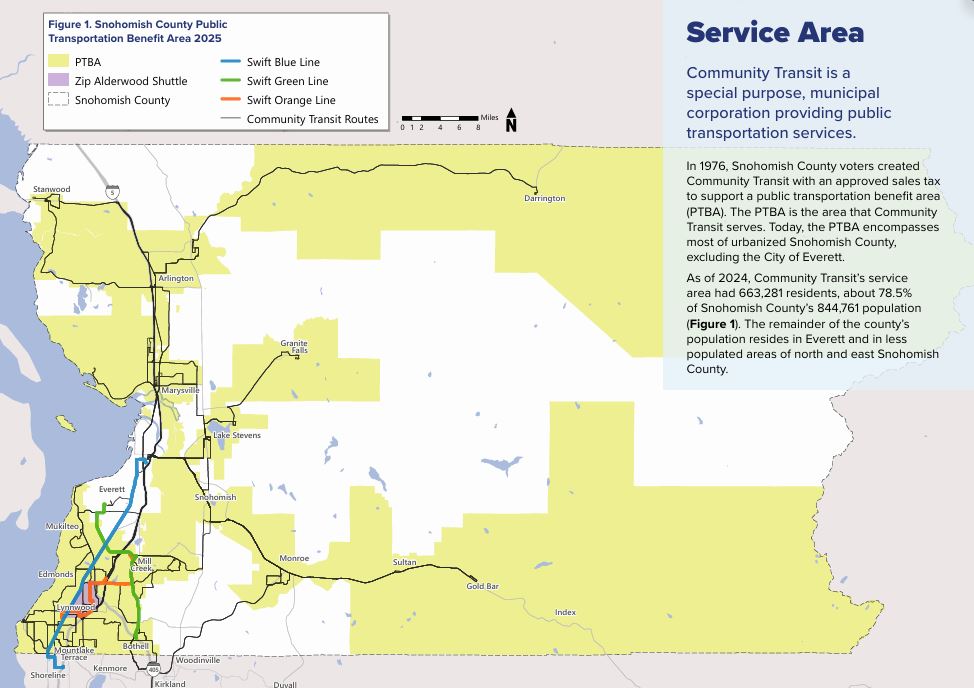
Community Transit, which serves a population of about 700,000 across Snohomish County with up to 1,100 employees, an annual operating and capital budget exceeding $400 million and a fleet of 696 vehicles, would absorb Everett Transit, which serves an estimated 115,000 residents with 161 employees, a $47 million operating and capital budget for 2026 and a fleet of 65 vehicles. The consolidated agency would serve roughly 800,000 people.
Community Transit operates fixed routes countywide, Swift bus rapid transit lines, commuter service to Seattle, vanpools, on-demand DART paratransit and Zip microtransit, with connections to Link light rail. Everett Transit provides fixed routes within city limits, on-demand paratransit and operates the Everett Station and several transit centers. Community Transit’s fleet includes 40- and 60-foot diesel and hybrid coaches, double-deckers and gasoline paratransit vans. Everett Transit’s fleet features a higher proportion of battery-electric buses, including 24 full electric and eight hybrid models, giving it a lead in zero-emission technology.
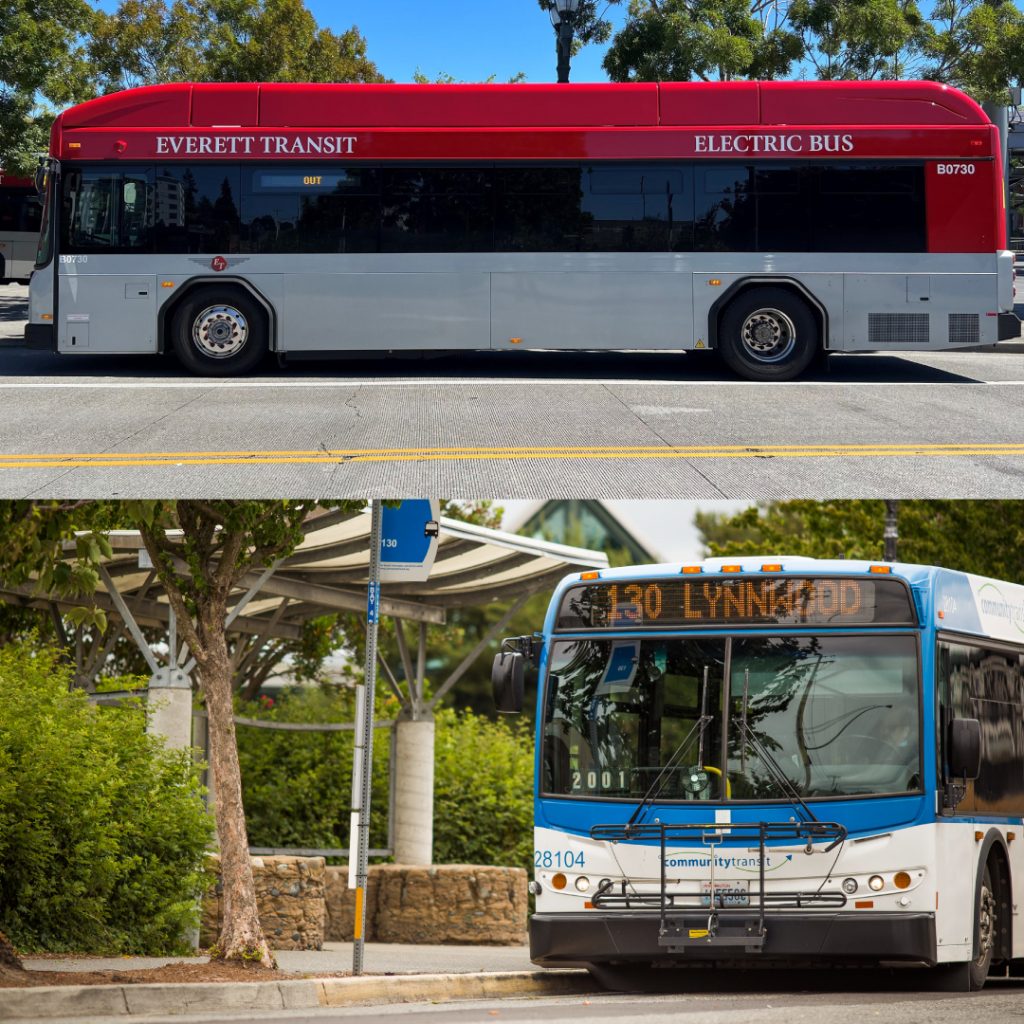
The two transit systems differ in fare structures. Everett Transit charges lower fares across all categories. Adult fixed-route rides cost $2 on Everett Transit versus $2.50 on Community Transit. Senior and disabled fares are $0.50 versus $1. Paratransit fares follow the same gap, with Everett Transit also offering free rides for personal care attendants. Both systems offer free youth rides and accept ORCA cards.
Demographically, Everett is denser, more urban and more diverse, with a median household income of $83,512 and a poverty rate of 12.9% to 14.1%. Its population is 61.4% white, 6.5% Black, 10% Asian and 22% Hispanic or Latino. Community Transit serves a broader suburban and rural area with a median household income of $111,246 and an 8.04% poverty rate.
The annexation would increase the racial and ethnic diversity of Community Transit’s ridership base and blend Everett’s urban equity-priority neighborhoods with the county’s higher-income commuter corridors.
Paratransit services also differ. Everett Transit provides door-to-door service citywide for people with disabilities and all seniors 65 and older at lower fares, with 24 vans operated in-house. Community Transit’s DART paratransit, outsourced to France-based Transdev—approximately $3.1 billion in U.S. revenues and $10 billion globally—is limited to three-quarters of a mile of fixed routes and Link stations, serves only those meeting strict ADA criteria and charges higher fares.

Author: Mario Lotmore



3 Responses
Great research, Mario. Very well done! I think yours is the best article about this subject out there.
The outsourcing of paratransit to a French company seems odd. Can we merge but keep those services local?
I pray that Everett transit gets absorbed. As someone who depends on bus service at this time, Everett transit is terrible. The ET busses are unreliable and frequently has busses that just don’t show up or fly by your stop. Everett transit does not have the capacity for late nights or weekends which requires us to call Uber to get to and from work, or make connecting transit on time. Everett transit is terrible and it’s about time something was done!