

LYNNWOOD — Jacqueline Manlastas appointment to the Public Facilities District board, a utility rate freeze approved, and a new ordinance making it a local crime to exposing children or dependent adults to controlled substances were all approved by the Lynnwood City Council on Monday, September 28.
Exposing children and dependent adults to fentanyl and other drugs now a crime in Lynnwood
In a 5-1 vote, the Lynnwood City Council made it a local crime to expose children or dependent adults to fentanyl and other controlled substances. The vote followed a fight over both the ordinance and how it reached the floor.


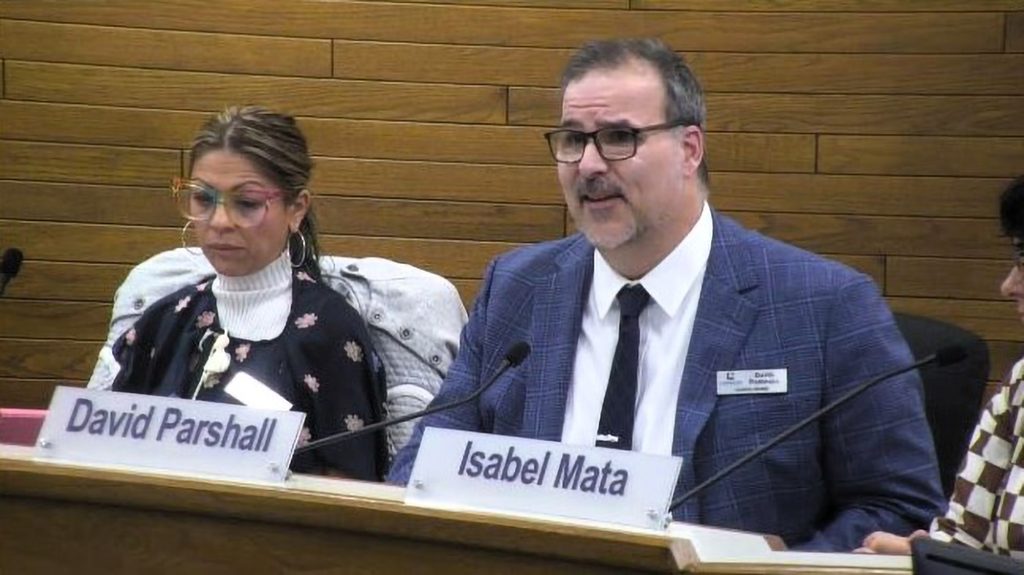
Councilmember Isabel Mata, the lone no, said she was “really surprised” to see the item on Monday’s agenda. Last week’s briefing, she said, never became a council deliberation, and she asked to send it back to a work session. When that failed, she pressed Lynnwood Police Chief Cole Langdon on the scope of the ordinance asking whether a parent whose child finds prescription medication could face 364 days in jail and a $5,000 fine; and whether calling 911 after an accidental exposure would be a safe harbor.
“The normal administering of medication pursuant to a prescription is covered,” Chief Langdon said. “This is really about the use of controlled substances that present a real danger and exposing children to those.”




The crime, he said, turns on “knowingly and recklessly causing” exposure that would be judged on a case by case basis.



In response to Mata’ s 911 question, Langdon drew a line between adults and children saying that if two adults use together and one overdoses, he said, there is “some safe harbor” for the person who calls for help. Doing nothing after a child is harmed, he said, can become reckless endangerment.
“It’s a completely different relationship if I’m with my child and my child is exposed,” he said.
If the child is lastingly injured or dies, Chief Langdon said, investigators could look consider it a homicide.
“It’s always going to be case-specific,” he added.
Mata then wanted clarification if the ordinance will do anything about actually getting the people the help they need and break the cycle of incarceration.
Municipal Judge Valerie Bouffiou chimed in saying that every case can go to pretrial diversion explaining that the city of Lynnwood holds the charge from three weeks to five years while probation monitors treatment and classes of the individual. The 364-day maximum “doesn’t mean they get that,” she said.
“Most often it’s a dismissal,” Judge Bouffiou said.
The goal, she said, is that people leave court “in a better position” and do not come back.
Councilmember Chelsea Wright said that her support for the ordinance hinged on the fact that Lynnwood system offers diversion, an option not afforded to many Black men and women decades earlier, comparing the dipropionate impact the war on drugs had on the Black community.
“If there was an ordinance in place [then], there would not be this mass incarceration of disproportionately minority folks that got caught up in the war on drugs,” Councilwoman Wright said. “There was not a system that was in place that would give that diversion.”
Adding, “We don’t want you to stay here for 364 days. We don’t want to fine you. We want to be able to help you get to that next level.”
The ordinance makes it a gross misdemeanor — punishable by up to 364 days in jail and a $5,000 fine — to knowingly or recklessly cause a child or dependent person to be exposed to, ingest, inhale, absorb or have contact with a controlled substance, or with smoke from a substance the person knows or reasonably should know contains one.
Police Chief Cole Langdon presented the measure to the council. Washington’s existing felony, RCW 9A.42.100, covers only methamphetamine and certain manufacturing chemicals. Bills to add fentanyl, including Senate Bill 5071, sponsored by Sens. John Braun (R-Centralia) and Manka Dhingra (D-Redmond), have stalled in Olympia.
Fentanyl has become the drug most often found when young children are poisoned at home.
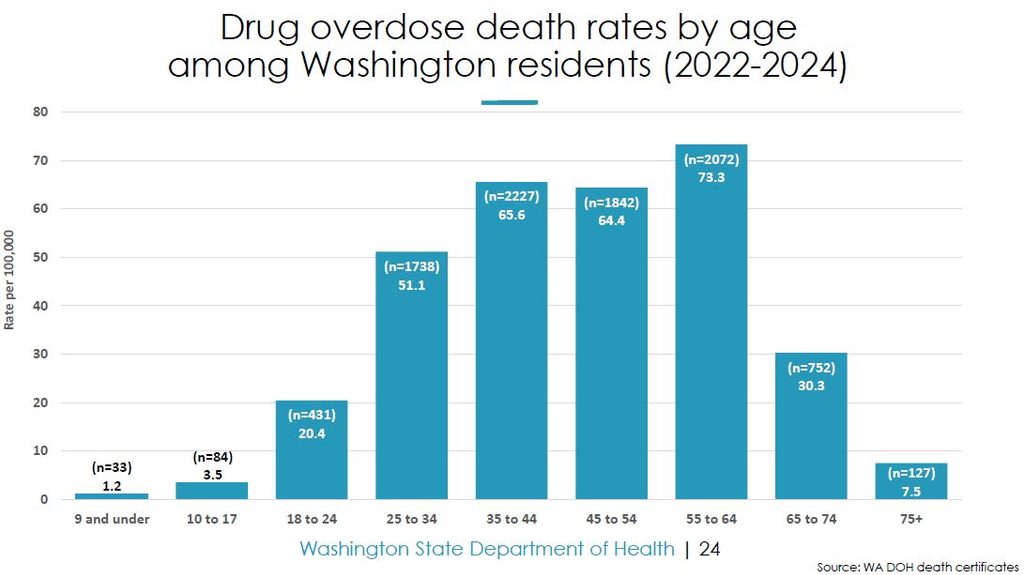
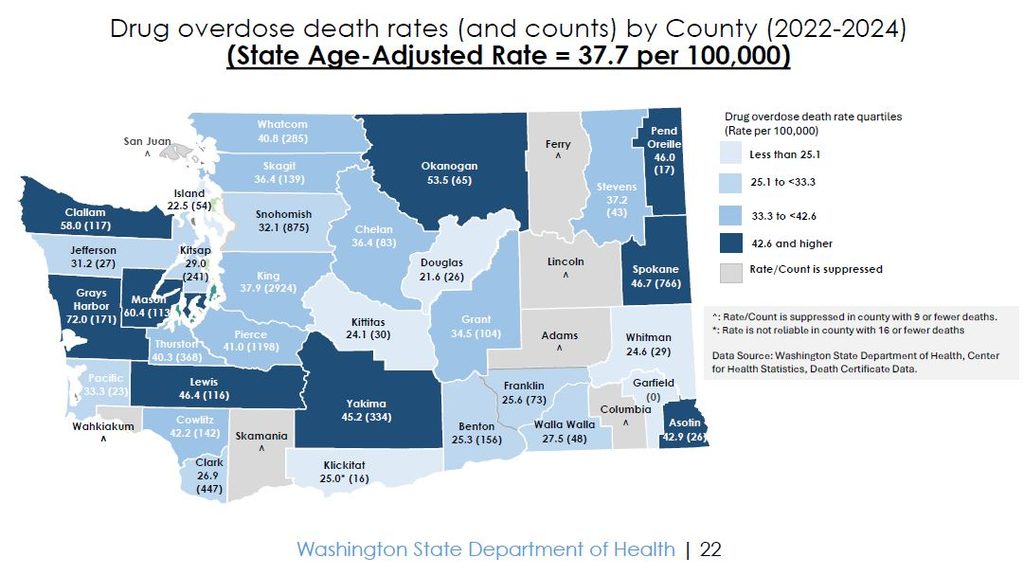
In 2022 alone, 38 Washington children age 17 and under died of opioid overdoses, more than triple the 2019 total. Among child-welfare fatalities and near-fatalities reviewed in 2024, accidental ingestions and overdoses accounted for one in four deaths and two-thirds of near-deaths, and fentanyl was involved in 78 percent of those combined cases.
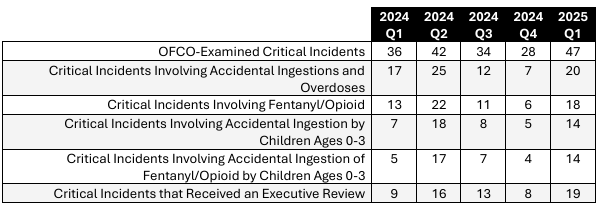
Everett adopted a similar ordinance in March, Yakima in April, and Snohomish County passed one unanimously in June. Lynnwood’s version excludes cannabis and valid prescription care, sits beneath rather than replacing the state meth felony, and sunsets if the Legislature later preempts Lynnwood’s ordinance.
The sharpest exchange of the evening was procedural when Council Vice President Derica Escamilla said she supports protecting children but “failed as a leader” by not stopping a one-week sprint from a briefing on the ordinance in a work session to Monday’s vote.
Escamilla shared that she had been sick and wanted time to talk to social workers and legislators. She added that she did not want to “penalize a disease” with “another probation, another fine” but “I want this. I just don’t want it right now.”
Council President Nick Coelho said the work session was the time to object.
“If I don’t hear any real significant pushback, the logical next step is to bring it forward,” Coelho said.
He added that the ordinance closes a loophole in state law that already exists for methamphetamine. He offered to pause the vote if three members asked, which only Escamilla and Mata did.
Councilmember Mata said last week’s session was “incredibly pressed for time,” so she assumed another discussion was coming.
Escamilla told Coelho the council has already asked for a slower ordinance process.
“With all due respect…. You decided that if it was brought up in a work session that the right thing to do is put it up for the next business meeting vote,” Escamilla said. “I think that we have brought concerns that we would like to see that change. … I don’t think that that is the democratic way to do it.”
Coelho said he “was not expecting the pushback tonight.” He again offered to delay the vote if Mata and Escamilla were genuinely concerned to which again there was no third councilmember who wanted to object.
Councilman David Parshall then moved to adopt the ordinance which passed 5-1. Escamilla voted yes, saying on the record that the ordinance is “important” and that she is “definitely for it,” but that “one week is not enough for any ordinance or resolution.” Mata voted no.
PFD board: Jacqueline Manlastas for Position 5
The council unanimously confirmed the appointment of Jacqueline Manlastas to Position 5 on the Lynnwood Public Facilities District Board for a term ending Oct. 18, 2029.
The five-member board, appointed under LMC 2.31.010 and state PFD law, governs the Event Center and the 13-acre City Center campus now branded “The District.” That master plan—development agreement approved in October 2025—contemplates an expanded indoor-outdoor event center, locally curated retail, public plazas, a hotel, and about 400 units of workforce housing. Design and contractor procurement are underway in 2026.
Utility rates: 2027 delayed, 2028 reduced, looming $1.7 million lump-sum bill to Everett
The council unanimously adopted an ordinance freezing 2027 water, sewer, and surface-water rates at 2026 levels and resetting 2028 rates to what had been scheduled for 2027. The change would leave the three enterprise funds collecting the same revenue as in 2026. Staff say the utilities can absorb the pause without solvency problems and that there is no General Fund impact.
“Sewer costs are largely being driven by our upcoming wastewater treatment plant project,” Public Works Director Jared Bond told the council. “We are working on an alternatives analysis for the wastewater treatment plant. This should be complete by the end of the year. We hope to have updates to the cost and spending schedule, which is important for debt and bond sales, as well as our rates. With that information, we will revisit our financial partnership with the city of Edmonds and what amount they will be contributing to our project.”
The tables first adopted in 2022 Ordinance 3426 had locked in annual increases through 2028; current published tables remain on the Lynnwood Municipal Code. Sewer was the steepest track—about 12 percent a year after a multi-year catch-up—while water ran about 5 percent a year and surface water about 4.25 percent. Under the draft:
- 2027 rates equal 2026 rates (a cut of about 4.8 percent versus the old 2027 water schedule, 4.1 percent versus the old surface-water schedule, and 10.7 percent versus the old sewer schedule).
- 2028 rates equal the former 2027 rates, so customers never see the original 2028 step-up.
A typical single-family base bill (10 CCF water, 20 CCF sewer, 1 ERU surface water) would stay at $323.73 bimonthly in 2027 instead of rising to the previously scheduled $355.14, then move to $355.14 in 2028 instead of $389.97.
Lynnwood’s recent bill increases so far come mostly from Lynnwood’s own rates and taxes, Alderwood’s own retail rates, and that lump-sum retroactive Lynnwood tax collection for missed utility taxes going back years. However, Lynnwood residents could be on the hook for at least another $1.7 million water bill, pending a dispute between Alderwood Water and the city of Everett.
In March 2025, the city of Everett, where Alderwood water gets its water from, proposed increasing its wholesale charge of about $1.00 per CCF to about $2.26, then later toward about $2.44 for 2026—a 143% increase—to help offset Everett’s structural budget deficit of which a 12% utilities tax that will go into Everett’s General Fund. The City of Everett’s driver for increasing their rates is to fund an $80 million project that would replace its current underground reservoir with two new concrete 8 million gallon, and 15 million gallons, reservoirs.
Alderwood refused to pay the new 2025 rate and has been paying the 2024 rate while in arbitration with the city of Everett. If Everett wins, Alderwood, and then Lynnwood residents, could owe a retroactive “true-up” bill back to 2025.
Currently, Lynnwood residents pay an average of $68.66 bimonthly for water. With an added 10% Utility Tax hike this sits at $75.53. The potential rate increase could increase the bimonthly bill to $83.56, on average, making it a bimonthly cost of $91.92 with the 10% Utility Tax increase.
Currently Public Works has $1.5 million set aside for this potential true-up, though Bond says the longer arbitration continues the higher the true-up will be.

Author: Mario Lotmore