


LYNNWOOD—The Ninth District Court of Appeals ruled that Olympus Spa – a Lynnwood-based, female-only, Korean spa that requires patrons to be fully nude – cannot sue the Washington State Human Rights Commission on First Amendment grounds for requiring transgender women into its facilities.

“The HRC’s enforcement action against Olympus Spa was a straightforward application of Washington’s statutory scheme—WLAD—which prohibits discrimination on the basis of gender expression or identity in places of public accommodation. As applied, the statute does not abridge the Spa’s rights to free speech, free exercise, or free association. We affirm the district court’s dismissal of the complaint,” the court opinion states.



Olympus Spa, located on 196th Street near the Lynnwood Event Center, is fashioned after “Jjimjilbang” — a health and wellness facility where patrons are required to be nude in some procedures per its Korean-inspired tradition. Because of this, it has held the requirement for members to have female genitalia – a requirement held throughout its 20 years of operation. Transgender women are only admitted at Olympus Spa if they have undergone post-operative sex confirmation surgery.
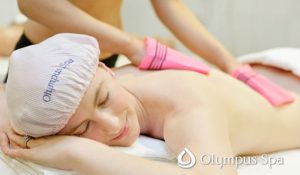
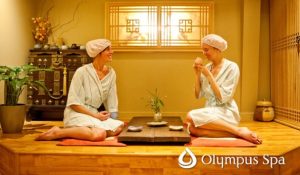
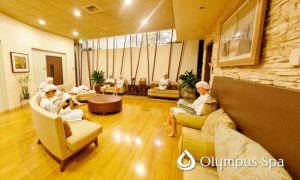
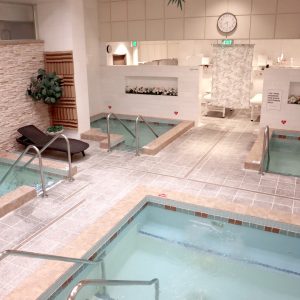
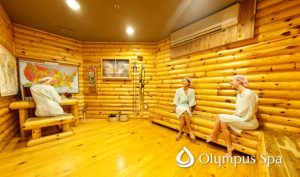
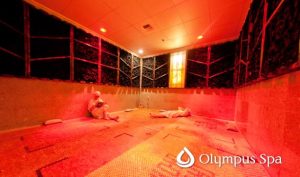
The spa contains a bath area with multiple whirlpools, a traditional Korean body-scrub service area, standing showers, sit-down showers, a steam room, and a dry sauna. Patrons are nude when utilizing these services and have visual access to other nude patrons. Nudity is not optional, adhering to the Korean tradition of “Seshin,” and employees refuse to perform massages on fully nude patrons with male genitalia.




“The tradition has existed for about 500 years from Korean ancestry,” Olympus Spa Owner Sun Lee told the Lynnwood Times. “Where women, particularly women, go through a traditional, ceremonial, act of cleansing and the person has to be naked.”


Transwoman Haven Wilvich sought access to the Lynnwood spa in 2020 but was allegedly told that her request was declined because, “transgender women without surgery are not welcome because it could make other customers and staff uncomfortable.”

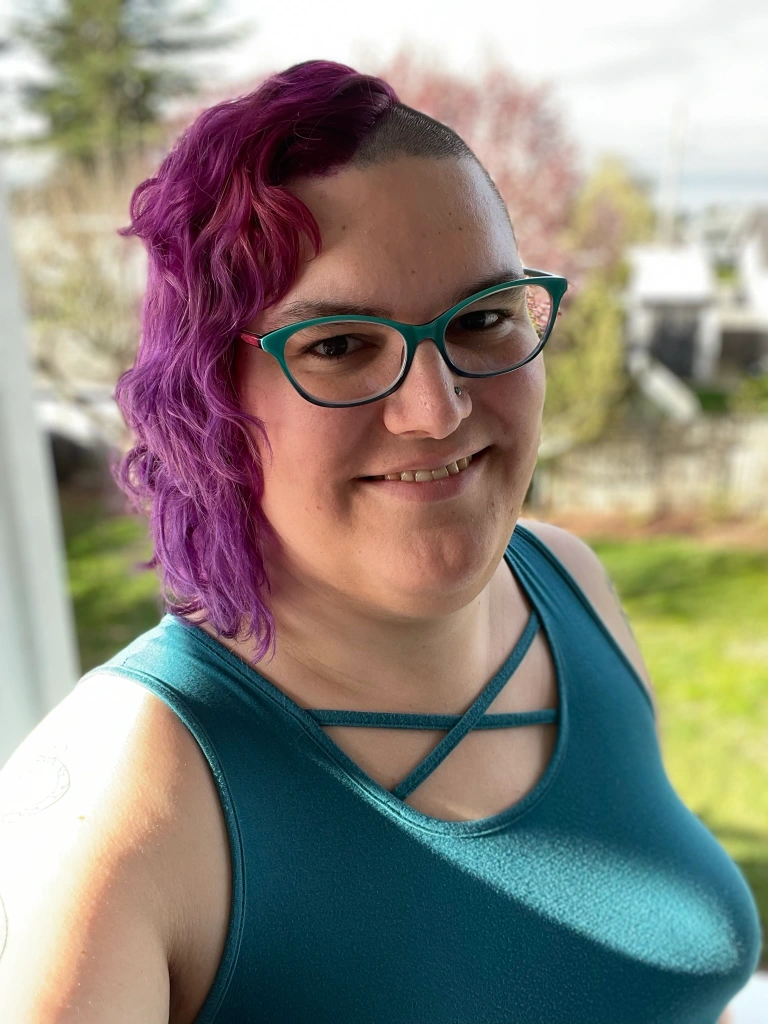
“It felt really terrible to be invited to an event and find out I can’t attend because the spa is willing to reduce me to my genitalia and not see me as the woman that I am,” Wilvich told the Lynnwood Times.
Wilvich felt discriminated against by this dismissal and took the issue up with the Washington State Human Rights Commission (WSHRC) in February of 2020. The commission then sent notice of the complaint to Olympus Spa in November of 2020. In March 2021, Olympus received a second complaint, this time requesting a written response by the spa owner.
Olympus Spa owner Sun Lee remained firm to his beliefs stating he “firmly believe it is essential for the safety, legal protection, and well-being of our customers and employees that we maintain adherence to this adaptation of a female-only rule” adding they feared exposing female customers to male genitalia, especially minors, could result in criminal penalties under the state’s laws on lewd conduct. He also cited his Christian faith in which they hold that it is “inappropriate” for a man and a woman to be naked together unless they are married.

Lee filed a lawsuit against Andreta Armstrong, Executive Director of WSHRC, in March of 2022, alleging violations of the company’s first amendment rights under exercise of religion, freedom of speech, and freedom of association. However, Western Washington District Court Judge Barbara Jacobs Rothstein, rejected the claim on Monday June, 2023.
Lee and his legal counsel, Tracy Tribbet with the Pacific Justice Institute, then filed a lawsuit against the WSHRC on the grounds that the state violated his First Amendment rights, arguing that the mandate went against his Christian faith and Korean traditions.
In Thursday’s ruling, however, the Court sided with the WSHRC in that, in accordance with Washington Law Against Discrimination (WLAD) – which prohibits public facilities from discrimination on the basis of sexual orientation, defined as including gender expression or identity – the spa’s entrance policies violated state law.
“The Spa did not challenge this definition or the language of the statute nor did it argue that the statute was vague or that the Spa’s conduct did not fit within the statute’s definition of discrimination on the basis of gender expression or identity. Rather, the Spa alleged that WLAD, as enforced against the Spa’s entrance policy, violated its First Amendment rights,” the court’s ruling states.
The court further concluded that the WSHRC’s actions, under the WLAD, did “not impermissibly burden the Spa’s First Amendment rights to free speech, free exercise of religion, or free association,” and that the Spa’s religious expression was only “incidentally burdened” and the WLAD was both neutral and generally applicable.
Ninth Circuit Judge Kenneth Kiyul Lee, who is South Korean-born, dissented with the court’s opinion stating:
“Korean spas are not like spas at the Four Seasons or Ritz Carlton with their soothing ambient music and lavender aroma in private lounges. Steeped in centuries-old tradition, Korean spas require their patrons to be fully naked, as they sit in communal saunas and undergo deep-tissue scrubbing of their entire bodies in an open area filled with other unclothed patrons.
“Given this intimate environment, Korean spas separate patrons as well as employees by their sex…Now, under edict from the state, women—and even girls as young as 13 years old—must be nude alongside patrons with exposed male genitalia as they receive treatment…This is not what Washington state law requires. While the Washington Law Against Discrimination (WLAD) forbids discrimination based on (among other things) sex and sexual orientation, its text and structure make clear that it does not cover transgender status. Washington has perversely distorted a law that was enacted to safeguard women’s rights to strip women of protections. The women and girls of Washington state deserve better.”


Author: Kienan Briscoe





6 Responses
Judge Lee’s dissent was eloquent and goes to show reason and logic will not appeal to a certain segment of our society. We must be vigilant when voting. It has consequences. Much like the recent clergy law, these laws are written and twisted in sinister ways to strip us of our rights, while bludgeoning us with virtue.
I find the logic of Judge M. Margaret McKeown, who compared gender and sex with race in her ruling, to be as absurd as comparing age with race. In Great Britain and the Supreme Court of the United Kingdom ruled correctly when it ruled women are not men, and defined “sex” as meaning biological sex, meaning a “woman” is someone born female, and trans women, even those with Gender Recognition Certificates (GRCs) are not women. One can no more change their sex anymore than they could change their race or age. Sadly, I must assume Judge M. Margaret McKeown at the Ninth District Court of Appeals also believes in unicorns.
I love going to this spa. I have gone to all-gender naked spas and hot springs, but by far prefer the all-woman environment Olympus offers. It would feel weird to even have to explain why.
I hope Olympus takes a different legal argument. I haven’t gone back to this spa since this case began because I don’t want creepy naked men joining me in enclosed spaces and hot tubs. Protect women’s rights to choose if they want to be naked with men. I can guarantee you, the sane women disagree with allowing men in our spaces.
This issue is exhausting! I do not want to be sitting in that spa with penis all around me. There are plenty of spas for people with penis to go to, they do not have to invade a vagina spa.
As A Transwoman myself I’ll say a lot. First let’s clear up a great misunderstanding of what the condition known as gender dysphoria is. Individuals who identify as transgender with the medically established condition known as gender dysphoria have a strong sense of being assigned the wrong gender. The sense of gender that’s the sense of male or female is part of human consciousness everyone has the sense of feeling and knowing if they are male or female. For Transgender individuals this sense of self is not aligned with the reproductive anatomy that they were born with. To correct nature’s mistake and align both mind and body that’s why gender affirmation care comes in. Many Transgender individuals display Transgender characteristics at early ages some as soon as five from the age of five through prepubescent to pubescent only puberty blocking medications are given these medications are given for a time to see how that Transgender individual is able to integrate into the gender they seem best to live as. If that prepubescent individual wishes to return to assigned birth sex and gender those puberty blocking medications are withdrawn and puberty resumes. If that young Transgender individual makes it past puberty and into adolescence when they reach the age of eighteen then gender affirmation surgery can be performed. These are steps required in the Transgender standards of care created to prevent those with temporary gender dysphoria from becoming what’s known as a Transition regretter. This individual who is reportedly pre gender affirmation should not have applied to this or any other establishment individuals like this person should refrain from applying to institutions such as a spa or a gym unless undergoing gender affirmation surgery. Gender affirmation surgery isn’t trying to fool anyone the surgery is to align mind with the body.