


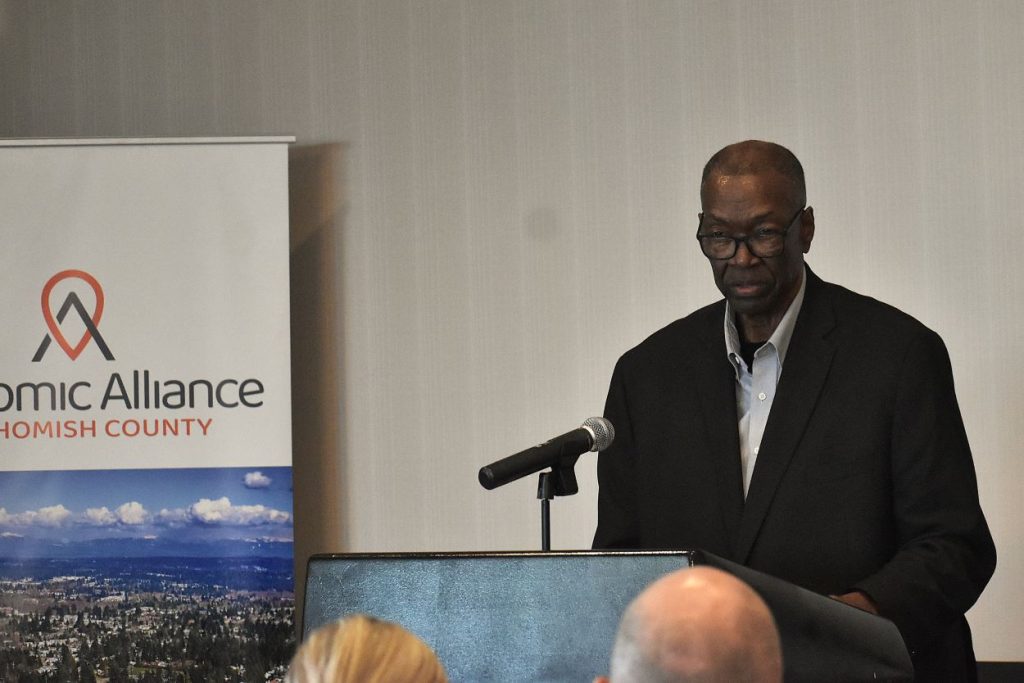
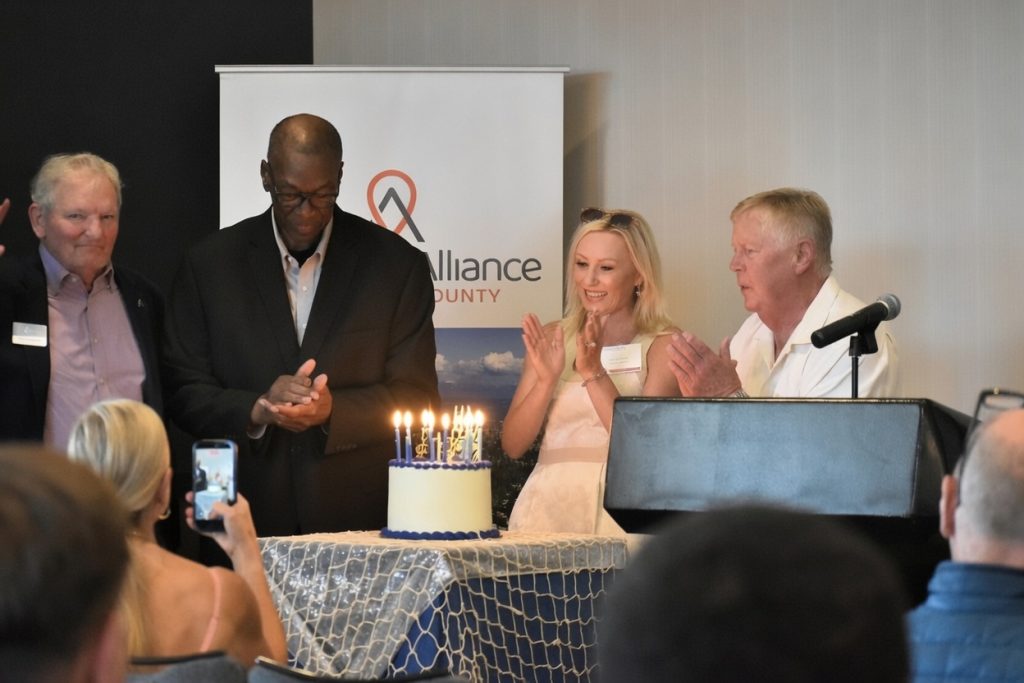
EVERETT— Speaking before local business leaders, elected officials and community members during the Port of Everett’s annual Port Report, CEO Lisa Lefeber described an organization balancing significant economic headwinds with what she characterized as one of the busiest periods of investment in the port’s history. Monday’s event was hosted by the Economic Alliance Snohomish County (EASC).
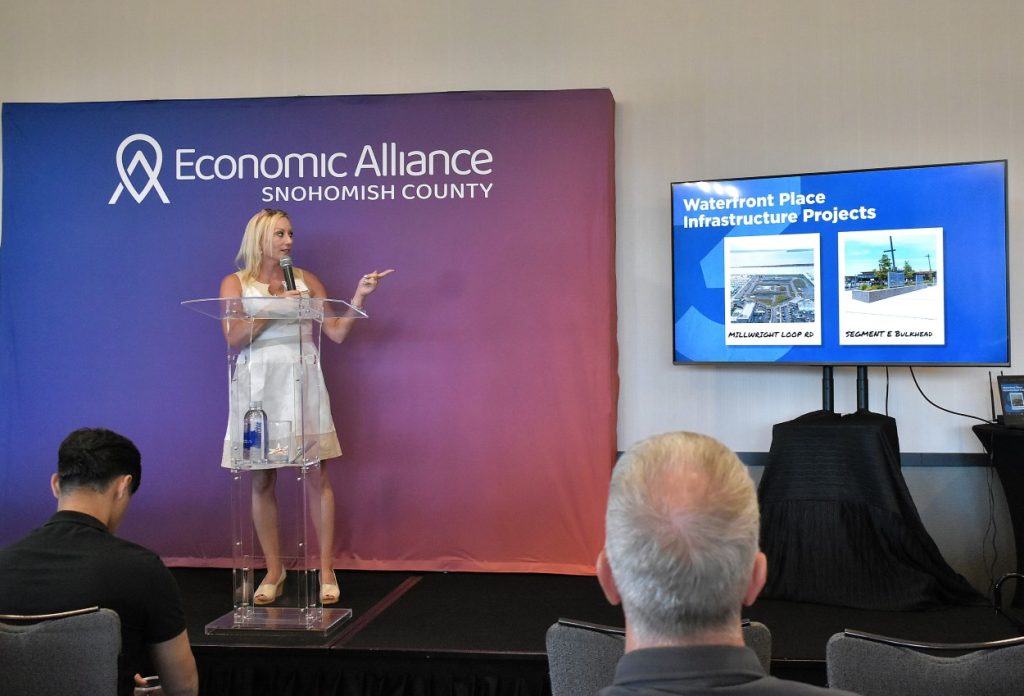
From expanding its working waterfront and modernizing aging marine infrastructure to constructing hundreds of new housing units and pursuing one of Washington’s largest environmental cleanups, the port is preparing for over a billion dollars in public and private investment over the coming decade.



While tariffs and international trade uncertainty continue to affect shipping volumes, Lefeber said aerospace manufacturing and military cargo have helped provide stability for the port’s commercial operations.
The Port of Everett generates more than $433 million in state and local taxes revenues and supports over 40,000 jobs throughout the region.




Tariffs Continue to Shape Cargo Business


Unlike many West Coast ports that primarily handle consumer goods in large container shipments, Everett occupies a unique position in the maritime industry.
The port specializes in oversized, high-value cargo such as aerospace components, military equipment and industrial materials. It also operates its own marine terminal because of restrictions associated with sharing a harbor with Naval Station Everett.
That operating model gives the port greater control over cargo handling but also increases operating costs.
“We run everything from the labor to the longshore to the shuttle barge for the aerospace supply chain,” Lefeber said.
The trade environment has remained challenging for nearly two years as tariffs and changing international supply chains continue to reshape shipping patterns.

Although cargo volumes have not returned to previous levels, Lefeber said inquiries from prospective customers have increased following recent court activity surrounding tariff policy.
“The saving grace for the last 18 months has actually been aerospace and military,” she said.
Those sectors have historically served as the backbone of Everett’s maritime economy, particularly because of the area’s close relationship with Boeing and Naval Station Everett.
The port also continues lobbying federal officials to address what Lefeber described as an imbalance in U.S. trade policy that encourages cargo to enter North America through Canadian ports before crossing into the United States.
According to Lefeber, some cargo can clear customs in Canada while avoiding harbor maintenance taxes paid at American ports.
“Canada is busier than they were even during COVID,” she said. “If that doesn’t tell you our trade policy isn’t working, that should.”
Port officials are working with congressional representatives to close what they call a “land border loophole” that they believe places American ports at a competitive disadvantage.
Shipyard Emerges as Bright Spot
While cargo volumes remain under pressure, Everett Ship Repair has become one of the port’s strongest performing businesses.
The company recently acquired the Hercules dry dock, one of the largest floating dry docks in Washington state, significantly expanding its repair capabilities.
Lefeber said the investment represents years of collaboration between the company and the port.
The long-term objective is to provide sufficient repair capacity for Navy destroyers stationed at Naval Station Everett, eliminating the need for vessels and crews to travel to shipyards farther south in the Puget Sound region.
Currently, many sailors must travel hours for maintenance work.
“Our primary goal is to get a dry dock capable of handling one of the destroyers that are homeported at Naval Station Everett so that we can have the work done here in this harbor,” Lefeber said.
Federal funding is helping accelerate additional improvements.
A $5 million project will electrify the shipyard, replacing diesel-powered generators that currently supply electricity throughout the facility.
Beyond reducing emissions, electrification will also allow the port to generate clean-air credits while lowering long-term operating costs.
Separately, the port secured an $11.25 million Port Infrastructure Development Program grant to modernize Pier 3.
Built during the 1970s, the aging pier requires structural improvements to continue serving commercial cargo operations.
Together, those projects represent continued investment in Everett’s role as both a working waterfront and military support facility.
Infrastructure Investments Continue Along Waterfront
Away from the cargo terminals, much of the port’s attention has shifted toward transforming Waterfront Place into one of Snohomish County’s fastest-growing mixed-use districts.
Lefeber highlighted several recently completed public infrastructure projects that she said lay the foundation for future private development.
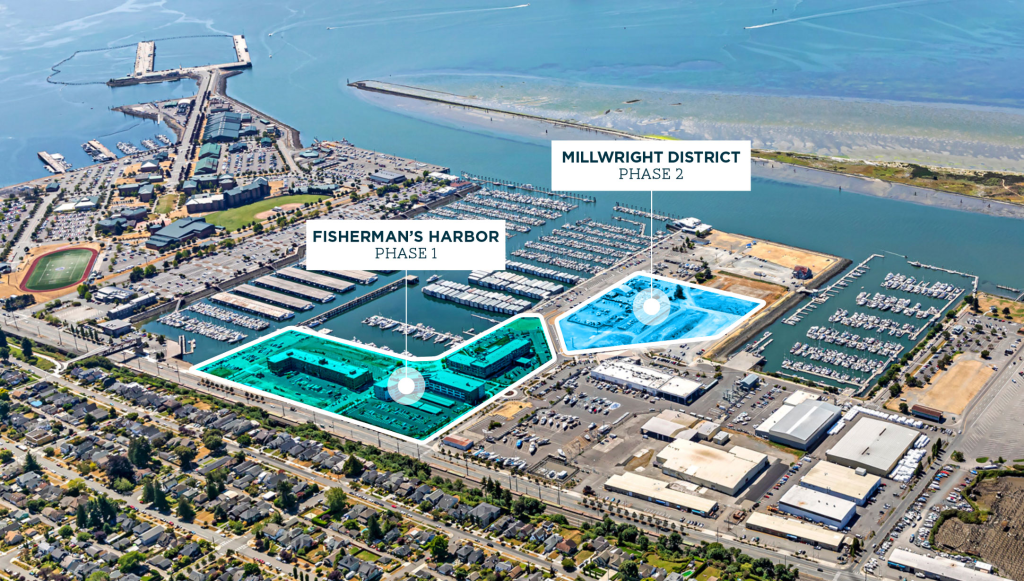
Among the most significant was construction of Millwright Loop Road, a project financed through assistance from Snohomish County.
The roadway provides access to future residential and commercial development while extending utilities throughout the district.
However, Lefeber said the infrastructure improvements are “not cheap.”
Roads, utilities and stormwater systems represent millions of dollars in upfront investment that often precede any private construction by several years.
Another milestone came with completion of improvements surrounding the Music at the Marina venue.
The project widened the waterfront promenade, expanded public gathering areas and improved pedestrian safety by separating foot traffic from truck operations.
The improvements also created larger event space capable of hosting concerts and community festivals.
The project relied heavily on state and federal grant funding.
“The common theme,” Lefeber joked, “is other people’s money.”
Because the Port of Everett serves only a portion of Snohomish County rather than operating as a countywide port district, its taxing authority and bonding capacity remain significantly smaller than larger ports such as Seattle and Tacoma.
As a result, outside grants frequently determine whether major capital projects move forward.
Waterfront Becomes Regional Destination
While cargo terminals remain central to the port’s mission, public access has increasingly become another defining feature of the Everett waterfront.
Lefeber said changes over the past two decades have fundamentally altered how residents interact with the area.
Twenty-one years ago, she said, few people visited the waterfront except for boating or industrial purposes.
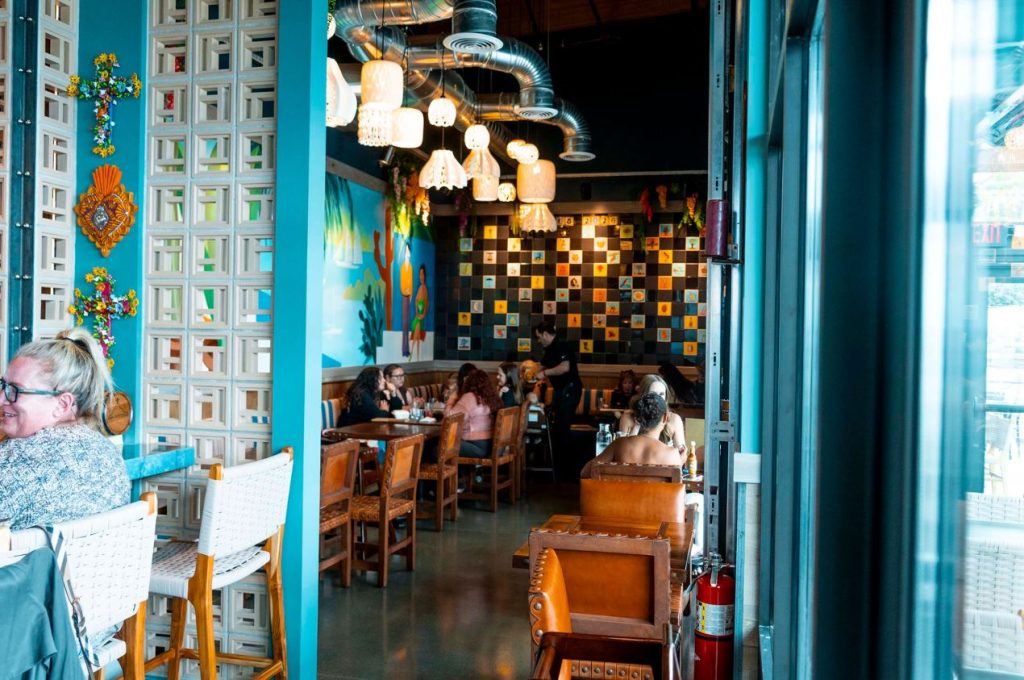
Today, families stroll along the promenade, children play in the splash fountain, diners fill restaurants and visitors attend concerts and festivals throughout the summer.
“It really is starting to come to life,” Lefeber said.
Several new businesses have opened over the past year, including Rustic Cork Wine Bar, Menchie’s Frozen Yogurt, Tapped Public House, Marina Azul Mexican restaurant and the Net Shed Fish Market.
The additions diversify dining options while helping transform the district into a year-round destination.
The port has also invested heavily in placemaking.
Recent additions include public art installations, decorative lighting, seasonal displays, a waterfront trolley, the Harbor Hopper shuttle service and new sculptures that have quickly become popular photography locations.
Officials continue evaluating additional artwork, signage and seasonal programming intended to encourage repeat visits.
The Harbor Hopper remains in a pilot phase but has generated enough public interest that the port expects to continue evaluating future service.
Similarly, FIFA Club World Cup watch parties exceeded expectations.
Lefeber admitted organizers initially questioned whether public screenings would attract much interest.
Instead, approximately 17,000 to 18,000 visitors attended the four events.
The turnout required coordination among the port, city officials, Snohomish County, Naval Station Everett and multiple public safety agencies.
“It was pretty impressive,” Lefeber said.
Demand proved so strong that attendees requested additional screenings after the scheduled events concluded but Lefeber noted it would have cost the Port an additional $100,000 per game.
Fuel Dock and Marina Improvements
Behind many of the waterfront’s visible amenities are less noticeable infrastructure projects that remain essential to daily operations.
One example is the recently completed fuel dock.

The facility serves the West Coast’s largest public marina while supplying fuel to fire, law enforcement and Navy vessels.
Construction was supported through a Defense Community Infrastructure Program grant developed in partnership with Naval Station Everett.
Although the facility has opened, contractors continue addressing concrete cracking discovered during final project closeout.
“It’s never easy or simple or cheap,” Lefeber said of major construction projects.
Additional marina improvements are scheduled over the next two years.
The North Marina will undergo dredging to improve navigation.
The public boat launch will be rebuilt using recently awarded grant funding.
The aging commercial dock near Anthony’s Home Port restaurant also is scheduled for replacement through a combination of federal earmarks and future grant applications.
Port officials estimate that project alone could cost approximately $17 million.
Construction of a new traffic signal at 13th Street also is expected to improve vehicle access into Waterfront Place.
Housing Development Nears Construction
Perhaps the most visible future project involves the next phase of Waterfront Place development.
Plans call for approximately 300 residential units above ground-floor retail space on land immediately east of existing waterfront businesses.
Design and permitting have already been completed.
The project now awaits final financing as developers navigate elevated interest rates affecting commercial real estate nationwide.
If financing is completed this year, construction could begin in early 2027.
Officials anticipate approximately two years of construction before residents begin moving in around 2029.
Lefeber also hinted that additional opportunities currently under discussion could accelerate redevelopment timelines but declined to provide details.
“We’ve got a couple irons in the fire that I can’t talk about,” Lefeber said.
Future phases include another mixed-use building, expanded office space, classrooms for maritime workforce training and a redesigned festival street capable of hosting outdoor markets, concerts and community events.
The pedestrian-focused corridor would include fire pits, public gathering areas and flexible space for seasonal programming.
Mukilteo Waterfront Expansion Gains Momentum
South of Everett, the Port of Everett continues expanding its presence along the Mukilteo waterfront.
After the National Oceanic and Atmospheric Administration abandoned plans to develop a marine operations facility during the COVID-19 pandemic, ownership of the property reverted to the port under previous federal agreements.
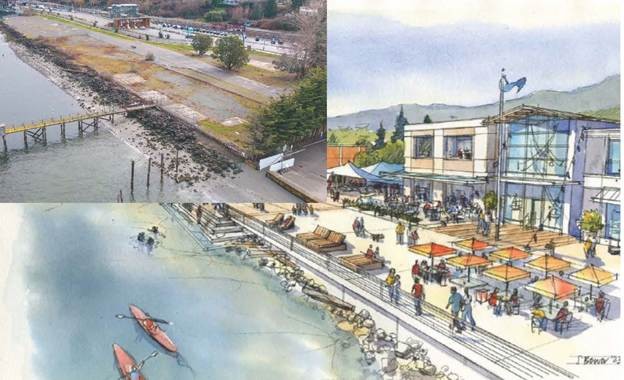
The transfer was completed earlier this year.
The port also acquired adjacent holding lanes and purchased the property occupied by Ivar’s Mukilteo Landing.
Lefeber emphasized that the popular seafood restaurant is not leaving.
Rather, acquiring the entire property became necessary because the restaurant owner declined to sell only the adjacent parking lot needed for future redevelopment.
Planning now shifts toward designing a new waterfront district that includes expanded public access, restaurants, tourism opportunities and mixed-use housing.
Architectural planning has already begun.
Future phases envision a new waterfront esplanade, ground-floor retail, residential development and possible marine tourism attractions.
Developers are expected to begin reviewing opportunities later this year.
Environmental Cleanup Represents Historic Undertaking
Among the port’s largest long-term commitments is cleanup of the former Weyerhaeuser Mill A site.
The project could become the largest in-water environmental remediation effort ever undertaken in Washington.
Decades of industrial operations left extensive contamination beneath portions of the Everett waterfront.
Lefeber estimated approximately 50,000 truckloads of contaminated material require removal.
Cleanup costs could exceed $250 million.
The port remains engaged in litigation seeking reimbursement from Weyerhaeuser for contamination associated with historic mill operations.
Trial is scheduled later this year.
Permitting continues in parallel so construction can begin once legal issues are resolved.
Officials anticipate the cleanup will require three separate in-water construction seasons because state environmental regulations limit marine work to periods that minimize impacts on salmon migration.
Completion of the project would unlock future redevelopment opportunities while restoring significant sections of Everett’s shoreline.
Maritime Workforce Program Expands
Lefeber also highlighted continued growth of the Maritime Training Institute, which recently celebrated graduation of students from Washington’s first high school maritime career program.
Developed through partnerships with Sno-Isle TECH Skills Center and industry organizations, the program prepares students for careers in maritime trades.
Enrollment demand has exceeded expectations.
Additional portable classrooms are scheduled for installation later this year while planning begins for permanent expansion into a future annex building near Waterfront Place.
Port officials expect enrollment could quadruple during the coming academic year.
The expansion reflects growing regional demand for skilled workers across ship repair, marine transportation and related industries.
Looking Ahead
Despite continued uncertainty surrounding international trade, Lefeber expressed confidence that long-term investments will strengthen the Port of Everett’s role as an economic engine for Snohomish County.
Collectively, projects underway or in planning represent hundreds of millions of dollars in public investment and could leverage billions more in private development over the next decade.
In Everett alone, waterfront redevelopment is expected to surpass $1 billion when public and private investment is combined.
Additional redevelopment in Mukilteo and future improvements to cargo terminals could add hundreds of millions more.
The port also plans to revisit a proposal to expand its district boundaries countywide, arguing broader taxing authority would allow investments in economic development projects throughout Snohomish County while increasing competitiveness with larger ports.
For now, however, the focus remains on completing infrastructure, attracting investment and maintaining the balance between industrial commerce and public access that has increasingly defined Everett’s evolving waterfront.
“Our job is creating jobs and economic opportunity for the whole region,” said Lefeber.
With cargo operations stabilizing, waterfront redevelopment accelerating and environmental restoration moving closer to construction, the Port of Everett enters the next decade pursuing one of the most ambitious capital programs in its history.

Author: Kienan Briscoe





One Response
I wasn’t even looking for this but saw someone mention it in another blog… tried it for a few days and surprisingly got results. Not sure if it still
works though…… detail mention in my name