

LYNNWOOD—The Lynnwood Police Department was approved for a $2.5 million public safety grant from the Washington State Criminal Justice Training Commission, through HB 2015. This is in addition to the Lynnwood City Council approving a 0.1% public safety sales tax earlier this year, adding two new funding mechanisms to the law enforcement agency.

“We’re grateful for the funding opportunity in addition to the public safety sales tax. We applied for a grant through house bill 2015, which allowed us to fund initiatives and/or pieces of equipment we otherwise, with budget constraints we couldn’t bring about,” Lynnwood Police Chief Cole Langdon told the Lynnwood Times. “



Langdon noted that with the additional funds he’s most looking forward to implementing a radar system to the jail which, given the fentanyl crises, will allow law enforcement officers to detect respirations (or lack thereof) and if they get to a dangerously low level, it will send out an alert.
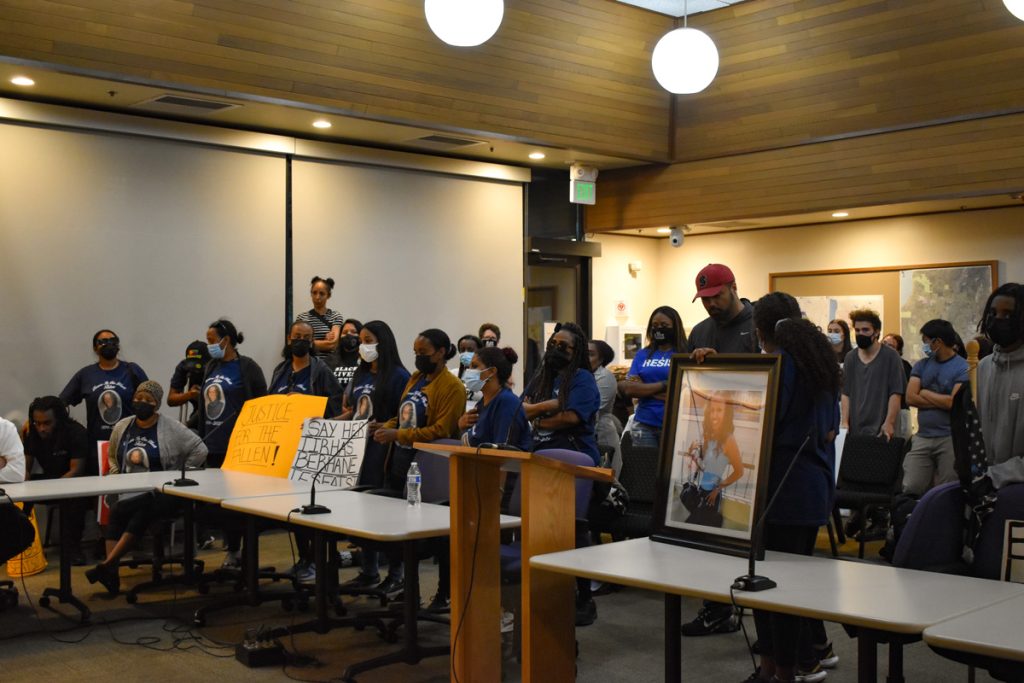
Tirhas Berhand Tesfatsion, a 47-year-old woman was found dead at the Lynnwood Jail on July 13, 2021, leading to an outside investigation and protest by a defund the police movement— a death that may have been prevented with this new radar technology.




“From a risk mitigation and just caring for our community members that’s a huge deal,” said Langdon. “The next big thing is unfunded mandates as it relates to crisesintervention training. We’ll now be able to have overtime funding so aside so we can send our folks to that training without having an undo impact to our funding.”

In 2025, the Washington State Legislature approved HB 2015, which aimed to improve public safety funding by providing resources to local governments and state and local criminal justice agencies through the authorization of a local 0.1% sales tax (Public Safety Sales Tax) as well as a grant administered through the Washington State Criminal Justice Training Commission.

In January of 2026, the Lynnwood City Council passed the Public Safety Enhancement Sales Tax to be used for criminal justice purposes. To qualify for both the sales tax and grant, the Police Department was required to meet specific training and policy requirements which It did.
The Lynnwood Police Department then applied for the Washington State Criminal Justice Training Commission grant, to further fund specific public safety projects.
Commander Scott Dilworth, with the Lynnwood Police Department, received a letter from the WSCJTC on June 29, 2026, notifying the department it was successfully awarded the funds.
The acceptance vote of the HB 2015 Public Safety Grant was officially held at the Lynnwood City Council’s Business meeting on Monday, July 13, 2026, where it was approved unanimously, despite some concerns voiced by Councilwoman Isabel Mata.
As of July 2026, 21 recipients in Washington state have been awarded the ESHB 2015 / HB 2015 Public Safety Funding Program grant. These are:
- Auburn PD – $3,860,372
- Bellingham PD – $3,703,583
- Black Diamond PD – $486,078
- Clark County – $4,997,696
- Cle Elum PD – $699,571
- Colfax PD – $25,000
- Des Moines – $362,511
- East Wenatchee PD – $1,24,785
- Federal Way PD – $3,298,725
- Jefferson County – $762,234
- Kent PD – $1,922,340
- King County Sheriff’s Office – $15,000,000
- Lynnwood PD – $2,500,000
- Lynden PD – $910,040
- Medina PD – $360,000
- Olympia PD – $1,969,263
- Pierce County – $4,999,742
- Port Angeles PD – $785,680
- Renton PD – $321,000
- Ridgefield PD – $1,104,231
- Skagit County Sheriff’s Office – $2,758,902
The awarded grant can be used to support the following programs:
- Funding of a social worker and custody officer position to support and enhance reentry services and programming within the jail facility.
- Radar units for the Lynnwood jail to assist in detecting a medical crisis of a person within the care and custody of the facility.
- Training support for mandated and best practice training in the form of overtime funding in recognition of the 24/7 first responder environment the police department operates in.
- Employee wellness support in the form of funding to purchase fitness equipment and health assessments of our staff for dangerous and often undetected medical conditions first responders are more susceptible to.
- A facility K-9 for staff and community members to mitigate trauma and facilitate healing.
- Technology in the form of a drone as first responder program to reduce response times to calls, enhance officer safety, facilitate de-escalation, and provide medical support (ex: Narcan).
- Computers and associated training related to the work traffic and investigative units are engaged in daily.
Lynnwood Police plan to use their newly awarded $2.5 million grant to fund the following:
- Overtime – DFR, CIT, Bod Scanner, and PTI: $426,029.92
- Social Worker: $263,161.26
- Custody Officer: $186.968.36
- DFR (Drone First Responder): $398.516.68
- Radar for Jail: $591,259.77
- Drones (interior and patrol): $167,591.21
- Training – Body Scanner, DNT and FARO: $133,744.25
- Computers – CID and FARO: $49,456.70
- Exercise Equipment – Jail & Officers: $27,452.12
- Therapy/Wellness Dog: $20,000
- Software Licenses: $69,000
- Health Assessments: $56,364
- Misc. Equipment: $77,172.33
- Electric Bikes: $17,933.40
- LEMAP: $10,000
- Business Card: $5,350.00
There is a potential financial impact relating to the social worker and custody officer positions as the funding for these positions would lapse in June of 2028. However, there are existing grant opportunities for the social worker position that will continue to be explored, the LPD says.
The Drone program listed follows in the footsteps of Everett, which passed a Drone as a First Responder (DFR) program on April 9, 2025, following a Everett City Council vote of 5-1. The drones are reported to reduce response times by up to 63 percent—to just under 90 seconds!


The drones fly up to 53 mph, have thermal and nighttime vison capabilities, a 400X zoom, and can cover up to 38 square miles per deployment. The drone assigned to the south precinct will fly at an altitude of 400 feet, whereas the north drone will fly at 200 feet. The drones will not be equipped with facial recognition software, won’t track a vehicle’s speed, nor will they be used to aid in parking enforcement.
The First Responder Drones will integrate with both the Sno911 to provide real-time caller information to the certified officer pilot and EPD’s Automatic License Plate Recognition (ALPR) cameras to combat vehicle thefts. The drone pilots will be certified with the City and trained by officers with an existing FAA Part 107 certification. The drones are also equipped with a collision avoidance system for added community safety.
The grant is CJTC administered, expires in June 2028, covers 75% of salaries requiring a 25% local match (with a max of $125,000 in funding per position), requires policy and training requirements, and would need to levy or receive one of three available safety or criminal justice sales taxes first.
The sales tax is councilmanic through June of 2028, enforces a 0.1% tax on sales and use, is permanent and can be used for a broad array of purposes, is stackable with other taxes and jurisdictions, requires similar policy and training to grant, and does not require an application for consideration.
Just some examples of the “broad array of purposes” are: domestic violence services, public defenders, diversion programs, reentry work for inmates, reducing homelessness or improving behavioral health, community placements for juvenile offenders, community outreach, alternative response, and mental health crises response.
The policy and training requirements, for both the grant and public safety sales tax, include AGO training and policies, CJTC trainings, use of force policies, use of force database, court-ordered firearm relinquishment, crises intervention training, gender-based violence training, in addition to certain leadership requirements volunteer requirements, staffing plans, and 911/case-closure rates.
As of mid-2026, the Lynnwood Police Department has approximately 70 commissioned officers and over 100 total employees, with authorization for up to 80 commissioned officers and 128 total positions which include civilians and custody staff. In 2025, the department handled 44,673 calls for service and recorded about 46,700 total incidents. This included roughly 1,400 shoplifting calls, 400 assaults, and hundreds of other public safety responses.

Author: Kienan Briscoe