


EVERETT—Snohomish County Executive Dave Somers is recommending the county separate its mental health and community support/developmental disabilities levy and its veterans levy, from the county’s existing general levy, which would save the county $8.7 million for essential services but come at an added cost to homeowners.
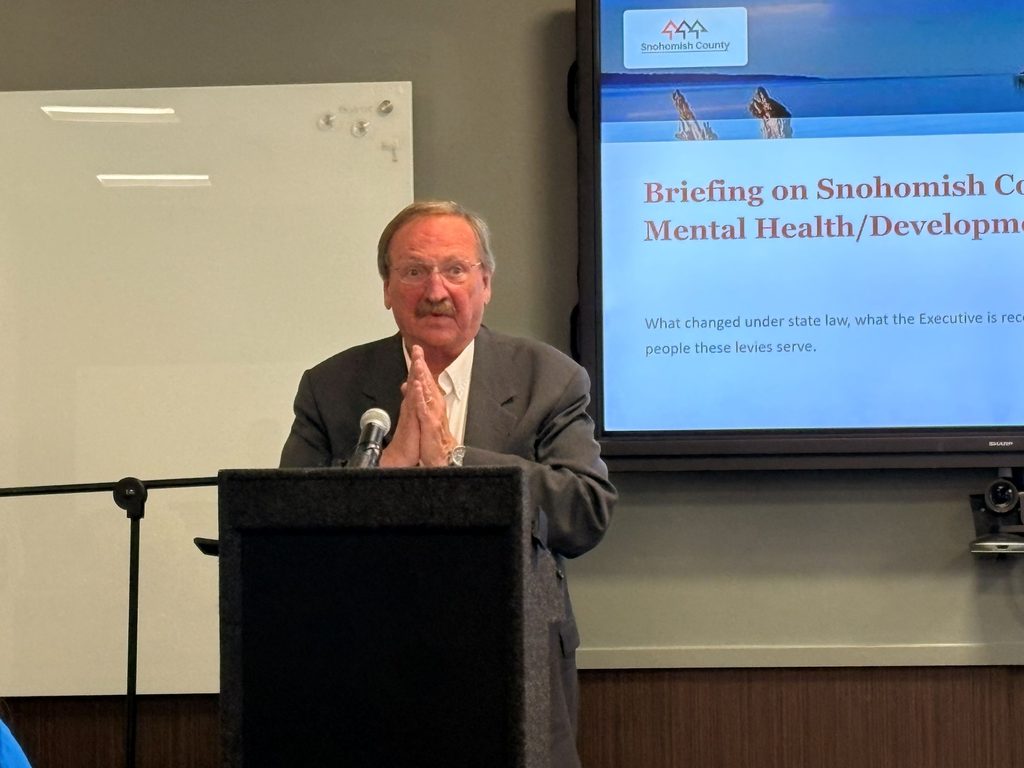
“We must preserve essential services and minimize impacts on residents with the greatest needs and the fewer alternatives,” said Snohomish County Executive Dave Somers. “The recommended budget already includes significant staffing reductions and other difficult choices, and the tradeoff for preserving that General Fund capacity is an additional property tax cost. The choice is not whether veterans and mental health/disability services receive more funding, that’s been decided at the state level. This is a choice about whether that change reduces other General Fund services.”


Earlier this year the state legislature passed House Bill 2442, sponsored by Representative April Burg, which changed the requirements for Snohomish County’s Mental Health/Developmental Disabilities (MH/DD) Levy and Veterans Levy.
Previously these levies were “nested” within the County’s General levy and grew at the same limited rate. However, under the new law, the property owners must fund them at statutory minimum rates and can either keep them nested or separate them from the General levy.




If the MH/DD and Veterans levies continue to be nested they would consume capacity within the General levy which, in turn, means less General Fund capacity for other County services such as: public safety and justice, community and essential services, environment and quality of life, and supporting County staff positions.

By separating, however, both dedicated levies would sit outside of the General levy and receive the required levy funding. The MH/DD levy would generate $6.0 million, and the Veterans levy would generate $2.27 million, preserving a total of $8.7 million for the General Fund.

As the county faces a projected $56 million deficit, this preserved General Fund capacity could support services across County government. On the other hand, the estimated household impact would mean an added $26.90 more per year in property taxes for the average homeowner of $741,000. This is in addition to the existing General Fund levy.
“I don’t take recommending an additional cost to residents lightly, but the alternative would have direct harmful consequences to the people who rely upon these services. That’s the tradeoff we are weighing,” said Executive Somers.
Executive Somers chalked the projected deficit up to costs increasing faster than the county’s revenues.
The increase in property taxes would come at a time when the county has already approved a new 0.1% Public Safety Enhancement Sales Tax back in August, a $20 annual car tab fee increase that same month, and just one year after a 2% property tax increase was approved in its 2025/2026 biennial.

On the other hand, Somers noted that out of the 39 counties in Washington State, Snohomish County still has one of the lowest property taxes (only above Island County for lowest).
County tax increases aside, the Consumer Price Index (CPI) is up 3.4% over the last 12 months, according to the Bureau of Labor Statistics, leaving many already stretched thin just trying to afford the basics.
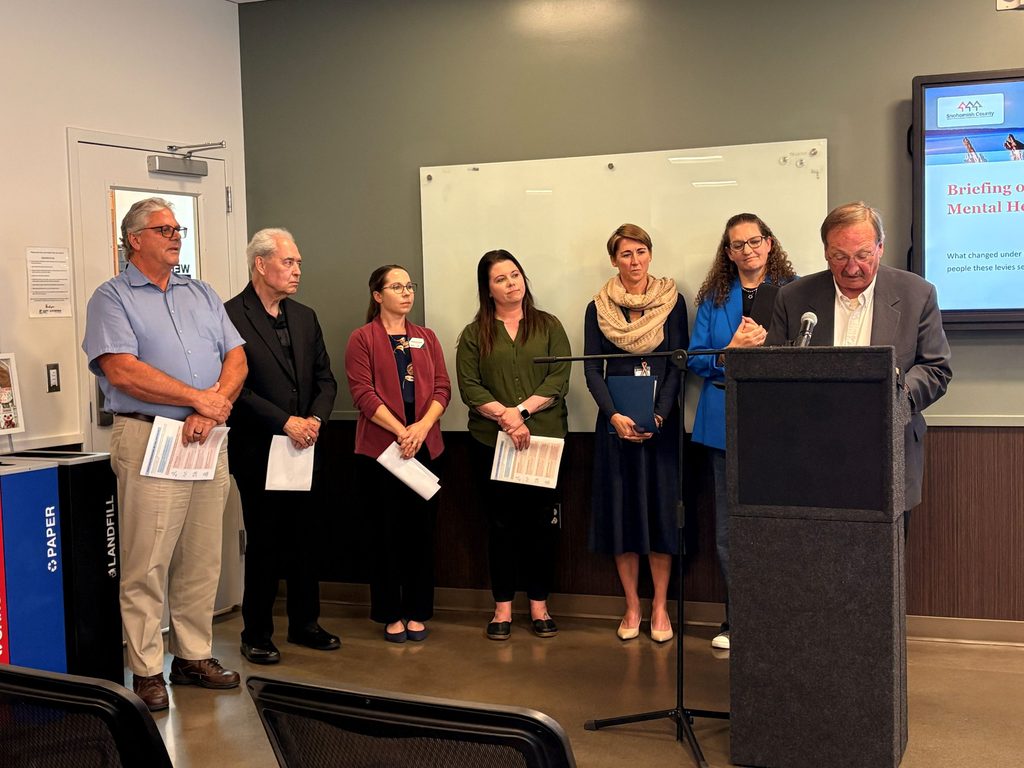
On Tuesday, September 22, Executive Somers, County Council Chair Megan Dunn and Chief Budget Officer Kara Main-Hester were joined by community partners at Hope Works in Everett, including veterans and advocates for housing and related services, to discuss these levy changes and what the funding would support.
“This funding provides direct funding and support to some of our most vulnerable community members. It tests who we are as a community, whether we can provide a social safety net for our veterans, for people with developmental disabilities, and for families facing behavioral health needs and changes,” said Chair Dunn.
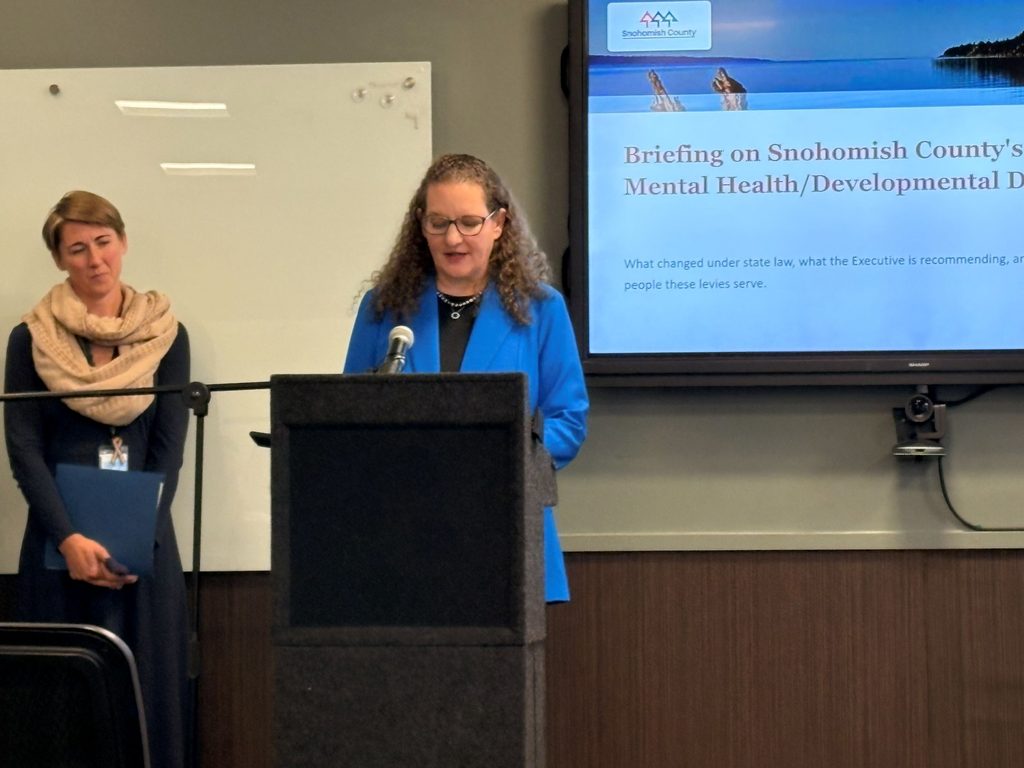
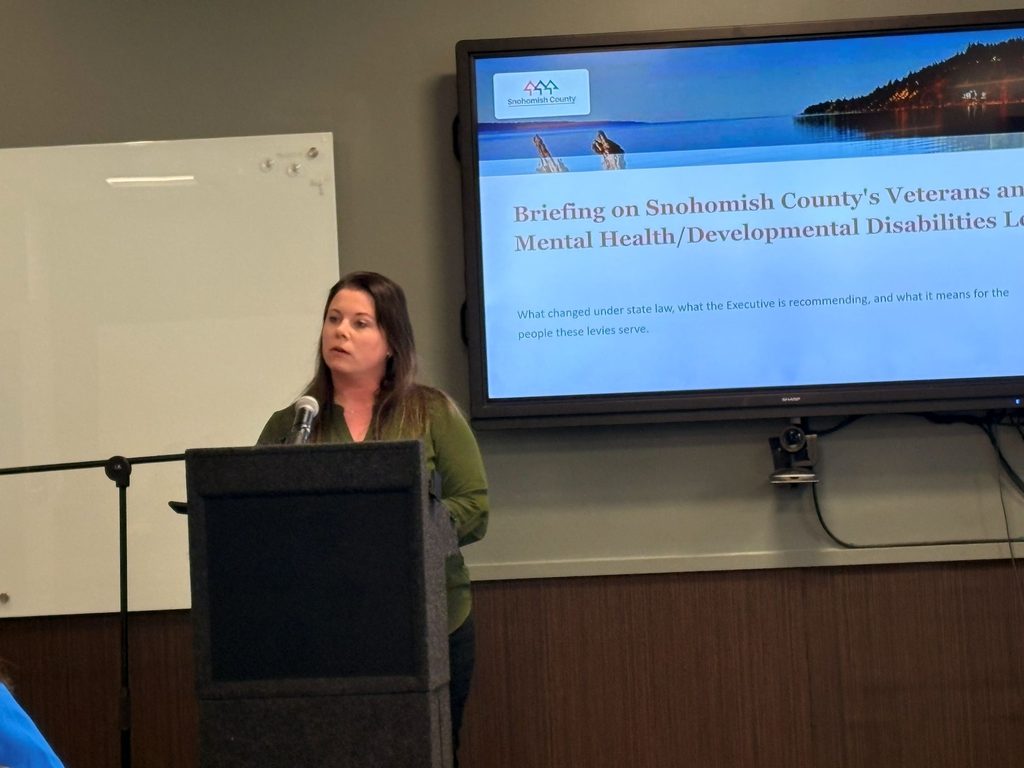
Amanda Frankle, Behavioral Health and Veterans Services Division Manager for Snohomish County Human Services, spoke on how the funds would directly impact residents at every stage of their lives; from infants born with developmental disabilities, to young adults entering the workforce, to those experiencing behavioral health challenges, to veterans working for greater stability.
“In behavioral health, levy resources can help maintain services as other funding becomes reduced or remains uncertain. In developmental disabilities, they can help close gaps at critical points at early childhood to the transition to employment, and for veterans they can expand our ability to respond to immediate needs while helping long-term stability,” said Franke.
The funds, specifically, can help prevention, treatment, outreach, diversion, and recovery services as well as housing stabilization and connections to care. Some of these services are already facing reductions or uncertainty from other funding sources, Frankle continued, such as the Chemical Dependency and Mental Health Sales Tax – which funds the Snohomish County Outreach Team (SCOUT), and direct housing assistance, as well as school-based support, treatment services, and prevention.
In 2025 alone, SCOUT made more than 1,200 initial contacts and facilitated the completion of more than 500 behavioral health assessments with hundreds going on to treatment, diversion services, and securing housing.
“Levy resources help us maintain continuity, as the broader behavioral health landscape changes,” said Franke.
The Early Support for Infants and Toddlers Program serves approximately 3,100 children each year from birth to age three who have significant developmental delays and health conditions while the County experiences reduced access to IDEA (Part C) funding.
“Youth leaving high school with employment are more likely to remain employed as adults and for adults the need for supportive employment is growing while state funding remains stagnant,” said Franke. “Today more than 800 adults receive supportive employment services, working with approximately 150 local businesses and they expect to earn about $5 million in wages in 2026.”
For veterans, levy resources can provide immediate assistance and a pathway toward longer stability.
In 2025, the Snohomish County Veterans Services Program served 253 unique veterans and provided approximately 600 direct support vouchers – about $230,000 in assistance, half of which went towards rent and moving costs.
Bob Reese, Vice Chair for the Veterans Assistance Fund Executive Board – who retired from the U.S. Army as a General after 31 years – said as the cost of gas, food, and utilities go up it begins to impact veterans’ abilities to stay in their homes.
“We want to help them before they become homeless. We know how to take people out of homelessness and get them settled again but we don’t want to put them through that. There was plenty of rent money during COVID and beyond, but those resources are incredibly scarce today,” said Reese.
The levy money would go towards rent assistance, and increasing the amount of that, rapid rehousing, but both of things require staff.
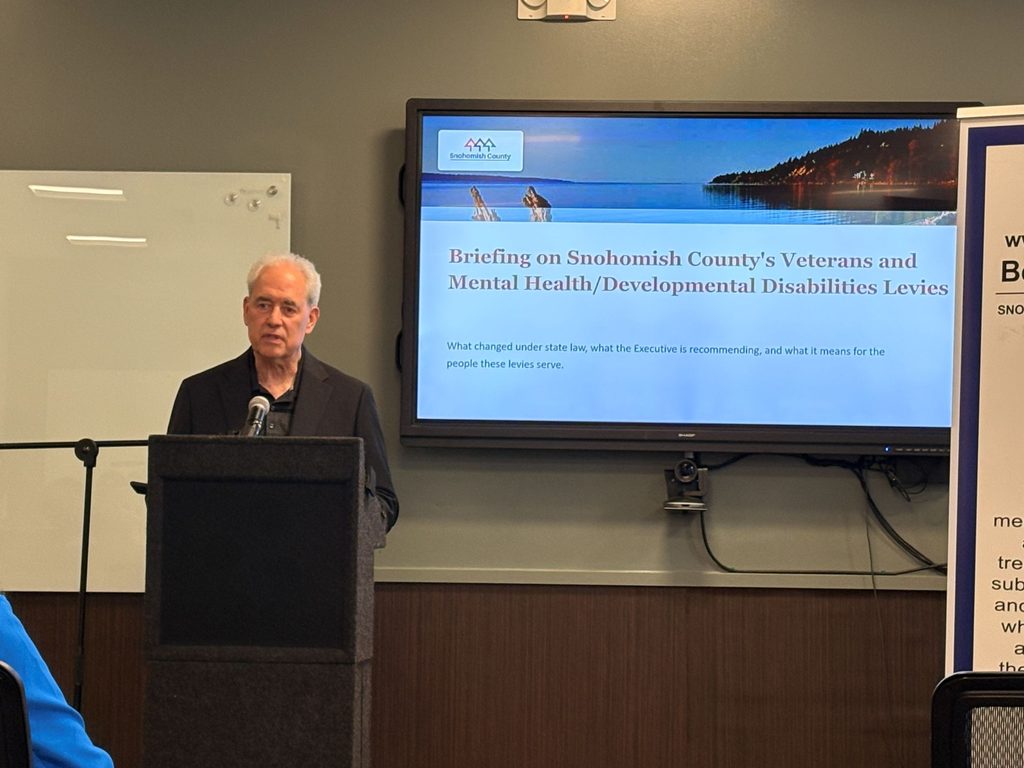
“Today one person in that dedicate team can handle about 17 houses at a time and adding a couple more will have a significant impact in the county as a whole,” said Reese.
The funding could also support Hero Cafes and claims among other things.
On the housing assistance side, Rachel Downes, Chief Strategic Officer for Housing Hope, said that the country’s current federal funding landscape makes resources like this more important than ever with HUD fundamentally reshaping its Continuing Care Program, which is the primary federal funding source for local homelessness response system.
“The current funding notice makes 40% of COC funding competitive and also sets aside over $1 billion for new projects, with priorities for transitional housing and supportive services only projects. That represents a significant shift in federal homelessness policy,” said Downes. “In other words, the uncertainty is not hypothetical. It is happening right now…We don’t have the option of simply not caring about our neighbors, the question is how and where we pay for that care.”
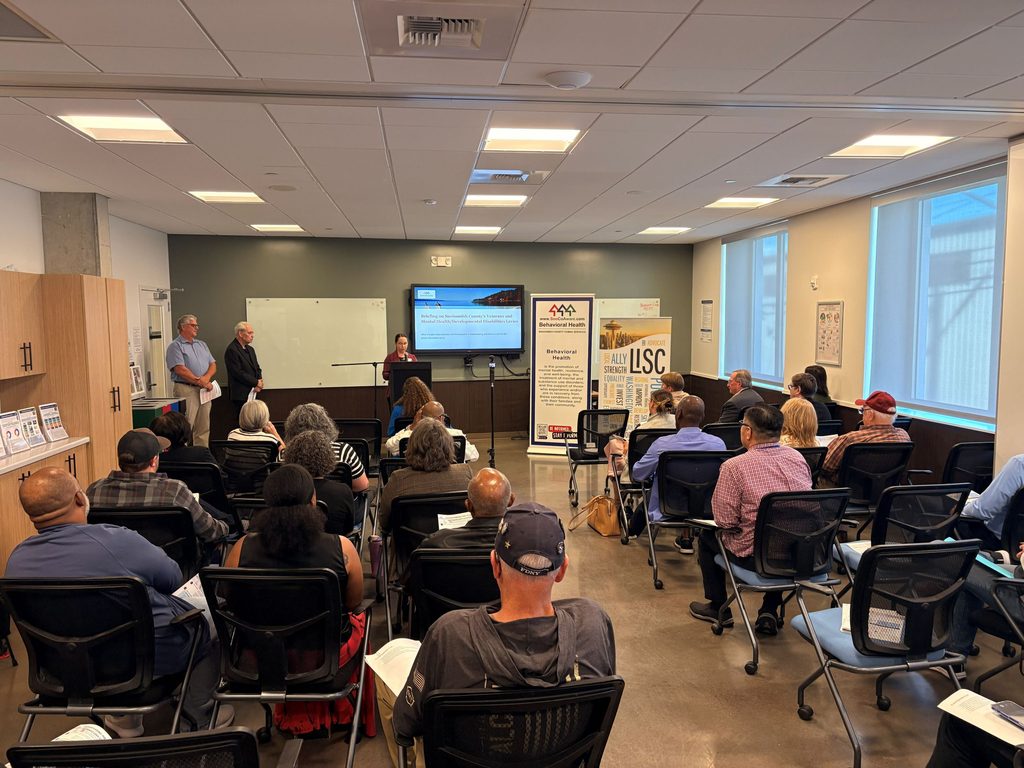
Lance Morehouse, Chief Executive Officer of Sherwood Community Services, which provides innovative and inclusive services to children and adults with disabilities in their communities, supported the segregation of levies adding that reducing services could lead to crises situations which could cost more to address in the future.
Each year Sherwood serves 3,100 children and 800 adults in Snohomish County and leverages taxpayer dollars to help children reach developmental milestones as well as supporting adults become successfully employed, contributing members of the community.
“I recognize that any tax increase can place additional strain on Snohomish County homeowners, even so I urge you to support the changes with the mental health/dd levy because it makes a meaningful difference every day for children and adults with disabilities in our community,” said Morehouse.
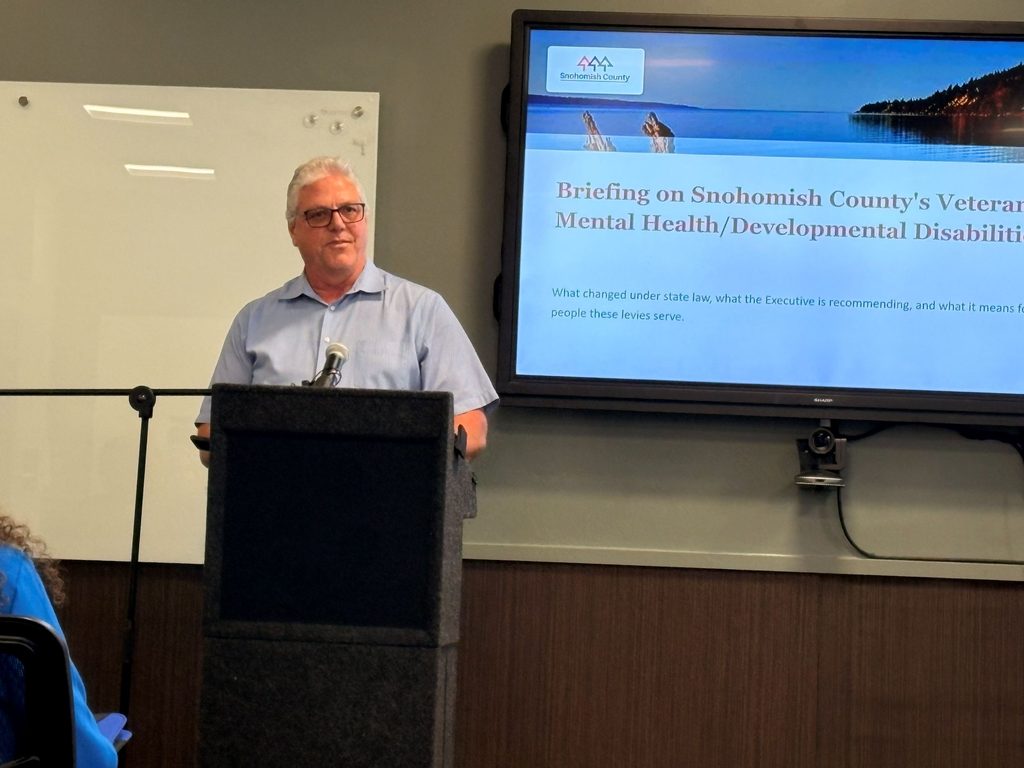
Ultimately, Somers’ recommendation will come to the Snohomish County Council as part of its 2027-2028 budget process.
“The state has given us the tools, the Executive and his team has done the math, and now it’s time for council to do the work,” County Council Chair Dunn said.
Council will have a Community Budget Forum on October 7 at the County Council Chambers (and online) at 6 p.m.

Author: Kienan Briscoe



2 Responses
The Olympia Democrats strike again with another indirect tax increase. Basically they have Used the “Divide and Conquer” concept. So essentially forcing communities to fund under new levies vs having to acknowledge even higher increases in WA State taxation. Our Dem Goverment just cannot be honest. Vote Red!!!
There are no scenarios where I support property tax increases. We have reached the ceiling. Cut your spending or find other sources of revenue.
Property tax increases hit homeowners who own the home they live in and nothing else. We can’t pass on the cost, everyone else can. Enough