

OLYMPIA—Washington state has made progress toward addressing its aging transportation infrastructure, but the state is still falling short of what is needed to preserve roads and bridges, and major Snohomish County projects remain without full construction funding, state Sen. Marko Liias said in an interview with the Lynnwood Times last Friday.
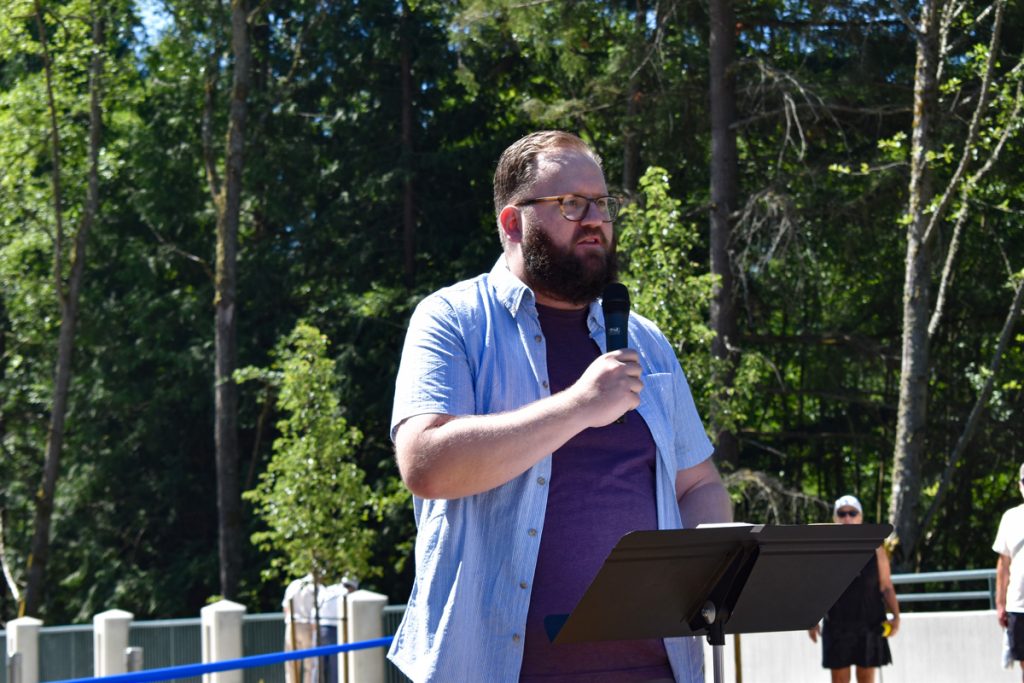
Liias, D-Edmonds, who chairs the Senate Transportation Committee, said the Legislature’s 2026 supplemental transportation budget added approximately $1.5 billion over six years for preservation and maintenance. The investment brings the state closer to meeting its annual infrastructure needs, but it will not substantially reduce the existing backlog, he said.
“I think we’ve turned the corner, but we’re not going fast enough toward getting the system back to where it needs to be,” Liias said.
The funding shortfall comes as Snohomish County continues to grapple with congestion, growing communities and aging transportation infrastructure. Liias identified replacing the U.S. 2 trestle, completing improvements to State Route 522 in Monroe and preparing for light rail expansion as among his top regional priorities over the next five years.




But with construction funding still incomplete for two of those major projects, Liias said the state must find additional resources while improving how it delivers transportation projects.

State still falling behind on maintenance
Liias said Washington needs close to $1 billion more annually to adequately maintain its transportation system, according to estimates from the state Department of Transportation.
The additional $1.5 billion in the supplemental budget helps close the gap between available funding and annual preservation needs, but it does not eliminate the backlog of deteriorating infrastructure.
“We’re not digging the hole deeper necessarily, but we still have a large backlog we’ve got to get through,” Liias said.
The senator added he has been working with fellow lawmakers, including Rep. Sam Low and Sen. Curtis King, to identify additional funding, particularly for bridge preservation.
Bridges are a particular concern because damage or deterioration can force closures that disrupt regional mobility and commerce, he continued.
Looking ahead to 2031, Liias said he expects the current funding level to prevent the overall condition of roads and bridges from deteriorating further, with some modest improvements possible.
“It’s not going to move the needle dramatically because we are so far behind,” he said.
Liias said additional investment would be needed to make more substantial progress toward restoring the state’s transportation system.
U.S. 2 trestle, SR 522 face funding challenges
For Snohomish County, Liias identified replacing the U.S. 2 trestle and completing improvements to SR 522 in Monroe as two of the most pressing transportation projects that still face funding gaps.
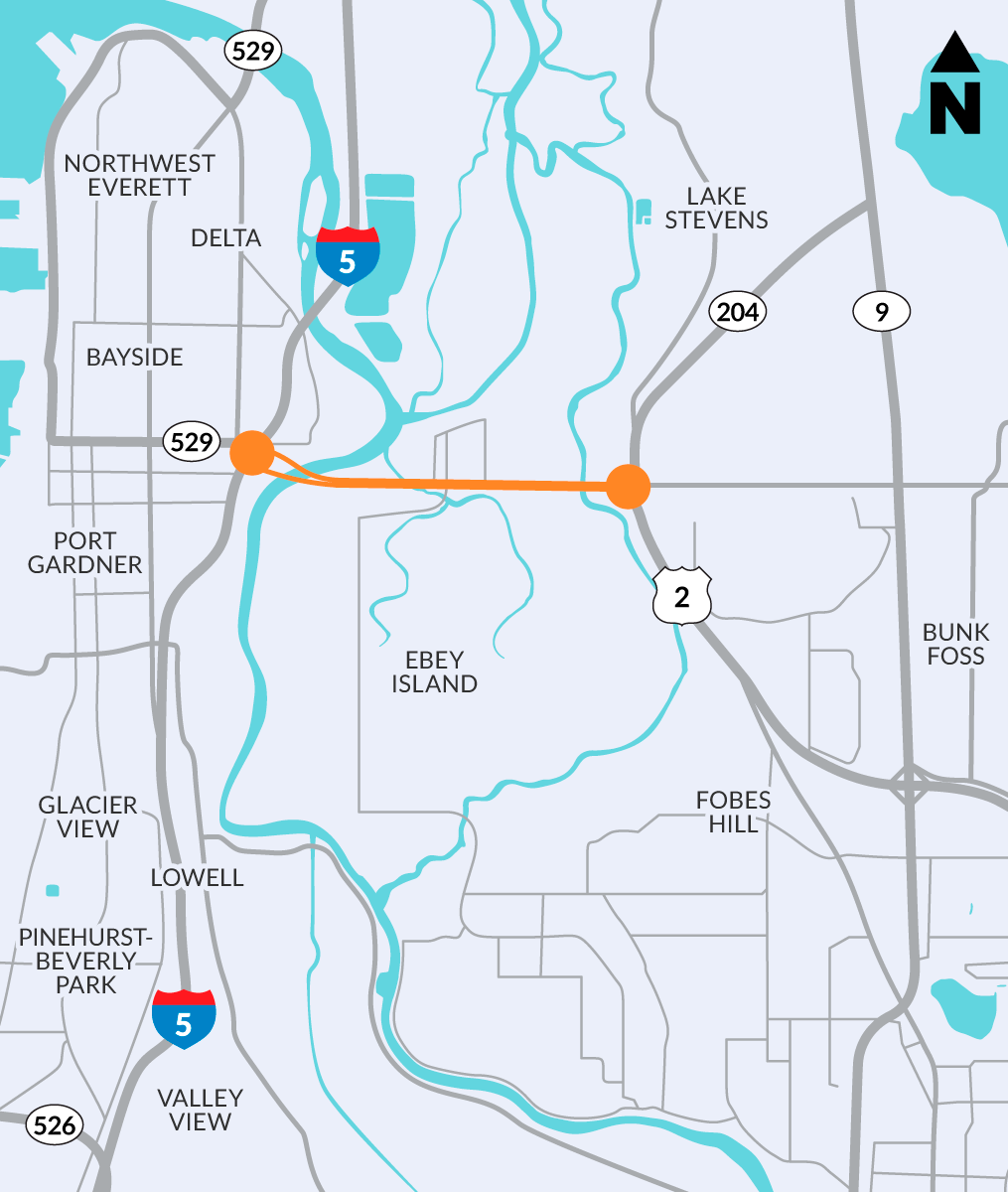
Both projects are being designed, and plans are in place, but the state has not secured all the money needed to move forward with construction, he said.
The trestle replacement is particularly important for communities relying on the corridor to travel between Lake Stevens and Everett. Liias said he has been working with Low and local leaders to build public support and secure the funding needed to advance the project.
“We’ve got to build the momentum and get people behind a plan so that we can get funding to do the construction of that,” Liias said.
Completing SR 522 is another priority, particularly the section in Monroe where the highway narrows from four lanes to two. Liias said the state needs to close that gap while also improving transit connections between Monroe and the Woodinville and Bothell areas.
Other projects are advancing across the county, including construction of a new bridge over the Snohomish River on SR 9, preservation work along Highway 99 in Lynnwood and the recently completed repaving of Mukilteo Speedway.
A new bridge crossing the railroad tracks to the Mukilteo ferry terminal is also planned for the coming years, Liias said.
The county will need additional infrastructure to accommodate future light rail stations at Mariner and Ash Way, as well as growth around Paine Field. Liias also identified safety and mobility improvements in Marysville, Arlington and other North County communities as important priorities.
Despite the breadth of projects, he said the trestle replacement and SR 522 remain the projects he is most focused on completing.
Transit seen as key to easing congestion
Liias said expanding transit will be essential to managing congestion in south Snohomish County, particularly in areas where adding more road lanes is difficult.
He pointed to 164th Street between Lynnwood and Mill Creek, where existing development and the Interstate 5 crossing limit the ability to widen the roadway.
“There’s really isn’t a way to widen that road because there’s businesses and housing on both sides of that,” Liias said.
Rather than relying exclusively on road expansion, Liias said the region needs to move more people through existing corridors by improving bus service and expanding light rail.
The Swift bus rapid transit network already serves portions of the county, while future light rail connections at Ash Way and other stations could provide additional alternatives for commuters.
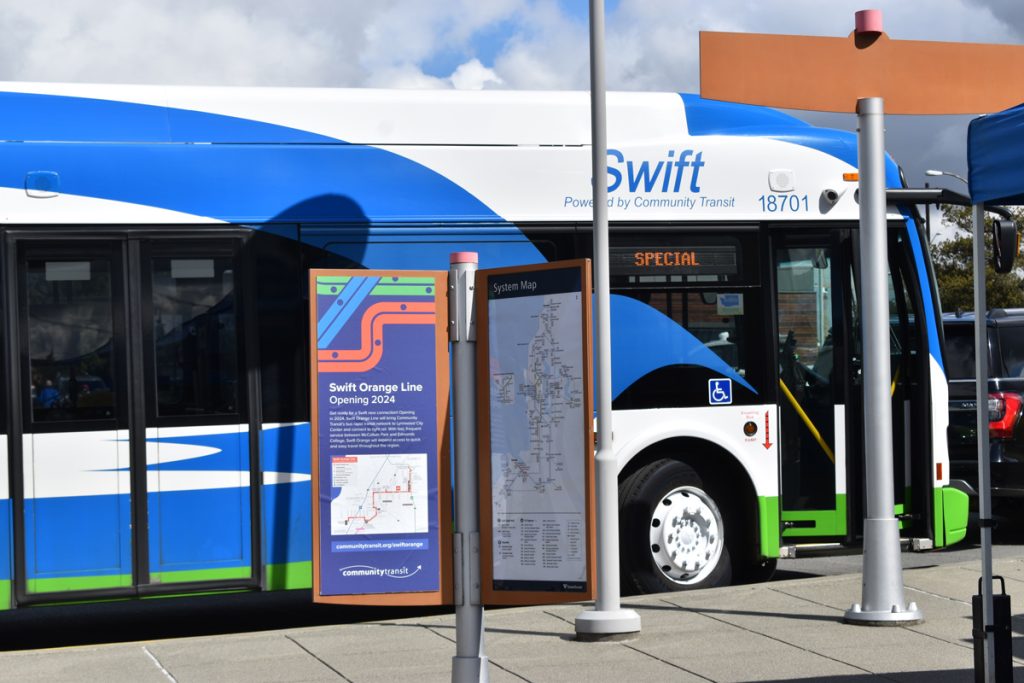
But transit expansion must be paired with reliable connections to stations, he said. Liias pointed to the lack of convenient bus service between downtown Edmonds and light rail as one barrier preventing more residents from using the regional system.
He also stressed that road capacity remains necessary for people whose jobs require driving between locations, as well as freight operators moving goods throughout the region.
“Like as much as it would be fun to move freight by bus, that’s much harder to do,” Liias joked.
The goal, he said, should be a transportation system that offers more choices while making better use of existing infrastructure.
“We’ve got to make sure that everybody has options to move around,” Liias said.
Fuel prices complicate transportation funding
The Lynnwood Times also asked Sen. Liias about the state’s high fuel prices and the long-term sustainability of Washington’s transportation funding model.
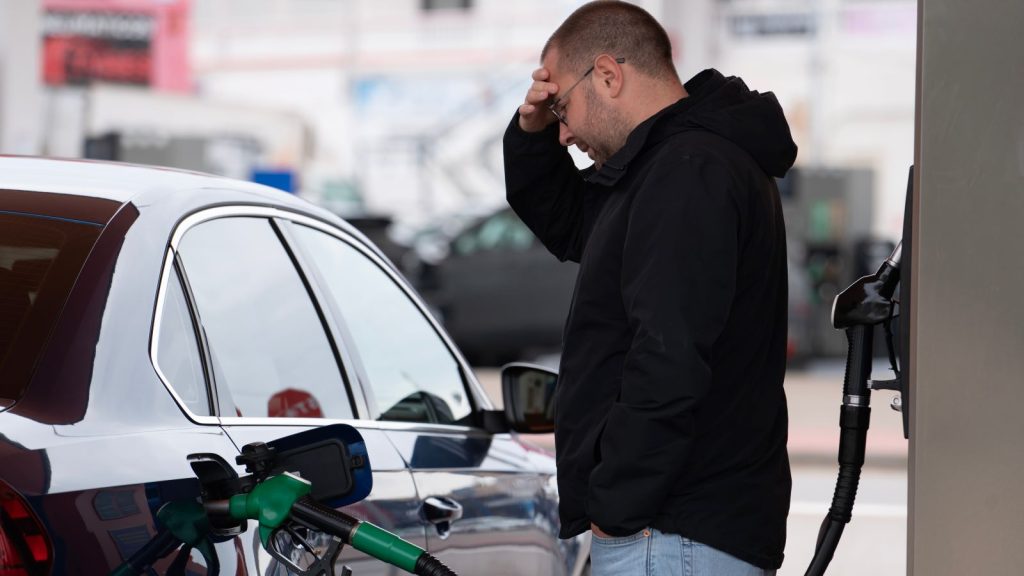
Liias said Washington’s relatively high gas prices reflect several factors, including state fuel taxes, the Climate Commitment Act and the Pacific Northwest’s limited connections to the national fuel pipeline network.
Because the region relies heavily on local refineries and fuel imports, disruptions to its limited supply infrastructure can affect prices, he said.
Liias pointed to the Olympic Pipeline’s closure following a leak in Snohomish County as an example of how disruptions can affect fuel prices across the region.
The state’s gas tax also plays a central role in funding transportation infrastructure. But as vehicles become more fuel-efficient and more drivers switch to electric vehicles, the state faces the challenge of maintaining revenue even as gasoline consumption declines.
Electric vehicles currently pay a $225 annual registration fee, which Liias said helps offset lost gas tax revenue. He and King previously proposed increasing those fees and indexing them to keep pace with costs, though the proposal had not been adopted yet.
Liias said he does not support charging drivers based on the number of miles they travel, citing privacy concerns.
“I think we’ve got a lot of privacy concerns and other issues at play,” Liias said. “I think having a system where it’s based on fees, the gas tax, things like that make more sense to me than asking drivers to kind of report how much they’ve driven.”
Liias also defended transportation investments funded through the Climate Commitment Act, which he said are intended to reduce emissions while providing tangible benefits to residents.
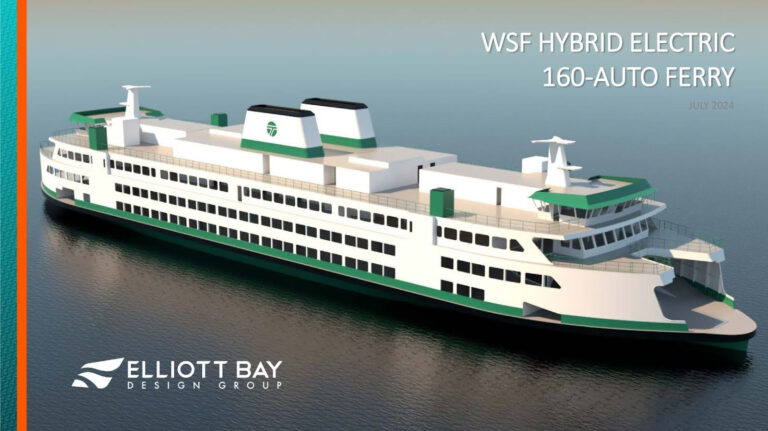
Those investments include transitioning Washington State Ferries to hybrid-electric vessels, providing free transit fares for youth and helping commercial fleets convert diesel vehicles to electric.
Liias said youth transit ridership has increased, helping families reduce transportation expenses. Hybrid-electric ferries are expected to reduce fuel consumption and operating costs, while the state is collecting data to measure the effectiveness of vehicle electrification incentives.
He said the state evaluates these investments based on their individual results, including changes in ridership, emissions and operating costs.
Lawmakers look to accelerate project delivery
Beyond securing more funding, Liias said Washington must find ways to deliver transportation projects faster and limit cost increases.
He pointed to public-private partnerships, which bring private companies into project financing and construction, as one possible approach. The state has authorized consideration of such partnerships, and the U.S. 2 trestle replacement is being examined as a potential project for the model.
Liias also identified permitting, design and environmental review as areas where delays can drive up costs.
“If it takes us a year or two longer to plan or to get a permit on a project, that’s adding real costs,” he said.
Construction inflation can make those delays particularly expensive, he added.
Liias said there is no single solution to improving project delivery, but the state must seriously consider recommendations aimed at streamlining preservation work, environmental review and other stages of construction.
“We need to be looking at all the improvements that folks come up with that can get our projects done faster and be serious about it,” he said.
Liias calls for renewed focus on traffic safety
Liias said traffic safety must also be a priority as the state invests in transportation infrastructure.
He identified Highway 99 in Lynnwood as an area where improvements could make the transportation system safer for drivers and other road users.
Washington’s Target Zero initiative, which aims to eliminate preventable traffic deaths and serious injuries, has recently been updated to incorporate a safe-systems approach, Liias said.
Although traffic fatalities have begun declining after years of increases, he said more work is needed to prevent deaths and serious injuries.
Liias supports lowering Washington’s legal blood alcohol concentration limit for driving from 0.08% to 0.05%, saying it could discourage impaired driving. He also pointed to speeding, distracted driving, vehicle safety technology and restoring Washington State Patrol staffing as areas where additional action could help reduce crashes.
For Liias, the broader challenge is ensuring that the state’s transportation investments keep pace with both the infrastructure it already has and the demands of a growing population.
He acknowledged that the Legislature has not yet resolved every funding challenge but said he believes lawmakers will continue working toward solutions.
“I don’t have a crystal ball to tell you exactly what those solutions will be,” Liias said. “But I’m confident that across time we’re going to meet the moment, address the challenges that are there, get the job done.”

Author: Kienan Briscoe